
Welcome to our locksmith information hub, where we share real projects, expert security advice and practical guidance on locks, doors and home protection. From completed jobs across West Dunbartonshire to tips on improving your property’s security, these articles are designed to help you understand your options and make confident decisions about keeping your home safe.
Published Date: 23 October 2026
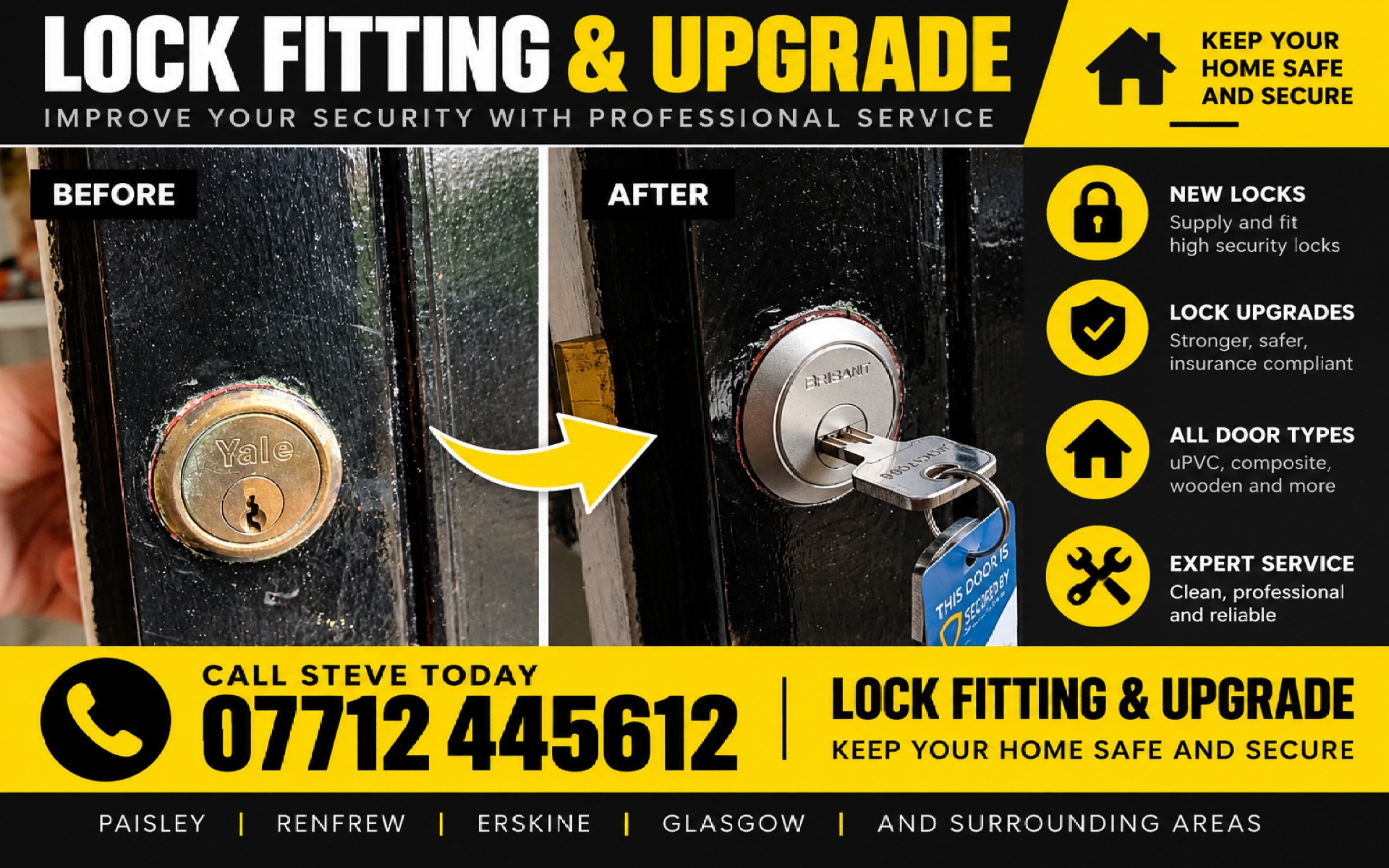
A homeowner in Glasgow's West End contacted A.L.S. Locksmiths because the lock on their storm door was not working properly. On inspection, I found that the existing lock offered limited protection against manipulation and did not provide the level of security the homeowner wanted. I recommended upgrading the locking arrangement with a high-security locking cylinder and a rollerbolt nightlatch. The homeowner agreed, and I fitted the new hardware to improve the door's security and everyday operation. The upgrade provided a more robust locking arrangement, with key-controlled access and improved resistance to common forms of lock manipulation. It was a practical improvement to the property's entrance security without needing to replace the door itself. The problem: an unreliable storm door lock I attended a property in Glasgow's West End after the owner reported problems with the lock on their storm door. A storm door provides an additional layer at the entrance to a property, but its security depends on the quality and condition of the locking hardware fitted to it. If the lock is unreliable or offers little resistance to manipulation, the door may provide less protection than the homeowner expects. During my assessment, I identified that the existing lock offered limited protection against manipulation. It also did not meet the security requirements the homeowner wanted from the door. I explained the limitations and recommended upgrading the lock rather than continuing to rely on the existing arrangement. After discussing the proposed solution, the homeowner decided to go ahead.
Published Date: 23 October 2026
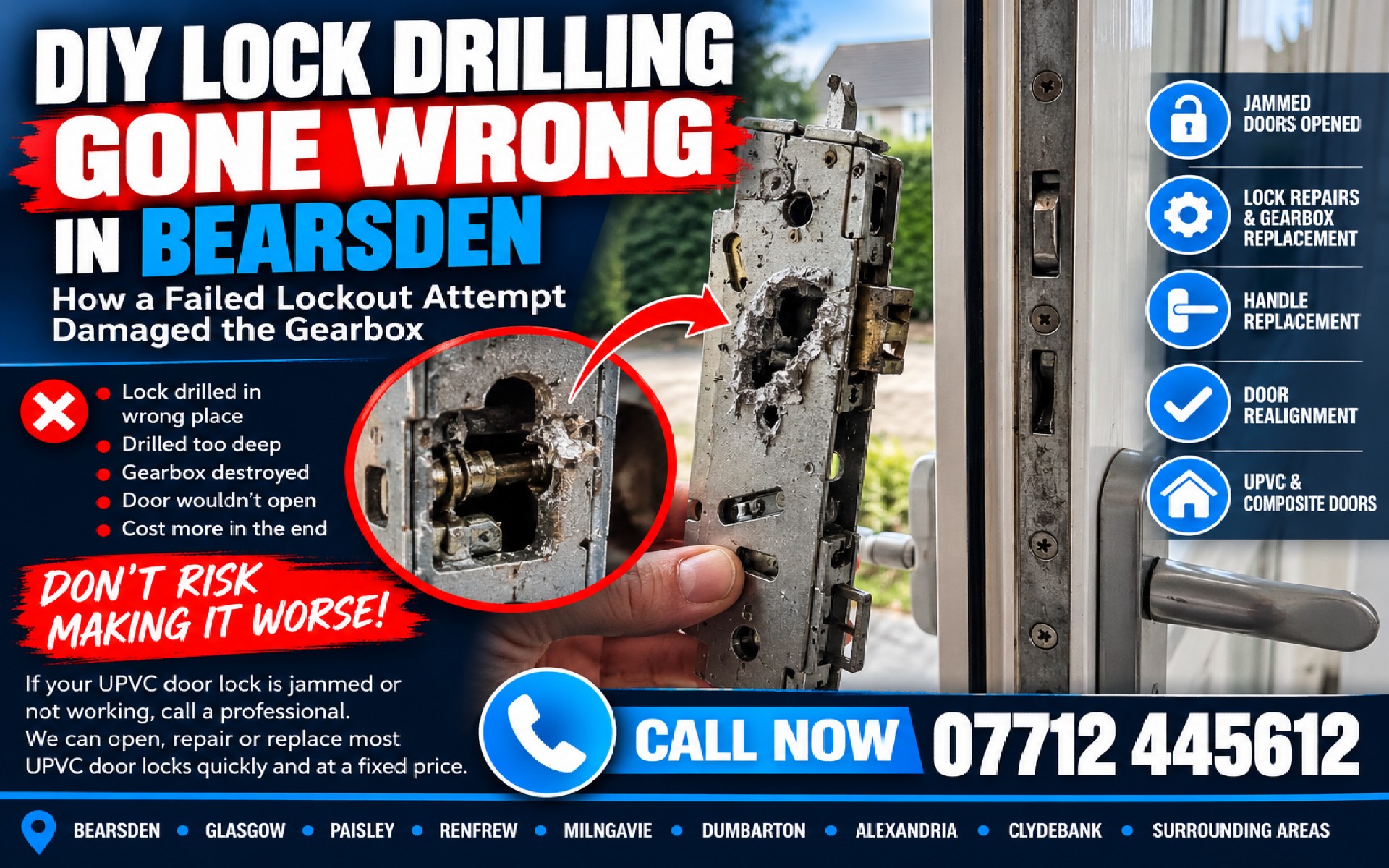
A homeowner in Bearsden found himself locked out and decided to drill out the lock himself to save the cost of calling a locksmith. Unfortunately, the drilling was carried out in the wrong position and went too far, damaging the internal gearbox as well as the cylinder. The door remained firmly shut. When I attended, I had to remove the destroyed cylinder, manually release the locking mechanism and open the door before assessing the damage. As I did not have the correct replacement part available, I fitted a temporary overnight lock and cylinder to secure the property while I ordered a genuine replacement gearbox. I returned a couple of days later, fitted the new mechanism and cylinder, realigned the door and thoroughly tested its operation. The job illustrates an important point: attempting a DIY lock repair to save money can turn a relatively straightforward problem into a more expensive repair when the wrong components are damaged.
.jpg)
Published Date: 21 October 2026
A homeowner in Glasgow's West End contacted A.L.S. Locksmiths for a lock change after purchasing a new property. On inspection, the existing mortice lock did not meet the British Standard BS3621. After discussing the options, the homeowner chose to upgrade to a suitable BS3621-compliant lock. The installation involved enlarging the existing mortice, preserving the original handle positions on a previously painted door, modifying the frame to accommodate the more substantial lock keep and carefully checking the alignment. The new lock was supplied with two keys, and the homeowner received advice on its operation and future key cutting. This job demonstrates why upgrading a lock to a recognised security standard involves more than simply removing one lock and inserting another. Correct preparation, accurate fitting and smooth operation are essential to getting the best from a security upgrade.
Published Date: 21 October 2026
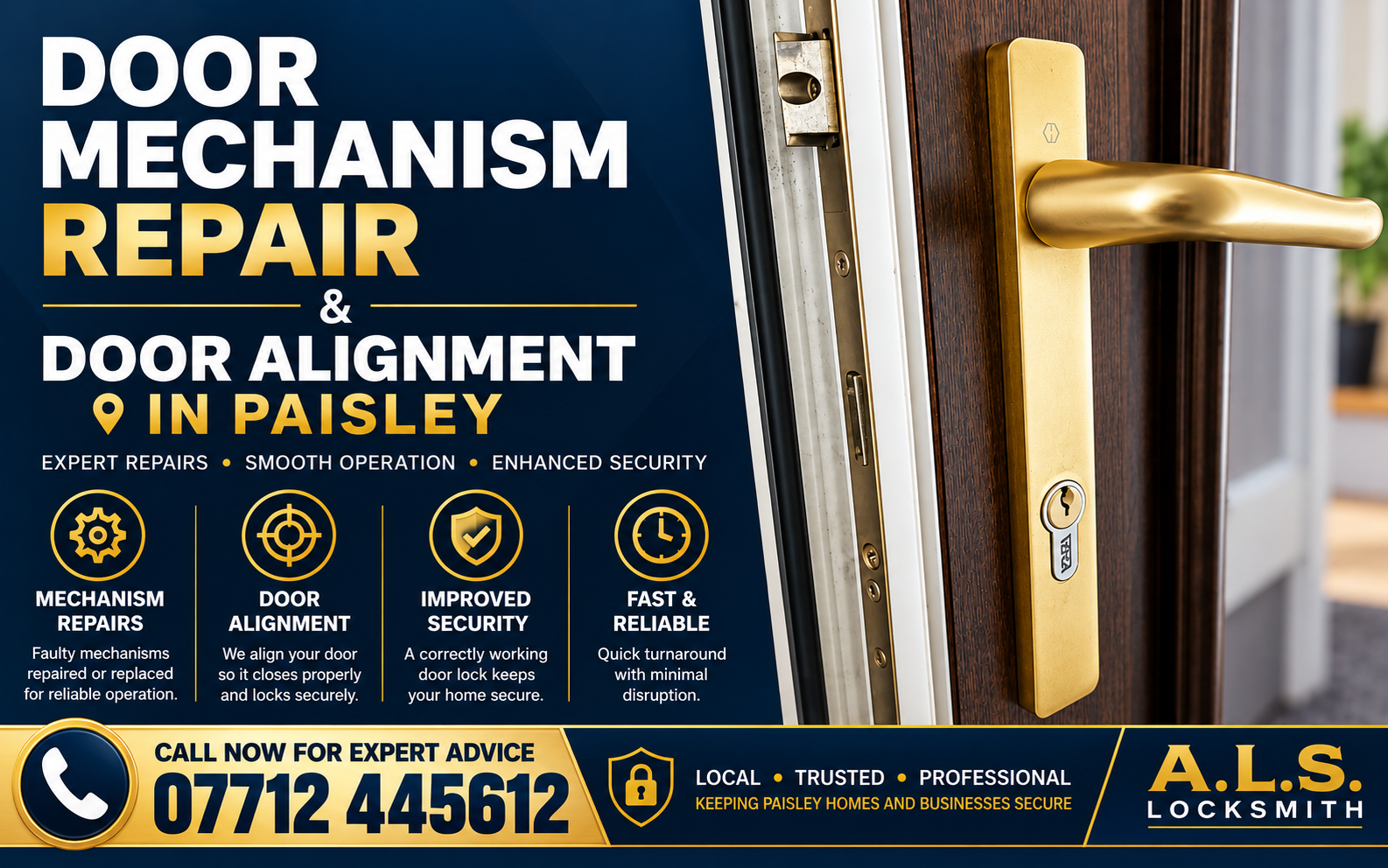
I was called to a property in Paisley PA2 where the front door wouldn't open. The homeowner could turn the key, but it wasn't unlocking the door. According to the owner, the uPVC door was approximately 20 years old, and there was concern that the problem might mean the door needed replacing. I managed to open the door using non-destructive methods, without damaging the door or the locking mechanism. This was particularly important because some components in older locking systems can be difficult to source or replace. Preserving the existing mechanism during entry can make the difference between a straightforward repair and a much more expensive job. Once the door was open, I removed and dismantled the locking mechanism. Testing revealed that the gearbox wasn't retracting the hooks and that the lock wasn't connecting correctly with the internal cam. After identifying the manufacturer, I replaced the failed gearbox with an original part rather than a copy. I carry a selection of gearboxes and components for different manufacturers, which can help make repairs possible without unnecessary delays. I also fitted a new snap-resistant cylinder, reassembled the mechanism and tested the door. The door was hitting the frame, so I adjusted the alignment and made further adjustments until the locking system operated properly. The door was working well again, and the homeowner avoided the expense of replacing the entire door.
Published Date: 21 October 2026
ALS Lock Repairs provides professional lock change and replacement services across Paisley, Glasgow and surrounding areas. From lost keys and damaged locks to UPVC and composite door locking mechanisms, we offer practical, cost-effective solutions to help keep your home secure.
Published Date: 14 October 2026
Professional Lock Change Service in Glasgow & Paisley A.L.S. Locksmiths supplies and fits replacement door locks throughout Glasgow, Paisley, Renfrew and surrounding areas. We change locks on timber, uPVC and composite doors, including mortice locks, night latches and euro cylinders. Whether you've moved home, lost your keys or want to improve security, we provide suitable replacement locks, fixed prices and no call-out charge. Call 07712 445612 for a reliable, professional service.
Published Date: 14 October 2026
UPVC & Composite Door Lock Repairs in Glasgow A.L.S. Locksmiths specialises in repairing uPVC and composite door locks throughout Glasgow, Paisley, Renfrew, Bearsden, Milngavie, Dumbarton and surrounding areas. We repair jammed doors, faulty multipoint locking mechanisms, gearboxes, handles and door alignment problems. Wherever possible, we repair your existing door rather than recommend an expensive replacement. We offer fixed prices, no call-out charge and a 12-month guarantee on parts fitted. Call 07712 445612 for a fast, friendly service.
Published Date: 14 October 2026
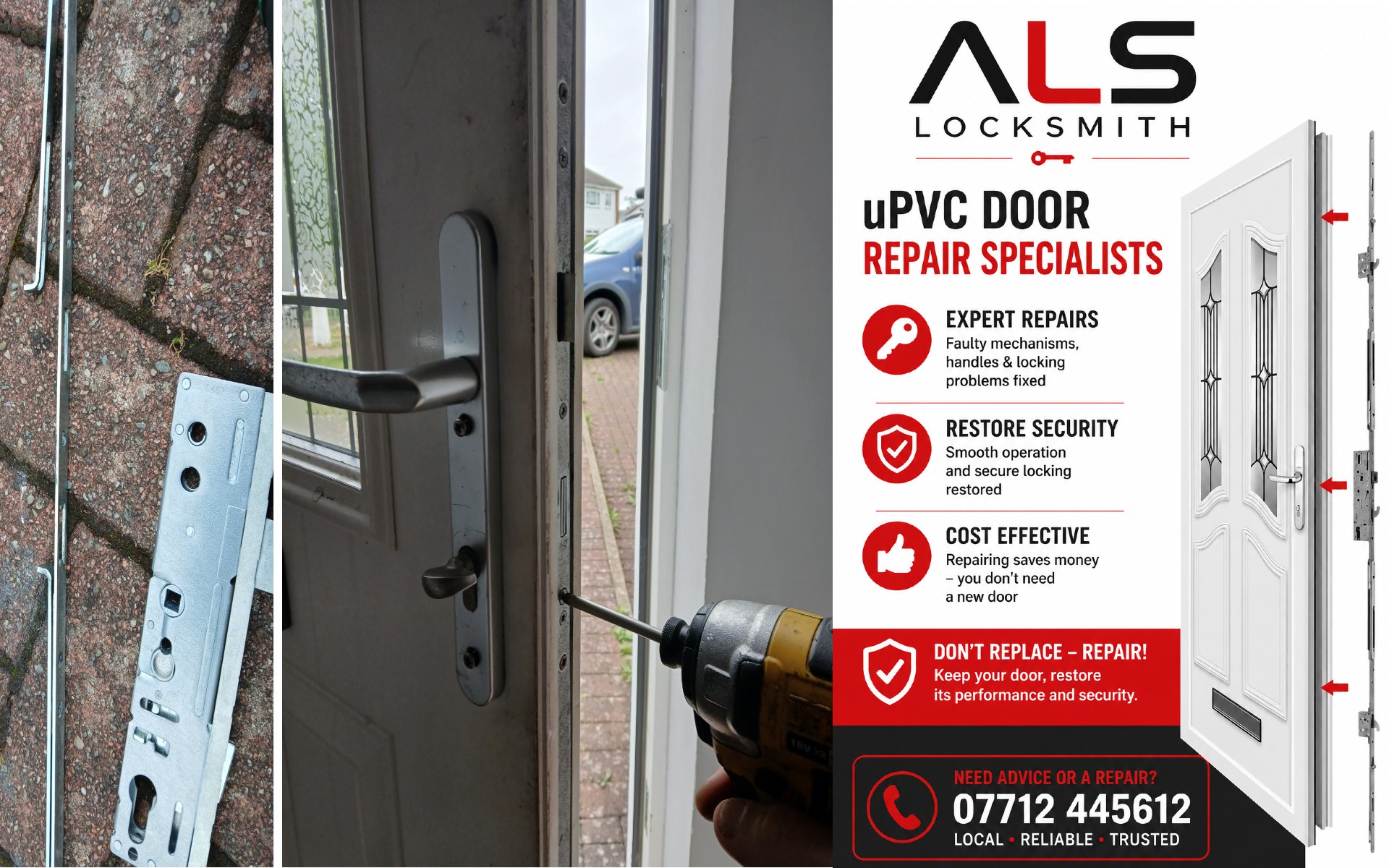
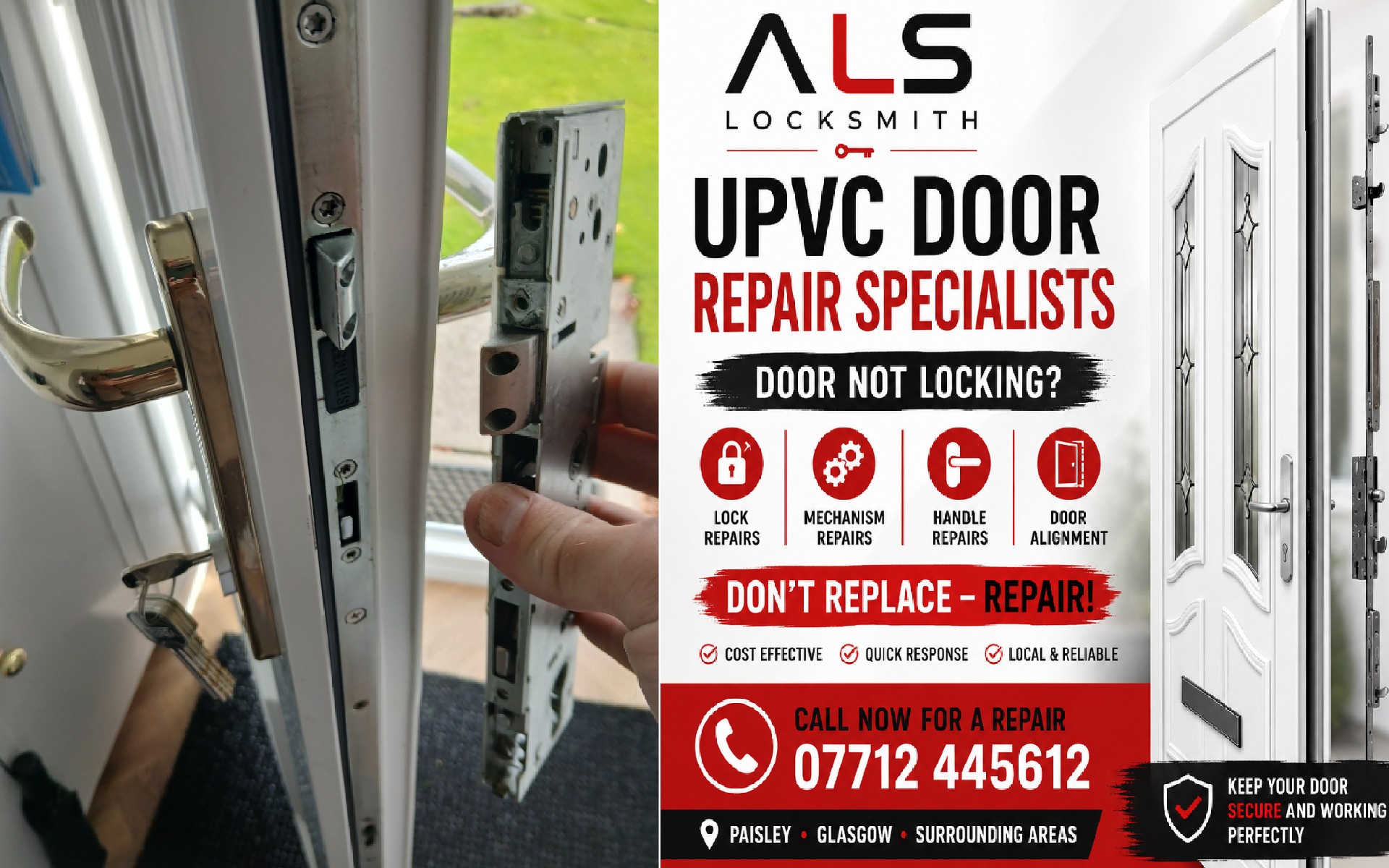
I was called to a property in Paisley where the homeowner had been advised by another company that their composite door needed replacing. The existing locking mechanism had been declared obsolete, leaving the owners concerned that a complete new door was their only option. After inspecting the door, I believed there was another solution. By replacing the locking mechanism, handles and lock cylinder, it was possible to bring the existing door back into proper working order without the expense of a complete replacement. The homeowner agreed, so I ordered the replacement mechanism, handles and additional components needed for the job. When I returned, I removed the old mechanism and handles. The new gearbox required some adjustment to the centre section of the door so that it could operate freely. I also trimmed the replacement locking strip to run down the full length of the door. After fitting the new handles and cylinder, I tested the mechanism. It worked correctly, but testing the door in its frame revealed that the bottom locking point wasn't lining up with its receiver. I adjusted the bottom mortise in the frame so that the locking point could engage properly, then tested the complete door again. The result was a composite door that worked well, with a new locking mechanism, new handles and a new lock cylinder. The homeowner kept their existing door rather than paying for a complete replacement.
Published Date: 14 October 2026
I attended a property in the G53 area of Glasgow to investigate problems with two uPVC doors. The back door was sticking at the bottom and had to be lifted before it would lock. The front door was more unpredictable: some days it locked normally, while on other days the locking mechanism played up. The homeowner was concerned that the front door might eventually fail completely. They had already replaced the cylinder, believing it was responsible for the problem, but this hadn't resolved the fault. After inspecting both doors, I recommended replacing the front door gearbox and correcting the alignment of both doors. I dismantled the front door mechanism, replaced the gearbox and reassembled the locking strip. When refitting it, I raised the mechanism by a few millimetres and tested the door. This helped reveal a significant alignment problem: the bottom locking rollers were too far away from their keep. As a result, the rollers weren't engaging correctly, the door wasn't achieving the proper seal and the mechanism was being subjected to unnecessary strain. I adjusted the door alignment, tested it again and restored the correct operation. The back door had a similar alignment problem, which I corrected quickly. Both doors were working properly by the end of the visit. The homeowner was delighted with the result and left a 5-star review.
Published Date: 14 October 2026
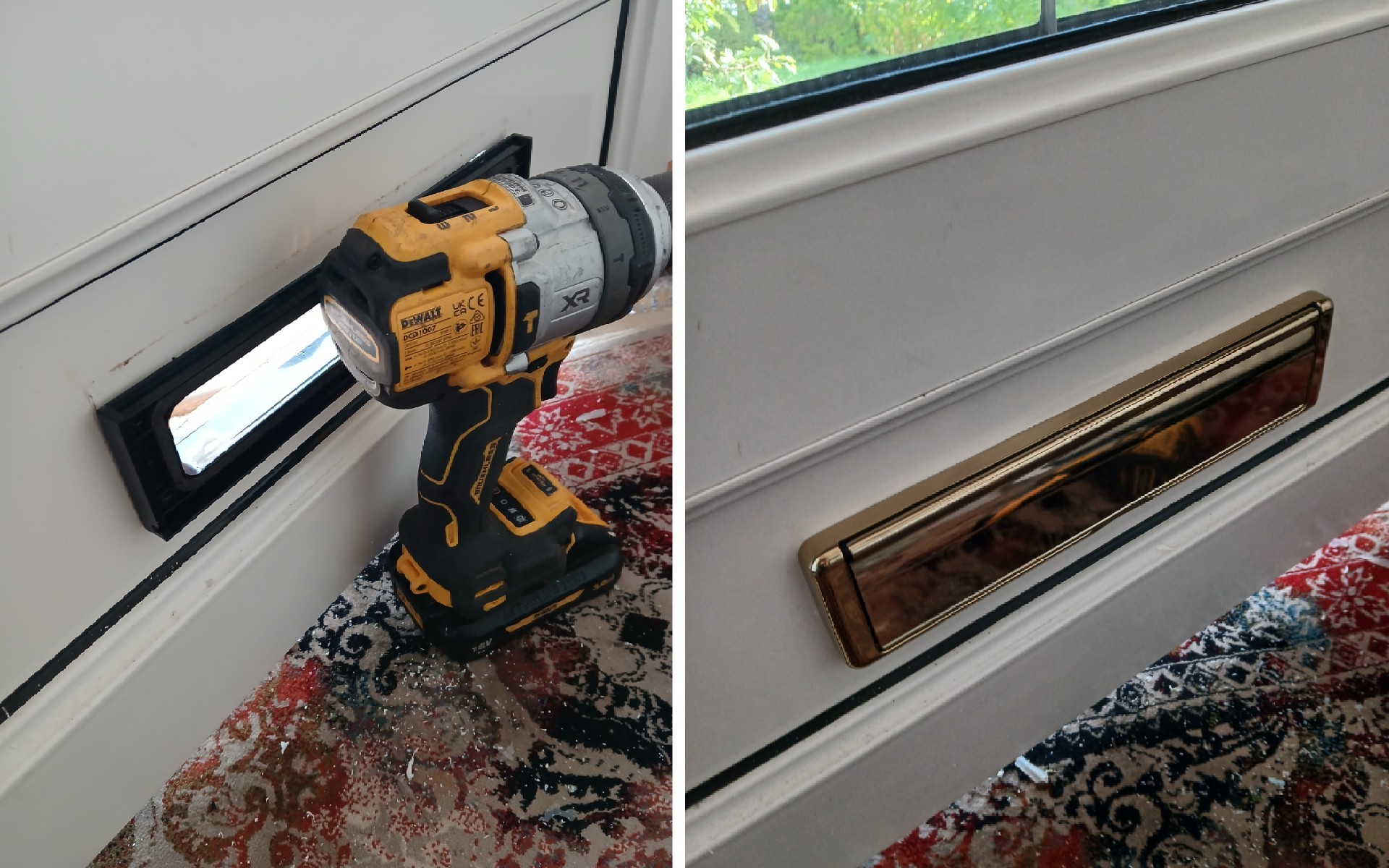
I was contacted via WhatsApp by a customer in Bearsden who wanted a letterbox replacement and a lock change. After discussing the job, I ordered a suitable replacement letterbox and arranged to fit it once it arrived. On attending the property, I removed the existing letterbox and the silicone that had been used around it. The original fitting was poorly secured, relying on short screws and what appeared to be silicone to hold it in place. After cleaning the opening, I offered up the new letterbox and marked the areas that needed to be enlarged slightly. I carefully adjusted the opening to accommodate the replacement and dry-fitted the letterbox to check that everything aligned correctly. The new letterbox consisted of two parts that fitted together through the door. Bolts passed between the two sections and pulled them tightly together to secure the assembly. The supplied bolts were too long for the door, so I shortened them to the correct length before tightening everything securely. The finished result was a smart-looking, quality letterbox that complemented the door and provided a much neater installation.
Published Date: 13 October 2026
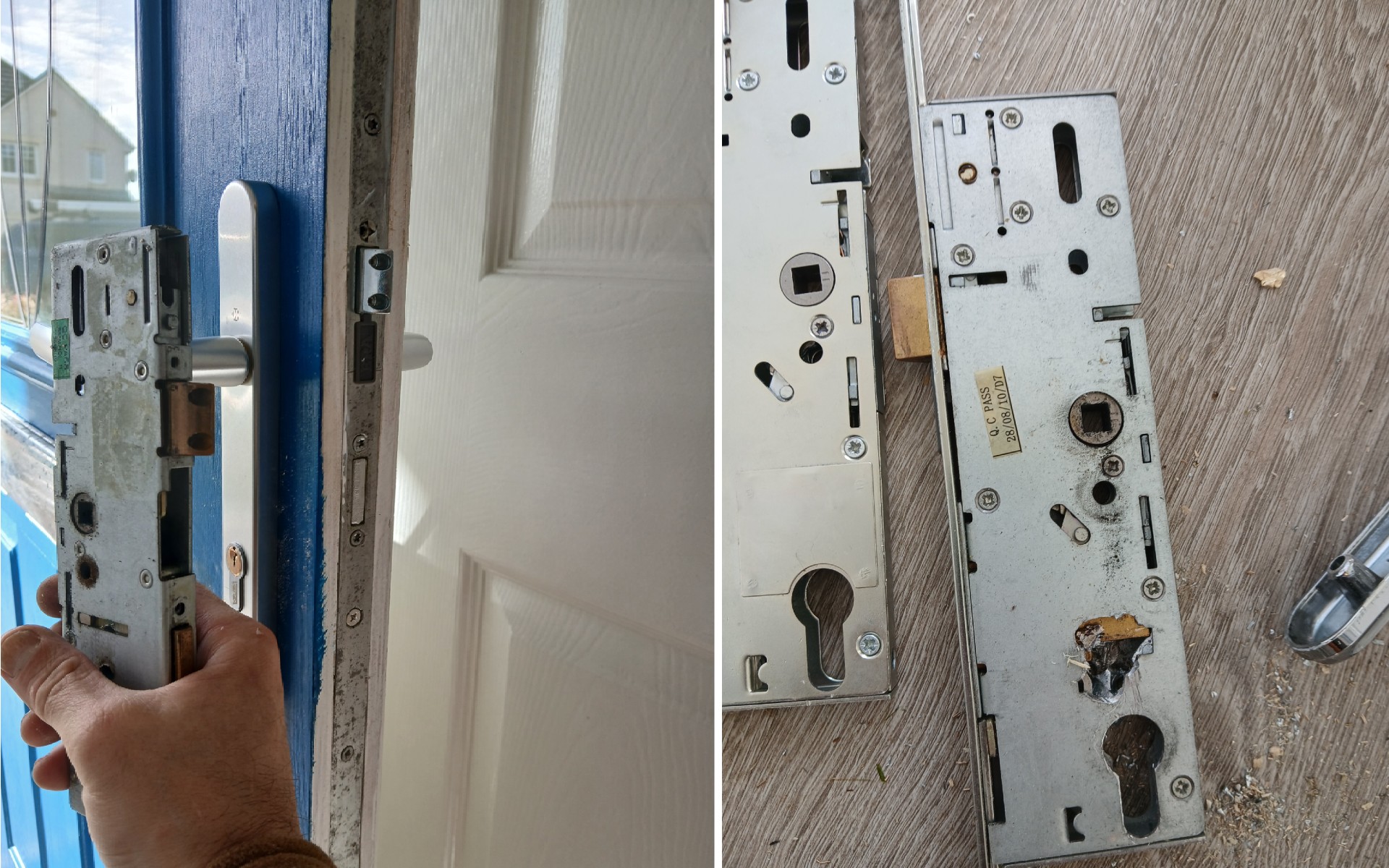
I was called to a property in Dumbarton where a composite front door had jammed shut. The key would turn, but the door wouldn't unlock. The homeowner thought that a new door might be necessary. My first priority was to identify the locking mechanism. With 18 years of experience working with uPVC and composite door locking systems, I recognised it as an ERA mechanism. Some ERA gearboxes can suffer from internal seizure. When this happens, the mechanism can jam completely, preventing the door from opening even though the key still turns. These situations require careful diagnosis because an incorrect approach can cause unnecessary damage to the door or locking system. After identifying the mechanism, I located the appropriate access point and carefully drilled through the composite door. This allowed me to manipulate the internal components and release the locking bolt without having to cut through the mechanism's locking points. After approximately 30 minutes of work, I successfully opened the door. The existing handles were broken, so I replaced them along with the lock. The new handles covered the access hole, and the new lock was fitted correctly. I then realigned the door and tested the complete locking system. The door worked perfectly, the homeowner avoided replacing the entire door, and I received a 5-star review.
Published Date: 10 October 2026
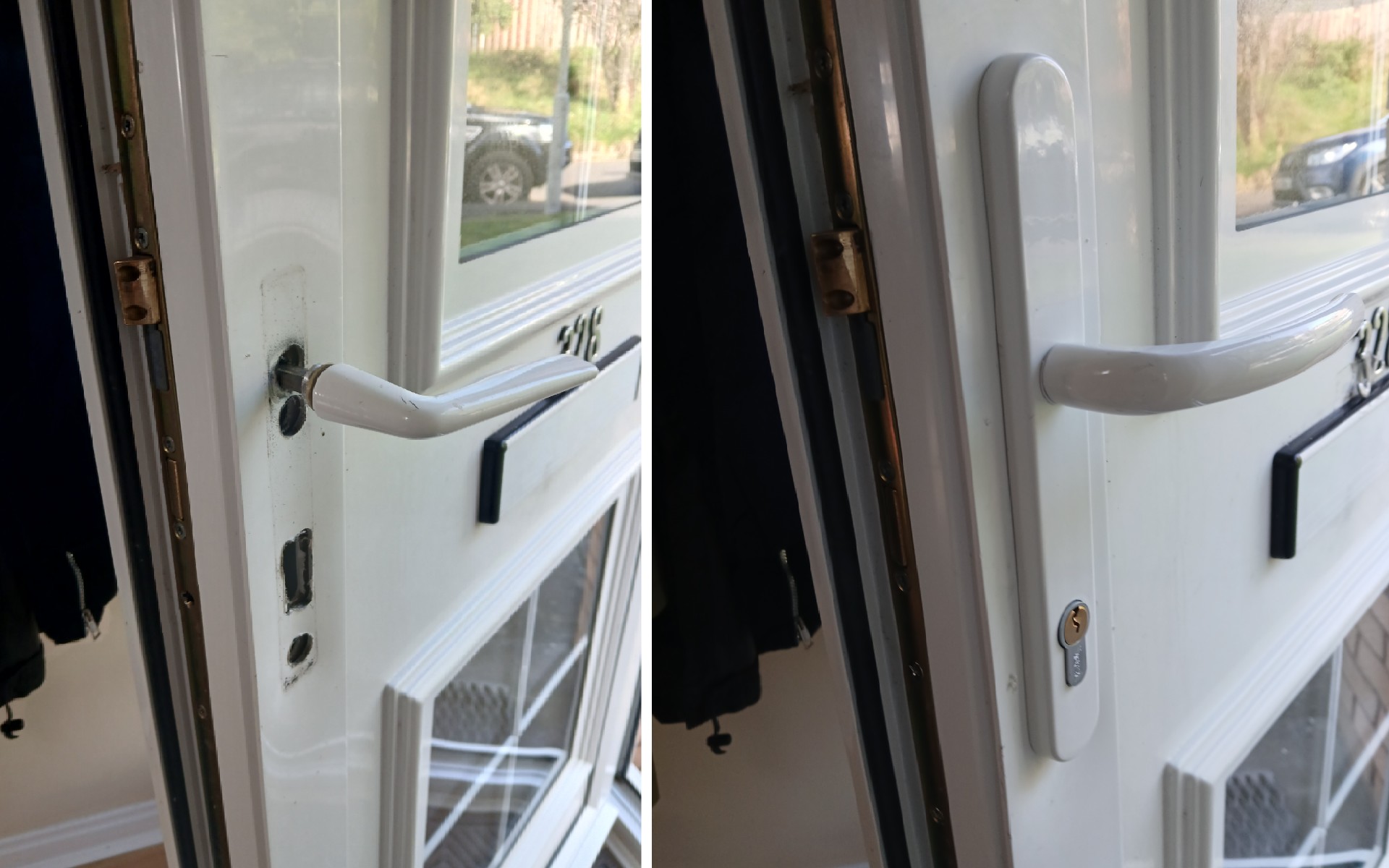
I was called to a property in Bearsden where the handles on an older uPVC door had broken. The homeowners were concerned that the age of the door and the damage might mean they needed a new door or an expensive repair. I removed the existing handles and offered up a new set. However, there was a problem: the new handles didn't cover all the marks and holes left by the original fittings. Part of the old handle position remained visible below the replacements. Rather than leave the door looking untidy, I lowered the locking mechanism by approximately 10mm and fitted the new handles in a position that covered the existing holes. The door was also badly out of alignment, so I adjusted the frame and corrected the alignment as part of the repair. Once everything was correctly positioned, the door worked perfectly. I suspected that the alignment problem was also why the original handles had broken. The homeowners had been having to pull hard on the handles to get the door to lock. Over time, that extra force had placed unnecessary strain on the handles until they eventually failed. The owners were delighted. They had expected the repair to cost considerably more, or even to involve replacing the entire door. Instead, the existing door was repaired, and they left a 5-star review.
Published Date: 9 October 2026
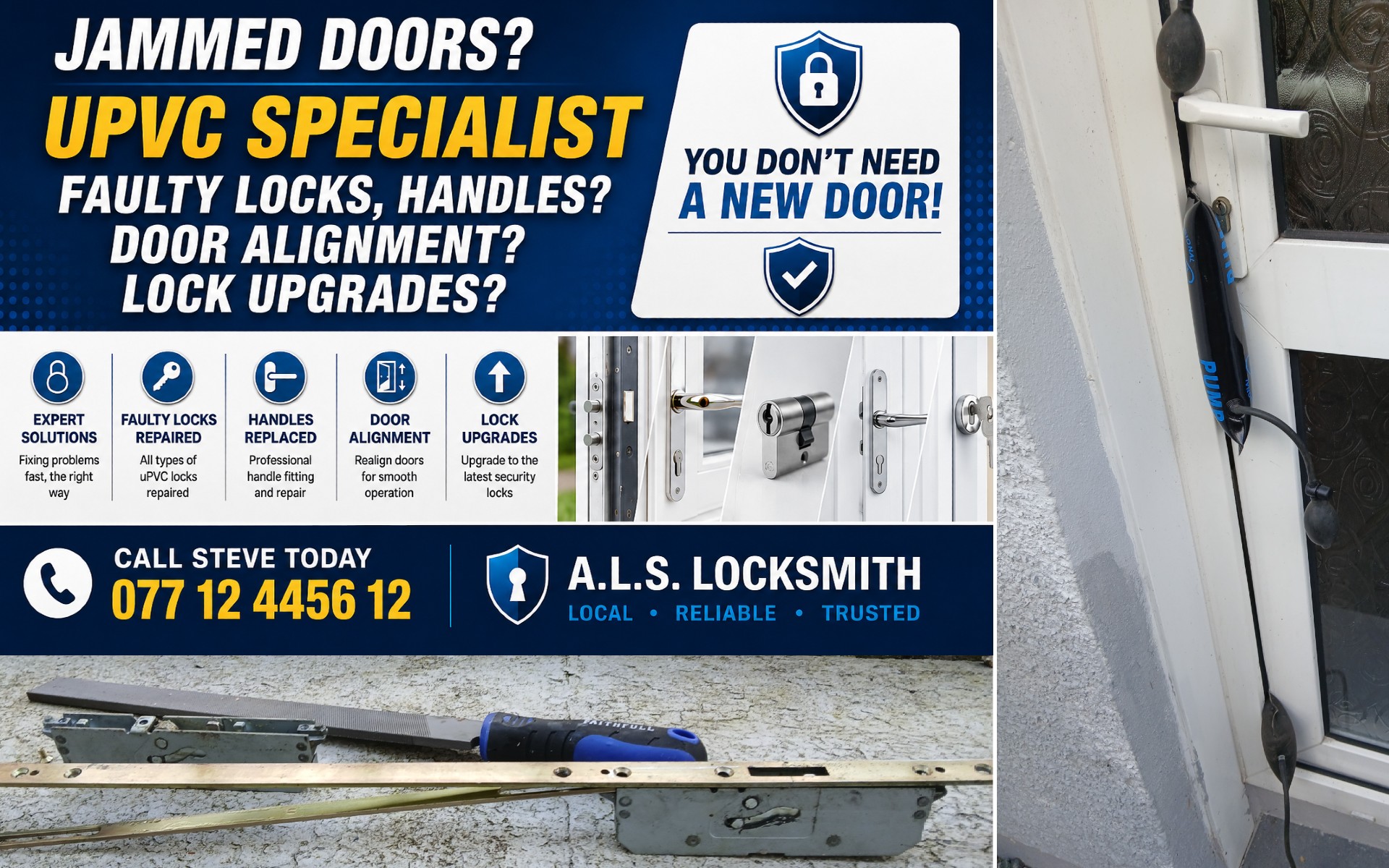
I was called to a property in Dumbarton following a referral from someone who knew about my locksmith services. The homeowner had a uPVC door that was jammed shut and was considering buying a new door because the existing one was approximately 25–30 years old. After arriving, I managed to open the door without causing any damage, although it took some work because the locking mechanism had four hooks and the bottom two were seized and would not move. With the door open, I removed the locking mechanism and dismantled it for inspection. I discovered that the metal strip beneath the faceplate had become badly distorted. Instead of sitting at a right angle so that it could engage correctly with the gearbox, it had bent to approximately 30 degrees. I carefully reshaped the strip and narrowed it slightly so that it could slide correctly into the gearbox. I then replaced the gearbox and removed the two seized hooks, cleaning and lubricating them before reassembling the mechanism. The mechanism was tested and found to be working. However, when I refitted it into the door and tested the locking operation, the door was badly out of alignment. I carried out a door alignment adjustment, fitted a new snap-resistant cylinder and tested the complete system again. The door was then working perfectly. The homeowner was able to keep the existing door rather than spend money on a complete replacement.
Published Date: 28 September 2026
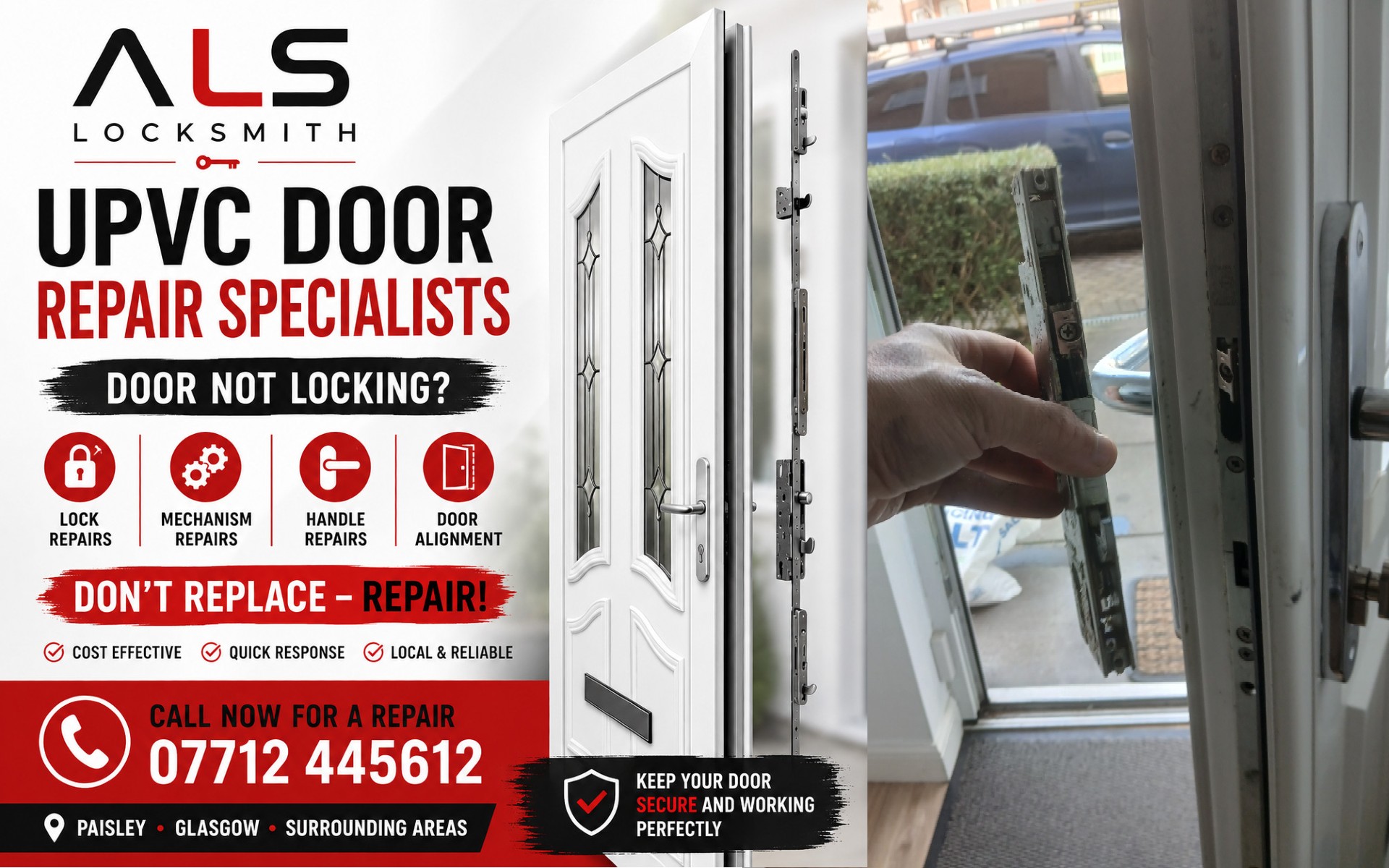
I was called out to a property on the Southside of Glasgow where a relatively young uPVC front door had jammed shut. The owner could move the handles, but they weren't operating the locking mechanism. The handles were moving without transferring movement into the mechanism itself, leaving the door unable to open normally. I gained entry using non-destructive methods, opening the door without damaging it. Once the door was open, I recognised the locking mechanism. The owner explained that the door was only around six years old, but he had already been experiencing difficulty locking it. He had to lift the handle in two separate movements to get the door to lock. That was an important clue. The particular mechanism fitted to this door can be prone to premature failure when a door hasn't been correctly set up and is operating out of alignment. In this case, the owner's description of the problem suggested that the mechanism had already been working under unnecessary resistance. After removing the mechanism, I identified a Fullex double-spindle gearbox. Fortunately, I had a suitable replacement gearbox in the vehicle. I replaced the double-spindle gearbox with a single-spindle gearbox, which was compatible with the existing handles. After reassembling the mechanism and putting it back into the door, I tested it. The gearbox was working, but the door was indeed out of alignment. I adjusted the door, tested it, made further adjustments and tested it again until the door was operating correctly. The owner then tried the door himself and was happy with the result. He subsequently left a 5-star review.
Published Date: 27 September 2026
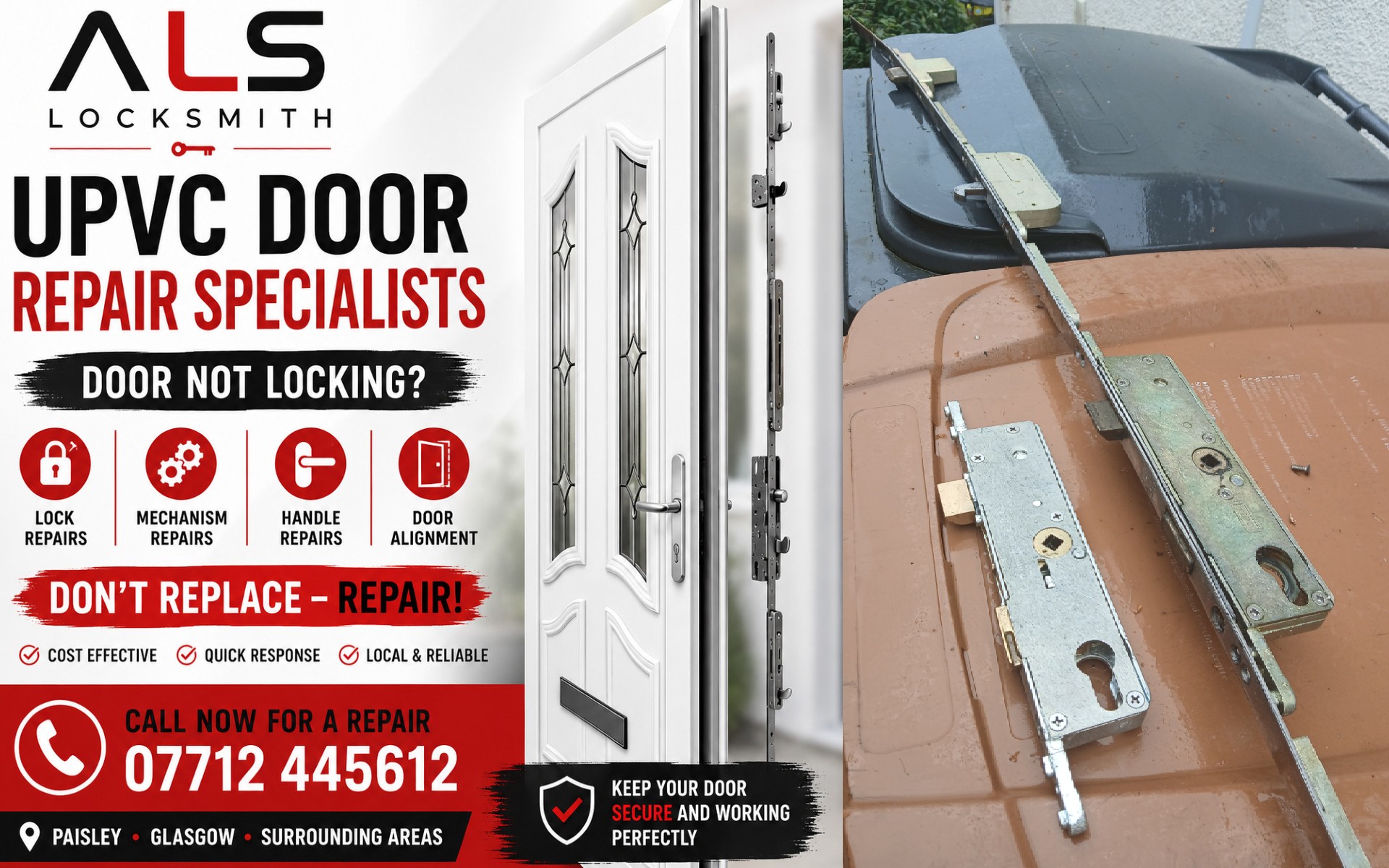
A call-out to a house in Erskine involved a uPVC front door that was shut and would not open. The homeowners had already been advised by another company that the door was too old to repair and that their only option was to replace it. Naturally, this was a concern because replacing a complete front door is considerably more expensive than repairing an individual component. After inspecting the door, I was able to open it without causing any damage. The existing handles were familiar, which allowed me to identify the type of locking mechanism before the door was opened. There were two possible versions — Type A or Type B — so the mechanism still needed to be removed to confirm exactly what was fitted. Once the locking strip was removed, the centre gearbox was taken out. A suitable replacement gearbox was already in the vehicle, so it could be replaced immediately. The mechanism was reassembled and tested before being put back into the door. A new lock was also fitted, giving the customer a new cylinder rather than relying on another old component. With everything back in the door, it worked correctly, but the door felt slightly stiff when tested closed. Rather than leaving it that way, I carried out a door alignment adjustment. Once the alignment was corrected, the uPVC door operated smoothly. The result was a 20–25-year-old uPVC door repaired rather than replaced, saving the homeowners the cost and disruption of a new door.
Published Date: 24 September 2026
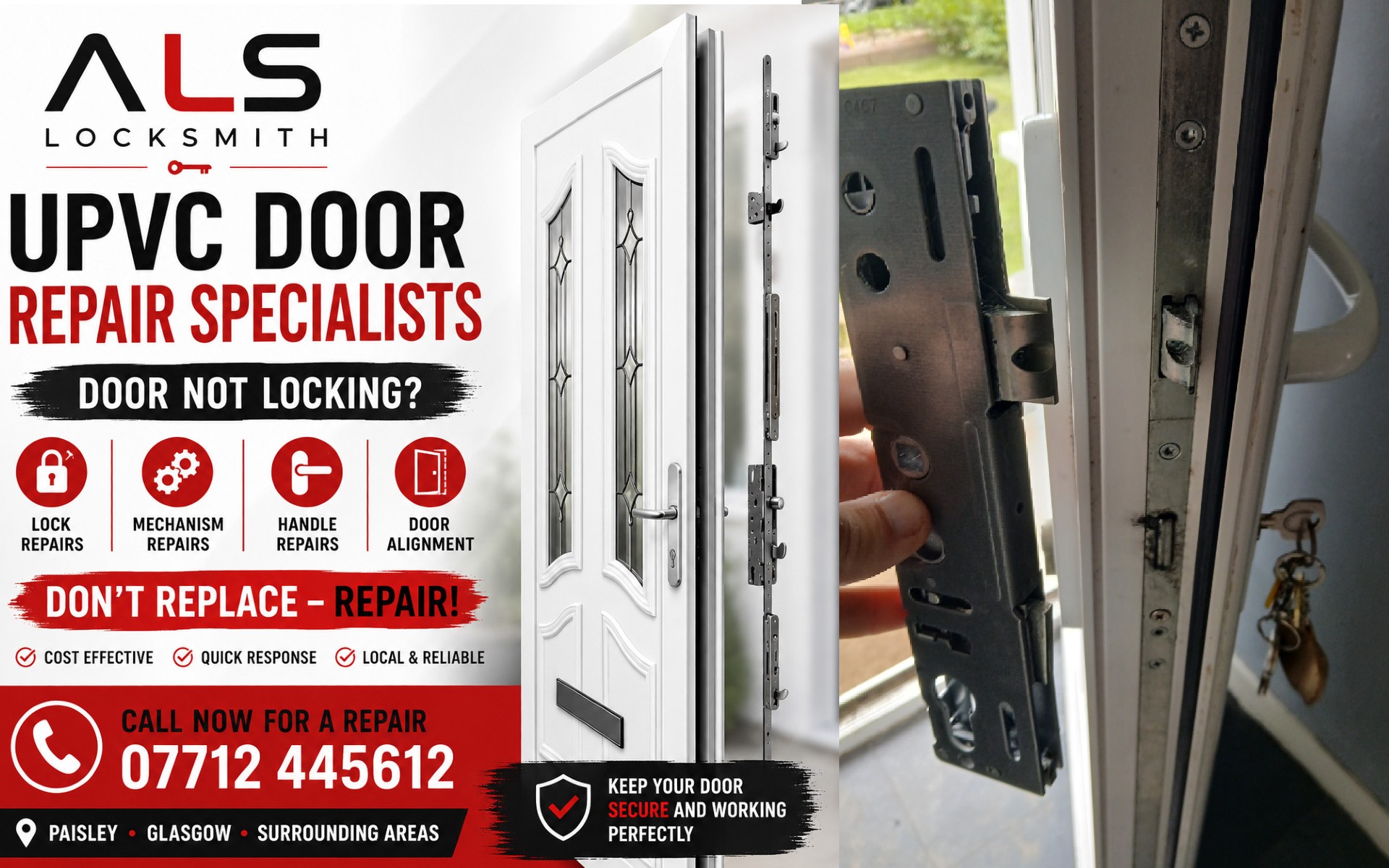
A homeowner in Paisley PA1 called A.L.S. Locksmiths after their 15-year-old composite door had jammed shut. The owners were understandably concerned that the door might need to be replaced, potentially turning a lock problem into a much more expensive job. Initial inspection showed that the handle could still be moved up and down, but the locking mechanism itself wasn't responding. The cylinder also wasn't operating the locking bolt. The door was opened without damage and the complete locking strip was removed for inspection. Once the mechanism was dismantled, the cause became clear: the Lockmaster 2-spindle gearbox had suffered a catastrophic internal failure. The internal components had effectively seized and were no longer transferring movement through the mechanism. Rather than replacing the door, the failed gearbox was replaced with a single-spindle gearbox. The mechanism was reassembled, a new snap-resistant cylinder was fitted, and the complete door was tested. The door was working correctly again, and the homeowner avoided the cost and disruption of replacing a 15-year-old composite door.
Published Date: 17 September 2026
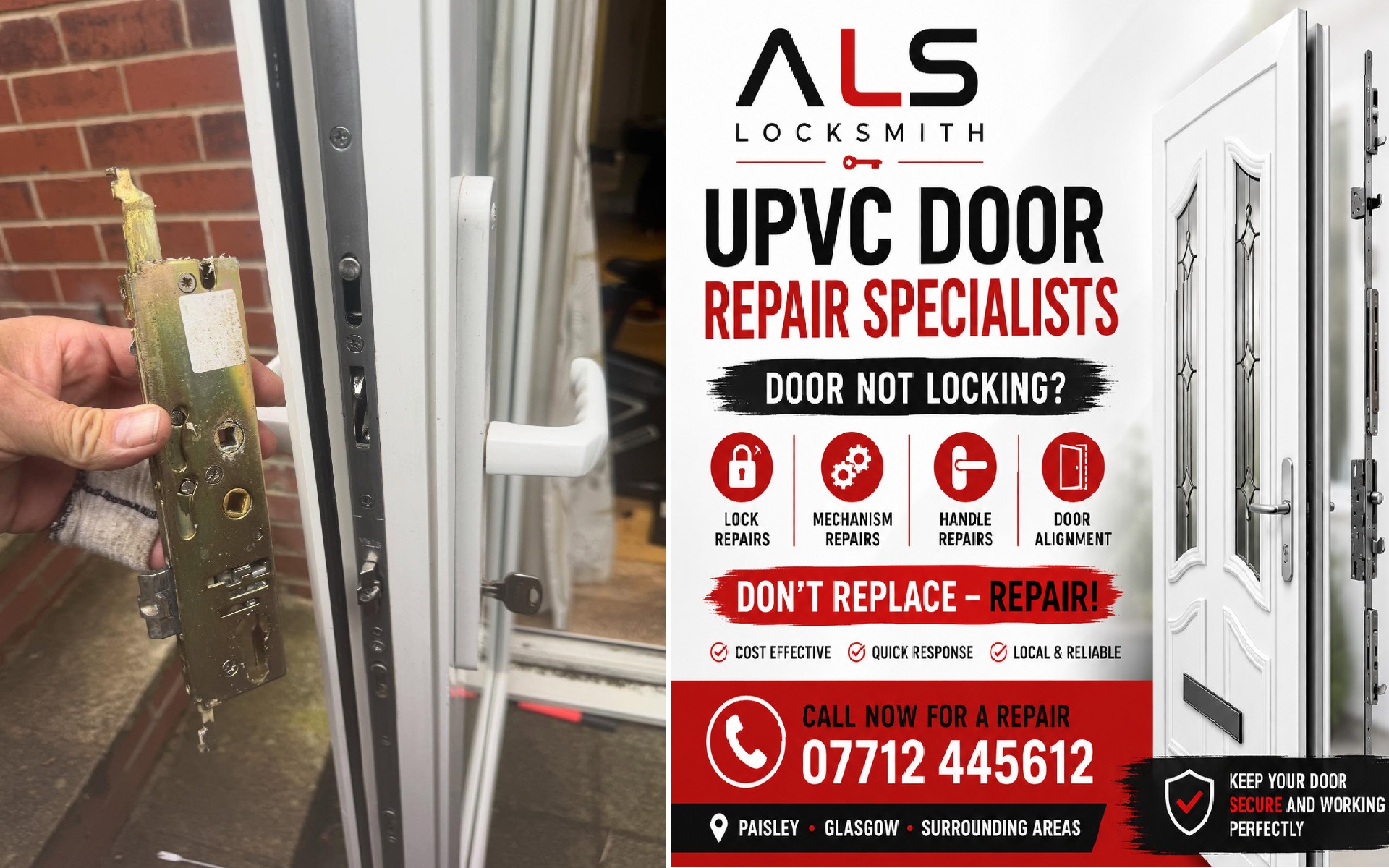
A uPVC door in Paisley was becoming difficult to lock, with the upper section of the multipoint mechanism no longer operating. When the handle was lifted, the lower section moved but the upper rollers and hooks remained stationary. The mechanism was removed and inspected, revealing a hook packed with grit and a bent gearbox link that was no longer connecting correctly to the locking strip. The hook was cleaned and serviced, while the faulty gearbox was replaced. The original latch was transferred to the replacement gearbox because the new latch did not operate smoothly with the existing keep. The sticky cylinder was also replaced with a snap-resistant cylinder, and the handle spring cassettes were lubricated, restoring the lost spring action. After reassembly, the mechanism operated correctly with the door open. A final test with the door closed revealed another issue: the locking system was operating too easily because the door wasn't compressing the weather seal correctly. Further adjustment corrected the door position and compression. The result was a door that operated properly again without the need for a new door.
Published Date: 31 August 2026
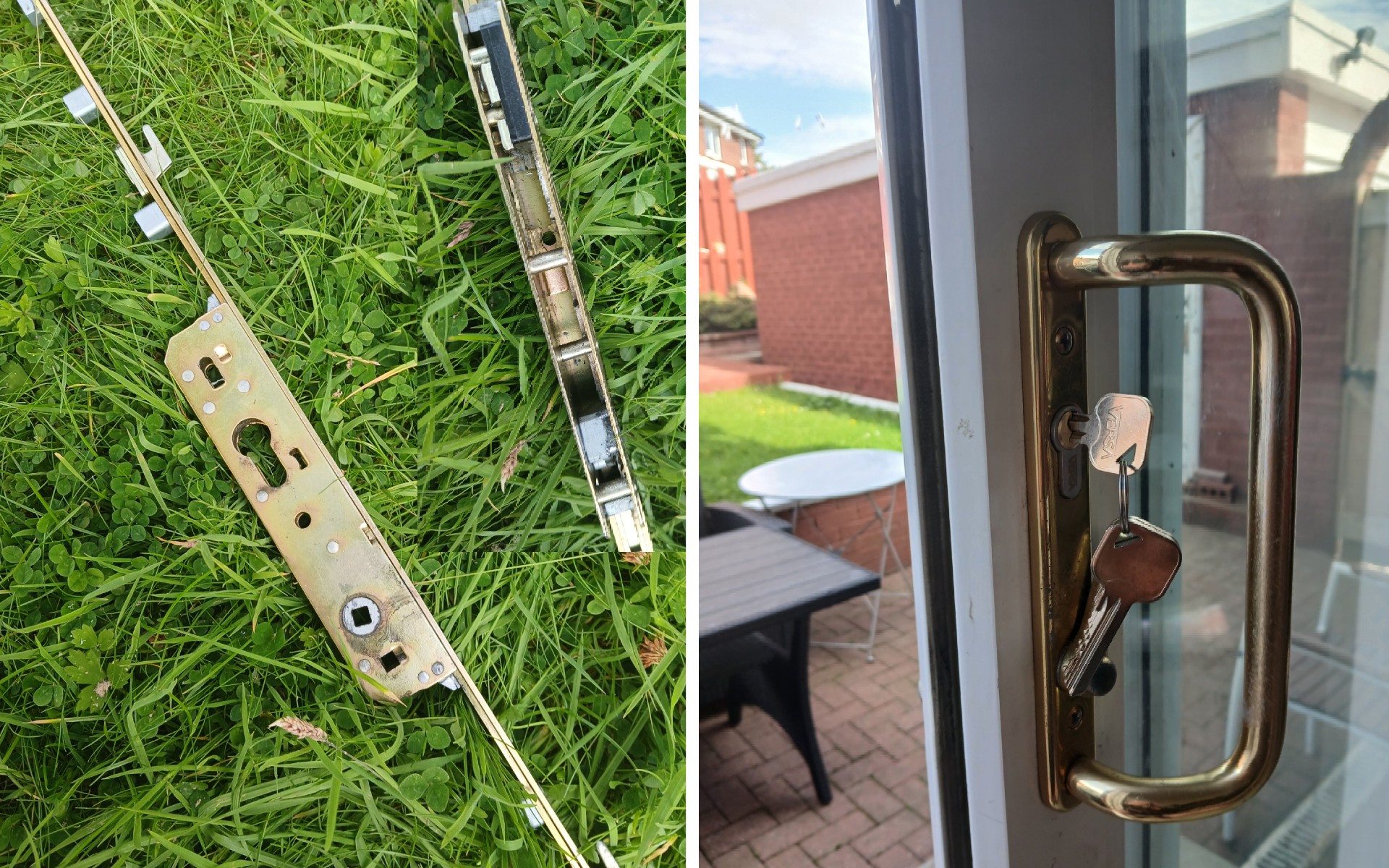
A routine lock change at a Balloch property turned into an unexpected sliding door mechanism repair. The existing lock was replaced because the homeowner's husband had dementia and had lost the key, but testing revealed that the mechanism itself wasn't operating. The paddle levers were turning freely through 360 degrees without engaging the locking system. Although sliding door repairs aren't normally undertaken, the mechanism was removed and inspected. The gearbox had an obvious internal fault: the paddle lever cam had come out of position and was no longer connected to the operating mechanism. The cam was repositioned and carefully driven back into place, restoring the connection. After replacing the spindle, handles and lock, the complete system was tested repeatedly and operated correctly. What initially appeared to be a potential door replacement became a successful repair at only a small additional cost to the homeowner.
Published Date: 6 August 2026
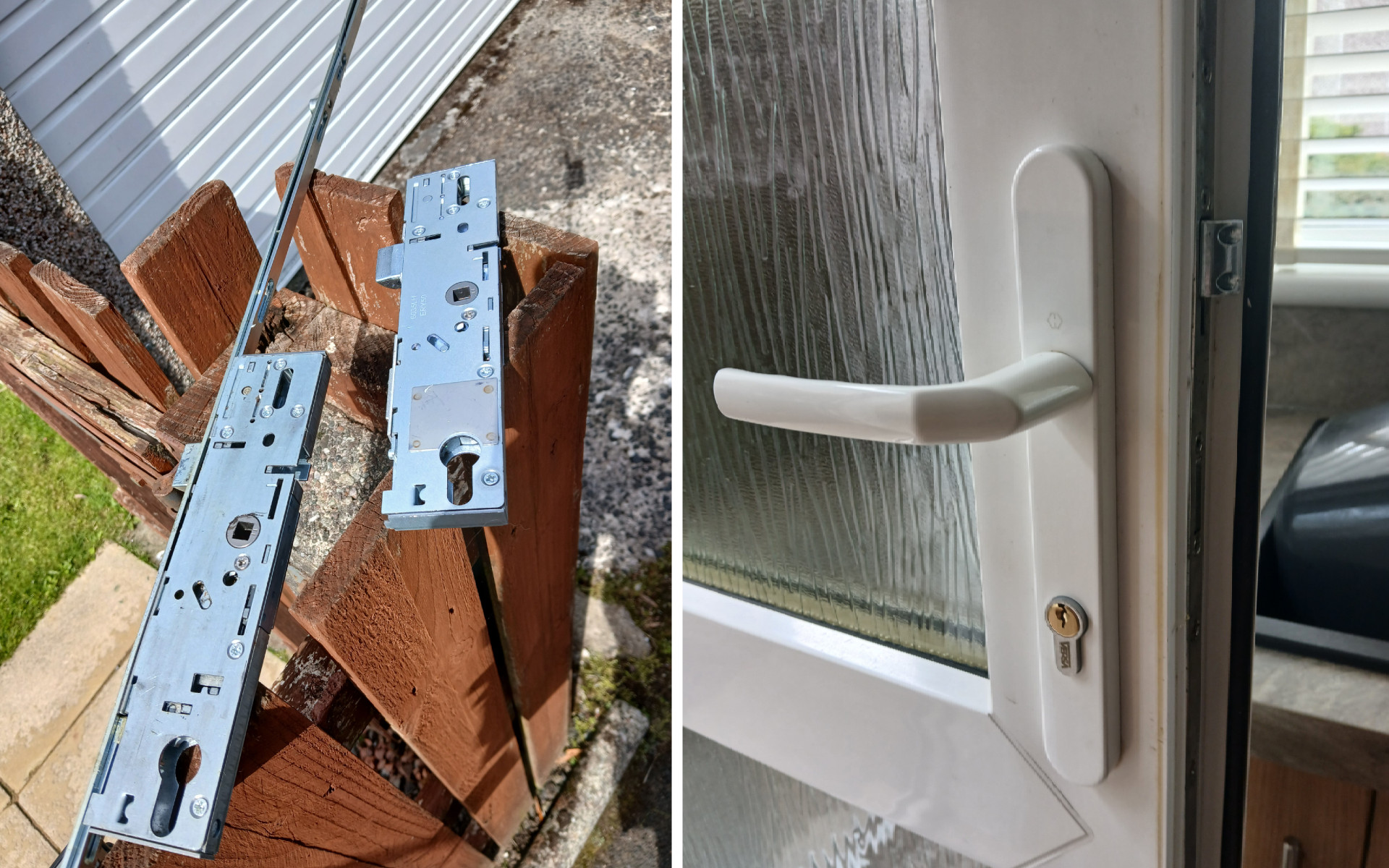
A homeowner in Bishopton was unable to lock their uPVC door after a gearbox that had been replaced less than two years earlier failed. The repair involved replacing the faulty gearbox, fitting new sprung handles and a snap-resistant cylinder, then correcting the door alignment to reduce strain on the locking mechanism. This case demonstrates why replacing a failed part alone isn't always enough and how proper alignment helps extend the life of the entire locking system.
Published Date: 4 August 2026
Modern door locks and security products are tested against recognised British and European standards, but many homeowners are unsure what these ratings actually mean. This guide explains the most common door security standards, including TS007, PAS24, BS3621, EN1303 and Secured by Design. You'll learn what each standard tests, how they differ and how they can help you choose locks and hardware that provide reliable security for your home.
Published Date: 4 August 2026
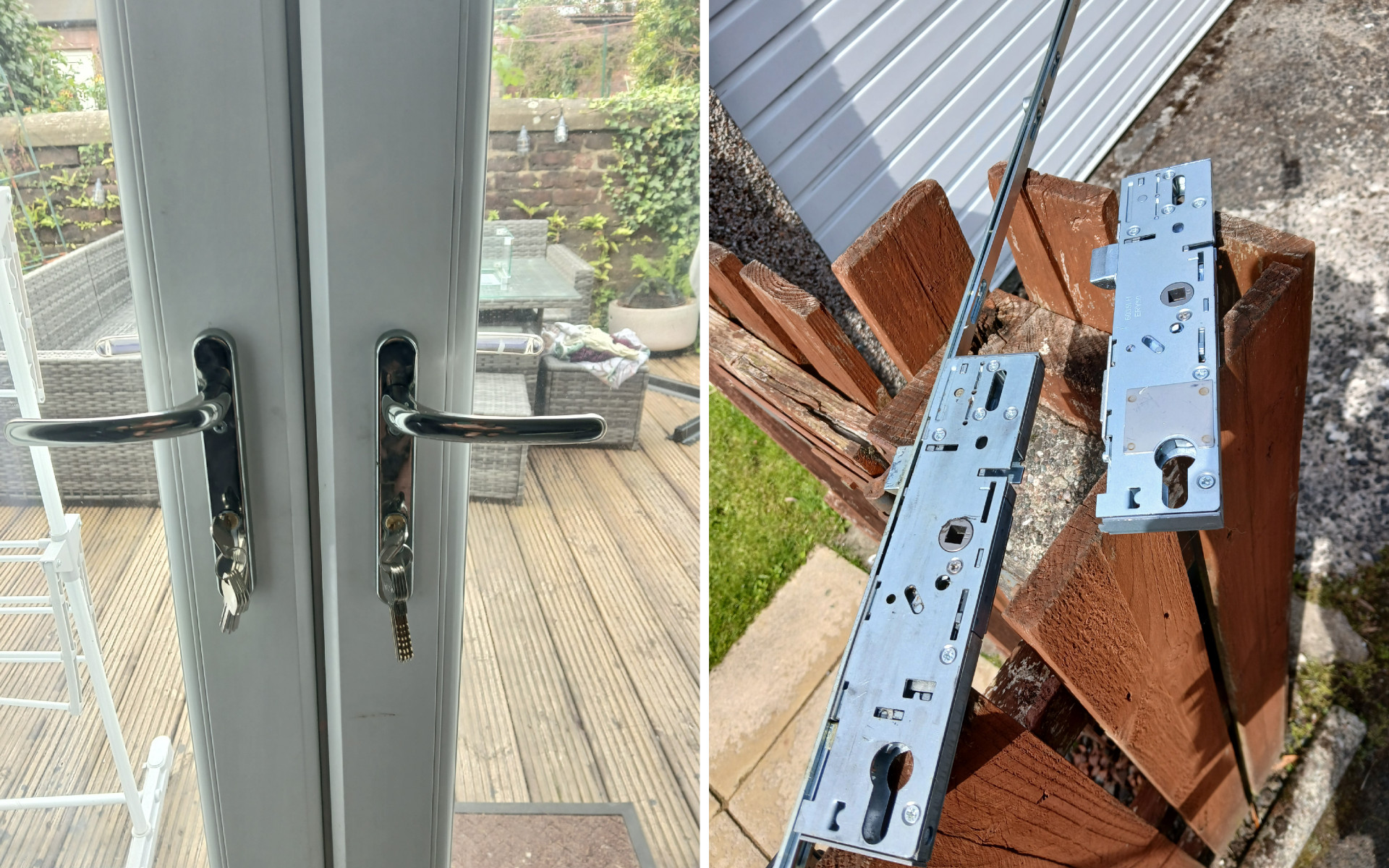
Modern uPVC and composite doors contain dozens of individual components working together to provide security, weather protection and smooth operation. This complete A–Z guide explains every major door component, what it does, how it works, the terminology used by locksmiths and manufacturers, common measurements and the faults associated with each part.
Published Date: 4 August 2026
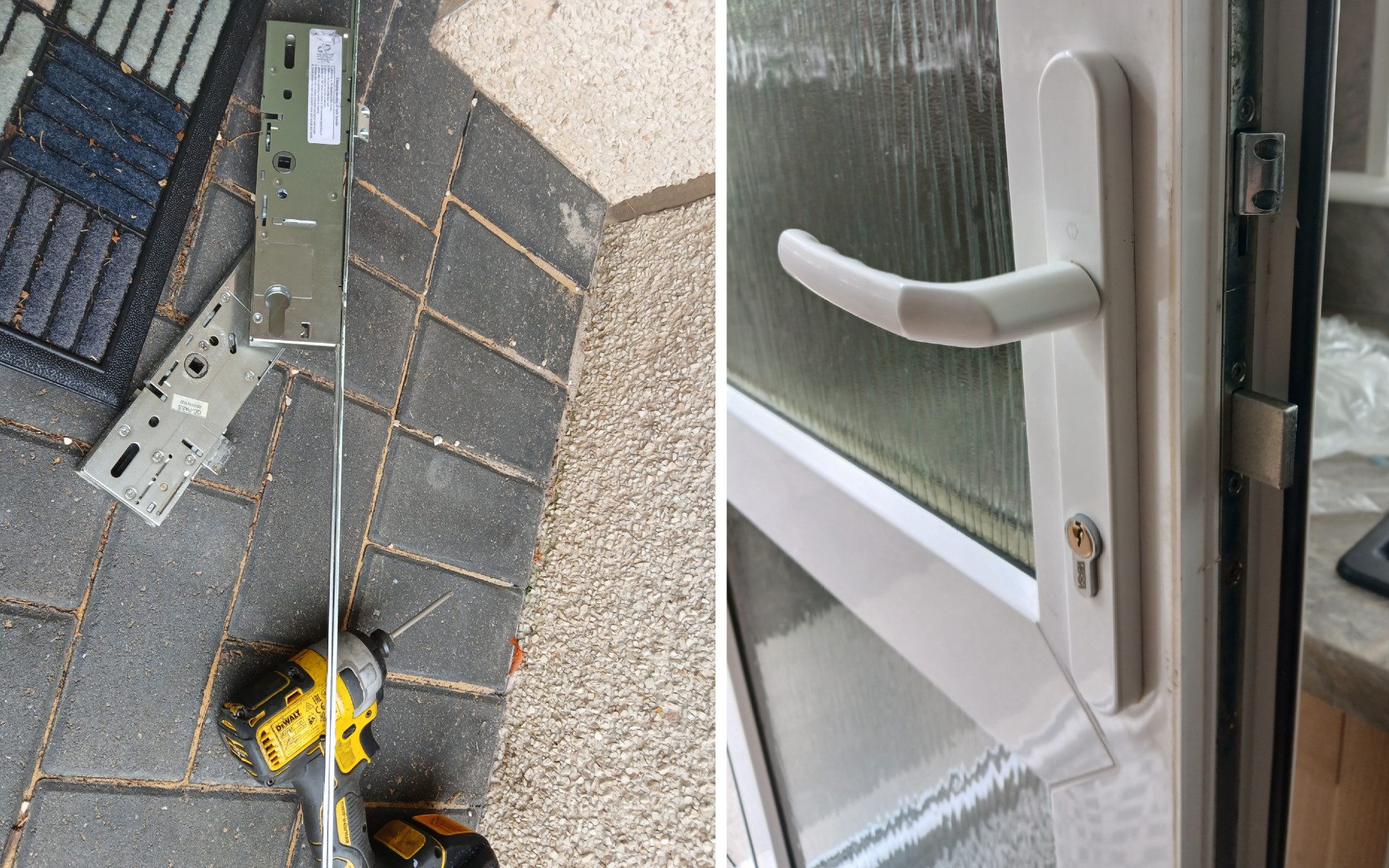
Regular maintenance is one of the simplest ways to extend the life of a uPVC or composite door. This guide explains how to clean and lubricate your door correctly, inspect hinges, locks and weather seals, recognise early signs of wear and prevent common problems such as stiff locks, dropped doors and gearbox failures. Whether your door is new or several years old, these simple maintenance checks can help keep it operating smoothly and reduce the likelihood of costly repairs.

Published Date: 4 August 2026
A secure front door relies on far more than just a good lock. This comprehensive guide explains how modern door security works, covering multipoint locking systems, anti-snap cylinders, TS007 ratings, PAS24, Secured by Design, door construction, burglary prevention and practical security upgrades. Learn how criminals assess properties, where common weaknesses exist and how to improve the security of uPVC, composite and timber doors without necessarily replacing them.
Published Date: 4 August 2026
Most uPVC and composite door faults can be repaired without replacing the entire door. This guide explains the most common repairs, including gearbox replacement, multipoint mechanism repairs, door alignment, handle replacement, lock changes, hinge repairs and upgrading obsolete locking systems. You'll learn how experienced locksmiths diagnose faults, why many doors are repaired instead of replaced and what to expect during a professional repair.
Published Date: 4 August 2026
Modern uPVC and composite doors can develop a variety of faults over time, but many different problems produce similar symptoms. This guide explains how to diagnose common door issues, including stiff locks, dropped doors, failed gearboxes, broken handles, worn cylinders and alignment problems. Rather than simply replacing parts, understanding the underlying cause helps ensure the correct repair is carried out, saving time and unnecessary expense.