Introduction
Not every lock change turns out to be just a lock change.
Sometimes replacing the cylinder or lock simply exposes a much larger problem elsewhere in the door.
That was the situation during a recent visit to a property in Balloch.
The original request was straightforward: the homeowner wanted the lock changed because her husband, who had dementia, had lost the key.
The intention was simply to remove the existing lock, install a replacement and make sure everything worked correctly.
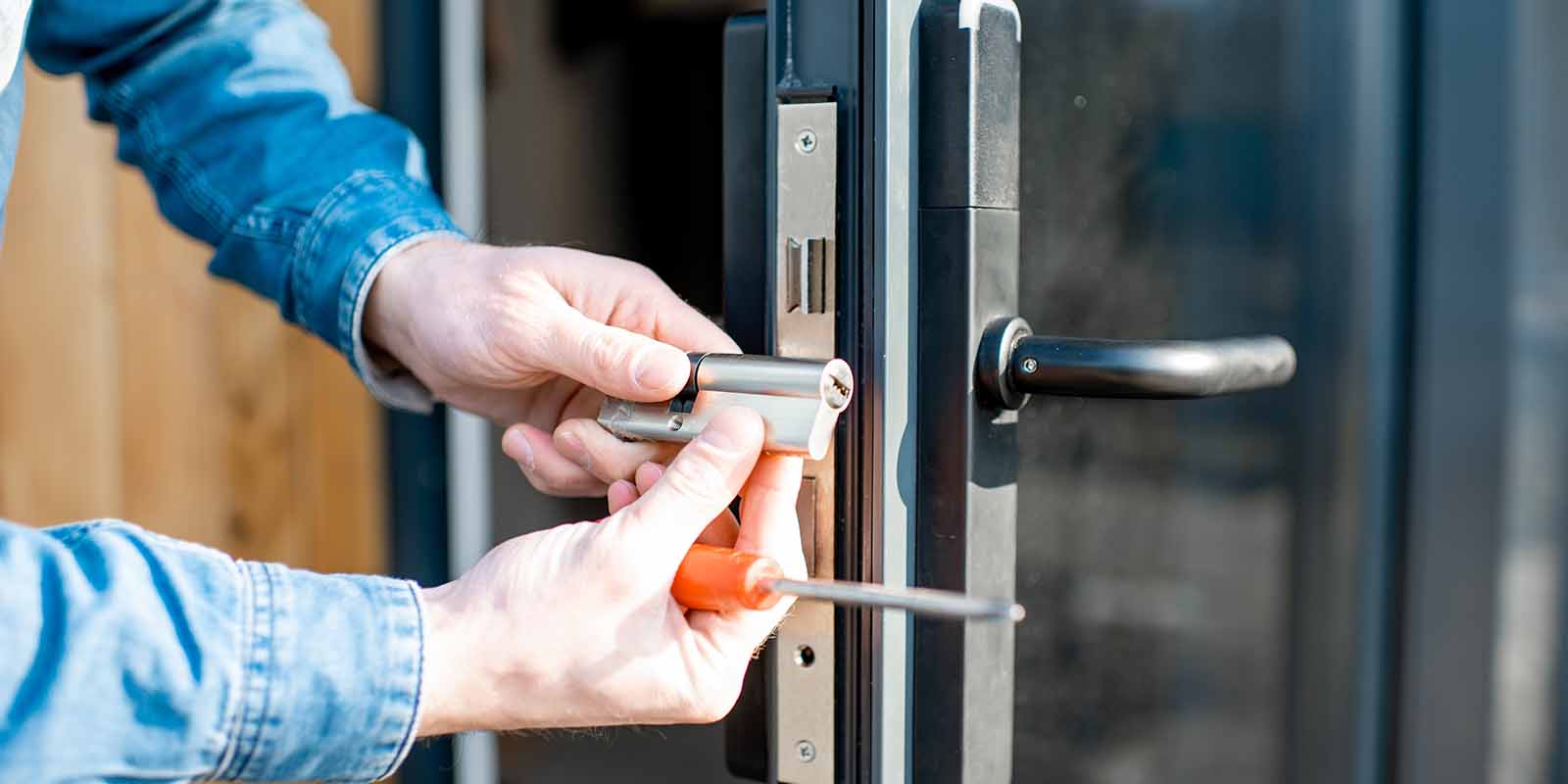
The lock itself was changed without difficulty.
However, when the door was tested, another problem immediately became apparent.
The locking mechanism wasn't operating.
The paddle levers were turning through approximately 360 degrees without actually operating anything.
At that point, it became clear that changing the lock had not solved the problem.
There was a fault within the mechanism itself.
The Initial Lock Change
The first part of the job was exactly what had been requested.
The existing lock was removed and replaced.
The new lock was fitted and tested.
But when the door was operated, the mechanism failed to respond.
The paddle levers were simply rotating freely.
Normally, operating the paddle should transfer movement into the internal gearbox or operating mechanism, which then moves the locking components.
In this case, that connection wasn't happening.
The paddle was moving, but the locking mechanism wasn't.
This distinction is important.
A door can have a perfectly good lock or cylinder but still fail to lock because the mechanism operating it has failed.
The Problem With the Paddle Levers
Inspection showed that the paddle levers could rotate through a full 360 degrees without producing the expected mechanical movement.
That immediately suggested that the problem wasn't simply the newly fitted lock.
The operating connection between the handle assembly and the mechanism had been lost.
At this point, I explained the situation to the homeowner.
The doors were at least 20 years old, and there was a genuine question over whether the mechanism could be repaired or whether the entire door might eventually require replacement.
I also explained that sliding door repairs aren't normally something I undertake.
However, the mechanism was already in front of me, and before concluding that the door was beyond economical repair, I decided to remove it and inspect it properly.
That decision turned out to be worthwhile.
Removing the Mechanism
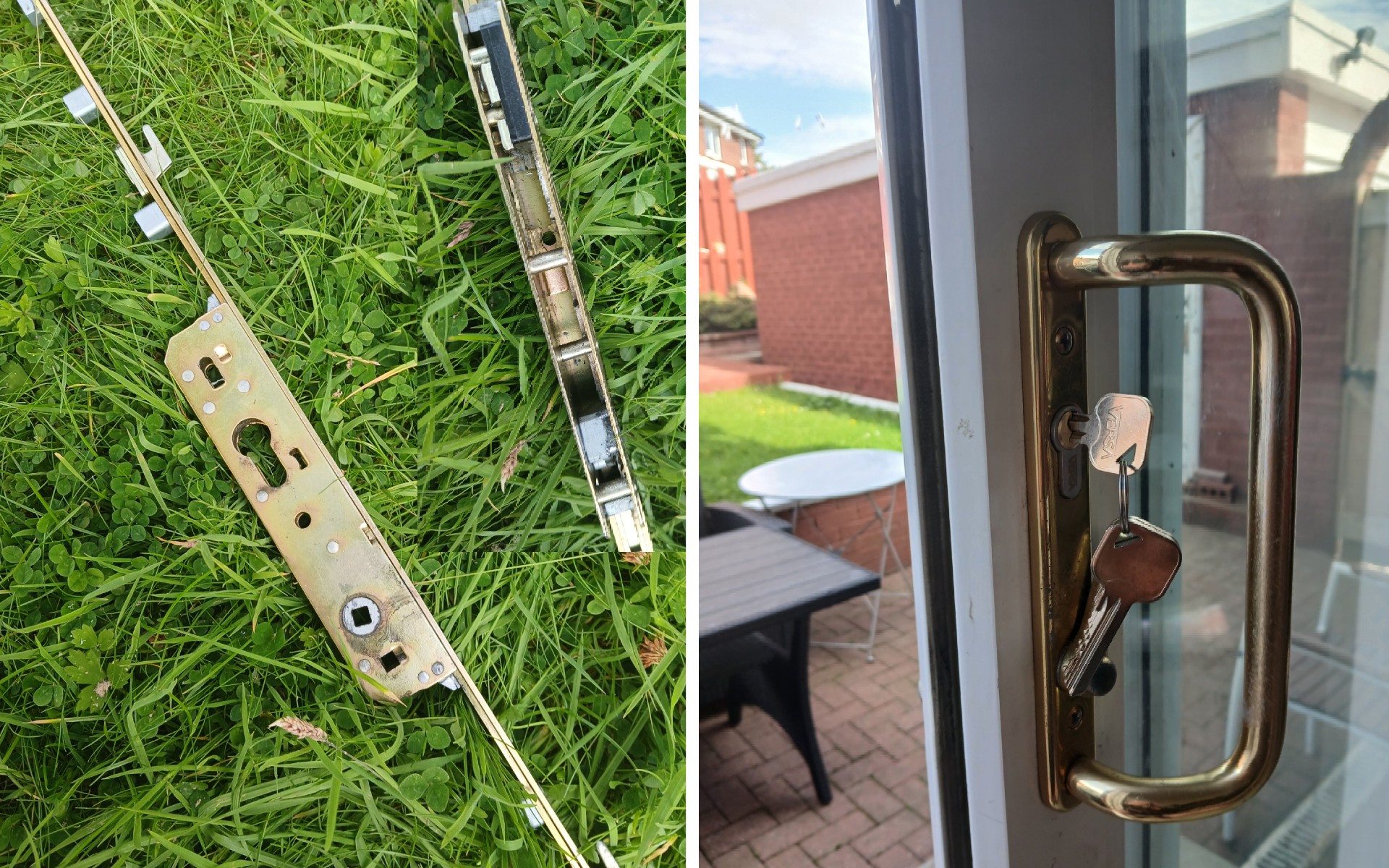
The mechanism was removed from the door so that the gearbox could be inspected directly.
This is where the fault became much clearer.
The rear of the gearbox was open, allowing the internal components to be seen.
Rather than finding a completely destroyed mechanism, there was an obvious mechanical fault that appeared capable of being rectified.
The paddle lever cam had moved out of its correct position.
Because the cam was no longer correctly positioned, the paddle lever could rotate without properly engaging with the mechanism that operated the lock.
In other words, the handle was moving, but the movement wasn't being transferred into the locking mechanism.
How the Fault Worked
The basic sequence should be:
Paddle lever
↓
Cam
↓
Operating mechanism
↓
Locking system
In this case, the connection between the cam and operating mechanism had been lost.
The paddle could therefore move freely without producing the mechanical movement required to operate the door.
This is a good example of why diagnosing the actual fault is important.
From the outside, the symptom could easily have led to the conclusion that the mechanism had completely failed.
But once the gearbox was opened, the actual problem was much more specific.
Repairing the Cam
The cam was carefully repositioned into its correct location.
Using a square punch, I was able to carefully tap the cam back into place.
The objective wasn't simply to force it back into position.
It needed to be correctly located so that it would reconnect with the operating mechanism.
Once the cam was correctly positioned, the paddle lever was tested again.
This time, the movement was being transferred correctly.
The mechanism operated.
That was a very good sign.
Testing Before Reassembly
The mechanism was tested before being put back into the door.
This is an important part of any mechanical repair.
There is little point reinstalling a mechanism and then discovering that the repair hasn't actually worked.
The repaired mechanism operated correctly.
The cam was now engaging with the operating system as it should.
The next step was therefore to reinstall everything.
Reassembling the Door
The mechanism was put back into the door.
The spindle was replaced.
The handles were refitted.
The replacement lock was fitted.
The complete assembly was then tested.
The mechanism operated.
The key turned.
The door locked.
The key was turned again and the door unlocked.
The complete sequence was repeated to make sure that the repair wasn't simply working once by chance.
Everything continued to operate correctly.
From Potential Door Replacement to a Successful Repair
The interesting part of this job was how quickly the situation could have escalated.
The original request was for a lock change.
After fitting the new lock, the mechanism appeared to have failed.
The doors were around two decades old.
Sliding door mechanisms can be difficult to source, particularly when dealing with older systems.
There was therefore a possibility that the repair could have resulted in a much larger problem involving replacement components or potentially the door itself.
Instead, inspection revealed a specific internal fault that could be corrected.
The existing mechanism was saved.
The door remained in service.
And the homeowner avoided the much greater expense and disruption associated with replacing the complete door.
Why Opening the Mechanism Made the Difference
This job demonstrates an important principle in door repairs:
The symptom isn't necessarily the fault.
The symptom was:
The paddle handles rotate without operating the lock.
That could potentially indicate a completely failed mechanism.
But it could also indicate a failure in the connection between the handle and the internal operating components.
Those are very different problems.
If the mechanism had simply been condemned without inspection, the homeowner could have been faced with unnecessary replacement costs.
Opening and inspecting the mechanism provided information that wasn't available from the outside.
Why Old Doors Shouldn't Automatically Be Replaced
Age alone doesn't necessarily mean that a door has reached the end of its useful life.
A 20-year-old door can still have a perfectly serviceable frame, door panel and locking system.
Individual mechanical components can fail while the rest of the door remains perfectly usable.
Where suitable replacement parts aren't available, repair can sometimes be an option.
The important question isn't:
"How old is the door?"
It is:
"What has actually failed, and can it realistically be repaired?"
That requires inspection.
The Importance of Mechanical Diagnosis
This job also demonstrates why replacing parts without diagnosing the fault can become expensive.
The homeowner originally needed a lock change.
The new lock was fitted correctly.
But the mechanism still didn't operate.
The lock wasn't the underlying problem.
The fault was within the operating mechanism.
Once that was identified, it was possible to deal with the actual problem rather than replacing unrelated components.
This approach is particularly important with older doors where replacement mechanisms may be difficult to source.
Not Every Repair Is a Standard Repair
This wasn't a repair I would normally advertise as a standard sliding-door service.
However, once the mechanism was removed and the internal fault became visible, there was a reasonable opportunity to repair it.
There is an important difference between:
"I normally repair this type of mechanism."
and
"I've inspected this mechanism and I can see a realistic way of repairing this particular fault."
The second situation is what happened here.
There was no guarantee that the repair would work.
But the mechanism had not simply been written off without inspection.
The fault was identified, the cam was repositioned, the mechanism was tested and it worked.
The Final Result
After the repair and complete reassembly, the door was tested repeatedly.
The paddle operated the mechanism.
The spindle operated correctly.
The handles operated correctly.
The new lock operated correctly.
The key turned smoothly.
The door locked.
The door unlocked.
Everything was functioning as it should.
Most importantly, the homeowner was extremely happy with the result.
The additional charge for the unexpected repair was kept relatively small because the repair had been straightforward once the fault had been identified.
What could potentially have become a much larger problem had instead been resolved during the original visit.
What This Job Teaches Us
There are several useful lessons from this repair.
1. A Lock Isn't the Same as a Locking Mechanism
Changing a lock doesn't necessarily resolve a problem with the mechanism operating the door.
2. Handles Can Fail Without Actually Breaking
A handle that spins freely may still be physically intact.
The problem may be the connection between the handle, cam, spindle or internal operating mechanism.
3. Older Doors Can Still Be Repairable
Age doesn't automatically mean replacement.
The condition and design of the individual components matter more than the age of the door alone.
4. Inspection Can Save Money
A mechanism that appears to have completely failed may have a specific internal fault that can be repaired.
5. Test the Complete System
Replacing one component isn't the end of the job.
The complete door needs to be tested:
Handle → mechanism → locking system → lock → key → unlock → repeat
Only then can you be confident that the repair has actually worked.
Conclusion
What started as a straightforward lock change in Balloch turned into an unexpected repair to a 20-year-old sliding door mechanism.
The new lock itself wasn't the problem.
The real fault was inside the mechanism, where the paddle lever cam had moved out of position and lost its connection with the operating mechanism. By removing the mechanism, inspecting the gearbox and carefully repositioning the cam, it was possible to restore the mechanical connection and return the door to proper operation.
The spindle, handles and lock were then refitted and the complete system was tested repeatedly. The door locked, unlocked and operated correctly.
This job is a good example of why proper diagnosis matters more than simply replacing parts.
An old mechanism isn't automatically a failed mechanism, and a door that appears to require replacement may sometimes have a relatively specific mechanical fault that can be repaired.
In this case, a little investigation turned what could have become a replacement-door problem into a successful repair—and the homeowner was delighted with the result.