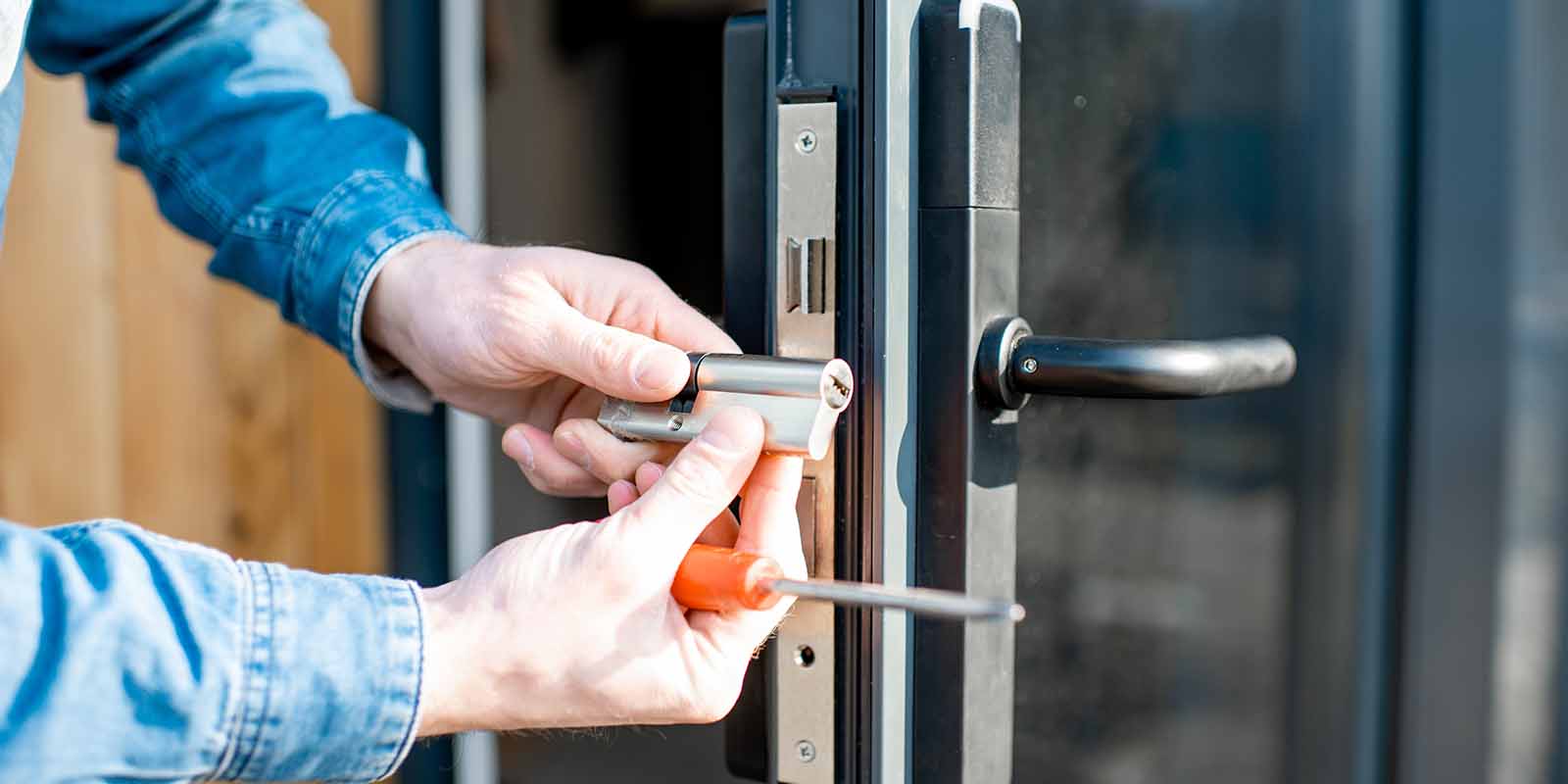

The job: upgrading a mortice lock after moving home
When moving into a new property, changing the locks is a sensible step. It gives the new homeowner greater control over who has keys and provides an opportunity to assess whether the existing security meets their requirements.
I attended a property in Glasgow's West End after the new owner requested a lock change. On inspecting the door, I found that the existing mortice lock was not up to the required BS3621 standard.
I explained the difference between the existing five-lever mortice lock and a suitable lock certified to BS3621. Following that advice, the homeowner decided to proceed with the upgrade.
The next step was to make sure the new lock could be fitted properly without unnecessarily disturbing the door's existing finish.
Why a BS3621 lock requires different preparation
A conventional five-lever mortice lock and a BS3621-compliant mortice lock can look similar in principle, but there are important differences in their construction and installation requirements.
A suitable BS3621 lock is generally wider than a basic five-lever mortice lock. Its construction can include additional security features, such as hardened anti-drill protection, depending on the model. These features help resist attacks against the lock, but they also mean that the available space inside the door must be considered carefully.
A security lock must never be forced into a mortice that is too small. If the lock body is squeezed or fitted tightly against the surrounding timber, it can bind internally or operate incorrectly. That can affect the key, the bolt movement and the long-term reliability of the installation.
In this case, the existing mortice needed to be enlarged to accommodate the new lock correctly.
Enlarging the mortice with a mortiser
I used a mortiser to enlarge the existing opening in the door. This produced a clean, accurately cut mortice approximately 19mm wide, providing the space required for the new lock body.
Using the appropriate tool helped achieve a neat result rather than forcing the new lock into the existing opening or removing timber unnecessarily.
The objective was straightforward: create enough clearance for the lock to sit correctly, while retaining the integrity of the door and ensuring the mechanism could operate freely.
This is an important part of a professional lock upgrade. The quality of the installation depends not only on the specification of the lock itself, but also on how accurately the door is prepared to receive it.
Preserving the original handle positions
There was another detail to consider. The door had previously been painted, and the handles had not been removed before painting. Instead, the paintwork had been applied around their original positions.
Moving the handles unnecessarily could have exposed unpainted timber or left visible marks where the old fittings had been.
I therefore took the existing handle positions into account during the installation. The aim was to fit the new lock while retaining the original handle arrangement and avoiding unnecessary cosmetic work.
This is a small detail, but it can make a noticeable difference to the finished job. A lock change should leave the door secure and functional without creating avoidable repairs to the surrounding paintwork.
Modifying the frame and lock keep
Once the mortice had been prepared, I inserted the new lock, fitted the handles and marked the corresponding position on the door frame.
The keep receiver in a BS3621 lock installation is more substantial than that found with many basic five-lever mortice locks. Consequently, the existing frame opening and keep position needed to be amended to suit the new lock.
I adjusted the frame and positioned the keep correctly so that the door could close and the key could turn smoothly when the door was shut.
This stage is particularly important because a lock can operate perfectly well while the door is open, yet struggle once the door is closed. The reason is often that the bolt is meeting resistance from the keep or that the door and frame are not correctly aligned.
If the bolt rubs or grinds against the keep every time the key is turned, the lock is working under unnecessary strain. Over time, that resistance can contribute to premature wear or failure.
Correct alignment is part of the lock installation, not an optional finishing touch.
The lock, door, frame and keep need to work together. A quality lock cannot deliver reliable everyday operation if the surrounding door furniture and frame prevent its bolts from moving freely.
Testing the lock and handing over the keys
After completing the fitting and adjustments, I checked the operation of the lock with the door closed. The key needed to turn easily, without grinding or unnecessary resistance against the keep.
I supplied the lock with two keys and explained how to operate it correctly. I also discussed what the homeowner should look out for when having additional keys cut in the future.
Spare keys should be cut from a suitable original or authorised key blank, where applicable, and the homeowner should use a reputable key cutter familiar with the particular lock. A poorly cut key can cause stiff operation and may be mistaken for a fault with the lock itself.
It is also worth paying attention to changes in operation. If the key begins to feel unusually stiff, or the lock works smoothly with the door open but becomes difficult when closed, the door alignment and keep position should be checked rather than repeatedly forcing the key.
Why professional lock fitting matters
This installation involved several separate tasks:
-
Assessing the existing lock and explaining the BS3621 upgrade.
-
Enlarging the mortice to accommodate the wider lock body.
-
Preserving the original handle positions to protect the painted finish.
-
Modifying the frame and keep receiver to suit the new lock.
-
Checking that the key and bolt operated smoothly with the door closed.
-
Supplying two keys and explaining correct use and future key cutting.
Each step contributed to the finished result. Simply installing a higher-specification lock would not have been enough if the lock body had been forced into the mortice or its bolts had been grinding against the frame.
A well-fitted lock should provide the intended security while remaining practical to use every day.
Conclusion
This Glasgow West End job began as a straightforward request for a lock change after a house purchase. However, inspection revealed that the existing mortice lock did not meet the BS3621 standard, giving the homeowner the opportunity to improve the property's security.
The upgrade required careful mortice preparation, attention to the existing painted finish and accurate adjustment of the door frame and keep. By addressing these details, the new lock could be fitted correctly rather than simply substituted for the old one.
At A.L.S. Locksmiths, the principle is simple: the right lock needs to be fitted properly and work with the door, not against it. Good diagnosis and careful installation help avoid unnecessary problems and give the homeowner a more reliable result.
For more information about changing locks after moving home, visit our change your house locks..