A uPVC Door That Had Already Been Declared Too Old to Repair
When I was called out to this property in Erskine, the front door was shut and wouldn't open.
The homeowners had already contacted another company and had been told that the uPVC door was simply too old and that the only option was to replace the entire door.
This is understandably concerning for a homeowner.
A problem with a lock or multipoint mechanism can sometimes sound much more serious than it actually is, particularly when the door is several decades old.
But the age of a uPVC door doesn't automatically mean that it needs to be replaced.
The first thing to establish is what has actually failed.
In this case, the door itself was still perfectly serviceable.
The problem was within the locking mechanism.
Recognising the Mechanism Before Opening the Door
One advantage of having experience with older uPVC door locking systems is that the handles can provide useful clues about the mechanism fitted inside the door.
I recognised the handles on this particular door before opening it.
That allowed me to narrow down which mechanism I was likely dealing with.
There were two possible versions — Type A or Type B — so the mechanism still needed to be removed to identify the exact version.
This sort of identification is particularly useful when dealing with an older door.
Older uPVC doors can contain locking systems that are no longer commonly encountered on newer installations, so identifying the mechanism correctly is important before selecting replacement parts.
Opening the uPVC Door Without Damage
The first priority was to get the homeowners back into their property without damaging the door.
The uPVC door was successfully opened without causing damage.
Once it was open, the locking strip could be removed and the mechanism inspected properly.
This is an important part of any locking problem.
It is very difficult to accurately diagnose every mechanical failure simply by looking at the handle or trying the key.
Once the mechanism is removed, the individual components can be inspected and the actual failed part identified.
Removing the Centre Gearbox
After removing the mechanism, I was able to access the centre gearbox.
The gearbox was the component that had failed and needed replacing.
Fortunately, I had a suitable replacement gearbox in the vehicle.
I always carry a selection of replacement parts and commonly required components because it isn't practical to carry every mechanism ever manufactured, but having suitable parts available can allow a repair to be completed during the original visit.
The old centre gearbox was removed and the replacement fitted.
The mechanism was then reassembled and tested.
The Mechanism Was Around 20–25 Years Old
The locking mechanism and door were approximately 20–25 years old.
That is certainly an older uPVC door system, but age doesn't automatically make a mechanism beyond repair.
In this case, the complete locking mechanism did not need to be replaced.
The failed centre gearbox was the component that required attention.
Once the replacement gearbox was installed, the mechanism operated correctly.
This is a good example of why it is important to distinguish between:
an old door
and
a door that has actually failed.
They aren't necessarily the same thing.
Reassembling the Door and Fitting a New Lock
Once the replacement gearbox had been tested, the mechanism was put back into the uPVC door.
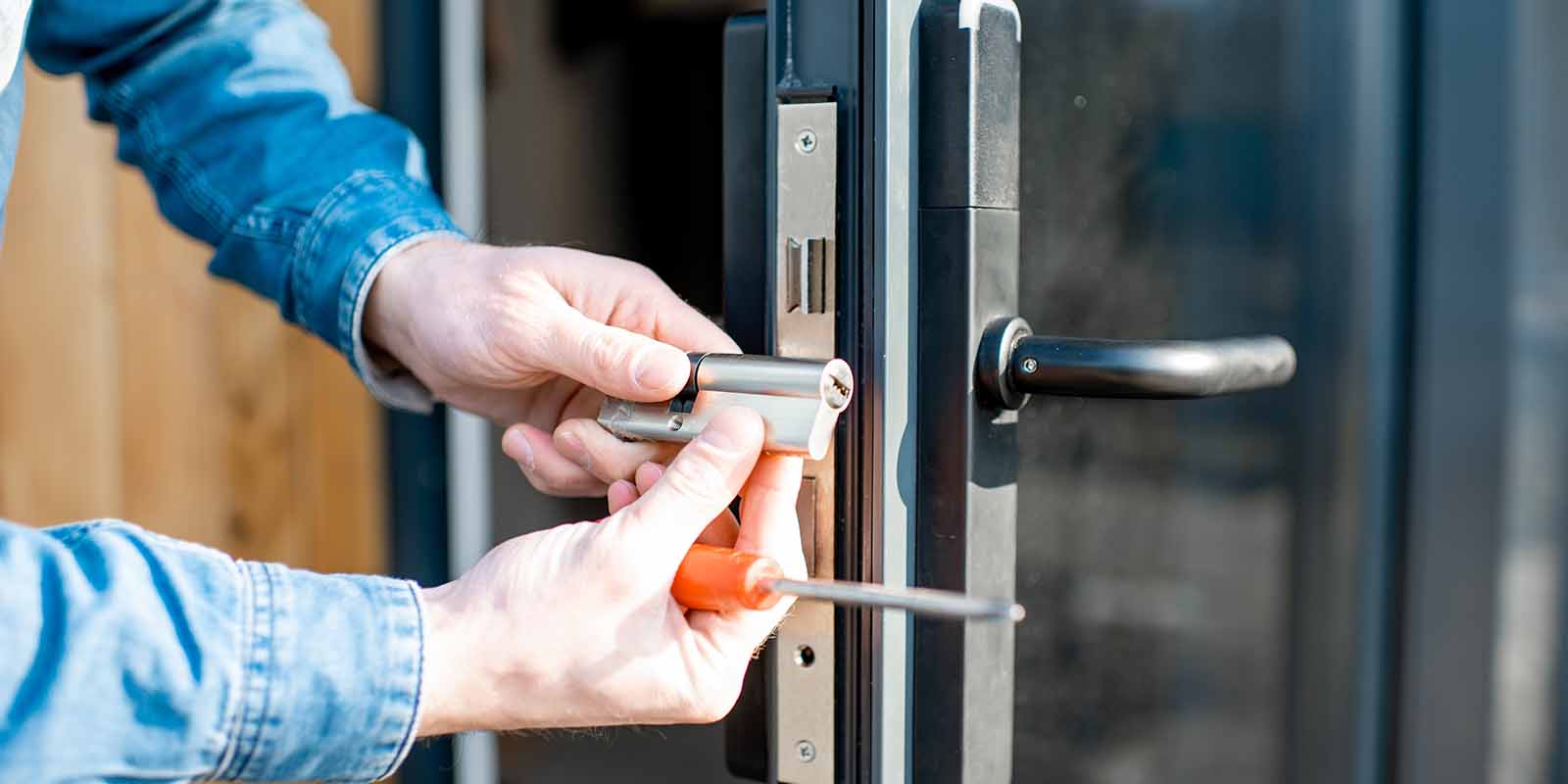
I also fitted a new lock cylinder.
There is a practical reason for doing this at the same time.
The gearbox had already failed, and the existing lock was another older component within the same locking system.
Replacing it meant the homeowner wasn't being left with an old cylinder that could potentially fail shortly afterwards.
If the old cylinder had failed in the coming months, the customer could have ended up paying for another call-out and another repair.
Replacing it during the original job gives the homeowner greater peace of mind and means the principal components of the locking system have now been renewed.
Testing the Door Open and Closed
After reassembly, the door was tested.
It worked.
However, I don't consider a uPVC door repair complete simply because the mechanism works with the door open.
The door also needs to be tested in its normal operating position.
When the door was closed and tested, it operated, but it felt slightly stiff.
That suggested there was another issue that needed addressing.
The gearbox had been replaced successfully, but the door itself wasn't quite operating as freely as it should.
Door Alignment Was Still Required
The next step was to check the alignment of the door.
This is something that is often overlooked.
A uPVC door can move over time.
The weight of the door, movement around the hinges and changes within the building can all affect its position.
Even relatively small changes can alter the relationship between the locking points and the keeps fitted into the frame.
When this happens, the mechanism may have to work harder to operate.
That can eventually contribute to:
- Stiff handles
- Difficult locking
- Stiff keys
- Locking points catching
- Handles requiring excessive force
- A door that needs lifting to lock
- Premature wear to the gearbox
In this case, I carried out a door alignment adjustment.
Once the alignment was corrected, the door operated much better.
Why Alignment Matters After a Gearbox Repair
Replacing a failed gearbox without checking the door alignment can leave part of the original problem unresolved.
A new gearbox may be perfectly good, but if the locking points are fighting against the keeps, the mechanism will still be under unnecessary strain.
The complete system needs to work together:
Handle → Spindle → Gearbox → Multipoint Mechanism → Locking Points → Keeps → Frame
If the door has moved out of position, all of those components can be affected.
That is why I always test the door properly after carrying out a mechanism or gearbox repair.
In this case, the final alignment adjustment made the difference between a door that technically worked and one that worked properly.
A 20–25-Year-Old uPVC Door Working Properly Again
Once the gearbox had been replaced, the new lock fitted and the door realigned, the uPVC door was operating correctly.
The entire door didn't need to be replaced.
The homeowners were able to keep their existing 20–25-year-old uPVC door and have the actual mechanical fault repaired.
This saved them the expense and disruption associated with replacing the complete door.
It also demonstrates an important point:
An old uPVC door isn't necessarily an obsolete or unusable uPVC door.
If the frame, door and other components are still serviceable, replacing the failed component can often restore the door to proper operation.
What This Erskine uPVC Door Repair Shows
1. Age doesn't automatically mean replacement
A uPVC door that is 20–25 years old can still be repairable.
2. The actual fault needs to be identified
In this case, the problem was the centre gearbox rather than the entire door.
3. Handles can help identify older mechanisms
Recognising the existing handles helped identify the likely mechanism before the door was opened.
4. Replacement parts can extend the life of an older door
The existing mechanism could remain in service after the failed gearbox was replaced.
5. A new lock can provide additional peace of mind
Replacing the old cylinder at the same time reduced the likelihood of the customer needing another visit for an ageing lock component shortly afterwards.
6. Always test the door closed
A mechanism can work when the door is open but become stiff when the locking points engage with the keeps.
7. Alignment is part of the repair
The final alignment adjustment allowed the repaired mechanism to operate correctly without unnecessary resistance.
Repair Rather Than Replace
This Erskine job is a good example of why diagnosis should come before replacement.
The homeowners had been told that their 20–25-year-old uPVC door was too old and that replacing the entire door was their only option.
But the door itself wasn't the problem.
The centre gearbox had failed.
Once the failed gearbox was replaced, the mechanism was working again. A new lock was fitted, the door was tested and the slight stiffness was traced to alignment rather than another failed component.
The door was then realigned and tested again.
The result was a 20–25-year-old uPVC door working properly again without the need for a new door.
For the homeowner, that meant avoiding the considerable cost and disruption of replacing a complete front door when a relatively small number of components were actually responsible for the problem.
Sometimes an old door doesn't need replacing — it just needs the right part repaired or replaced and the door set up correctly.