Contents
- What Is a Door Locking System?
- Why Modern Doors Use Multipoint Locks
- Parts of a Multipoint Lock
- How a Multipoint Lock Works
- Lift-to-Lock Systems
- Automatic Locking Systems
- Euro Cylinder Locking Systems
- Mortice Locking Systems
- The ERA Vectis Explained
- Locking Points Explained
- Gearboxes
- Handles & Spindles
- Keeps
- Split Spindle Systems
- Lever/Pad Systems
- Smart Locks
- Common Locking System Faults
- Repair or Replace?
- Frequently Asked Questions
- Conclusion
Introduction
The locking system is the heart of every modern external door.
While many homeowners refer to it simply as "the lock", the reality is very different. A modern locking system is a collection of precisely engineered components working together to secure the door, compress the weather seals and protect the property against forced entry.
Unlike traditional timber doors that often relied on a single mortice lock, many modern uPVC and composite doors use multipoint locking systems that secure the door at several positions simultaneously.
Every time you lift the handle or turn the key, multiple components operate together in a carefully designed sequence.
Understanding how these systems work not only helps explain why they occasionally fail, but also why many faults can be repaired without replacing the entire door.
What Is a Door Locking System?
A door locking system is the complete collection of components responsible for securing a door to its frame.
It includes considerably more than the cylinder or key-operated lock.
A typical modern locking system can include:
- Multipoint locking mechanism
- Gearbox
- Locking points
- Latch
- Deadbolt
- Hooks
- Rollers
- Mushroom cams
- Shoot bolts
- Euro cylinder
- Handles
- Spindle
- Keeps
- Hinges
- Faceplate
- Drive rails
- Fixings
Every component has a job, and the components have to work together correctly.
For example, a gearbox may be mechanically sound, but if the door has dropped and the locking points are pressing against the keeps, the gearbox can still become difficult to operate.
This is why diagnosing the complete locking system is important rather than simply replacing the component that appears to have failed.
Why Modern Doors Use Multipoint Locks
Older timber doors commonly relied on a single central locking point.
Modern uPVC and composite doors generally use several locking points distributed along the height of the door.
These can include:
- Hooks
- Rollers
- Mushroom cams
- Deadbolts
- Shoot bolts
The purpose is not simply to create more places for the door to lock.
A multipoint system also helps distribute the forces acting on the door and improves the compression of the weather seals.
When the handle is lifted, several locking points can engage with the keeps positioned around the frame. When correctly aligned, the result is a secure door with consistent compression and relatively little operating effort.
Parts of a Multipoint Lock
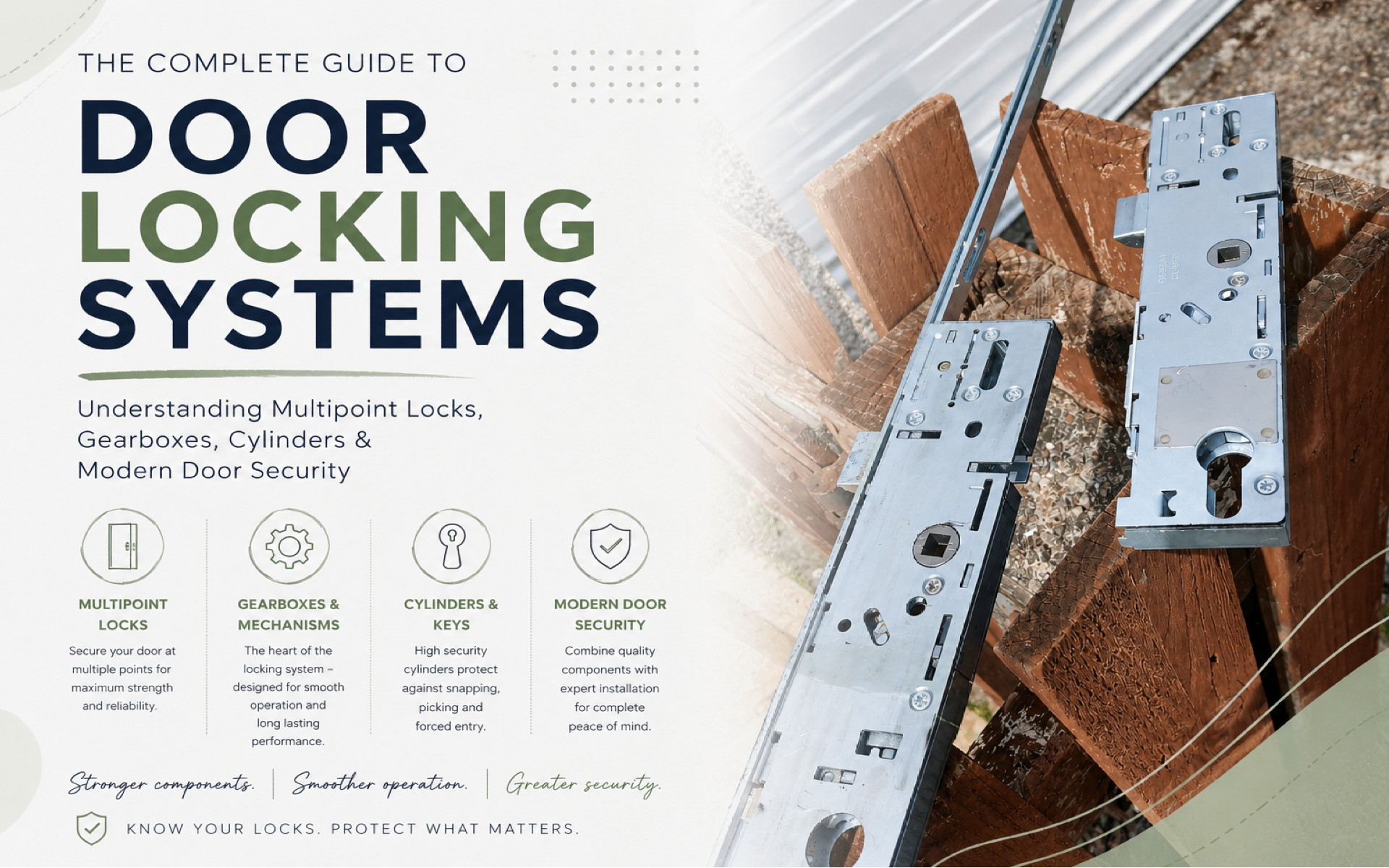
Although manufacturers use different designs, most multipoint systems contain several common components.
Faceplate
The faceplate is the visible metal strip running along the edge of the door.
It provides the mounting structure for the locking mechanism and allows the individual locking components to operate through the door edge.
Faceplates vary in:
- Length
- Width
- Finish
- Screw positions
- Locking point configuration
These measurements can be important when identifying a replacement mechanism.
Gearbox
The gearbox is the central operating section of many multipoint mechanisms.
The handle spindle enters the gearbox through the follower. When the handle is operated, the gearbox transfers that movement into the drive rails.
Depending on the design, the gearbox can control:
- Latch
- Deadbolt
- Hooks
- Rollers
- Other locking points
A gearbox failure can therefore prevent several parts of the mechanism from operating even though those individual components may still be perfectly serviceable.
Drive Rails
Drive rails connect the centre gearbox to the locking points positioned above and below it.
When the gearbox operates, the rails move and transfer the movement throughout the mechanism.
This is what allows one movement of the handle to operate multiple locking points simultaneously.
Locking Points
Locking points are the components that physically engage with the keeps mounted to the frame.
Depending on the mechanism, they may be:
- Hooks
- Rollers
- Mushroom cams
- Deadbolts
- Shoot bolts
Different designs provide different characteristics and levels of resistance to attack.
Keeps
Keeps are mounted to the frame rather than the door.
They receive the locking points when the door is closed.
Correct positioning is critical.
If a hook is not aligned with its keep, the locking mechanism can experience excessive resistance when the handle is lifted.
This is one of the reasons door alignment is so important to the reliability of a multipoint locking system.
How a Multipoint Lock Works
The exact operation depends on the mechanism, but a typical lift-to-lock system works approximately as follows.
1. The Door Closes
The latch enters the central keep and holds the door against the frame.
2. The Handle Is Lifted
The handle rotates the spindle.
3. The Spindle Operates the Gearbox
The spindle enters the gearbox and transfers the movement into the internal mechanism.
4. The Drive Rails Move
The gearbox moves the upper and lower drive rails.
5. The Locking Points Engage
Hooks, rollers, mushrooms or other locking points move into their corresponding keeps.
6. The Door Compresses Against the Seals
As the locking points engage, the door is pulled securely into the frame.
7. The Key Locks the Mechanism
On a conventional euro-cylinder system, turning the key operates the cylinder cam and locks the gearbox, preventing the handle from being operated.
The entire sequence happens within seconds.
When everything is correctly aligned, the process should feel smooth and require relatively little effort.
Lift-to-Lock Systems
Lift-to-lock is one of the most common designs found on uPVC and composite doors.
The door closes and the latch holds it shut.
The user then lifts the handle.
This operates the multipoint mechanism and engages the locking points.
The key is then turned to lock the mechanism.
Advantages
- Simple mechanical design.
- Familiar operation.
- Multiple locking points.
- Relatively straightforward to repair.
- Widely available replacement parts.
Disadvantages
- Requires the handle to be lifted correctly.
- Alignment problems can make the handle increasingly difficult to operate.
- Excessive force can damage the gearbox or other components.
A lift-to-lock door should not normally require excessive force.
If the handle suddenly becomes heavy, this can indicate that the locking points are meeting resistance from the frame keeps.
Automatic Locking Systems
Automatic multipoint mechanisms work differently.
Rather than requiring the user to lift the handle before the locking points engage, the mechanism can automatically lock when the door closes.
Some systems use mechanical triggers while others use more sophisticated automatic locking arrangements.
Advantages
- Convenient.
- Multiple locking points can engage automatically.
- The door can be secured without manually lifting the handle.
Disadvantages
- More complicated mechanism.
- More components can mean more potential failure points.
- Alignment remains critical.
- Repairs can be more complicated depending on the mechanism.
Automatic locking systems can be particularly useful where convenience is important, but they still require correct maintenance and alignment.
Euro Cylinder Locking Systems
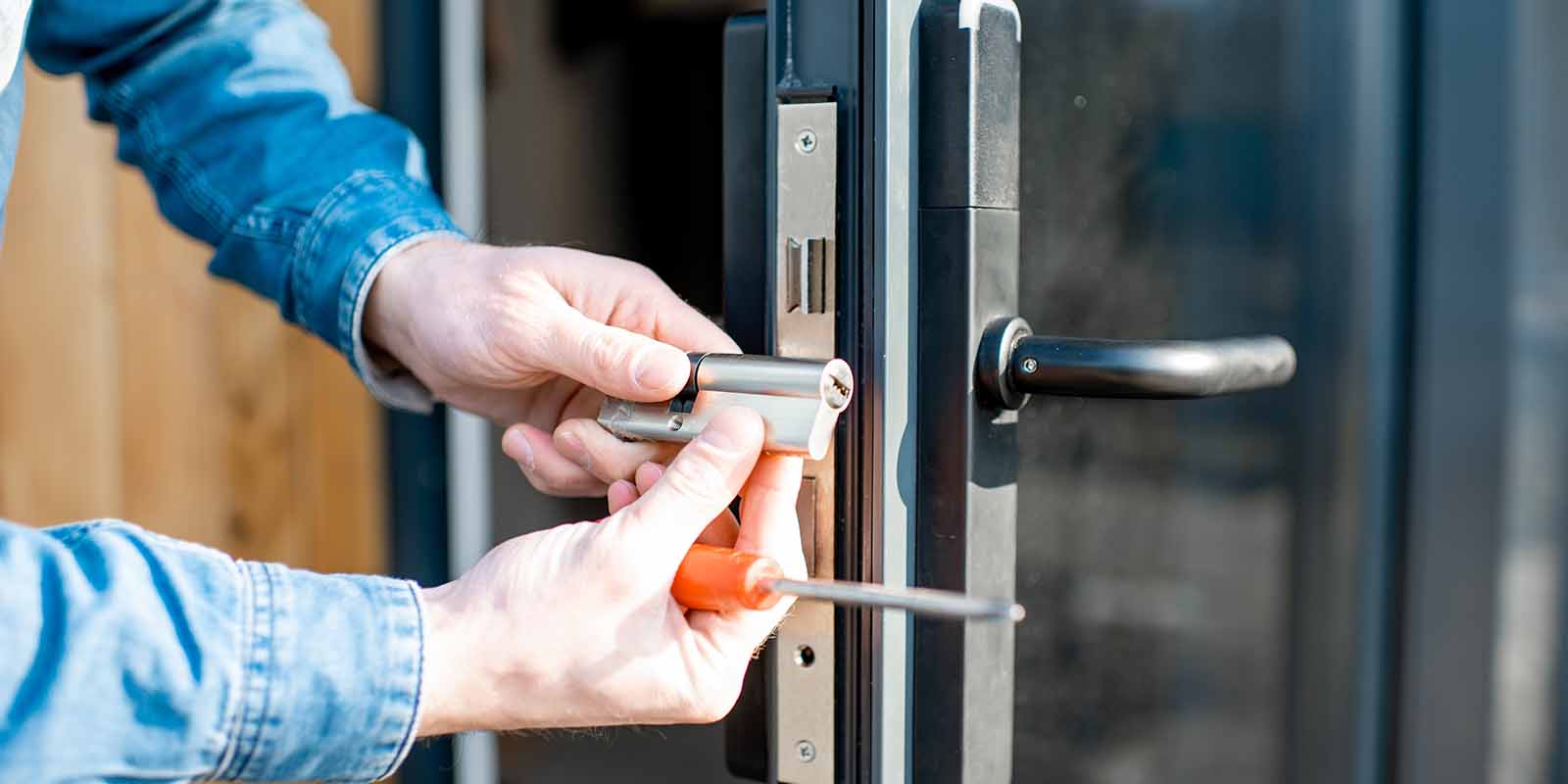
The euro cylinder is one of the most common locking components found on modern uPVC and composite doors.
It sits inside the central gearbox and is operated using a key.
When the key is turned, the cylinder's internal cam operates the locking mechanism.
The cylinder itself does not normally operate every hook, roller or locking point directly.
Instead, it interacts with the gearbox, which then controls the rest of the multipoint mechanism.
This distinction is important when diagnosing faults.
For example, a key may turn but the door may still fail to unlock because the gearbox has failed.
Likewise, replacing a perfectly good cylinder will not repair a failed gearbox.
Mortice Locking Systems
Mortice locks are traditionally associated with timber doors but can also be found in other door types.
The lock case is recessed into the door rather than mounted entirely on its surface.
Examples include:
- Sash locks
- Deadlocks
- Five-lever mortice locks
- Specialist mortice systems
The operating principles differ from a typical euro-cylinder multipoint mechanism.
The ERA Vectis is a good example of a specialist system that should not simply be treated as a conventional euro-cylinder lock.
The ERA Vectis Explained
The ERA Vectis is unusual compared with conventional euro-cylinder multipoint mechanisms.
Instead of using a euro cylinder to operate the central gearbox, the Vectis uses a mortice-style key.
The key operates internal levers which move a curtain and operate the locking mechanism.
This makes the Vectis fundamentally different from the conventional euro-cylinder systems found on many modern uPVC and composite doors.
How It Works
The key interacts with the internal lever system.
The levers move the curtain.
The curtain allows the internal mechanism to operate.
The bolt can then be moved to lock or unlock the door.
The system is therefore based around a mortice-key operating principle rather than the familiar euro-cylinder and cam arrangement.
Advantages
- Distinctive security design.
- No conventional euro cylinder.
- Can provide a very neat integrated locking arrangement.
- Established system with replacement parts available for many applications.
Disadvantages
In our experience, the Vectis design can be less rugged and more prone to certain failures than a conventional quality multipoint mechanism using a euro cylinder.
The gearbox can fail and the system can become unreliable.
Where appropriate, the Vectis can be converted to a conventional multipoint gearbox and euro-cylinder arrangement. This normally also requires replacement handles and appropriate adaptation of the mechanism.
At A.L.S. Locksmiths, where a Vectis system is suitable for upgrading, we would generally favour converting it to a good-quality conventional mechanism and euro-cylinder system. In our experience, this transition can provide a significant improvement in reliability and locking performance.
The important point is that the correct replacement depends on the individual door and mechanism. A conversion needs to be properly selected and fitted rather than simply installing a universal replacement.
Locking Points Explained
Multipoint mechanisms can use several different types of locking points.
Hooks
Hooks project into specially shaped keeps in the frame.
They provide a strong mechanical connection between the door and frame.
Hooks can be particularly useful on composite and uPVC doors where multiple locking points are required.
Common Problems
- Seized hooks
- Poor alignment
- Excessive friction
- Damaged keeps
- Internal mechanism failure
Rollers
Rollers engage with corresponding keeps.
They are particularly useful for controlling compression around the door.
Rollers can also make it easier for the locking mechanism to pull the door tightly against the seals.
Mushroom Cams
Mushroom-shaped locking cams engage with corresponding keeps.
Their shape can provide additional resistance against attempts to manipulate the locking system.
Deadbolts
A deadbolt extends into the frame when the mechanism is locked.
It provides a rigid locking point rather than the spring-loaded action of a latch.
Shoot Bolts
Shoot bolts are commonly found on some French doors and multipoint systems.
They extend vertically into the head and threshold or into corresponding keeps.
Correct alignment is particularly important because even a relatively small movement can affect their operation.
Gearboxes
The gearbox is one of the most frequently replaced components in a multipoint locking mechanism.
It is also one of the components most often incorrectly blamed for a problem.
A gearbox can fail internally due to:
- Normal wear.
- Excessive force.
- Poor alignment.
- Damaged handles.
- Internal component failure.
- Long-term friction.
Typical symptoms include:
- Handle won't operate.
- Handle becomes loose.
- Locking points don't move.
- Key turns but the mechanism doesn't operate.
- Door becomes jammed.
- Handles droop.
- Door won't lock.
However, these symptoms can also be caused by other parts of the system.
This is why diagnosis is important before replacing the gearbox.
Handles & Spindles
The handle transfers the user's movement into the gearbox.
The square spindle passes through the handle and into the gearbox follower.
When the handle is operated, the spindle rotates the follower.
Handles can suffer from:
- Broken springs.
- Worn followers.
- Loose fixings.
- Damaged spindles.
- General wear.
A common symptom of worn handles is a lever that remains hanging down rather than returning to its normal horizontal position.
This doesn't necessarily mean the gearbox has failed.
Sometimes replacing the handles is all that is required.
Keeps
The keeps are fixed to the frame and receive the locking points.
They are one of the most overlooked components in a locking system.
If the door moves because of:
- Building movement.
- Seasonal expansion.
- Hinge movement.
- Door weight.
- Frame movement.
the keeps can move out of the correct position relative to the locking points.
The mechanism may still be mechanically perfect, but the door can become increasingly difficult to lock.
This can eventually damage the gearbox if the problem is ignored.
Split Spindle Systems
A split spindle separates the internal and external operation of the handle.
This can be used to create different access arrangements.
For example, one side of the door may operate differently from the other.
Split spindle systems are particularly useful on lever/pad configurations and some security-focused door designs.
Lever/Pad Systems
A lever/pad arrangement uses a lever handle on one side and a fixed pad on the other.
The arrangement can provide a different method of operating the door from outside while maintaining handle operation internally.
These systems are often combined with split spindle arrangements.
As with all multipoint systems, correct operation depends on the handle, spindle, gearbox and locking mechanism working together.
Smart Locks
Smart locks are increasingly being installed on residential doors.
Depending on the design, a smart lock may use:
- Electronic motors.
- Keypads.
- Smartphones.
- Fingerprints.
- Bluetooth.
- Wi-Fi.
- Existing mechanical cylinders.
Smart technology does not eliminate the need for mechanical security.
Many smart locks still depend on the existing door mechanism and cylinder.
If the underlying multipoint mechanism is poorly aligned or mechanically worn, adding electronic hardware won't solve the underlying problem.
Common Locking System Faults
Modern door locking systems can fail in many different ways.
Handle Won't Lift
Possible causes include:
- Misalignment.
- Gearbox failure.
- Locking point obstruction.
- Worn mechanism.
Key Won't Turn
Possible causes include:
- Faulty cylinder.
- Gearbox failure.
- Door alignment.
- Locking points under pressure.
Door Is Jammed Shut
Possible causes include:
- Failed gearbox.
- Broken internal component.
- Seized locking point.
- Severe alignment problem.
Handles Droop
Possible causes include:
- Broken handle springs.
- Worn spring cassette.
- Gearbox failure.
- Damaged handle.
Door Only Locks When Lifted Excessively
Possible causes include:
- Door alignment.
- Door drop.
- Incorrect keep position.
- Locking points incorrectly adjusted.
Lock Feels Stiff
Possible causes include:
- Frame keeps.
- Door alignment.
- Dry mechanism.
- Worn gearbox.
- Seized hook or roller.
For a more detailed breakdown of symptoms, causes and repairs, see:
Common uPVC Door Problems, Faults, Causes & Repairs
Repair or Replace?
A failed locking system doesn't automatically mean the entire mechanism—or the door—needs replacing.
The correct repair depends on what has actually failed.
For example:
Failed Gearbox
A gearbox may be replaceable without replacing the complete multipoint mechanism.
Worn Handles
The mechanism may be perfectly serviceable and only the handles require replacement.
Poor Alignment
No major component may need replacing at all.
The door may simply require correct adjustment.
Obsolete Mechanism
An older mechanism may no longer be manufactured.
That doesn't automatically mean a new door is necessary.
Depending on the design, it may be possible to:
- Source original parts.
- Replace individual components.
- Adapt a modern mechanism.
- Convert the locking system.
The most appropriate solution depends on the individual door.
Why Correct Diagnosis Matters
Many different faults produce similar symptoms.
For example, a heavy handle could indicate:
- A failing gearbox.
- Poor alignment.
- A seized hook.
- Incorrect keeps.
- Worn handles.
Replacing the gearbox without addressing poor alignment may simply result in another failed gearbox later.
Likewise, replacing a cylinder when the gearbox has failed will not solve the underlying problem.
A proper diagnosis considers the complete door:
Door → Hinges → Alignment → Keeps → Mechanism → Gearbox → Handles → Cylinder
All of these components interact.
Frequently Asked Questions
What is a multipoint locking mechanism?
A multipoint locking mechanism is a door locking system that uses several locking points along the edge of the door rather than relying on a single central lock.
What is a gearbox?
The gearbox is the central operating section of many multipoint mechanisms. It transfers movement from the handle and controls the locking points.
What is the difference between a gearbox and a mechanism?
The gearbox is normally the central operating component. The mechanism refers to the complete assembly, including the gearbox, faceplate, drive rails and locking points.
Can a multipoint lock be repaired?
Yes. Depending on the fault, individual components such as gearboxes, handles, cylinders or locking points may be replaced without replacing the complete door.
Can you replace just the gearbox?
Often, yes. The correct replacement depends on the manufacturer, dimensions, configuration and design of the existing mechanism.
Are all multipoint mechanisms interchangeable?
No. Mechanisms vary considerably in dimensions, backset, PZ centres, faceplate dimensions, locking point configuration and gearbox design.
Why is my handle becoming difficult to lift?
Poor alignment is one common cause. If the locking points are pressing against the keeps, the handle can become increasingly difficult to operate.
Why has my handle started drooping?
The handle springs or spring cassette may have failed. However, a gearbox fault can produce similar symptoms.
Why won't my key turn?
Possible causes include a faulty cylinder, gearbox failure, door misalignment or pressure on the locking points.
Can an obsolete multipoint mechanism be repaired?
Sometimes. Original parts may still be available, or a suitable modern mechanism may be adapted to work with the existing door.
Does replacing the cylinder fix a faulty gearbox?
No. A cylinder and gearbox perform different functions. If the gearbox has failed, replacing a functioning cylinder will not repair the mechanism.
Can a Vectis mechanism be replaced with a conventional gearbox?
In suitable applications, yes. Converting the system generally requires more than simply changing the gearbox and may also require different handles and appropriate modification or adaptation of the mechanism.
How long should a multipoint mechanism last?
There is no single lifespan. Usage, installation quality, alignment, maintenance, door weight and the quality of the mechanism all affect service life.
Does door alignment really affect the lock?
Yes. Poor alignment can force the locking points against the frame keeps, increasing friction and placing additional load on the gearbox and other components.
Conclusion
A modern door locking system is far more than a key and a lock cylinder. It is a complete mechanical system made up of the gearbox, handles, spindle, locking points, drive rails, keeps, cylinder and other components, all of which have to work together correctly.
Multipoint locking systems provide significant advantages over traditional single-point locking by securing the door at several positions and helping distribute the forces acting between the door and frame. However, this increased complexity also means that problems can develop in several different parts of the system.
A stiff handle, difficult key, drooping lever or door that suddenly refuses to lock does not automatically mean that the entire mechanism has failed. The actual cause could be a gearbox, handle, cylinder, locking point, hinge or simply the alignment between the door and frame.
This is why accurate diagnosis matters.
Where possible, repairing or upgrading the failed component can be considerably more practical than replacing an entire door. Even obsolete mechanisms can sometimes be repaired or adapted, depending on the design and availability of suitable parts.
Most importantly, a locking mechanism should work with the door and frame, not against them. Correct alignment, quality components and proper installation are fundamental to achieving smooth operation, reliable security and a longer service life.
For homeowners experiencing problems with a uPVC or composite door, understanding how the locking system works is the first step towards identifying the correct solution rather than replacing parts unnecessarily.