
Welcome to our locksmith information hub, where we share real projects, expert security advice and practical guidance on locks, doors and home protection. From completed jobs across West Dunbartonshire to tips on improving your property’s security, these articles are designed to help you understand your options and make confident decisions about keeping your home safe.
Published Date: 29 June 2026
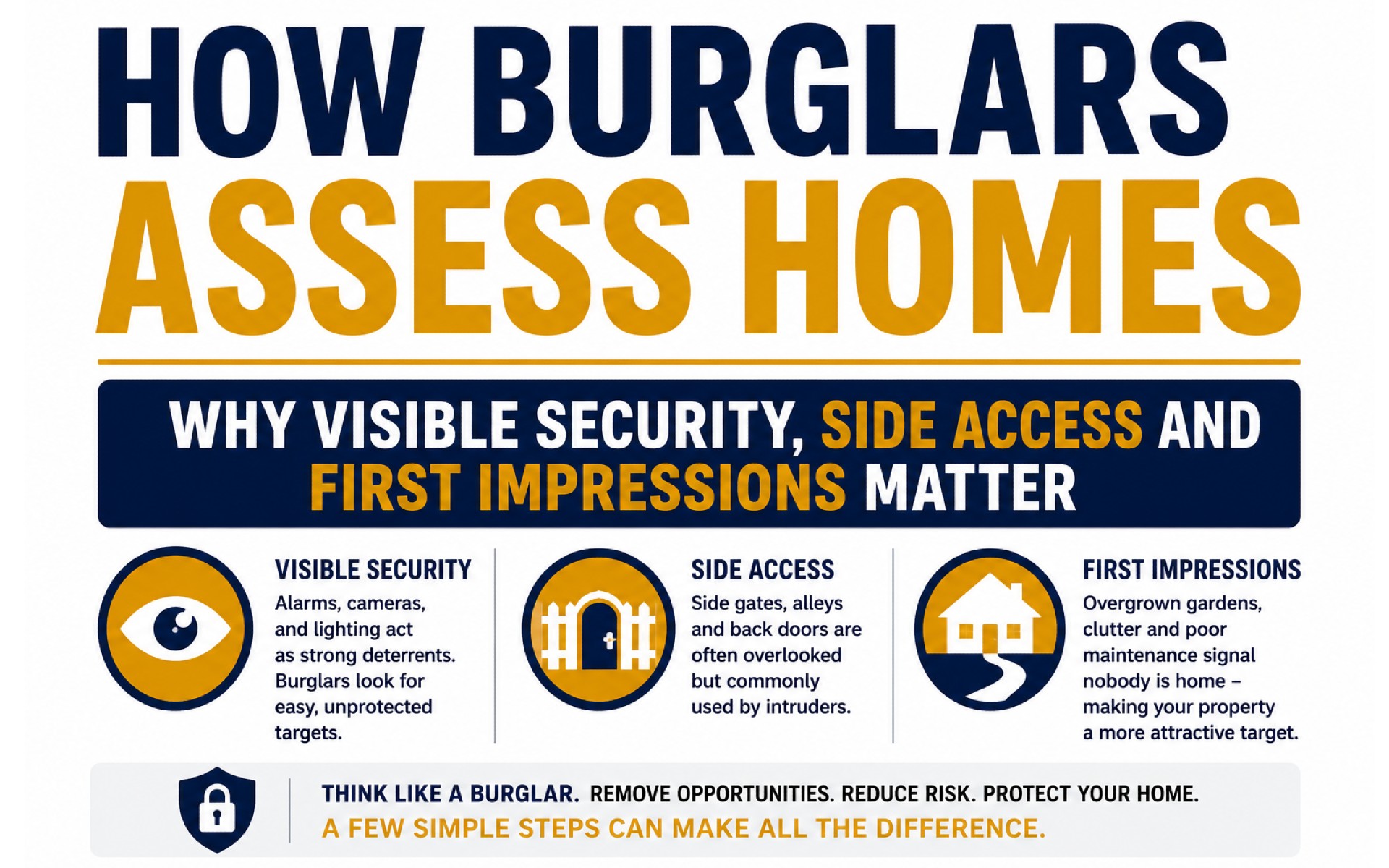
This guide explains how opportunist burglars may assess residential properties and why visible security, property maintenance and secure side access all contribute to reducing opportunities for crime. It highlights the importance of first impressions, maintaining external doors and boundaries, protecting rear access points and using layered security rather than relying on a single product. Understanding these principles helps homeowners identify practical improvements that strengthen the overall security of their property.

Published Date: 29 June 2026
This A–Z guide explains the key principles of burglary prevention for homeowners, covering everything from access control and perimeter security to lighting, maintenance, key management and target hardening. It highlights the importance of layered security, visible deterrents and regular property maintenance while showing how simple improvements can reduce opportunities for opportunist crime. By understanding these principles, homeowners can take practical steps to improve the security of their property without relying on a single security product.
Published Date: 29 June 2026
A door handle that won't lift can be caused by several different faults, including a dropped door, worn gearbox, damaged handles or misaligned locking points. This guide explains how to recognise the most common causes, why the problem often occurs only when the door is closed and why accurate diagnosis is essential before replacing any components. Many handle faults can be repaired without replacing the complete multipoint locking mechanism.
Published Date: 29 June 2026
A key that only turns halfway can be caused by door misalignment, a worn euro cylinder, gearbox wear or contamination inside the lock. This guide explains the most common causes, how to identify whether the problem occurs only when the door is closed and why forcing the key should always be avoided. Early diagnosis can often prevent more extensive damage and help restore the lock to smooth, reliable operation.
Published Date: 29 June 2026
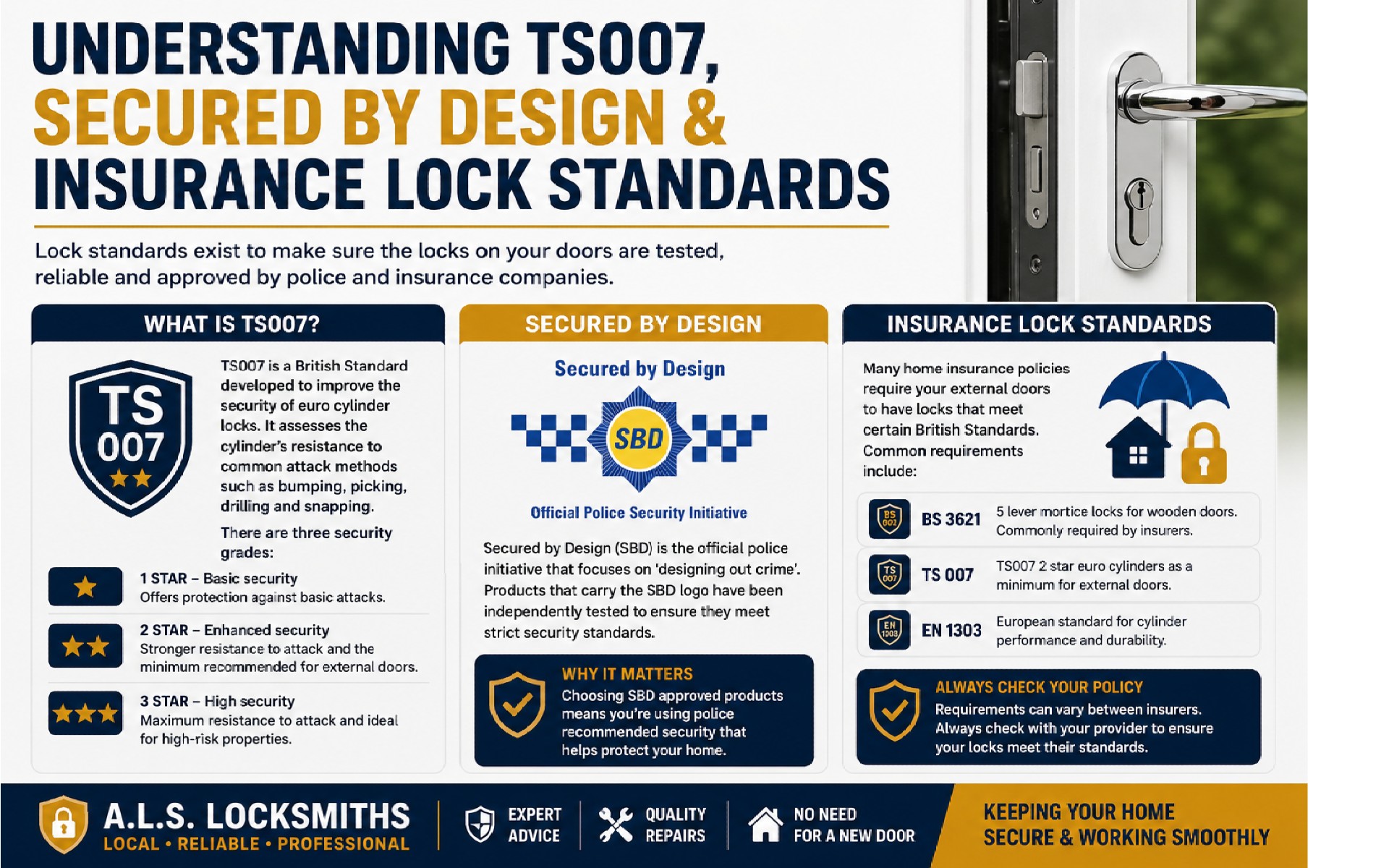
This guide explains the most common security standards found on modern residential door locks, including TS007, Secured by Design, BS3621, BS EN 1303, PAS 24 and SS312 Diamond. It explores how these standards are tested, what they measure and how they help homeowners identify independently assessed security products. The guide also explains common insurance requirements for external door locks and why the overall security of a property depends on the quality and condition of the entire door system, not just the lock itself.
Published Date: 29 June 2026
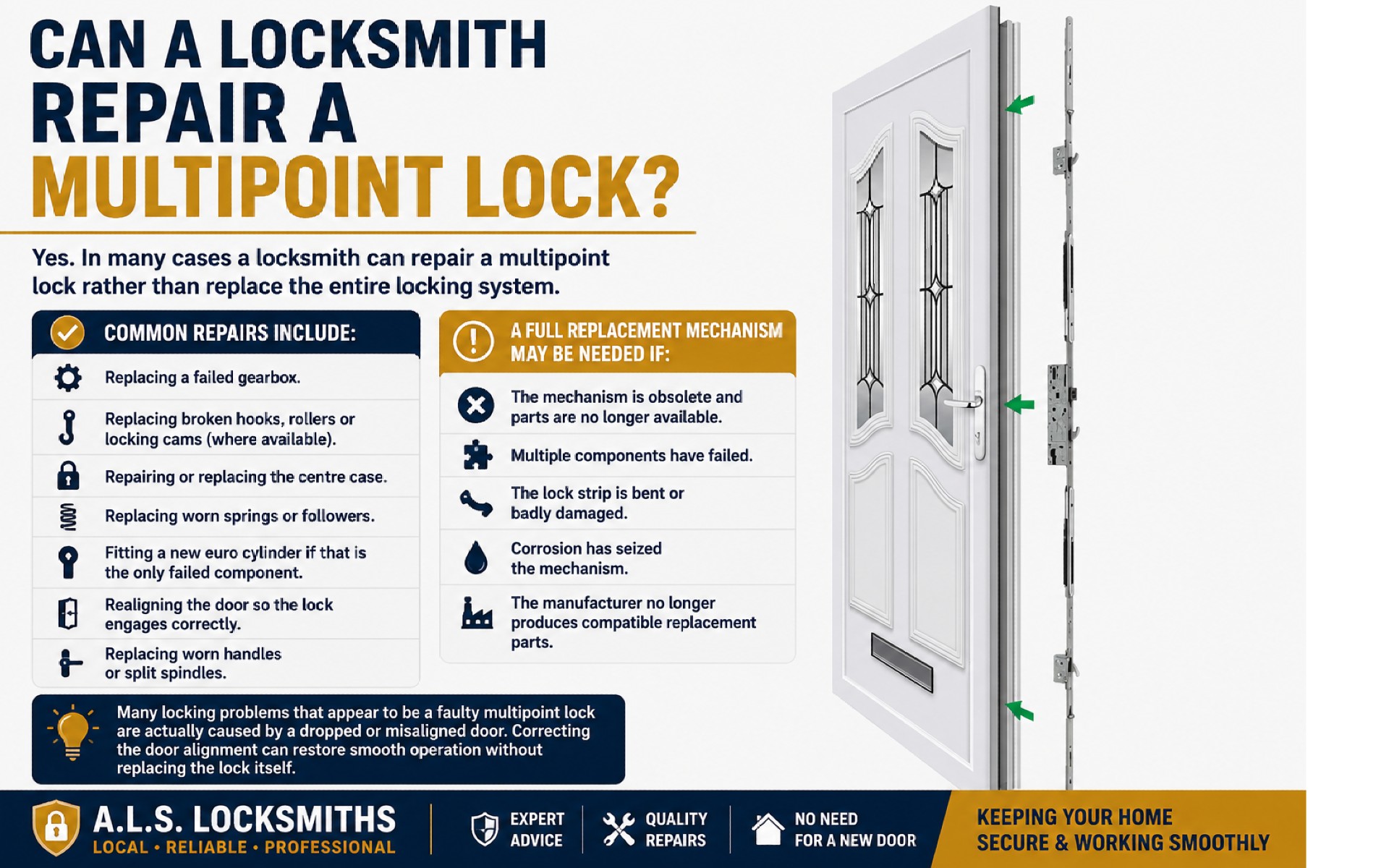
Most multipoint locking mechanisms can be repaired, depending on the cause of the fault. Problems such as worn gearboxes, broken handles, failed cylinders, dropped doors and alignment issues are often repairable without replacing the entire mechanism or the door itself. This guide explains how multipoint locks work, the most common faults that affect them, when repair is possible and when replacement is the better option. It also highlights the importance of accurate diagnosis, ensuring homeowners receive the most cost-effective and appropriate solution for their door.
.jpg)
Published Date: 29 June 2026
This A–Z guide explains the most common faults affecting modern door locks and multipoint locking systems. It covers symptoms such as stiff keys, dropped handles, noisy mechanisms, worn gearboxes and alignment problems, while outlining their likely causes and whether they are typically repairable. Understanding these common faults helps homeowners recognise problems earlier, communicate more effectively with a locksmith and avoid unnecessary replacement of otherwise serviceable door components.
Published Date: 29 June 2026
This comprehensive A–Z guide explains the wide variety of locking mechanisms used on modern uPVC, composite, timber and aluminium doors. It covers automatic locks, lift-to-lock systems, split spindle mechanisms, key-wind locks, hook locks, roller systems, panic mechanisms and many more, while also explaining the different locking point configurations found in residential doors. By understanding how each mechanism operates, homeowners can better identify their own locking system and appreciate why correct replacement parts and professional installation are essential for long-term security and reliability.
Published Date: 29 June 2026
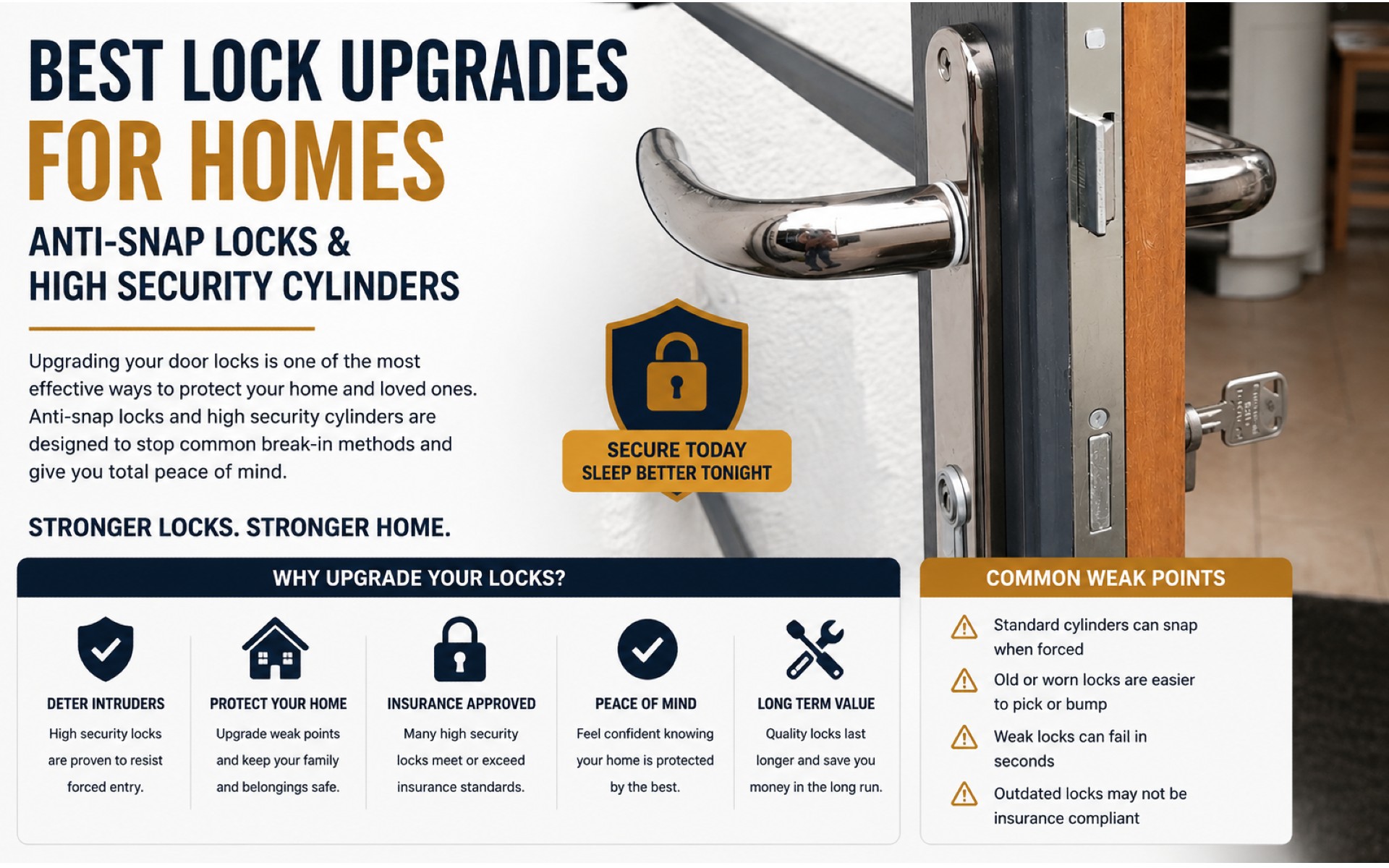
Modern lock upgrades offer homeowners an effective way to improve security without replacing their existing door. This guide explains how high-security euro cylinders, anti-snap technology and TS007-rated security handles provide greater resistance to common methods of attack, while emphasising that the entire door system—including the frame, hinges and multipoint locking mechanism—must work together to provide reliable protection. By upgrading quality components and ensuring they are correctly installed and maintained, homeowners can significantly improve security while extending the life of their existing door.
Published Date: 29 June 2026
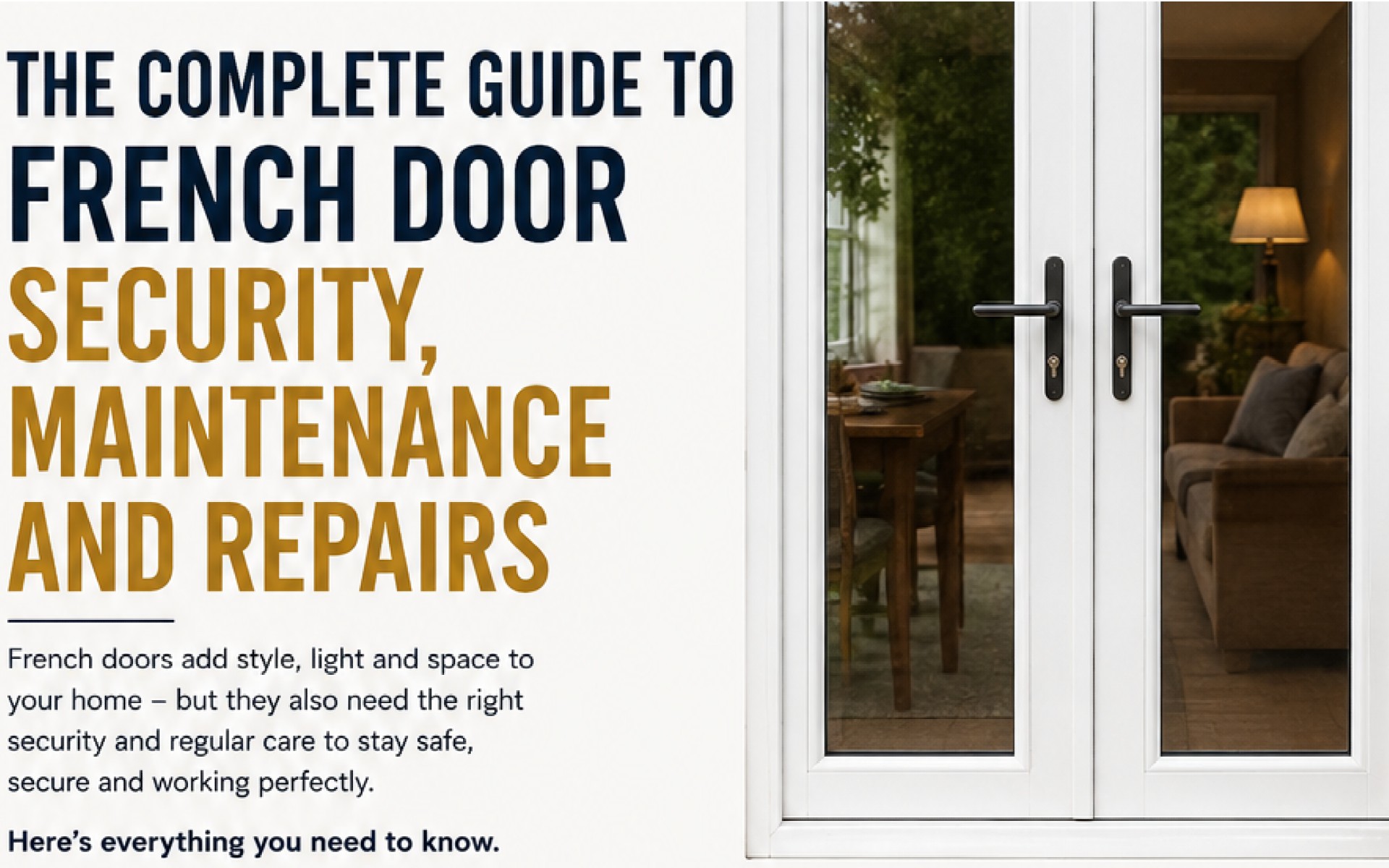
French doors are more complex than standard entrance doors because two separate door leaves must align perfectly with each other and the frame. This guide explains how French door security systems work, why doors drop over time, how multipoint locks and passive door bolts operate, and why correct alignment is essential for reliable locking. It also covers practical maintenance, worthwhile security upgrades and the common causes of locking problems, helping homeowners understand that many French door faults can be repaired without replacing the entire door system.
Published Date: 28 June 2026
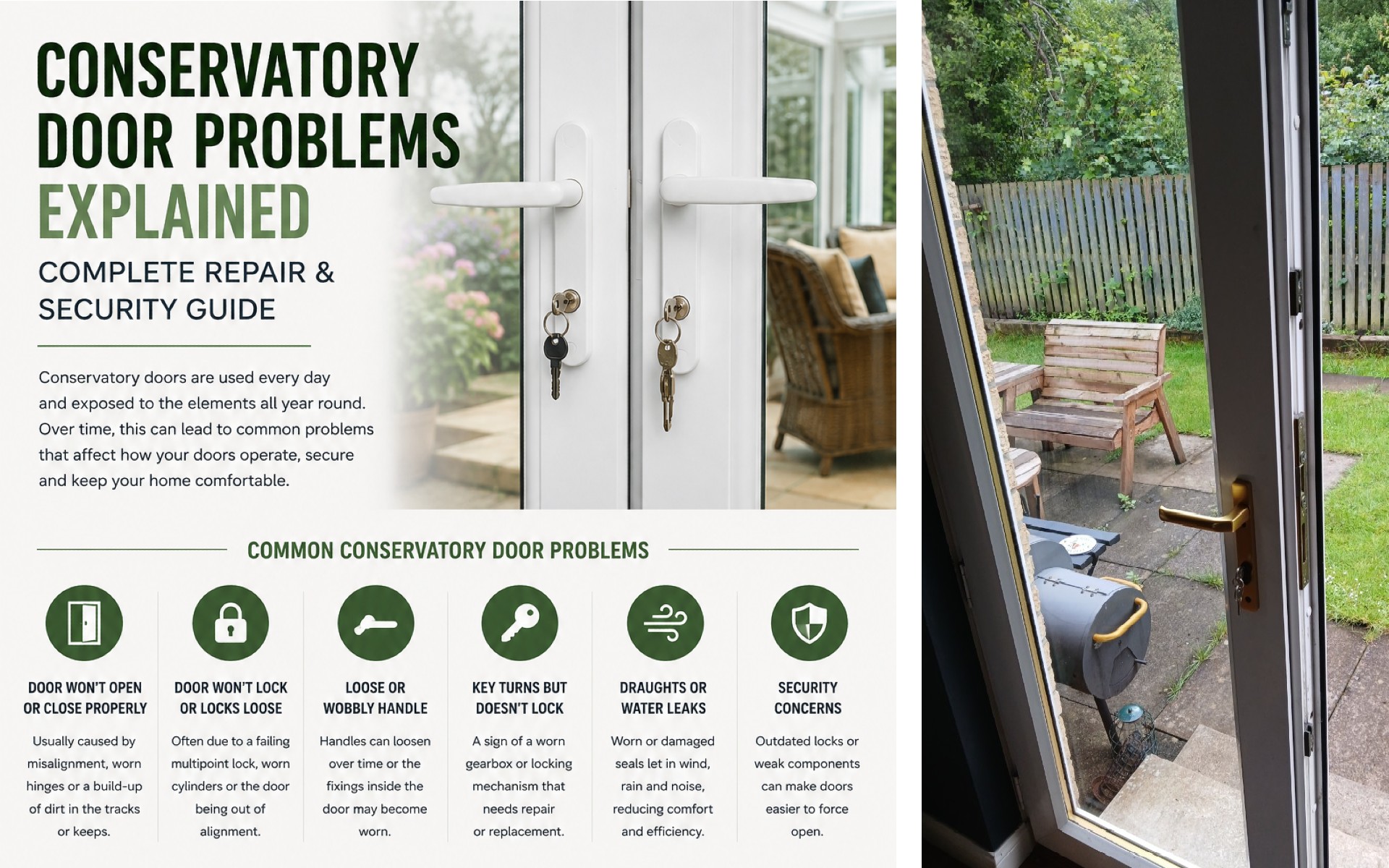
Conservatory doors are exposed to greater temperature changes and structural movement than many other external doors, making them more susceptible to alignment and locking problems over time. This guide explains why conservatory doors become difficult to open or close, how weather affects their operation, why locks and gearboxes wear, and the importance of hinge adjustment and correct alignment. It also shows that many common conservatory door faults can be repaired without replacing the entire door, helping homeowners maintain security, improve performance and extend the life of their existing doors.
Published Date: 28 June 2026
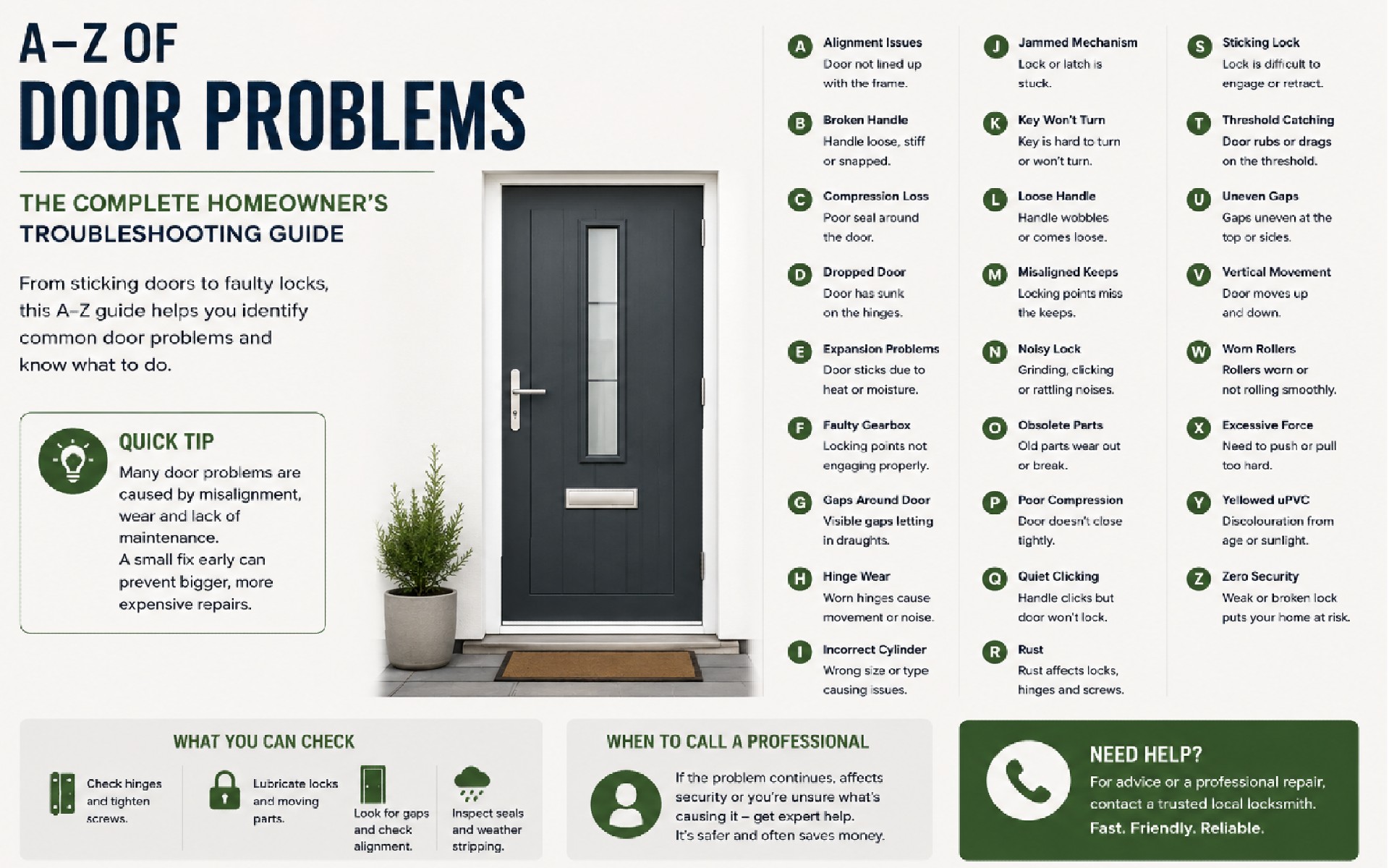
Every door develops wear and changes over time, but many common problems begin as small symptoms that are easy to overlook. A slightly stiff handle, a key that's becoming harder to turn or a door that catches the frame are often early signs that something within the door system has changed. This A–Z guide explains the most common faults affecting uPVC, composite and timber doors, from alignment and hinge wear to failed gearboxes, sticking locks and worn components. By understanding what these problems are, what causes them and how they affect the performance of your door, homeowners can recognise issues earlier, communicate more effectively with a locksmith and often prevent minor faults from developing into more expensive repairs.
Published Date: 28 June 2026
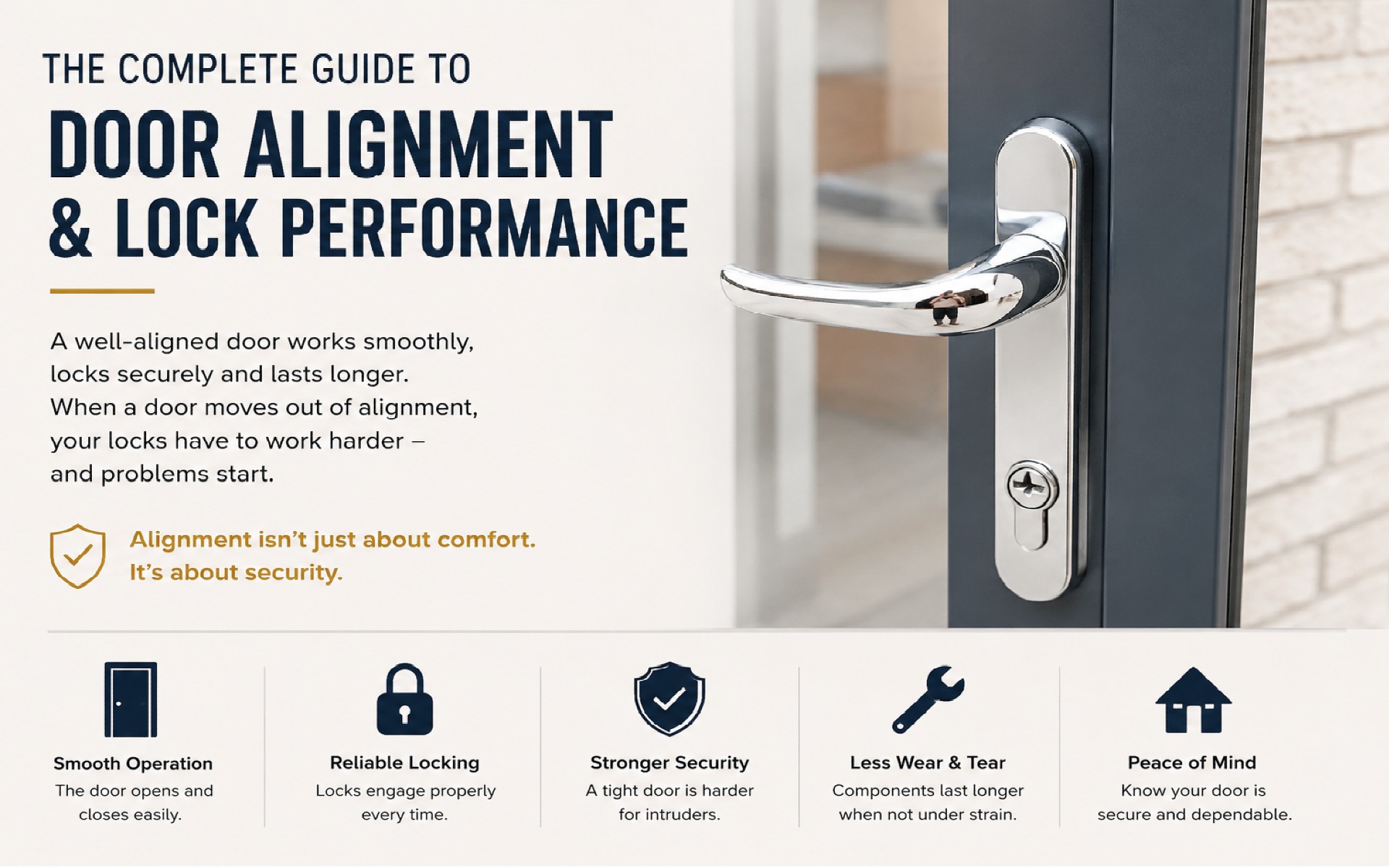
This guide explains why door alignment is one of the most important factors affecting the performance of modern uPVC and composite doors. It covers how to recognise a dropped door, the causes of door movement, why composite doors shift over time, how threshold rubbing develops and why many locking problems are actually caused by misalignment rather than faulty locks. It also explains how regular adjustment can extend the life of hinges, gearboxes and multipoint locking systems while maintaining reliable security.
Published Date: 28 June 2026
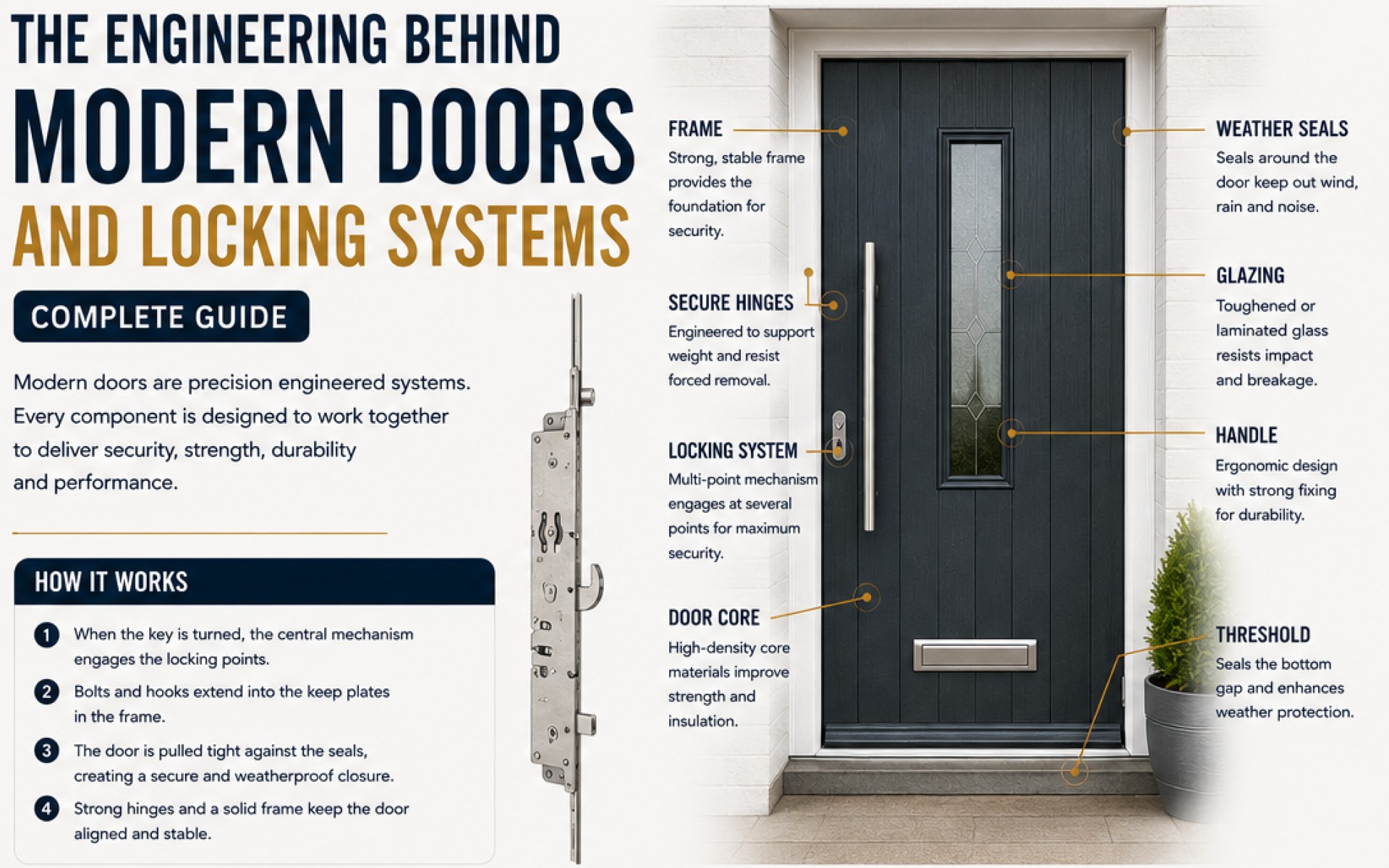
This guide explores the engineering principles that govern the operation of modern entrance doors and multipoint locking systems. It explains why door clearances, weight, geometry and compression are essential to smooth operation, how locking forces are transferred through the frame, why the centre latch plays such an important role and how even minor movement can accelerate wear on door hardware. Understanding these principles helps homeowners appreciate why correct alignment and maintenance are fundamental to long-term security and reliable performance.
Published Date: 28 June 2026
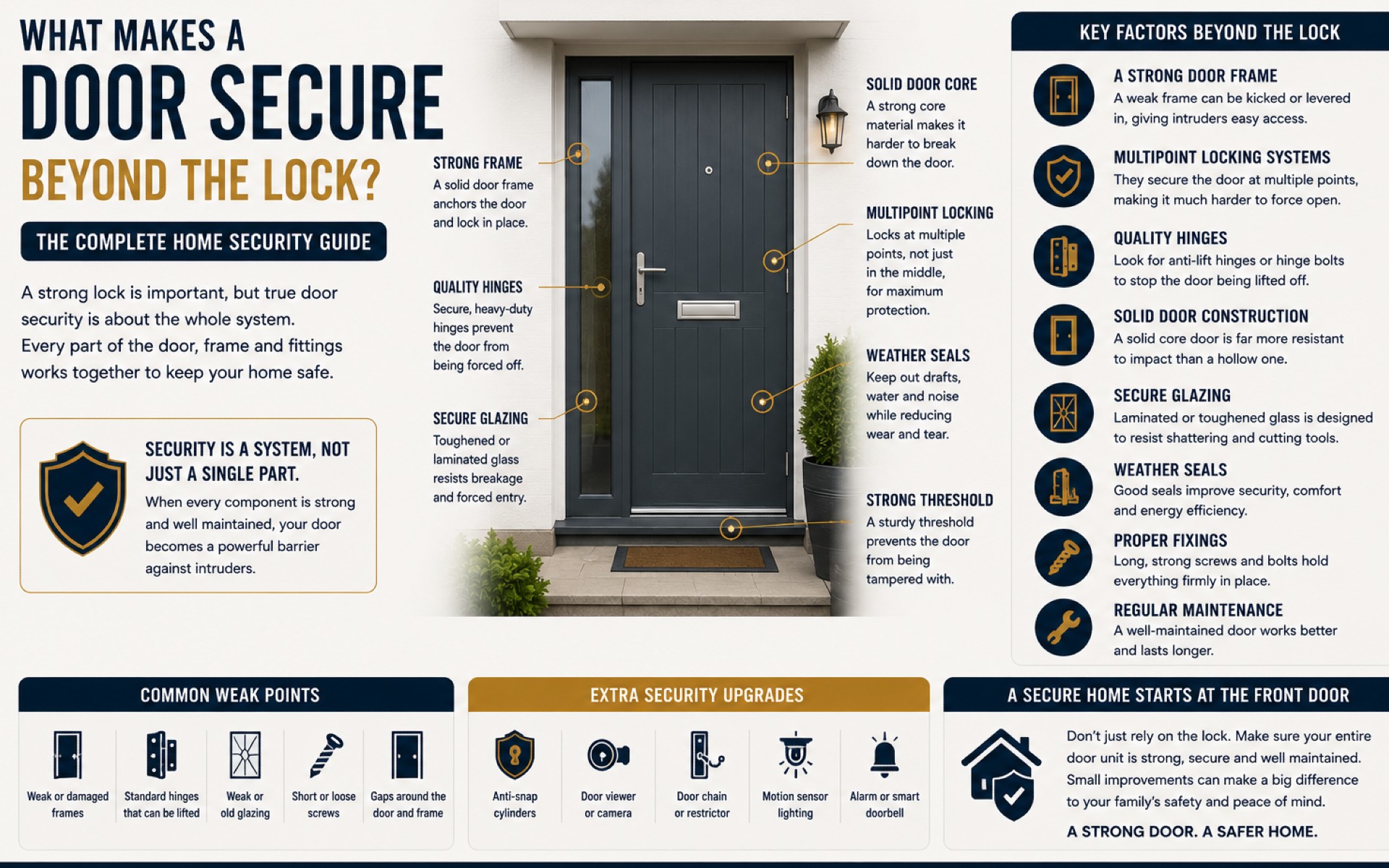
This comprehensive guide explains why a secure front door depends on much more than the lock alone. It explores how door frames, hinges, multipoint locking systems, handles, cylinders and hidden reinforcement work together to resist forced entry, while highlighting the importance of regular maintenance and correct alignment. It also examines why older doors can still provide excellent security and how layered protection creates a stronger, more resilient entrance door.
Published Date: 28 June 2026
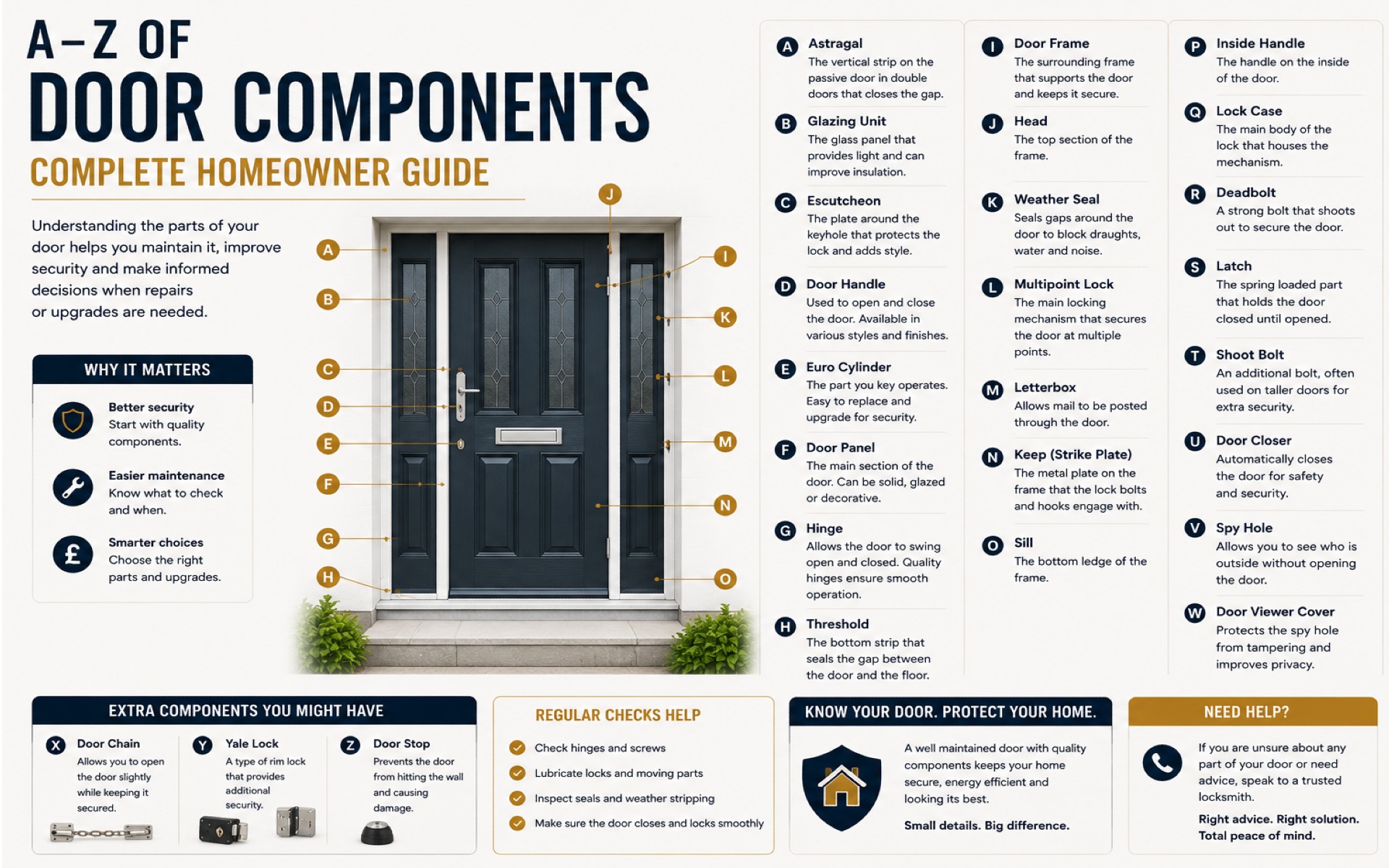
This comprehensive A–Z glossary explains the structural and mechanical components that make up modern uPVC, composite, timber and aluminium doors. It covers everything from frames, hinges and gearboxes to weather seals, reinforcement and locking points, helping homeowners understand how each part contributes to security, insulation, weather resistance and reliable everyday operation.
Published Date: 28 June 2026
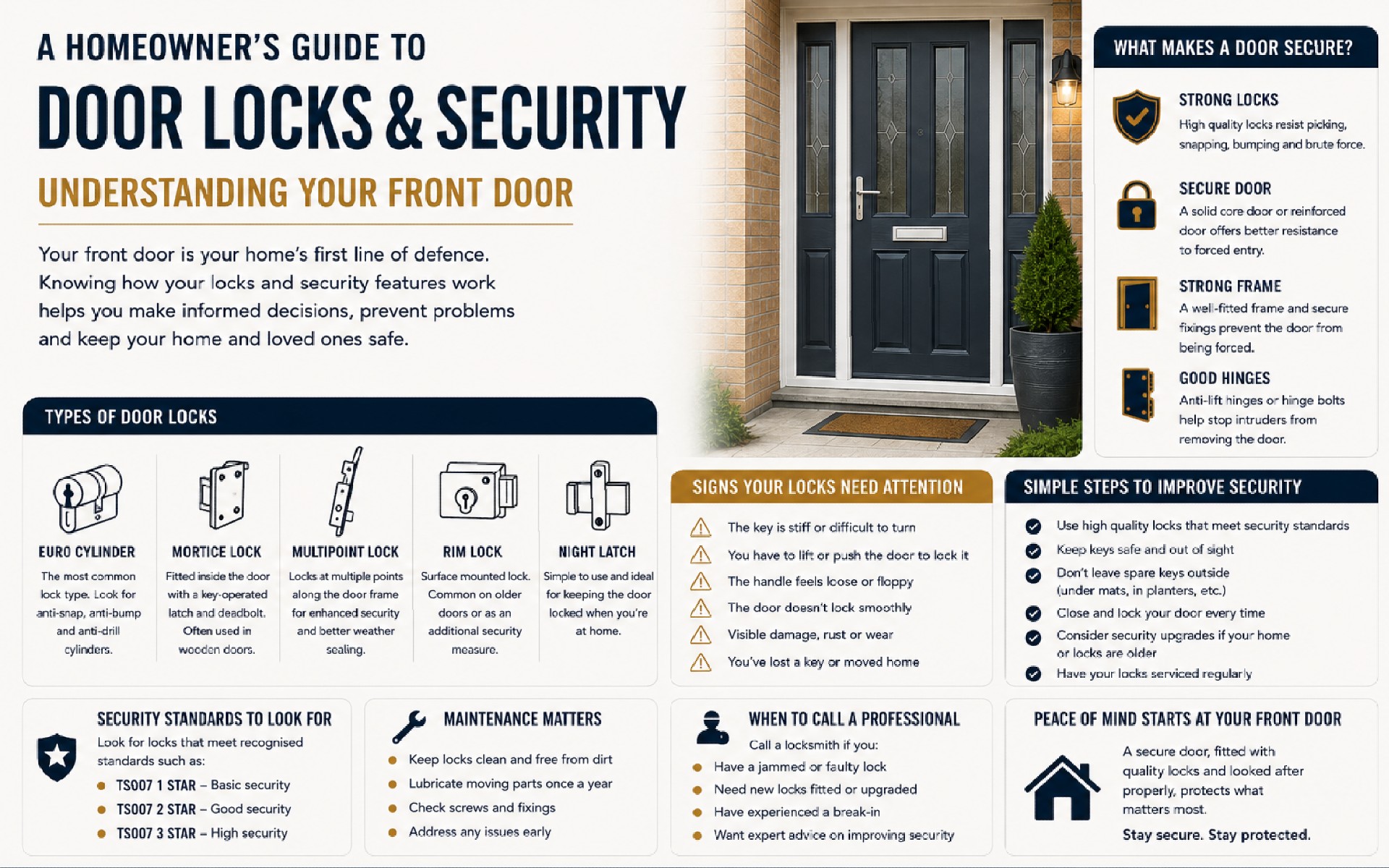
This comprehensive homeowner's guide explains the essential features of modern front doors and locking systems. It covers common door terminology, identifying multipoint locks, measuring euro cylinders and door handles, understanding door handing, recognising common faults and gathering the information that helps a locksmith diagnose problems efficiently. By understanding the basics of your own door, homeowners can make more informed decisions about repairs, maintenance and security upgrades.
Published Date: 28 June 2026
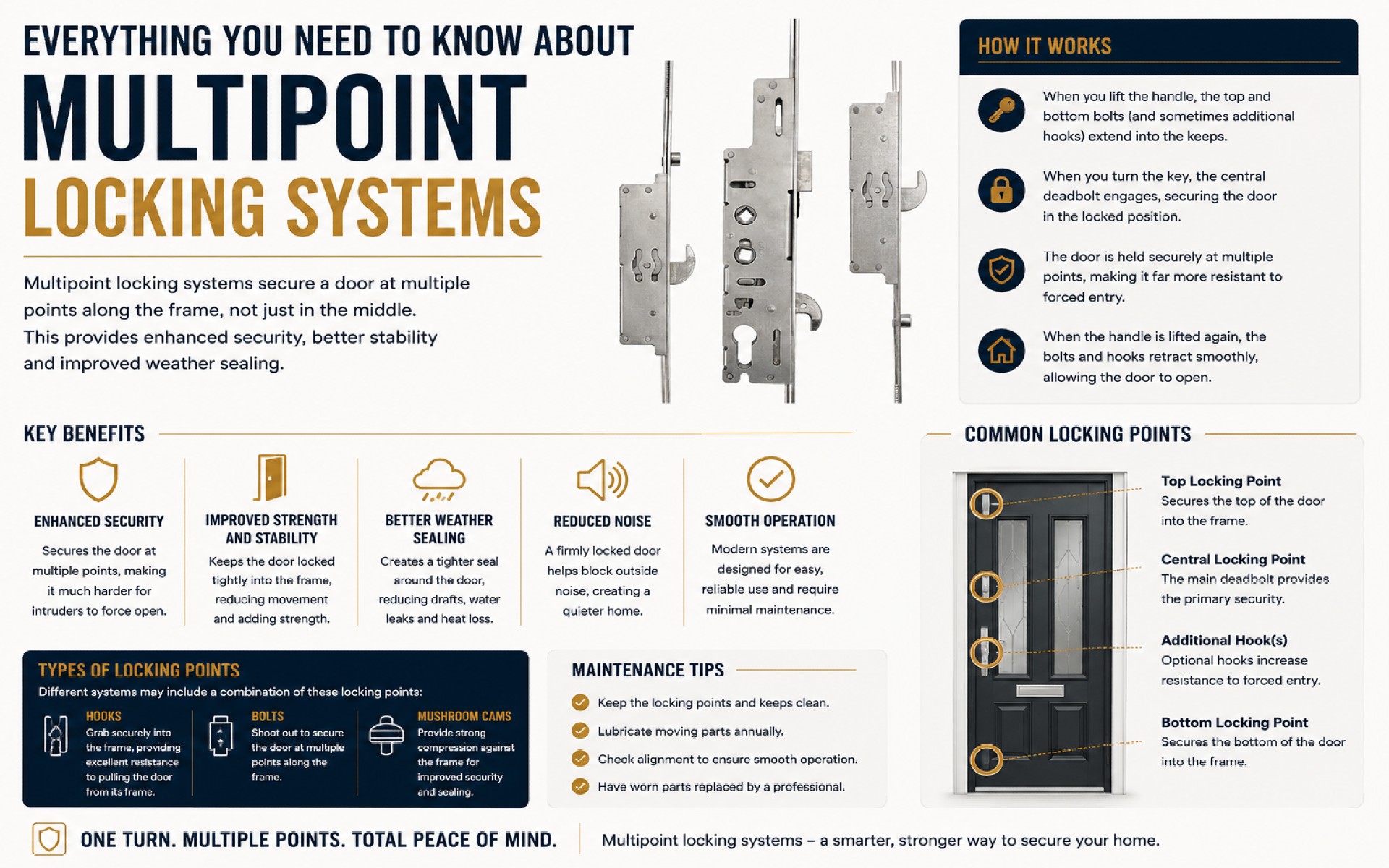
This comprehensive guide explains the engineering behind modern multipoint locking systems used on uPVC, composite and timber doors. It explores why multipoint locks replaced traditional locking methods, how different locking points resist forced entry, the role of hooks and rollers, the importance of door alignment, and the operation of lift-to-lock, automatic locking and split spindle systems. It also examines how gearboxes coordinate the entire mechanism and why correct maintenance is essential for long-term reliability and security.
Published Date: 28 June 2026
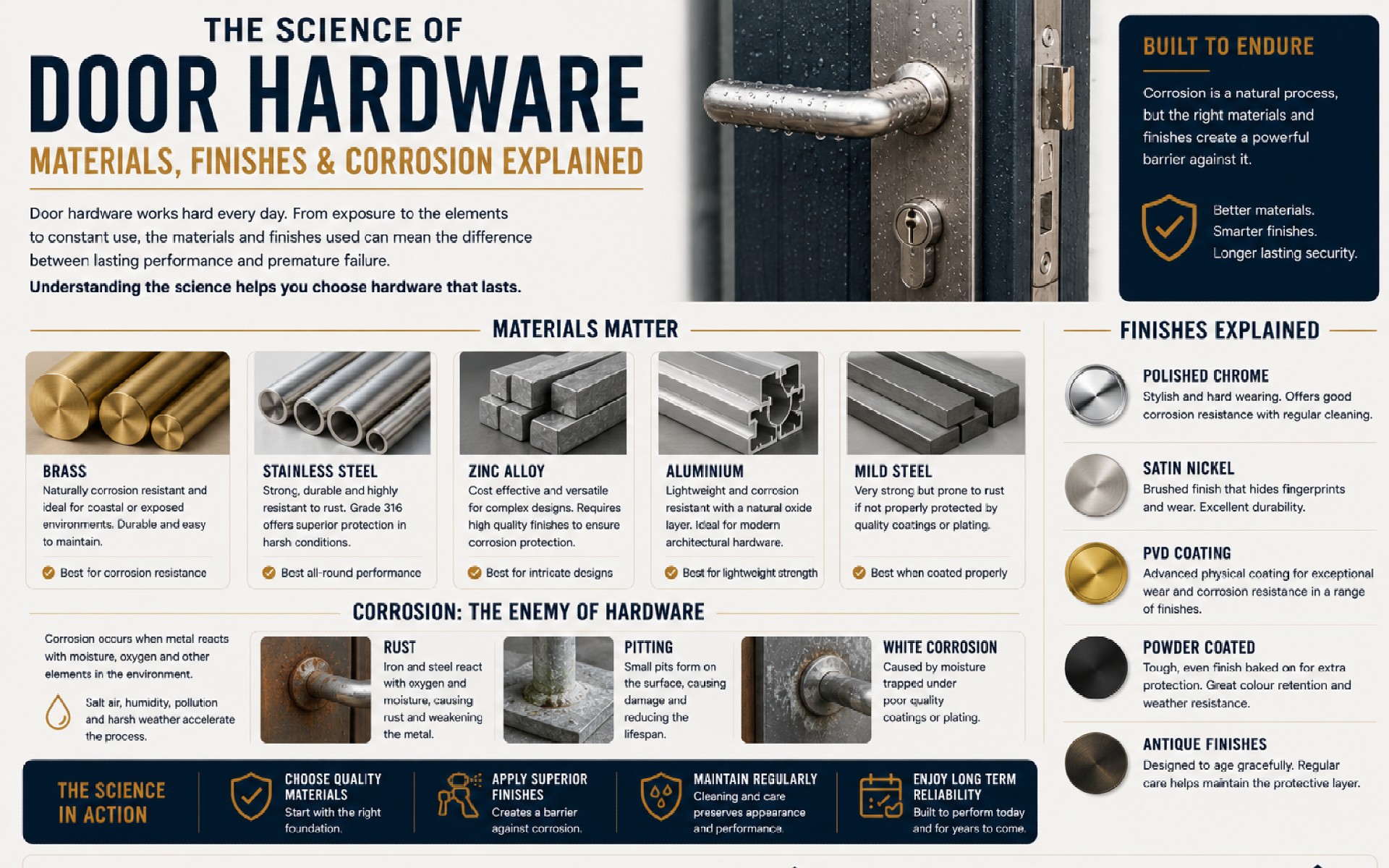
This guide explains the materials and finishes used in modern external door hardware, including stainless steel, brass and zinc alloys. It explores why different metals are chosen for specific components, how powder-coated and polished finishes compare, what causes corrosion, the effects of galvanic corrosion and salt air, and why high-quality fixings play an important role in the long-term durability of door handles, hinges, locks and other external hardware.
Published Date: 28 June 2026
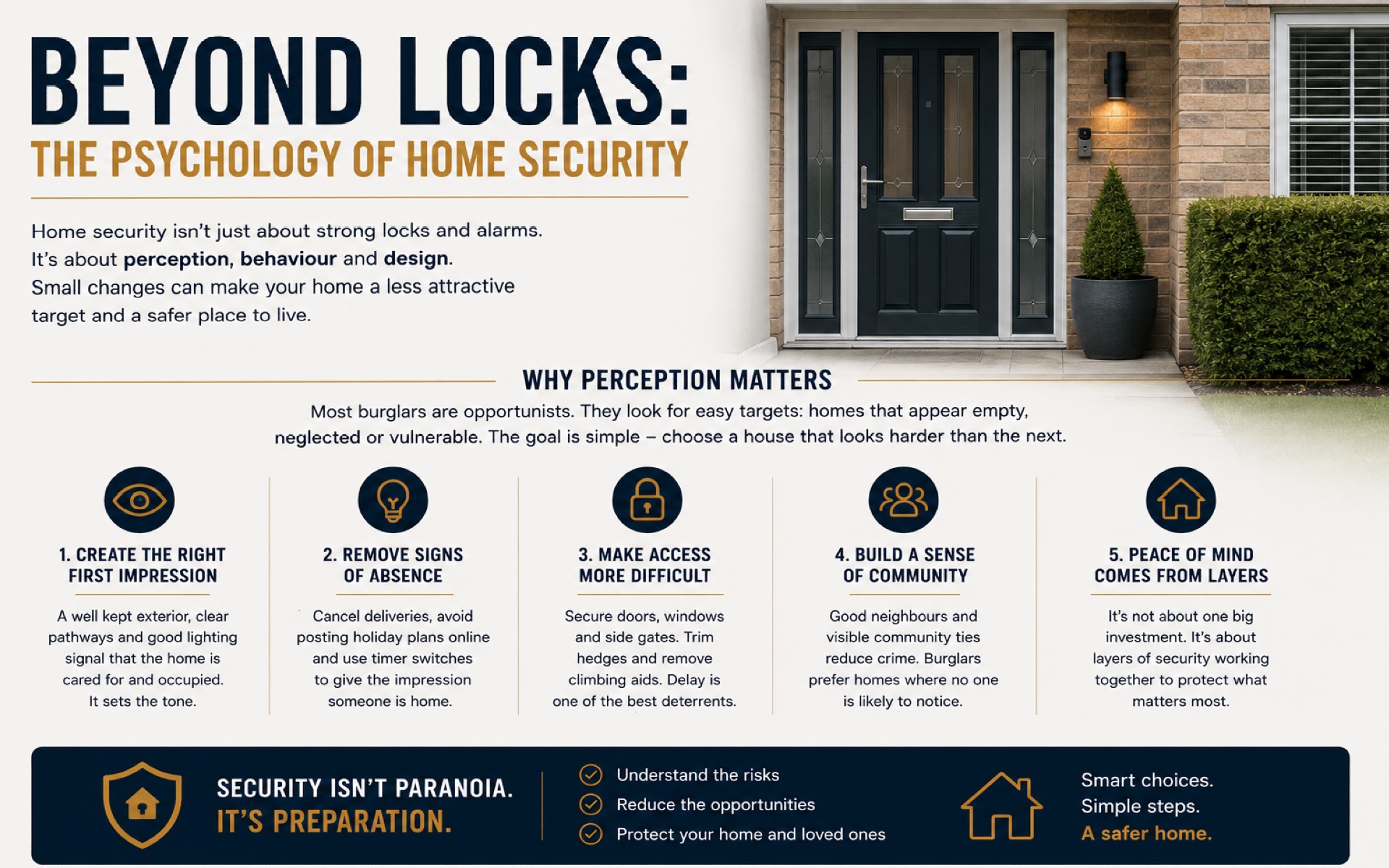
This guide explores the wider principles of residential security, explaining how property maintenance, environmental design, occupancy cues and neighbourhood awareness can influence home security. It discusses why layered security is generally more effective than relying on a single product, how visible signs of occupancy and maintenance may affect opportunist decision-making, and how thoughtful property design can support a more secure home.
Published Date: 28 June 2026
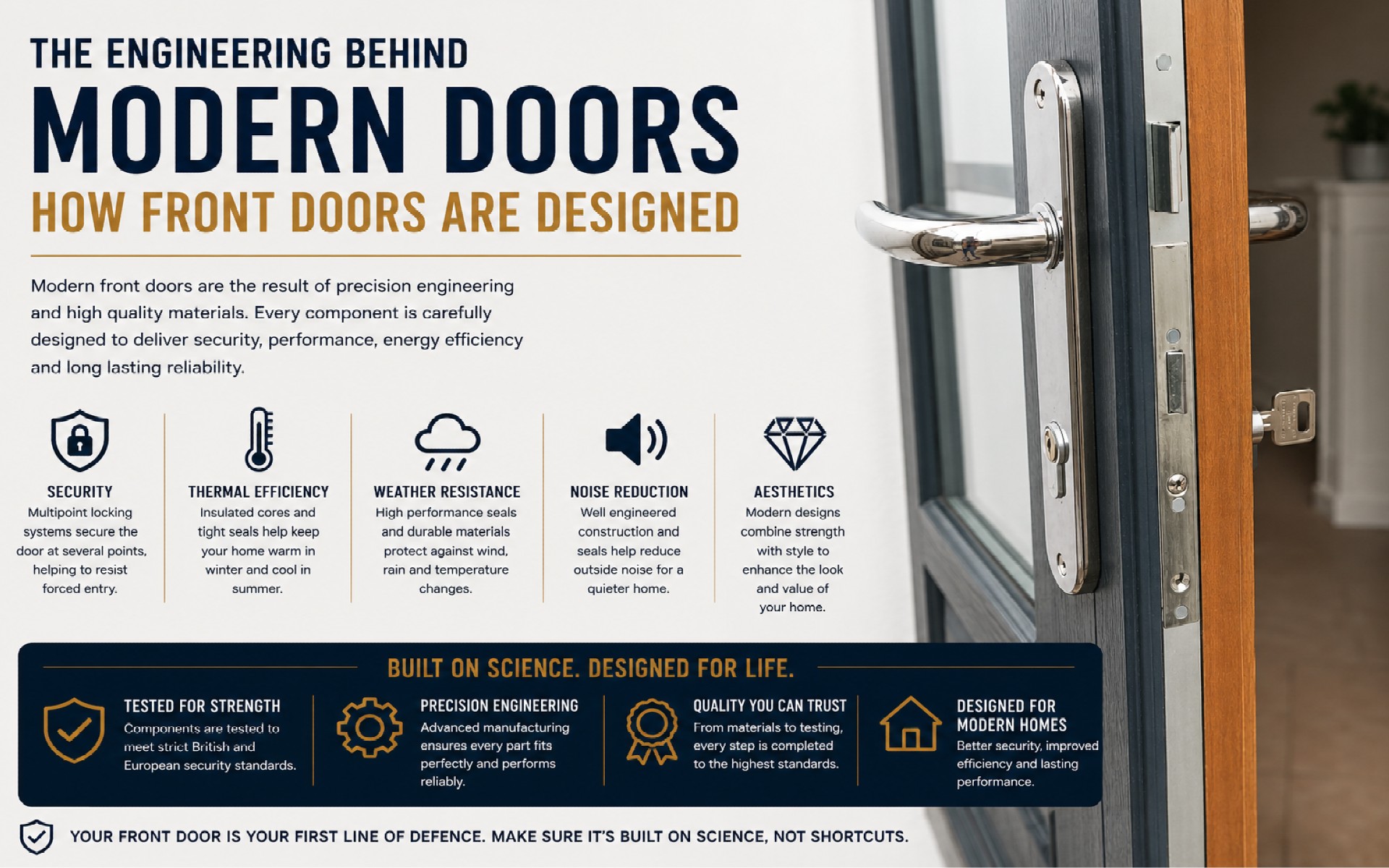
This guide explores the engineering principles behind modern residential doors, explaining why door handles are positioned where they are, why UK front doors usually open inwards, how door weight is calculated and why manufacturers reinforce lock areas. It also examines welded frame construction, anti-twist frame designs, the different core materials used in composite doors and the engineering behind low thresholds. Together, these design features create doors that are stronger, more secure, weather resistant and built to provide reliable performance for many years.
Published Date: 28 June 2026
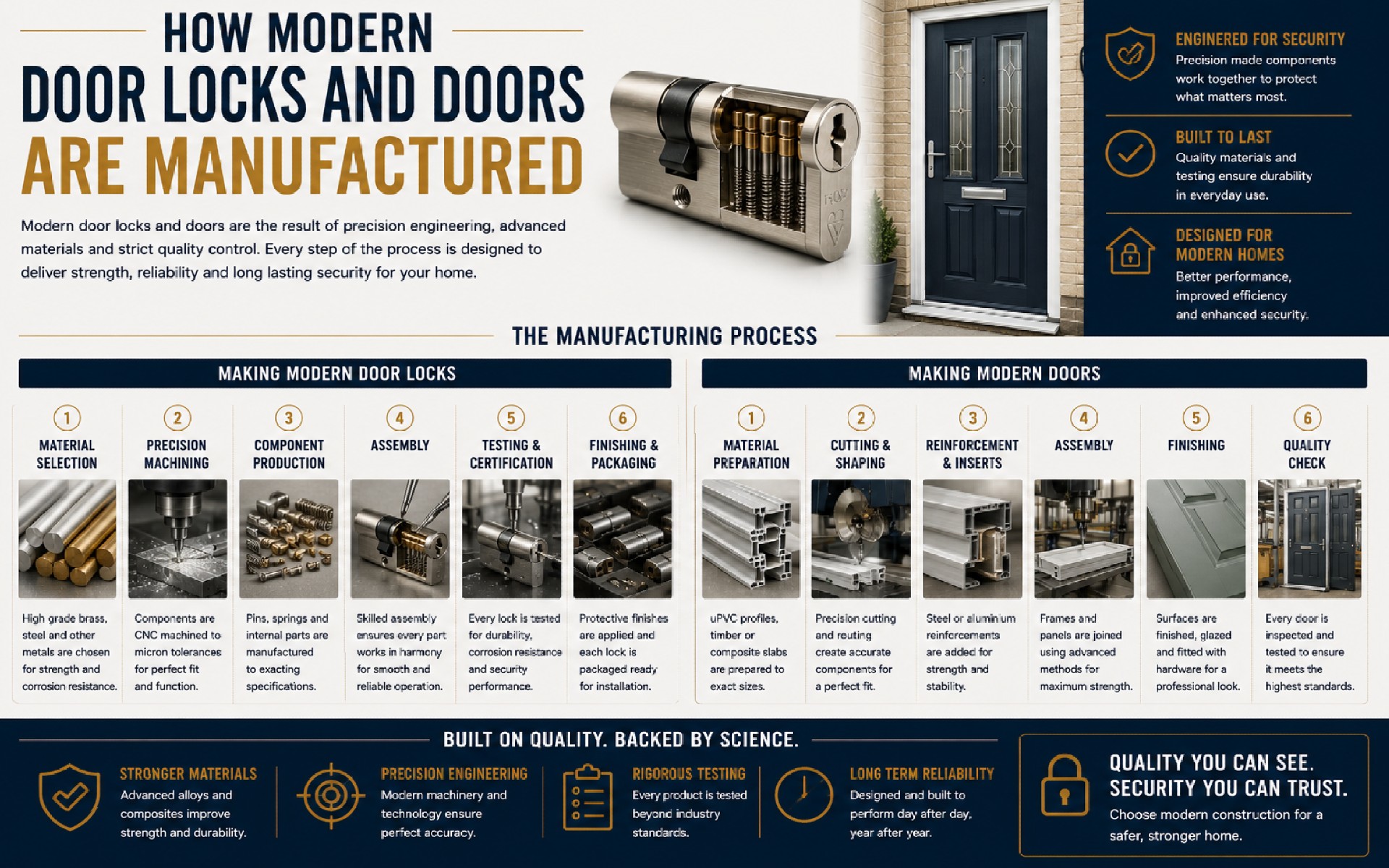
This guide explores the manufacturing processes behind modern doors and locking systems, explaining how euro cylinders are precision engineered, how keys are cut to microscopic tolerances, how hinges and multipoint locks are durability tested, how composite doors receive their weather-resistant finishes and how uPVC profiles are extruded and reinforced. It also explains why different door manufacturers use different lock centres and dimensions, highlighting the importance of precision engineering in producing reliable, secure and long-lasting entrance doors.
Published Date: 28 June 2026
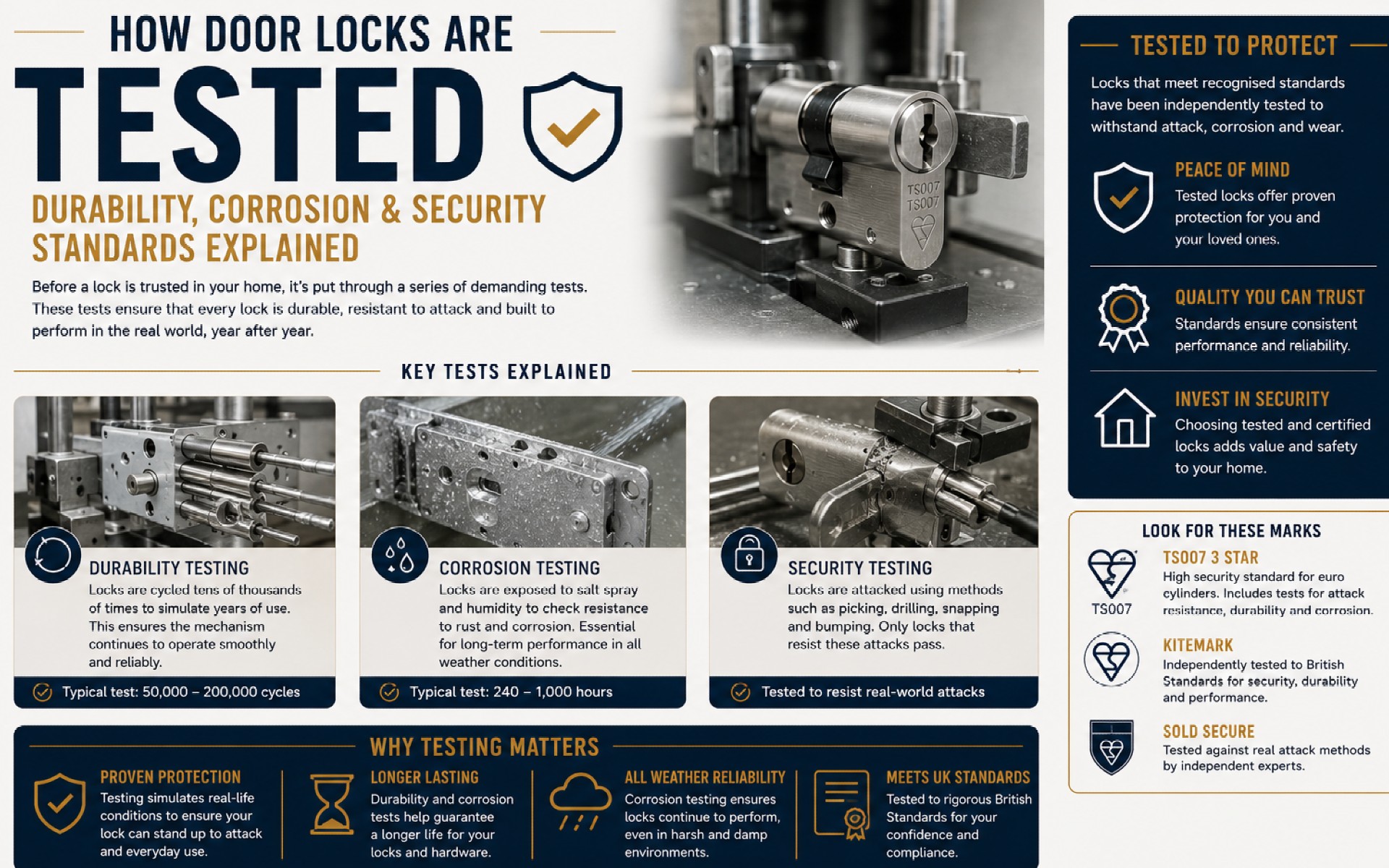
Modern door locks undergo extensive laboratory testing before reaching the market, including endurance cycling, corrosion testing and assessments against recognised security standards. This guide explains how durability testing works, what claims such as "100,000 cycles" actually represent, why security standards evolve over time and how salt spray testing measures corrosion resistance. It also explores why guarantee periods differ between products and why correct installation, maintenance and door alignment remain essential to achieving the longest possible service life.
Published Date: 28 June 2026
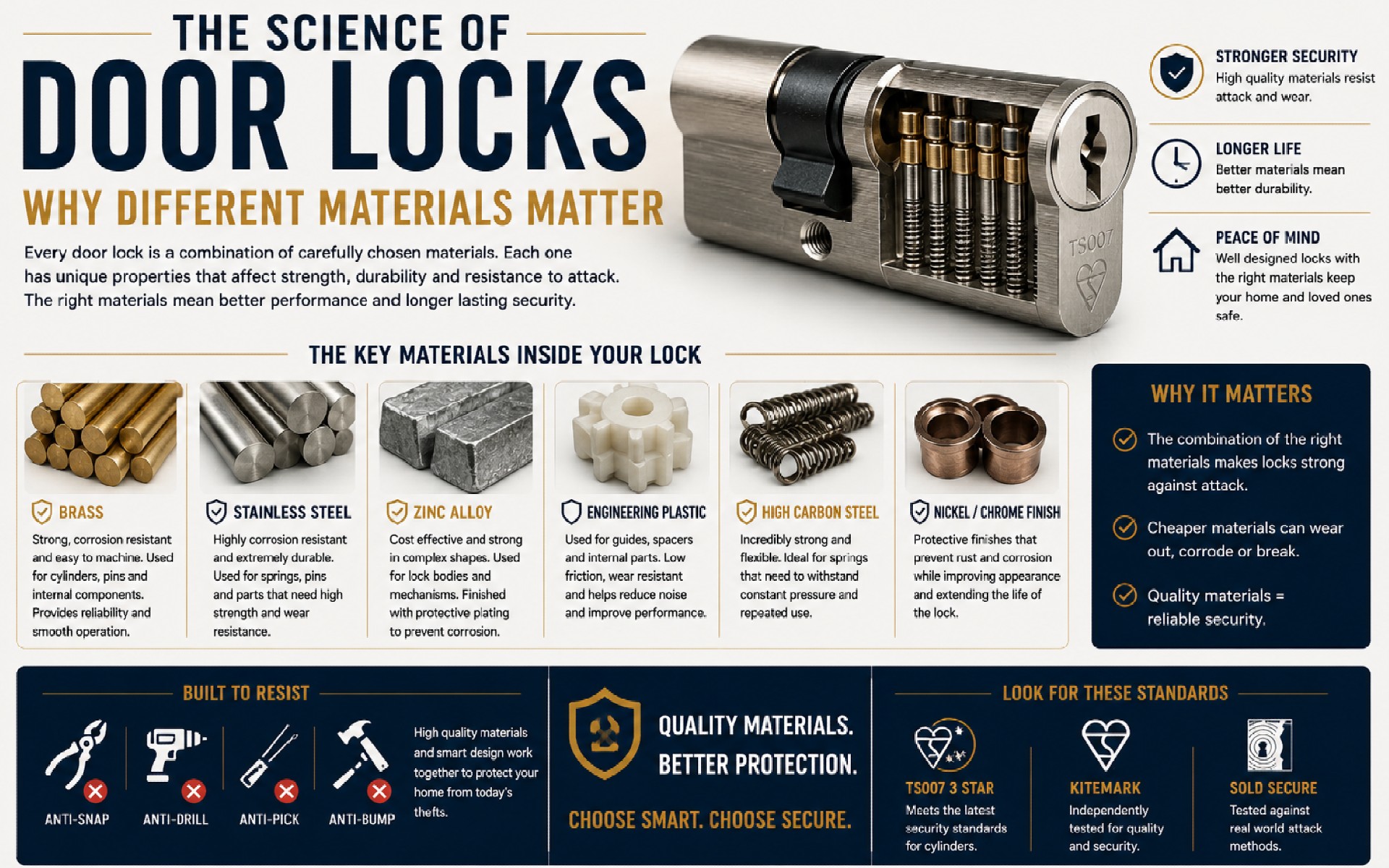
This guide explores the materials used in modern door locks and explains why manufacturers combine brass, hardened steel, stainless steel, zinc alloys and engineering plastics within a single locking system. It examines the role each material plays in providing strength, corrosion resistance, precision, durability and smooth operation, while also explaining how thermal expansion and protective coatings influence the long-term performance of modern multipoint locking mechanisms.
Published Date: 28 June 2026
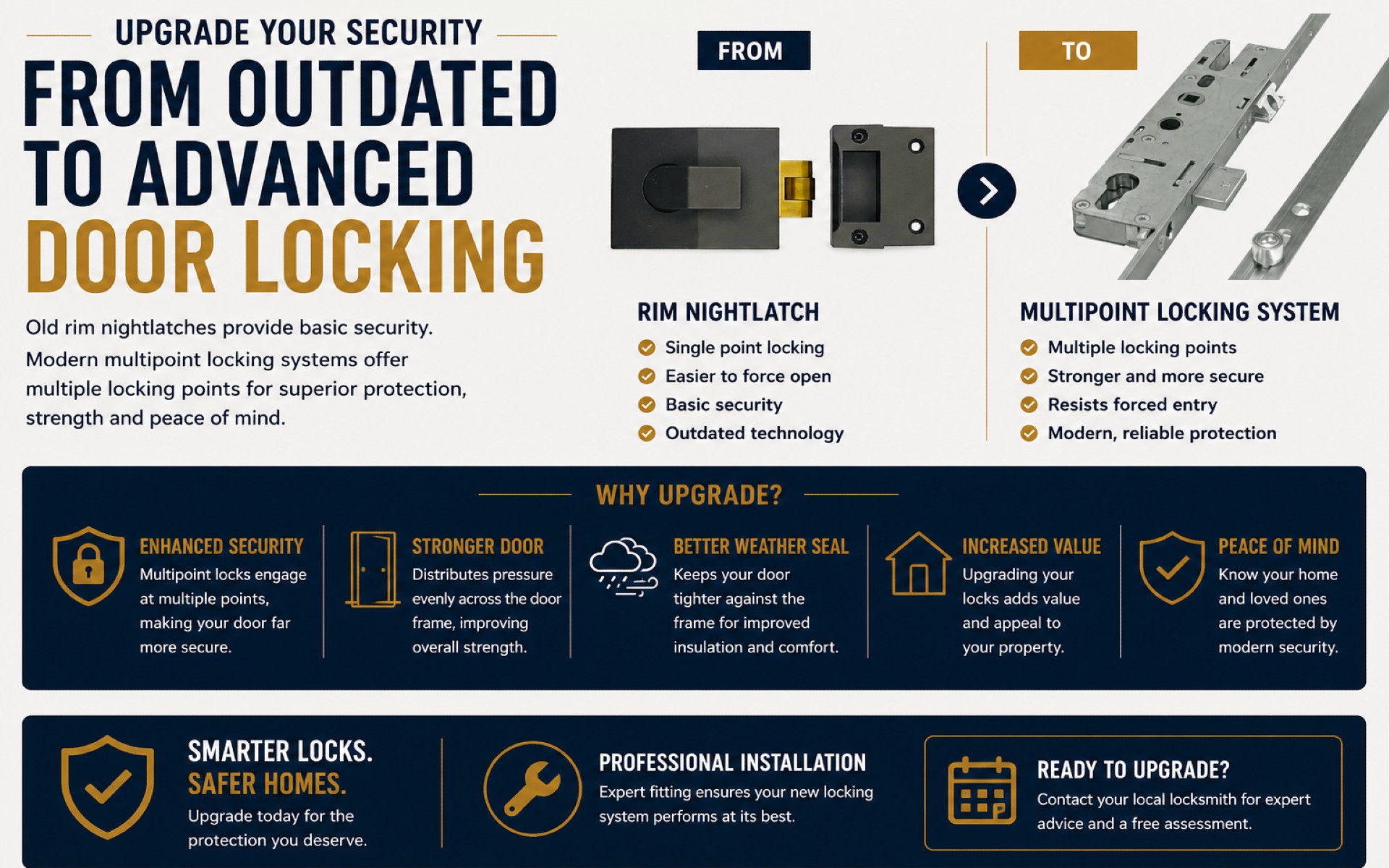
This guide traces the history of residential door security over the past six decades, exploring how front doors, locking systems and security standards have developed in response to changing burglary methods. It explains the rise of the nightlatch, the introduction of multipoint locking mechanisms, the widespread adoption of euro cylinders, the evolution of composite doors and the changing styles of door hardware. It also examines how modern testing standards and new technologies continue to shape the future of home security.
Please fill out your details below regarding the locksmith repair you'are looking for, and we will be in contact with you shortly. Or call us on 07712 445612.We love talking to our customers, and by calling us, we could help you straight away, and your issue could be fixed.