Most Lock Problems Start with the Door
When a door becomes difficult to lock, many homeowners assume the locking mechanism has failed. In reality, the problem often starts with the position of the door rather than the lock itself.
Modern multipoint locking systems are engineered to operate with very little resistance. They rely on the door, frame, hinges and locking points lining up precisely. Even a movement of just a few millimetres can place extra strain on every part of the mechanism.
This guide on common lock faults explains why alignment is so important, how it affects the life of your lock and why dealing with small problems early can save significant repair costs.
Why Does My uPVC Door Need Lifting to Lock?
If you find yourself lifting the handle harder than before, or physically lifting the door to get it to lock, the door has almost certainly moved.
- Worn hinges.
- The weight of the door.
- Building settlement.
- Seasonal expansion and contraction.
- Loose hinge fixings.
As the door drops, the hooks, rollers and latch no longer line up perfectly with the keeps fitted in the frame.
Instead of sliding smoothly into place, the locking mechanism has to force the components into alignment.
This extra effort is transferred directly to the gearbox every time you lock the door. If you're already lifting the door to make it lock,– Why Won't My Door Lock Unless I Lift the Handle? explains why this happens and why it shouldn't be ignored.
How Door Realignment Extends Lock Life
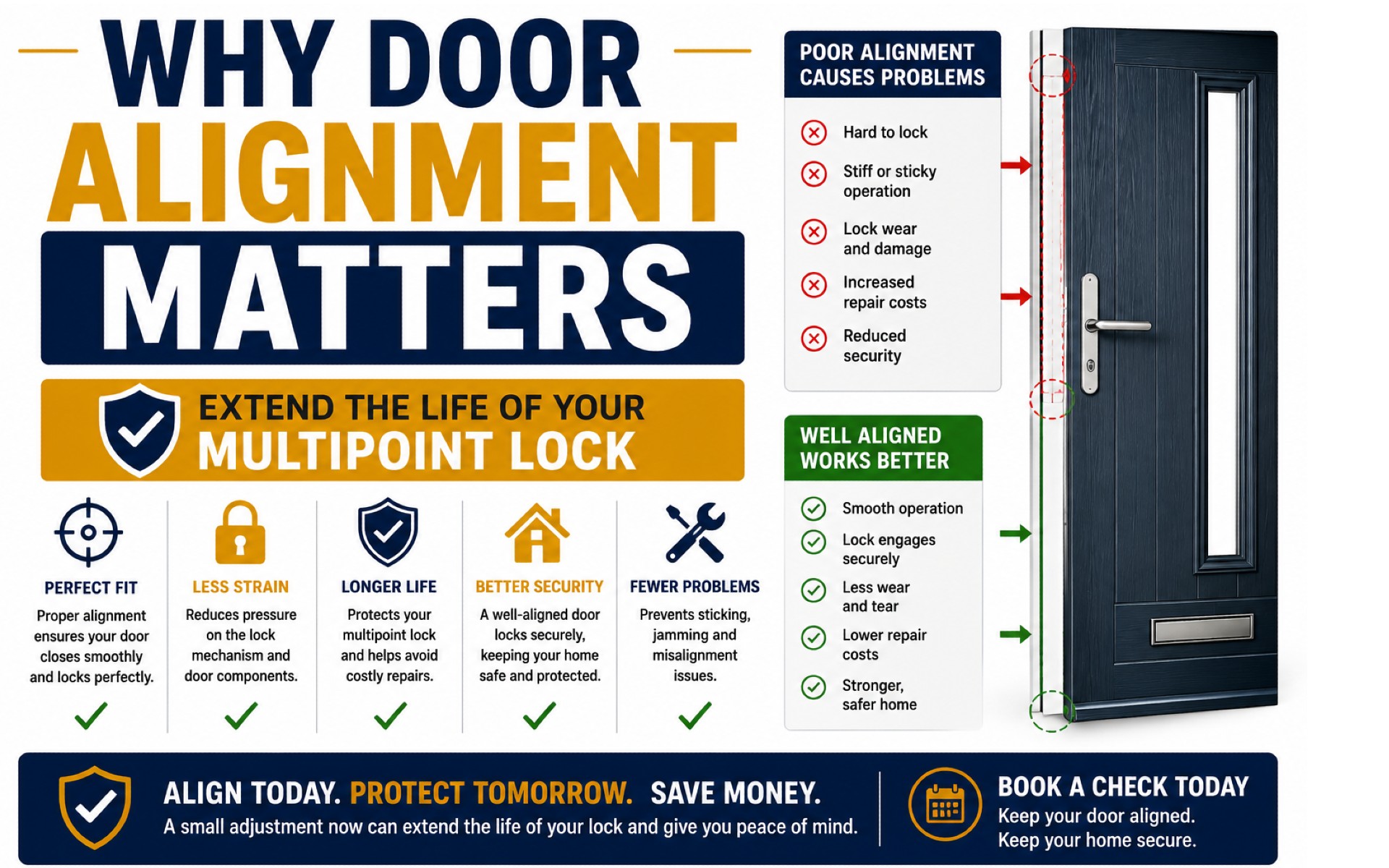
Correct door alignment removes unnecessary strain from the locking mechanism.
When a door is properly adjusted:
- Hooks enter the keeps cleanly.
- Rollers compress the weather seals evenly.
- The latch operates freely.
- The handle lifts with minimal effort.
- The key turns smoothly.
- The gearbox experiences far less stress.
Reducing this resistance helps extend the life of:
- Gearboxes.
- Handles.
- Spindles.
- Euro cylinders.
- Locking points.
A simple adjustment can often add years to the service life of the mechanism.
Signs Your Multipoint Lock Is Nearing Failure
A multipoint lock rarely fails without warning.
Watch for signs such as:
- The handle becoming progressively harder to lift.
- The key becoming stiff.
- Clicking or grinding noises.
- The door only locking with extra force.
- The lock working with the door open but not when closed.
- The handle failing to return fully.
- The door needing lifted slightly before it locks.
These symptoms often indicate the mechanism is working harder than it was designed to. If your lock operates normally with the door open,– Why Is My Door Easier to Lock with the Door Open? explains why alignment is usually the first thing to check as well as why wont my door lock common lock problems.
If left unresolved, wear will continue to increase until a component eventually fails.
Why Does My Door Lock Better in Summer Than Winter?
Many homeowners notice that their door behaves differently throughout the year.
This is because both the door and the frame respond to changing temperatures.
In warmer weather:
- Materials expand slightly.
- Compression against weather seals changes.
- Hinges and frames move by tiny amounts.
In colder weather:
- Materials contract.
- Door gaps alter.
- Existing alignment problems become more noticeable.
If your door only becomes difficult to lock during one season, it is often a sign that the alignment is already close to its operating limits.
Rather than being a fault caused by the weather itself, seasonal changes are simply exposing an underlying issue.
The Hidden Cost of Ignoring Door Alignment Problems
Ignoring a stiff or misaligned door rarely saves money.
Every time the handle is forced upwards or the key is turned against resistance, extra load is placed on the internal components.
Over time this can lead to:
- Premature gearbox failure.
- Broken handles.
- Worn spindles.
- Damaged cylinders.
- Bent locking points.
- Increased repair costs.
What might have been solved with a simple hinge adjustment can eventually require replacement parts that would otherwise have lasted much longer.– How a Stiff Handle Can Lead to Lock Failure explains how this extra strain damages the mechanism over time.
Why the Lock Is Often Blamed Unfairly
The lock is usually the part you notice because it's the component you touch every day.
However, the locking mechanism is often reacting to another problem rather than causing it.
Professional diagnosis typically begins by checking:
- Door gaps.
- Hinge condition.
- Threshold clearance.
- Keep alignment.
- Compression.
- Lock operation with the door open.
Only after these checks should the mechanism itself be condemned. This logical approach is covered in – Door Lock Troubleshooting Guide.
Preventive Maintenance Saves Money
Checking your door once or twice a year can help identify small changes before they become expensive repairs.
Look for:
- Uneven gaps around the frame.
- A handle that feels heavier than usual.
- A key that no longer turns smoothly.
- Rubbing at the threshold.
- Loose hinges or handles.
- The door moving when locked.
Early adjustment is usually quicker, less expensive and places far less strain on the locking system. If your key or handle has already become stiff,– Why Is My Door Lock Stiff? explains why early action can prevent more serious failures.
A Well-Aligned Door Is a Longer-Lasting Door
The lifespan of a multipoint locking mechanism depends on more than the quality of its components. Correct door alignment allows every part of the system to operate with minimal resistance, reducing wear on the gearbox, handles, cylinder and locking points. As doors settle and experience years of daily use, even small changes in alignment can gradually affect performance. Identifying these changes early and carrying out simple adjustments helps keep the door operating smoothly, extends the life of the lock and often prevents far more costly repairs in the future. If you're unsure whether the problem lies with the lock or the door, – Guide to Door Problems provides an overview of the most common faults and how to recognise them.