A Stiff Lock Is Usually a Symptom, Not the Problem
If your door lock has become difficult to operate, don't assume the lock itself has failed. A stiff lock is one of the most common problems homeowners experience, but it's often caused by something else within the door system.
Your door, hinges, frame and multipoint locking mechanism all work together. If one part moves or wears, the lock has to work much harder every time you use it.
Understanding what's causing the resistance can often prevent unnecessary lock replacements.
Does the Lock Feel Stiff Only When the Door Is Closed?
This is the first thing a locksmith will usually check.
If the key turns easily and the handle operates normally with the door open, but becomes stiff when the door is closed, the problem is almost always due to door alignment rather than the lock itself.
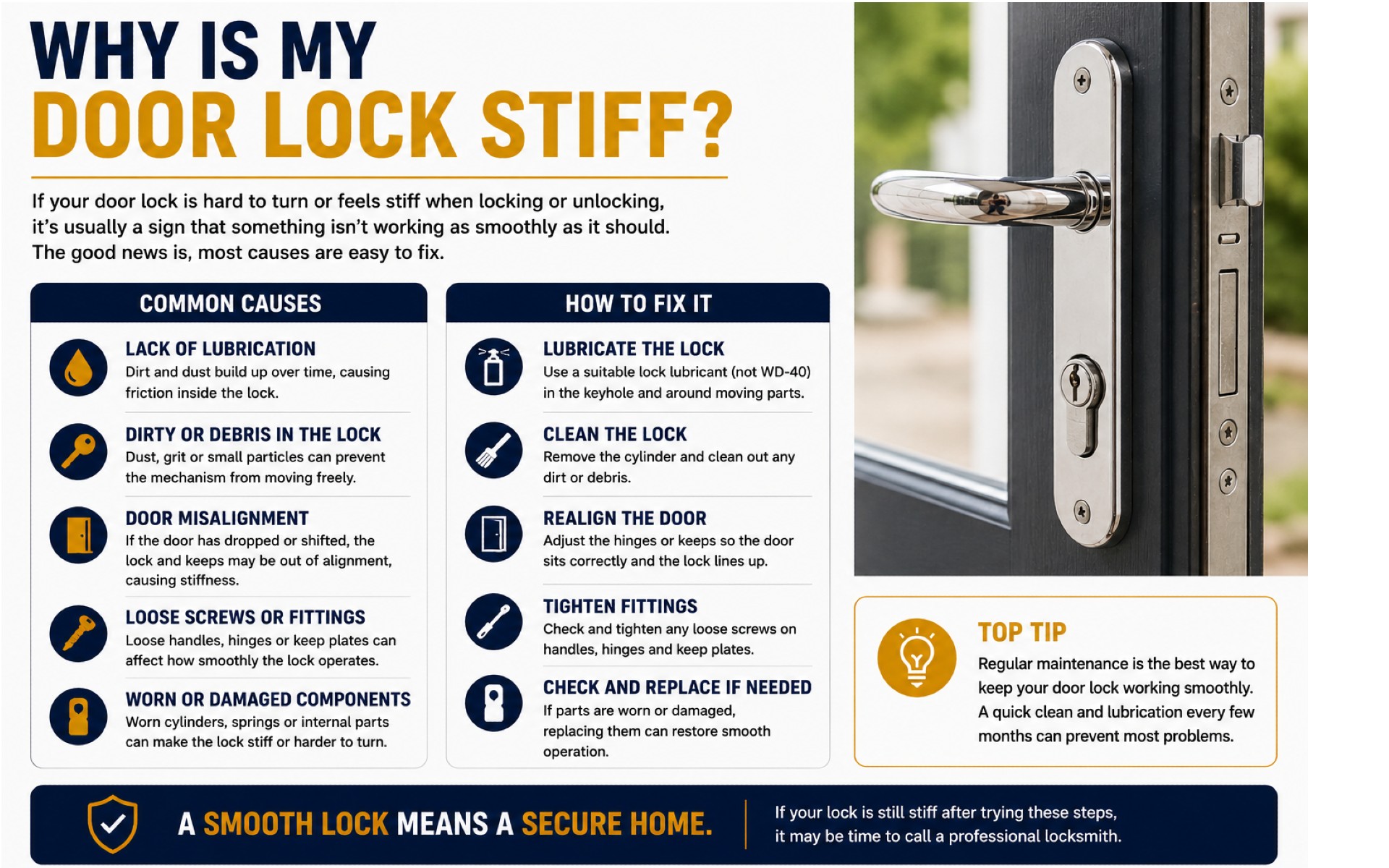
Common causes include:
- Door has dropped slightly.
- Hinges have moved.
- Locking points no longer line up with the keeps.
- The frame has moved over time.
If your door works normally when it's open but becomes difficult to lock once it's closed, Door Works Open but Not Closed explains why this usually points to an alignment issue.
Has the Door Dropped?
Modern uPVC and composite doors are heavy, especially those fitted with large glazed panels.
Years of everyday use can cause:
- Hinges to wear.
- Fixings to loosen.
- The door to settle slightly.
Even a few millimetres of movement can cause the hooks, rollers and deadbolts to bind against the frame.
Is the Gearbox Beginning to Wear?
The gearbox is the heart of a multipoint locking mechanism.
As it wears, you may notice:
- The handle becoming harder to lift.
- The key becoming stiff.
- Key snaps in the lock.
- Clicking or grinding noises.
- Locking requiring more effort.
A worn gearbox can often be replaced without changing the complete multipoint lock.
However, a stiff lock doesn't always mean the gearbox has failed. Every Door Problem Isn't a Lock Problem explains why diagnosing the cause first is so important.
Could the Euro Cylinder Be Worn?
If the key itself is becoming difficult to turn whether the door is open or closed, the cylinder may be worn.
Signs include:
- Key difficult to insert.
- Rough operation.
- Key sticking.
- Difficulty removing the key.
Replacing the cylinder is usually straightforward if it is the source of the problem. If your key is also difficult to remove, see Why Is My Key Difficult to Remove?
Dirt and Lack of Lubrication
External doors are exposed to:
- Dust.
- Dirt.
- Moisture.
- Road grime.
- Salt in coastal areas.
Over time this can affect moving parts.
Regular cleaning and the correct lubricant help keep the mechanism operating smoothly.
Avoid using excessive amounts of oil-based sprays inside the cylinder, as they can attract dirt and make the problem worse.
Seasonal Changes Can Affect Your Door
Many homeowners notice their lock feels stiffer during certain times of the year.
Temperature changes can cause the door and frame to expand or contract slightly.
This doesn't usually create the problem—it simply highlights an alignment issue that already exists.
If your door is harder to lock during winter or summer, it's worth having the alignment checked.
Are You Forcing the Lock?
If the handle needs excessive force or the key feels unusually tight, avoid forcing it.
Repeatedly applying extra pressure can damage:
- The gearbox.
- The euro cylinder.
- The handles.
- The spindle.
- The locking points.
A minor adjustment today may prevent a major repair later. How a Stiff Handle Can Lead to Lock Failure explains how continued strain can eventually cause internal components to fail.
How a Locksmith Diagnoses a Stiff Lock
Rather than replacing parts immediately, a professional locksmith will usually check:
- Does the lock work with the door open?
- Are the door gaps even?
- Has the door dropped?
- Are the hinges secure?
- Do the locking points line up correctly?
- Is the cylinder worn?
- Is the gearbox operating smoothly?
These checks help identify the real cause of the problem. Door Lock Troubleshooting Guide explains the step-by-step process used to diagnose common door faults.
Signs Your Door Needs Attention
Arrange a repair if you notice:
- The lock becoming progressively stiffer.
- The handle difficult to lift.
- The key harder to turn.
- Key difficult to remove.
- The door rubbing the frame.
- The door needing to be pushed or pulled while locking.
- Clicking or grinding noises.
- The lock working differently with the door open.
These are often early warning signs that something within the door system requires attention. If your key only turns part of the way, explains the most common causes.
Most Stiff Locks Can Be Repaired
A stiff lock doesn't automatically mean you need a new locking mechanism or a new door. In many cases, the problem is caused by a dropped door, worn hinges, poor alignment or a component that has begun to wear. Correcting the underlying fault often restores smooth operation, reduces unnecessary strain on the locking mechanism and helps extend the life of the entire door system.
If your lock becomes so stiff that the handle no longer lifts or the door refuses to lock.