Every Door Problem Isn't a Lock Problem
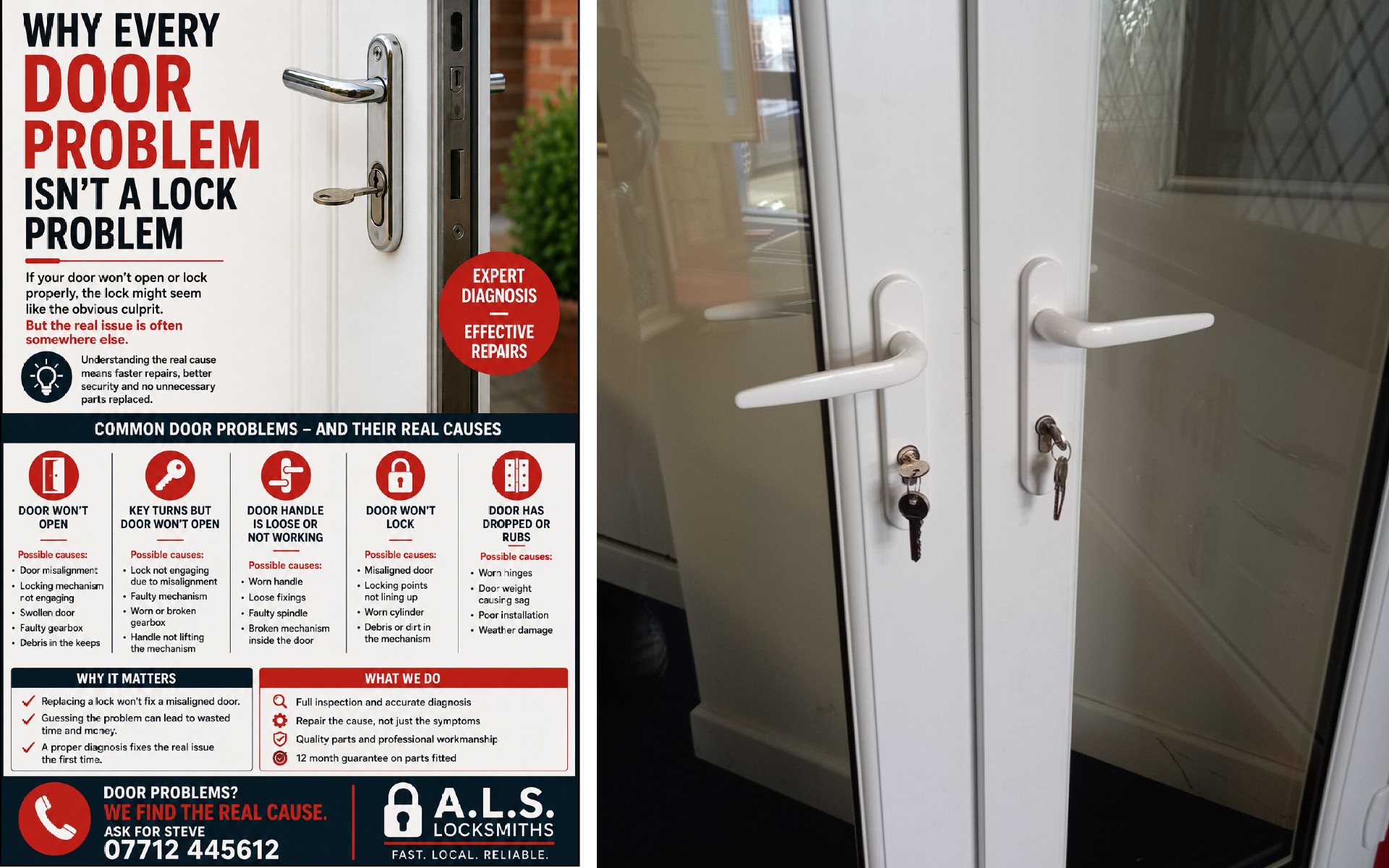
When a door becomes difficult to lock or unlock, most people immediately assume the lock has failed. While that can certainly be the case, it's often not the real cause of the problem.
In many cases, the lock is simply reacting to another fault elsewhere on the door. Replacing the lock without identifying the underlying issue may not solve the problem—and can even lead to the same fault happening again.
A Dropped Door
One of the most common causes of lock problems is a door that has gradually dropped on its hinges.
Even a movement of just a few millimetres can cause the locking points to miss the keeps in the frame.
Typical symptoms include:
- The handle becoming difficult to lift.
- Having to push or pull the door to lock it.
- The key becoming stiff.
- The door catching the frame.
- Uneven gaps around the door.
The lock isn't necessarily faulty—it's simply working against resistance. To understand why this happens, see – Why Door Alignment Matters.
Door Alignment Problems
Correct door alignment is essential for a multipoint locking system.
When the door is out of alignment:
- Hooks and rollers don't line up properly.
- The gearbox works harder.
- Internal components wear more quickly.
- The handle becomes stiff.
- The key becomes difficult to turn.
Simply replacing the lock won't remove this unnecessary strain.
Worn Hinges
Over years of use, hinges can develop wear or slight movement.
This can allow the door to:
- Drop slightly.
- Twist within the frame.
- Move away from its original position.
The locking mechanism may still be working perfectly—it just can't engage correctly because the door has moved.
Loose or Worn Handles
A floppy handle doesn't automatically mean the locking mechanism has failed.
The problem may simply be:
- Worn return springs.
- Loose fixing screws.
- Internal handle wear.
However, it's always worth checking whether the handle has become damaged because of a stiff locking mechanism underneath.– How a Stiff Handle Can Lead to Lock Failure explains how this can happen.
A Worn Lock Cylinder
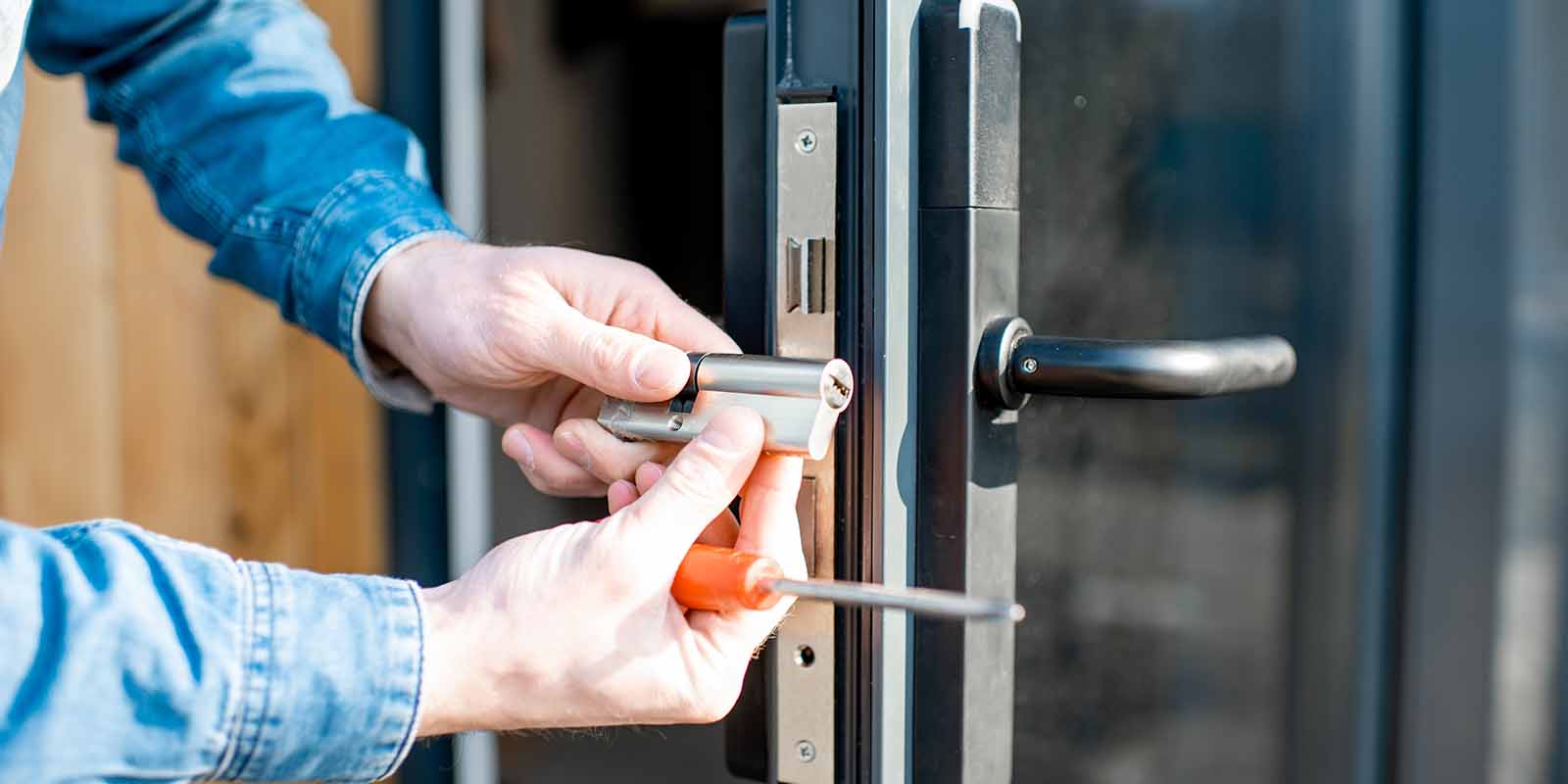
Sometimes the locking mechanism is fine, but the cylinder has reached the end of its life.
Signs include:
- The key sticking.
- Difficulty turning the key.
- The key becoming difficult to remove.
- Rough operation.
Replacing the cylinder may be all that's required. If you're experiencing these symptoms,– Why Is My Key Difficult to Remove? explains the most common causes.
The Gearbox Could Be the Problem
If the door is correctly aligned but the handle remains stiff, the gearbox may be beginning to fail.
Common symptoms include:
- The handle lifting but nothing happening.
- The locking points failing to move.
- Intermittent operation.
- Grinding or clicking noises.
In these cases, replacing the gearbox is often the correct repair.
Sometimes the Complete Mechanism Has Worn Out
If the gearbox isn't the only worn component, the repair may involve replacing the complete multipoint locking mechanism.
This is often necessary when there are:
- Broken connecting rods.
- Seized locking points.
- Damaged hooks or rollers.
- Extensive internal wear.
Again, the door itself is rarely the problem.
Accurate Diagnosis Saves Money
Replacing parts without identifying the real cause often leads to unnecessary expense.
For example:
- Replacing a cylinder won't fix a failed gearbox.
- Replacing a gearbox won't solve a dropped door.
- Replacing handles won't repair a worn multipoint mechanism.
- Fitting a new lock without realigning the door may simply result in another failure.
The correct repair starts with the correct diagnosis. – Door Lock Troubleshooting Guide explains the systematic approach used to identify the true cause of door and lock faults.
A Complete Repair Includes Door Realignment
If a gearbox or multipoint mechanism has failed because the door has dropped, replacing the faulty parts is only half the repair.
The door should always be checked and adjusted afterwards to ensure:
- The handle lifts effortlessly.
- The key turns smoothly.
- The locking points engage correctly.
- The new components aren't placed under unnecessary strain.
- The repair lasts for many years.
Ignoring the alignment often means the replacement parts will eventually suffer the same fate as the originals. If your door only works properly when it's open,– Door Works Open but Not Closed explains why correcting the alignment is usually the permanent solution.
Treat the Cause, Not Just the Symptoms
A stiff handle, difficult key or door that won't lock doesn't automatically mean the lock has failed. Very often, the locking mechanism is simply responding to another issue such as poor alignment, worn hinges or a dropped door. Identifying the true cause is the difference between a temporary fix and a long-lasting repair. By repairing the fault rather than just replacing parts, you can restore smooth operation, improve security and avoid the unnecessary cost of replacing a perfectly good door. If you're unsure where to start, – Guide to Door Problems provides an overview of the most common door and locking faults and how they can be diagnosed.