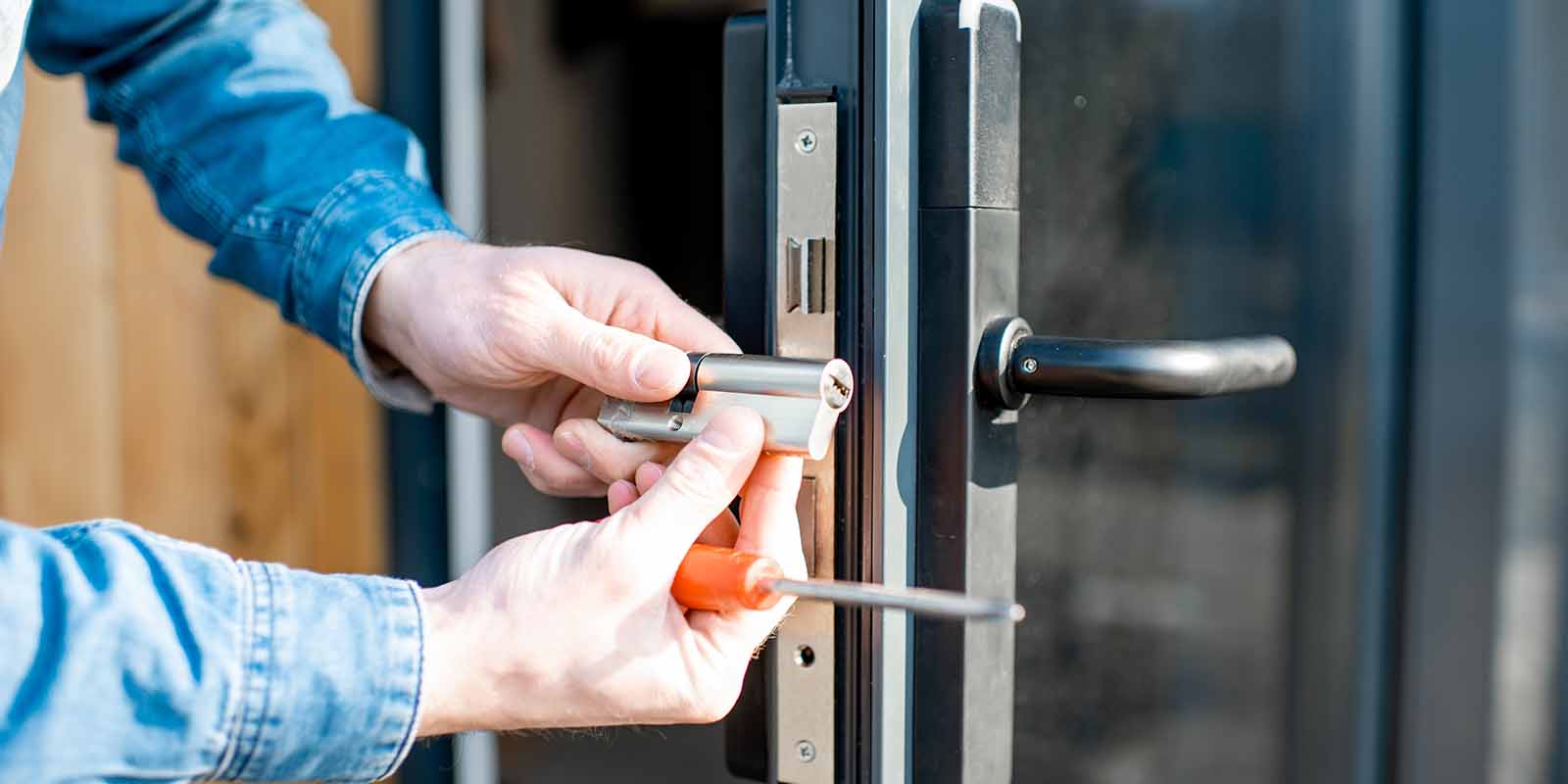
.jpg "A–Z of Common Lock Faults The Complete Homeowner's Guide to Diagnosing Door Lock Problems")
Introduction
Door locks rarely fail without warning. Most develop small faults over time, such as a stiff key, a handle that doesn't return properly or a lock that only works when the door is open.
These early symptoms often indicate wear elsewhere in the door system rather than complete lock failure. A dropped door, worn gearbox, poor alignment or ageing cylinder can all produce similar symptoms, making accurate diagnosis essential before replacing parts.
This A–Z guide explains the most common lock faults, what they mean, their most likely causes and links to our in-depth guides covering repairs, maintenance and security.
Common Lock Symptoms
Not sure what's wrong? Start with one of these common problems.
- Lock won't turn unless lifted
- Key difficult to remove
- Key only turns halfway
- Lock feels stiff
- Door won't lock
- Door won't unlock
- Key snapped in the lock
- Lock works with the door open
- Handle won't lift
- Easier to lock with door open
- Lock jams occasionally
A
Alignment Problems
Symptoms
- Handle difficult to lift
- Key stiff
- Lock only works with the door open
Common Causes
- Door dropped
- Hinge wear
- Building movement
Usually repairable through professional door realignment.
Complete Guide
➡ Complete Guide to Door Alignment & Lock Performance
Anti-Snap Lock Damage
Modern TS007 anti-snap cylinders are designed to resist one of the most common burglary methods used against Euro cylinders.
Complete Guide
➡ Complete Guide to Euro Cylinder Door Locks
Related Articles
- Do Anti-Snap Locks Really Work?
- What Makes a Lock Snap Resistant?
B
Broken Gearbox
The centre gearbox has failed internally.
Symptoms
- Handle loose
- Door won't unlock
- Key turns but nothing happens
Often repairable by replacing the gearbox rather than the complete locking mechanism.
Complete Guide
➡ Complete Guide to Multipoint Locking Systems
C
Cylinder Failure
The Euro cylinder has worn internally.
Symptoms
- Key difficult to insert
- Key sticks
- Key won't turn
Usually solved by replacing the cylinder.
Complete Guide
➡ Complete Guide to Euro Cylinder Door Locks
D
Dropped Handle
The handle no longer springs back correctly.
Symptoms
- Lever hangs down
- Poor latch operation
Usually Caused By
- Broken spring cassette
- Door misalignment
- Worn handles
Complete Guide
➡ Complete Guide to uPVC & Composite Door Handles
E
Excessive Force Required
A healthy door should operate smoothly.
If excessive force is needed there is usually another underlying fault rather than a worn lock alone.
Possible causes include poor alignment, worn mechanisms or increased compression.
F
Failed Centre Case
The centre case houses the gearbox and forms the heart of the multipoint locking system.
Wear here can prevent the entire mechanism operating correctly.
Complete Guide
➡ A to Z of door problems and trouble shooting.
G
Gearbox Wear
One of the most common causes of multipoint lock failure.
Symptoms
- Clicking
- Stiff operation
- Handle won't lift
Complete Guide
➡ Complete Guide to door problems explained.
H
Handle Spring Failure
The return springs inside the handles have broken.
Usually requires replacement handles.
Complete Guide
➡ Can a stiff handle cause lock failures?
I
Incorrect Adjustment
Poor hinge adjustment causes locking problems that are often mistaken for lock failure.
Complete Guide
➡ Complete Guide to Door Alignment & Lock Performance
J
Jammed Mechanism
Internal components have seized.
Possible Causes
- Broken gearbox
- Bent locking points
- Corrosion
Complete Guide
➡ Complete Guide to Multipoint Locking Systems
K
Key Will Not Turn
Possible Causes
- Door alignment
- Failed cylinder
- Broken gearbox
- Dirt inside the lock
- Lack of lubrication
Complete Guide
➡ Complete Guide to Euro Cylinder Door Locks
L
Loose Handles
Usually Caused By
- Loose fixing screws
- Worn backplates
- Broken fixing threads
Complete Guide
➡ Complete Guide to uPVC & Composite Door Handles
M
Misaligned Locking Points
Hooks or rollers no longer enter their keeps correctly.
Usually Caused By
- Door movement
- Hinge wear
Complete Guide
➡ Complete Guide to Door Alignment & Lock Performance
N
Noisy Lock
Symptoms
- Grinding
- Clicking
- Scraping
Usually indicates:
- Lack of lubrication
- Alignment issues
- Internal wear
O
Obsolete Mechanism
Replacement parts may no longer be manufactured.
Experienced locksmiths can often source:
- Genuine old stock
- Compatible alternatives
- Replacement gearboxes
P
Poor Compression
The door no longer seals tightly against the frame.
Symptoms
- Draughts
- Door movement
- Rattling
Usually indicates adjustment is required.
Q
Quiet Clicking
Often an early warning sign.
May indicate:
- Worn gearbox
- Handle spring wear
- Locking point wear
R
Roller Wear
Compression rollers no longer operate smoothly.
Symptoms
- Difficult locking
- Poor weather sealing
S
Sticking Lock
One of the most common homeowner complaints.
Possible Causes
- Door alignment
- Dirt
- Worn cylinder
- Failed gearbox
T
Tight Handle
The handle requires more effort than before.
Usually indicates:
- Door misalignment
- Increased compression
- Gearbox wear
U
Uneven Lock Engagement
Some hooks engage before others.
Usually caused by poor door alignment.
V
Vertical Door Movement
The door has dropped.
Common Symptom
- Lock difficult to operate
W
Worn Latch
The latch no longer retracts smoothly.
Symptoms
- Door won't close
- Door won't latch
X
eXcessive Wear
General wear affecting multiple components.
Usually found on locking mechanisms over 15–20 years old.
Y
Yellowed Lubricant Build-Up
Old grease hardens over time.
Can cause:
- Stiff operation
- Dirt build-up
- Increased wear
Cleaning and re-lubricating may restore smoother operation.
Z
Zero Engagement
The locking points no longer enter the keeps correctly.
Usually caused by:
- Severe door movement
- Failed hinges
- Incorrect adjustment
The door may appear locked while providing very little real security.
Most Lock Faults Are Repairable
Many homeowners assume a faulty lock means replacing the entire mechanism or even the whole door. In reality, most problems develop gradually and are often caused by alignment issues, worn handles, tired gearboxes or ageing cylinders rather than complete lock failure.
Identifying the underlying cause early can prevent unnecessary damage, extend the life of the locking system and often result in a much more cost-effective repair.
For more detailed information, continue to our complete guides covering door problems, door alignment, multipoint locking systems, Euro cylinders, door handles and home security.