A Sticking Key Is Usually a Warning Sign
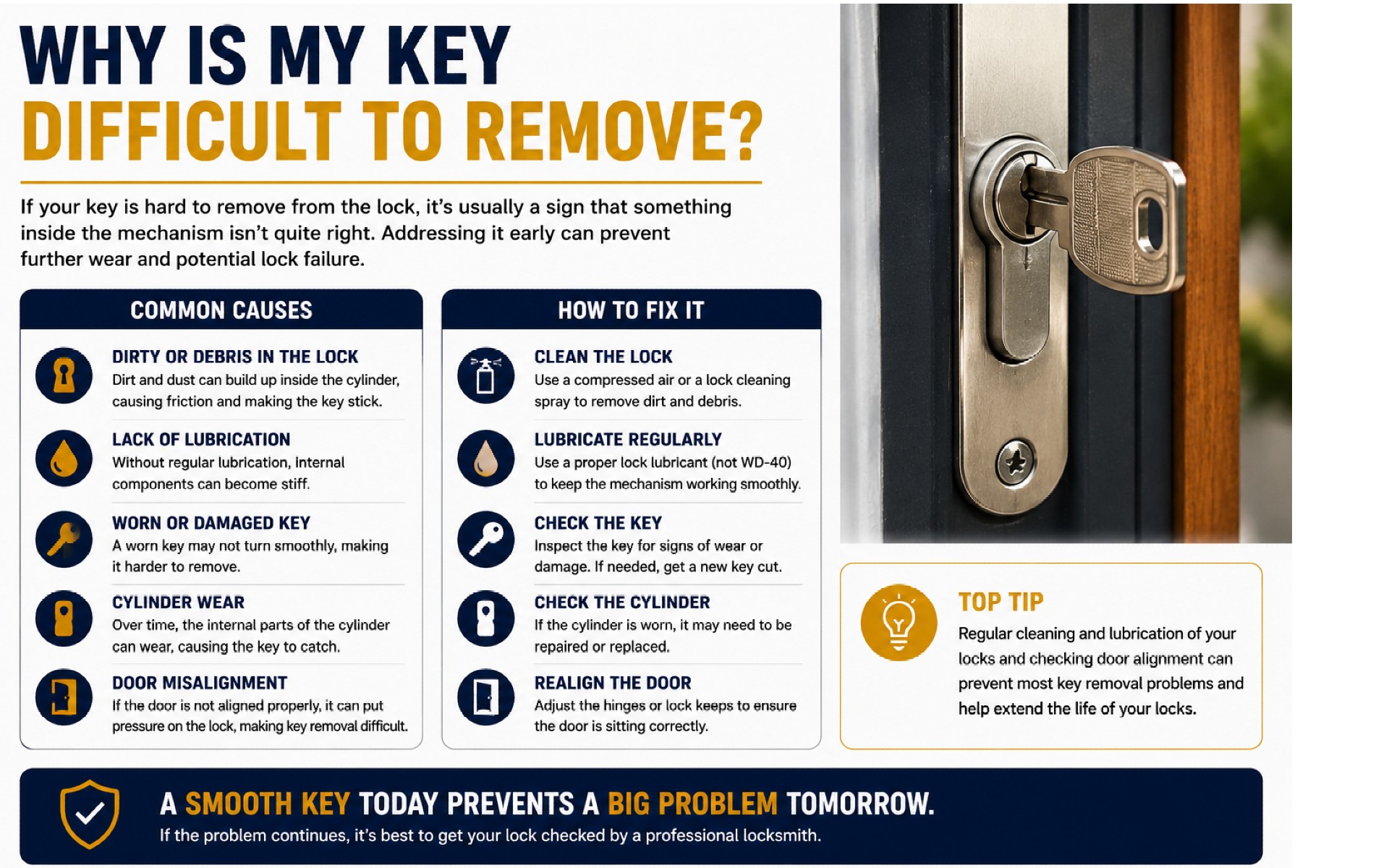
If your key has become difficult to remove after locking or unlocking your door, don't ignore it. While it may seem like a minor inconvenience, it's often an early indication that something within the locking system isn't operating as it should.
In many cases, the problem can be resolved before it develops into a complete lock failure or a snapped key.
Is It Difficult to Remove Only When the Door Is Closed?
This is one of the first questions a locksmith will ask.
If the key comes out easily with the door open but sticks when the door is closed, the euro cylinder is often not the problem.
The most likely cause is that the door has moved out of alignment.
When the locking points don't line up correctly with the keeps, extra pressure is placed on the cylinder and key. This pressure can stop the key returning fully to its normal position, making it difficult to remove.
If you notice the lock works differently with the door open, – Door Works Open but Not Closed explains why this usually points to an alignment issue rather than a faulty lock.
Is the Key Returning Fully?
Most euro cylinders only release the key when the internal mechanism returns to its correct position.
If the key stops a few degrees short, it may feel trapped in the lock.
This can happen because of:
- Door misalignment
- Gearbox wear
- A worn cylinder
- Excessive pressure on the locking mechanism
Could the Cylinder Be Worn?
Like any mechanical component, euro cylinders wear over time.
Signs of a worn cylinder include:
- The key feels rough when turning.
- The key sticks when entering or leaving the lock.
- Different keys behave the same way.
- The problem occurs whether the door is open or closed.
Replacing a worn cylinder is often a straightforward repair. If your key also only turns part of the way, – Why Does My Key Only Turn Half Way? covers another common symptom of cylinder and locking problems.
Could the Gearbox Be Causing the Problem?
The gearbox works together with the euro cylinder every time you lock or unlock the door.
If internal parts begin to wear, they may prevent the cylinder from returning smoothly after the key has been turned.
Other symptoms may include:
- Stiff handle.
- Clicking noises.
- Key difficult to turn.
- Lock becoming progressively harder to operate.
It's important to diagnose the cause before replacing parts, as Every Door Problem Isn't a Lock Problem explains.
Dirt and Lack of Lubrication
Over time, dust, dirt and worn lubricant can affect the small pins inside the cylinder.
This may cause:
- Rough key movement.
- Keys sticking.
- Difficulty removing the key.
Use a lock-specific lubricant designed for cylinders. Avoid oil-based sprays that can attract dirt and eventually make the problem worse.
Could the Key Be Worn?
Keys wear as well.
A worn or poorly cut duplicate may not align the pins inside the cylinder correctly.
Check whether:
- The original key works better.
- The key is bent.
- The teeth are noticeably worn.
- The key has suffered previous damage.
Sometimes replacing a worn key solves the problem before further wear occurs inside the cylinder.
Don't Pull the Key Out by Force
If the key feels stuck:
- Don't twist it aggressively.
- Don't use pliers.
- Don't force it out.
Applying excessive force can bend or snap the key, leaving part of it inside the cylinder and turning a simple repair into a much larger job. If your lock is also becoming difficult to turn, Why Is My Door Lock Stiff? explains the most common underlying causes.
How a Locksmith Diagnoses the Problem
A professional locksmith will usually check:
- Does the key remove easily with the door open?
- Is the door correctly aligned?
- Does the cylinder rotate smoothly?
- Are the locking points binding?
- Is the gearbox operating correctly?
- Is the key worn or damaged?
These checks help identify the true cause before replacing any parts. Door Lock Troubleshooting Guide explains the logical process used to diagnose these faults.
When Should You Have It Checked?
Arrange an inspection if:
- The key becomes progressively harder to remove.
- It only happens when the door is closed.
- The handle is also becoming stiff.
- The key won't always return to its starting position.
- The lock occasionally jams.
- You have to wiggle the key before it comes out.
Early diagnosis can prevent damage to the cylinder, gearbox and key. If your door has also become harder to lock or unlock, Why Door Alignment Matters explains why correcting the alignment early can prevent more expensive repairs.
Small Problems Often Lead to Bigger Ones
A key that is difficult to remove is rarely just an inconvenience. It often indicates that the locking system is under unnecessary strain or that a component is beginning to wear. Whether the cause is poor door alignment, a worn euro cylinder or a gearbox that's starting to fail, dealing with the problem early can prevent a snapped key, complete lock failure or more expensive repairs. A door should lock, unlock and release the key smoothly without excessive effort. If you're experiencing several of these symptoms together, Guide to Door Problems can help you identify the most likely cause before deciding what needs repairing.