It's One of the Biggest Clues a Locksmith Looks For
If your door locks perfectly when it's open but becomes stiff, difficult or impossible to lock when it's closed, you've already provided one of the biggest clues to diagnosing the problem.
In most cases, the lock isn't actually faulty.
Instead, the door and frame are no longer perfectly aligned, causing the locking points to bind against the keeps. The lock is simply struggling to overcome the extra resistance.
Understanding why this happens can help prevent unnecessary lock replacements and more expensive repairs later.
Why Does It Lock Normally When the Door Is Open?
With the door open, the locking mechanism moves freely because nothing is obstructing it.
The:
- Latch
- Hooks
- Rollers
- Deadbolt
- Gearbox
can all operate without engaging the frame.
If everything works smoothly with the door open, it usually means the internal mechanism is still functioning correctly.
The problem only appears once the locking points have to enter their keeps.
This is one of the clearest signs that the problem lies with the door rather than the lock itself. – Every Door Problem Isn't a Lock Problem explains why.
What Happens When the Door Closes?
As the door closes, every locking point must line up precisely with its matching keep.
These include:
- Centre latch keep
- Deadbolt keep
- Hook keeps
- Roller keeps
- Shoot bolt keeps (where fitted)
If the door has moved even slightly, these components no longer meet perfectly.
Instead of sliding smoothly into place, they begin rubbing or catching on the keeps.
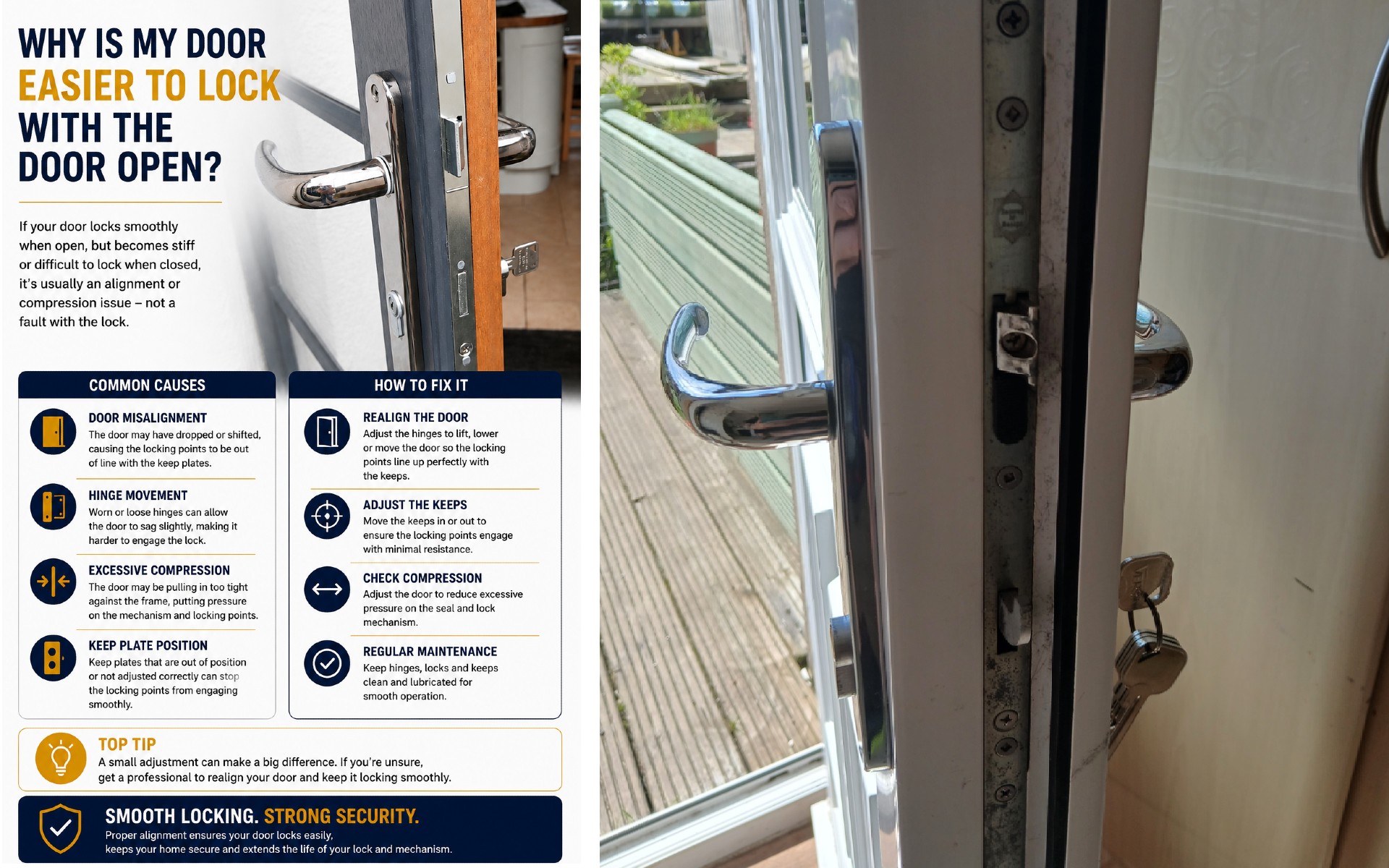
The Most Common Cause: Door Misalignment
By far the most common reason for this problem is poor door alignment.
A door may move because of:
- Worn hinges
- Building settlement
- Everyday use
- Seasonal expansion and contraction
- Loose hinge fixings
Even movement of just a few millimetres can make the locking mechanism feel completely different.
To understand why small changes can have such a big effect, read Why Door Alignment Matters.
Your Multipoint Lock Is Working Harder Than It Should
Modern multipoint locks are designed to operate with very little resistance.
When the locking points become misaligned:
- The handle becomes harder to lift.
- The key becomes stiff.
- The gearbox is placed under extra load.
- Internal components wear more quickly.
Every time you force the handle upwards or turn the key against resistance, additional stress is transferred through the mechanism. If your handle has also become difficult to lift, Why Door Handle Won't Lift explains why these faults often occur together.
Other Possible Causes
Although alignment is the most likely explanation, other faults can produce similar symptoms.
These include:
Worn Hinges
The door gradually drops under its own weight.
Misaligned Keeps
The keeps may have moved or become damaged.
Excessive Compression
The rollers may be pulling the door too tightly against the weather seals.
Threshold Contact
The bottom of the door may be rubbing against the threshold, preventing the locking points from lining up correctly.
Door Movement
Older doors can gradually shift over time, particularly if subjected to years of regular use.
Why Replacing the Lock Doesn't Always Help
Many homeowners replace the euro cylinder or even the complete multipoint mechanism expecting the problem to disappear.
Unfortunately, a brand-new lock will still struggle if the door remains out of alignment.
The new mechanism is simply working against exactly the same resistance as the old one.
This is why accurate diagnosis should always come before replacing parts. Door Lock Troubleshooting Guide explains the logical process of identifying the real fault before replacing components.
How a Locksmith Diagnoses the Problem
A professional locksmith will usually begin by checking:
- Does the handle lift with the door open?
- Does the key turn freely?
- Are the door gaps even?
- Are the hinges supporting the door correctly?
- Do the hooks and rollers line up with their keeps?
- Is the threshold clear?
- Are the weather seals creating excessive compression?
Only after these checks will they determine whether the locking mechanism itself has actually failed.
Signs the Door Needs Realigning
Your door may need adjustment if:
- It locks perfectly when open.
- The handle becomes stiff when closed.
- The key is harder to turn with the door shut.
- The door catches the frame.
- You need to push or pull the door while locking it.
- The door needs lifting slightly before it locks.
- There are uneven gaps around the frame.
Don't Ignore the Warning Signs
A door that is difficult to lock today may still function, but forcing it every day places unnecessary strain on:
- The gearbox.
- The handles.
- The spindle.
- The euro cylinder.
- The locking points.
What starts as a simple adjustment can eventually become a failed gearbox or broken handle if left unresolved. If the lock is already becoming harder to turn or operate, Why Is My Door Lock Stiff? explains why acting early can help prevent more expensive repairs.
The Door and Lock Work Together
A multipoint locking mechanism can only perform properly when the door is correctly aligned with its frame. If your door locks easily when open but becomes difficult once closed, the locking system is often telling you that something has changed elsewhere. Correcting the alignment restores smooth operation, reduces unnecessary wear and helps extend the life of the gearbox, handles and locking points. In many cases, repairing the underlying alignment issue is far more effective than replacing the lock itself. If you're unsure where to start, Guide to Door Problems can help you identify the most likely cause based on your symptoms.