Introduction
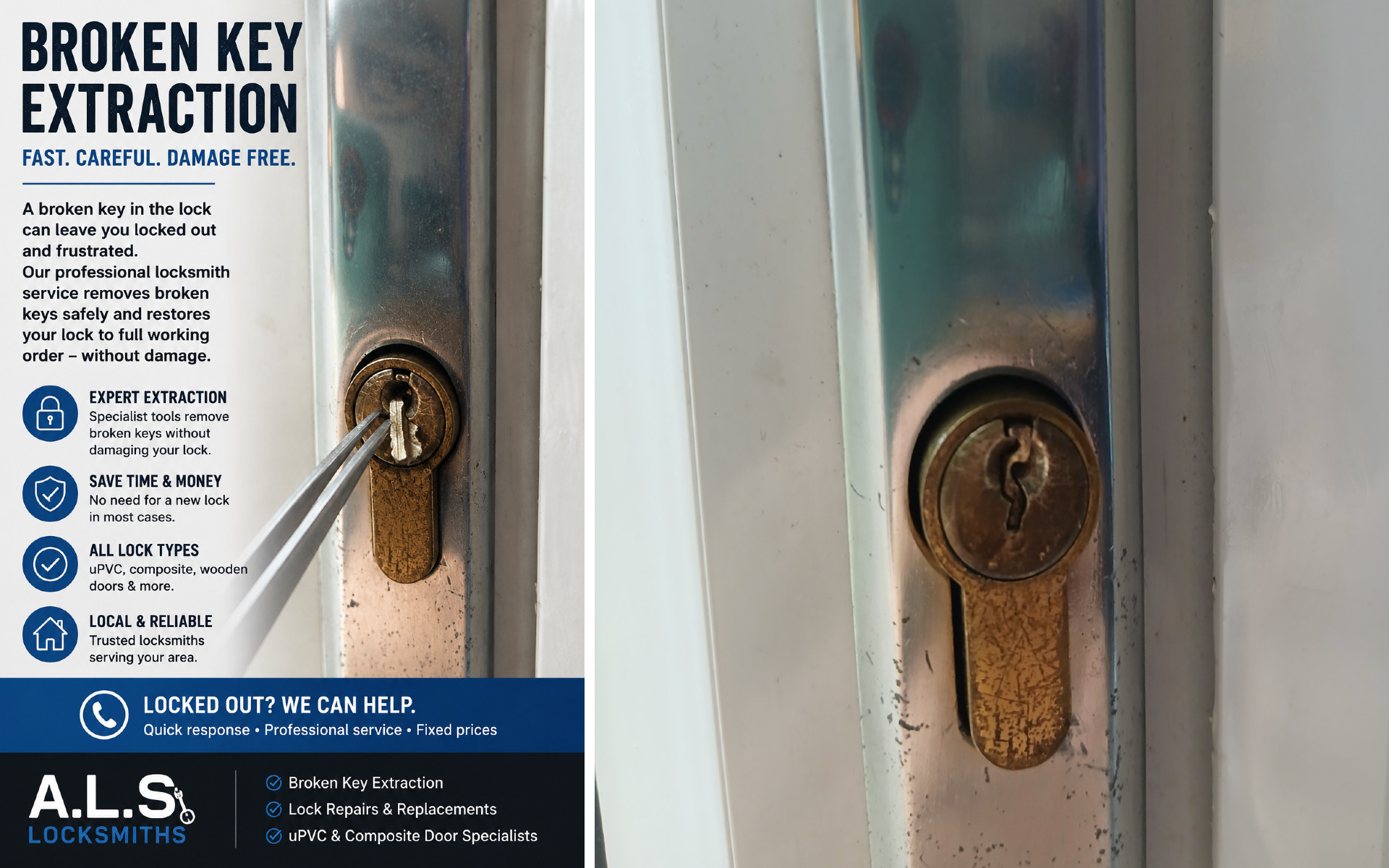
Few things are more frustrating than a key snapping off inside your door lock. It often happens when you're leaving for work, arriving home in bad weather or trying to lock up quickly.
Many people assume the key was simply old or weak. While keys can wear over time, they rarely break without a reason. In most cases, excessive force has been applied because the lock or door has developed a fault.
Removing the broken key gets the door working again, but unless the underlying problem is corrected, there's a good chance another key will eventually suffer the same fate.
Poor Door Alignment Is a Common Cause
One of the most common reasons keys snap is because the door has dropped out of alignment.
When a uPVC or composite door moves slightly over time, the locking points no longer line up correctly with the keeps in the frame. This places extra strain on the entire multipoint locking mechanism.
Instead of operating smoothly, the key is forced to work much harder to move the mechanism.
Signs of poor alignment include:
- The handle is difficult to lift.
- The key is hard to turn.
- The door needs pushing or pulling to lock.
- The door catches on the frame.
- Locking becomes progressively more difficult.
Correctly realigning the door often restores smooth operation and reduces the stress placed on the key.
A Faulty Multipoint Locking Mechanism
A worn or damaged multipoint locking mechanism can also place excessive resistance on the key.
As gearboxes, hooks, rollers and internal linkages wear, friction increases throughout the mechanism. Many homeowners continue using extra force without realising the lock is beginning to fail.
Eventually the weakest part of the system—the key—gives way.
Repairing or replacing the faulty components removes the resistance that caused the key to snap in the first place.
A Worn or Damaged Lock Cylinder
The euro cylinder is another component that can contribute to broken keys.
Internal pins and springs wear over time, making the key increasingly difficult to insert, remove or turn.
Common warning signs include:
- The key sticking in the cylinder.
- The key only turning after being wiggled.
- Rough or gritty operation.
- The key becoming difficult to remove.
Replacing a worn cylinder before it fails can prevent further problems.
Poorly Cut Duplicate Keys
Not all duplicate keys are cut to the same standard.
A poorly cut key may appear to work, but if the cuts are even slightly inaccurate it places additional stress on both the key and the lock.
Over time this can:
- Accelerate cylinder wear.
- Cause the key to stick.
- Make locking more difficult.
- Increase the likelihood of the key snapping.
If a duplicate key feels noticeably different from the original, it should be checked before continued use.
Non-Genuine Key Blanks
The quality of the key blank is just as important as the cutting itself.
Cheap aftermarket blanks are often made from softer metals and manufactured with lower tolerances than genuine blanks.
These keys may:
- Wear more quickly.
- Flex under load.
- Twist more easily.
- Snap with less force.
Where possible, genuine manufacturer-approved key blanks provide a more accurate fit and generally offer greater durability.
Worn Keys
Keys naturally wear after years of daily use.
Rounded edges and worn cuts no longer engage the lock pins correctly, requiring additional force to operate the cylinder.
If your original key has become visibly worn, replacing it before it fails can help avoid a broken key and reduce wear on the lock itself.
Dirt and Lack of Lubrication
Locks exposed to the weather can accumulate dirt, dust and moisture.
Old lubricant dries out, increasing friction inside both the cylinder and the multipoint mechanism.
Regular maintenance and the correct lock lubricant help keep moving parts operating smoothly and reduce unnecessary strain on the key.
Never Force a Stiff Key
If a key suddenly becomes difficult to turn, forcing it is rarely the answer.
Applying extra pressure can:
- Snap the key.
- Damage the lock cylinder.
- Bend internal lock components.
- Lead to a complete lock failure.
If the lock suddenly becomes stiff, it should be investigated before more force is applied.
Broken Key Removal Is Only Part of the Repair
Successfully removing a broken key restores access, but it doesn't solve the reason the key snapped.
A proper repair should include identifying whether the cause is:
- Poor door alignment.
- A failing gearbox.
- A seized locking point.
- A worn cylinder.
- A damaged handle.
- A poorly cut duplicate key.
- A worn original key.
Correcting the underlying fault greatly reduces the chances of another key breaking.
Preventing Broken Keys
Most broken keys can be avoided with routine maintenance and early attention to developing faults.
Simple preventative measures include:
- Have stiff locks investigated promptly.
- Keep the door correctly aligned.
- Lubricate locks and moving parts regularly.
- Replace worn cylinders before they fail.
- Use genuine, good-quality replacement keys.
- Avoid poorly cut duplicate keys.
- Never force the key if it doesn't turn smoothly.
Taking action when the first warning signs appear is usually far less expensive than dealing with a snapped key and a lock that won't operate.
Conclusion
A broken key is rarely just bad luck. In most cases, it is the result of an underlying fault that has gradually increased the force needed to operate the lock. Whether the cause is poor door alignment, a worn multipoint mechanism, a failing lock cylinder or an inferior duplicate key, simply removing the broken key is only half the job. Identifying and correcting the real cause will restore smooth operation, protect the locking system and greatly reduce the risk of another key snapping in the future.