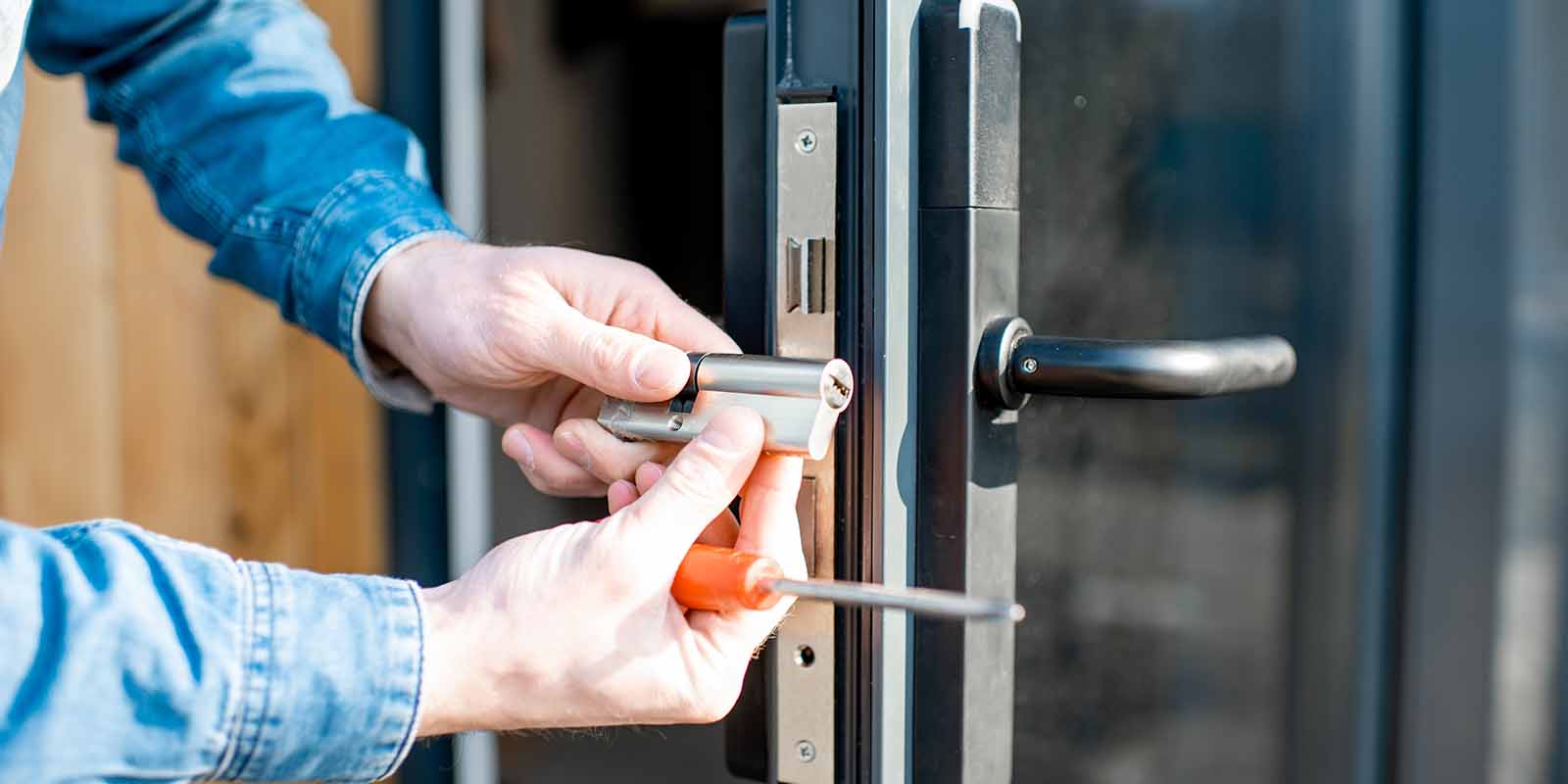
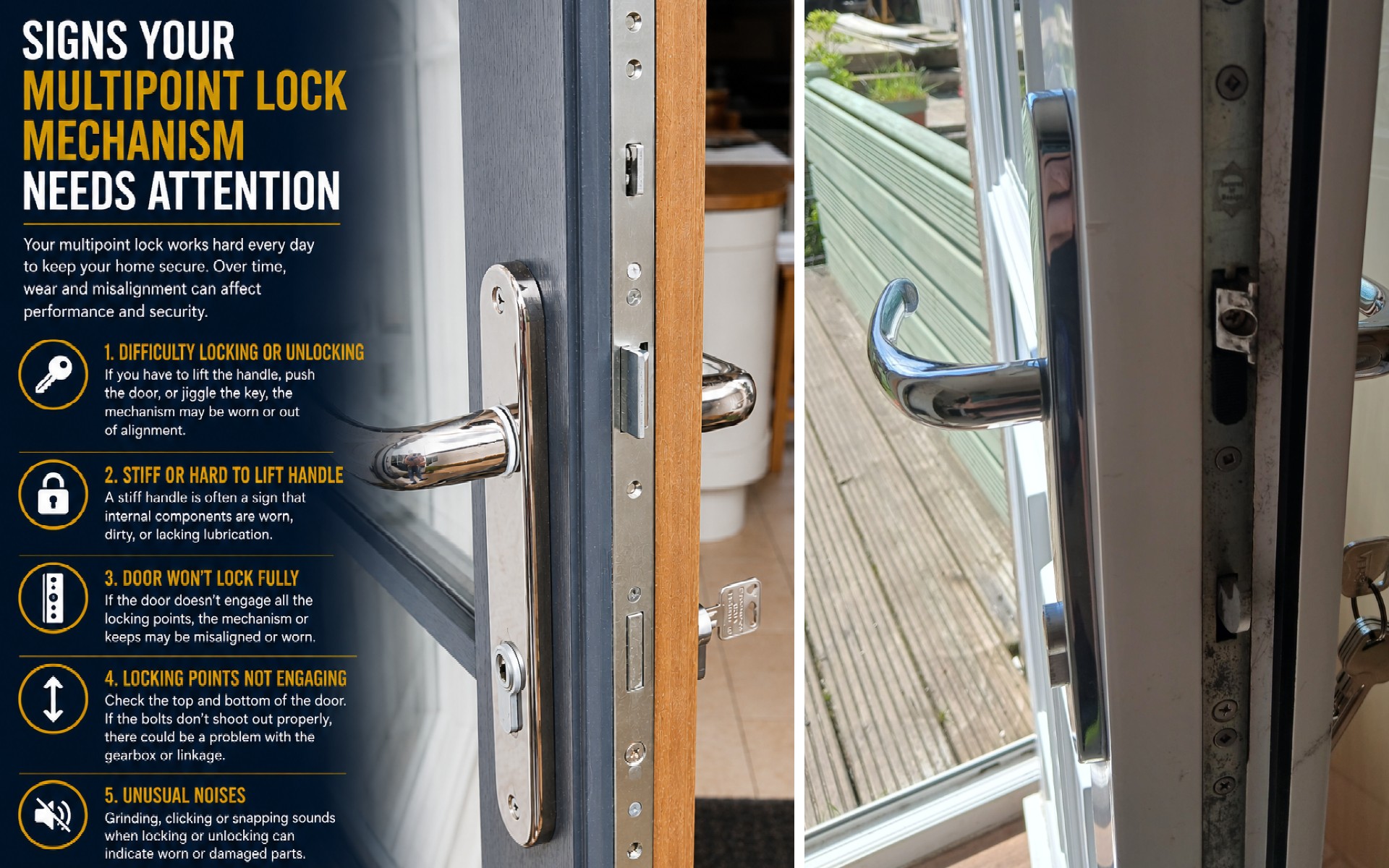
A multipoint locking mechanism is designed to keep your uPVC, composite or French door secure by locking at several points along the edge of the door. Like any mechanical system, it won't last forever. However, complete failure rarely happens without warning.
Most mechanisms show clear signs that something is wrong long before they stop working altogether. Recognising these early warning signs can help prevent a jammed door, an unexpected lockout and more expensive repairs.
The Handle Is Becoming Hard to Lift
One of the first signs of a problem is a handle that feels heavier than normal.
This can be caused by:
- A worn gearbox.
- A dropped or misaligned door.
- Locking points binding against the frame.
- General wear within the mechanism.
A healthy multipoint lock should operate smoothly without excessive force.
The Key Is Becoming Difficult to Turn
If your key is becoming stiff or rough to turn, don't assume the cylinder is to blame.
The extra resistance may be caused by:
- A worn lock cylinder.
- A failing gearbox.
- Poor door alignment.
- Key snaps in the lock.
- Increased strain on the locking mechanism.
Forcing the key can lead to a snapped key or complete lock failure.
The Door Is Becoming Harder to Lock
If you find yourself pushing, pulling or lifting the door to get it to lock, something isn't working as it should.
This usually indicates that the locking points are no longer lining up correctly with the keeps, placing unnecessary strain on the mechanism every time the door is locked.
The Locking Points Don't Retract Properly
The hooks, rollers, deadbolts and latch should move freely every time the handle is operated.
If you notice that the locking points remain partially extended or move unevenly, it could indicate wear inside the gearbox or the mechanism itself.
Ignoring the problem can eventually result in the door jamming shut.
The Handle Feels Loose or Floppy
A loose handle isn't always caused by worn handles.
It can also be a sign of:
- A worn gearbox.
- Broken internal springs.
- Wear within the locking mechanism.
Replacing the handles alone won't solve the problem if the fault lies deeper inside the lock.
The Lock Works One Day but Not the Next
Intermittent faults are another common warning sign.
You may find that the door locks perfectly one day but becomes stiff or awkward the next.
This often points to:
- A gearbox nearing failure.
- A mechanism beginning to seize.
- A door that's moving out of alignment.
- Internal components wearing out.
Mechanical problems rarely fix themselves and usually become progressively worse.
Grinding or Clicking Noises
A multipoint lock should operate quietly.
Grinding, scraping or clicking noises often indicate that components are wearing or operating under excessive strain.
Having the problem investigated early can prevent further damage.
The Door Is Catching the Frame
If the door rubs against the frame or catches when opening and closing, the locking mechanism has to work much harder than it was designed to.
Look out for:
- Scrape marks on the frame.
- Uneven gaps around the door.
- Resistance when closing.
- Increased effort needed to lock the door.
- Damage to the gearbox because locking points are siezed.
Correcting the alignment early can prevent unnecessary wear on the gearbox and locking mechanism.
The Mechanism Has Never Been Maintained
Many multipoint locks receive little or no maintenance throughout their lifetime.
Keeping the moving parts clean and applying a suitable lubricant to the hooks, rollers, deadbolts and latch can help reduce friction and extend the life of the mechanism.
Maintenance won't repair worn components, but it can help prevent premature wear.
Don't Wait Until It Fails
A multipoint locking mechanism rarely stops working without warning. A stiff handle, difficult key, unusual noises or a door that's becoming harder to lock are all signs that something needs attention. Identifying the cause early can often prevent a complete failure, reduce repair costs and keep your door operating smoothly for many years.