Introduction
Yes. A seized hook can cause significant damage to a multipoint locking mechanism if it is not repaired promptly.
Many homeowners notice their door becoming harder to lock and assume the gearbox or handle has worn out. While these components may eventually fail, they are often the victims rather than the cause. A seized locking hook creates resistance throughout the entire mechanism, forcing every moving part to work harder than it was designed to.
The longer the problem is ignored, the greater the risk of damage to the gearbox, handles and locking strip.
What Is a Locking Hook?
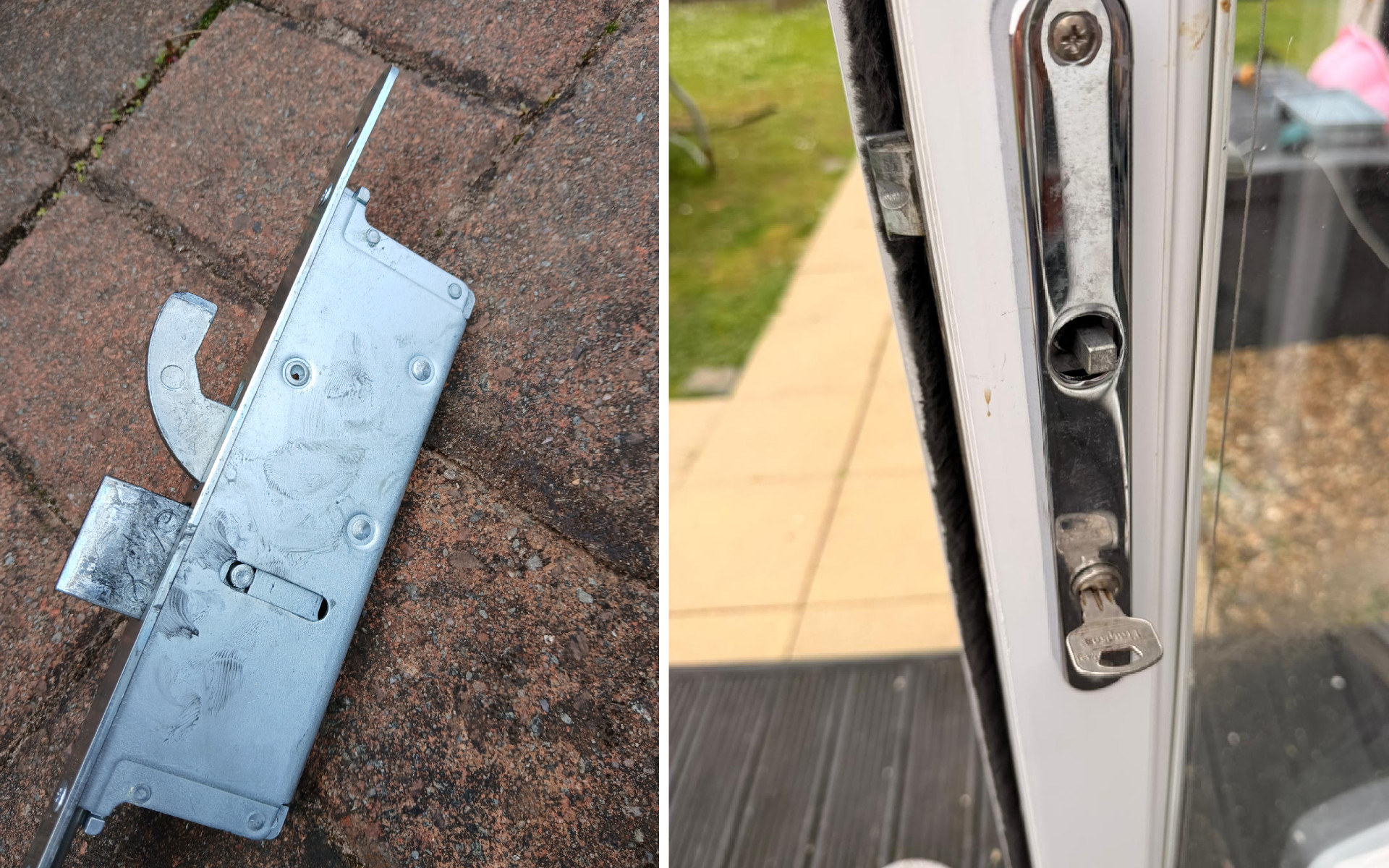
Many multipoint locking systems use hooks as part of the locking strip.
When you lift the handle, the gearbox moves the hooks into steel keeps fitted to the door frame. Once engaged, the hooks help pull the door tightly against the seals while providing excellent resistance against forced entry.
For the mechanism to operate correctly, every hook must move freely. If just one hook begins to stick, the entire locking system is affected.
Why Do Hooks Seize?
Several factors can cause a locking hook to seize.
Common causes include:
- Dirt and debris building up inside the mechanism.
- Old lubricant drying out and becoming sticky.
- Corrosion caused by moisture.
- Lack of regular maintenance.
- General wear after years of use.
- Excessive strain from a dropped or poorly aligned door.
As resistance increases, more force is required every time the handle is lifted.
How a Seized Hook Damages the Gearbox
The gearbox is designed to move all locking points smoothly.
When one hook becomes seized, the gearbox has to overcome the additional resistance before the mechanism can lock.
This places excessive load on:
- Internal gears.
- Springs.
- Followers.
- Drive plates.
Over time, these parts wear prematurely and may eventually fail altogether.
Many gearbox failures are caused by prolonged strain rather than simple age.
Extra Pressure on the Door Handle
The door handle is another common casualty.
As the seized hook resists movement, homeowners naturally apply more force to lift the handle.
This can lead to:
- Broken springs.
- Loose handles.
- Snapped spindles.
- Cracked backplates.
- Premature handle failure.
Replacing the handle without fixing the seized hook usually results in the same problem returning.
Increased Wear Across the Entire Mechanism
A multipoint lock works as one complete system.
When one hook sticks, every other moving component experiences additional strain.
This can accelerate wear on:
- Rollers.
- Deadbolts.
- Connecting rods.
- Locking strip linkages.
- The centre gearbox.
A relatively small fault can therefore shorten the lifespan of the entire locking mechanism.
Warning Signs of a Seized Hook
The problem often develops gradually.
Common symptoms include:
- The handle becoming stiff.
- The door becoming difficult to lock.
- Grinding or scraping noises.
- The key becoming harder to turn.
- One section of the lock feeling tighter than the rest.
- The door only locking when pushed or pulled.
Ignoring these warning signs usually allows the damage to worsen.
Can a Seized Hook Be Repaired?
In many cases, yes.
If the hook has not suffered significant wear or physical damage, it may be possible to:
- Remove the locking mechanism.
- Dismantle the seized hook assembly.
- Clean away dirt and old grease.
- Lubricate the moving parts.
- Reassemble and test the mechanism.
If the hook is badly worn, cracked or damaged, replacing the affected section or the complete locking mechanism may be the better option.
Preventing Hook Seizure
Regular maintenance helps reduce the likelihood of seized locking points.
Simple preventative measures include:
- Lubricate moving parts at least once or twice a year.
- Keep the door correctly aligned.
- Investigate any stiffness early.
- Avoid forcing the handle.
- Have worn components repaired before they fail completely.
A few minutes of maintenance can significantly extend the life of the locking system.
Conclusion
A seized hook should never be ignored. Although the door may still lock for a while, the additional resistance places constant strain on the handles, gearbox and the rest of the multipoint locking mechanism. In many cases, what appears to be a failed gearbox or broken handle is actually the result of a sticking hook that has been left unresolved. Repairing the fault early can restore smooth operation, prevent unnecessary damage and avoid the cost of replacing the entire locking mechanism.
Related articles: