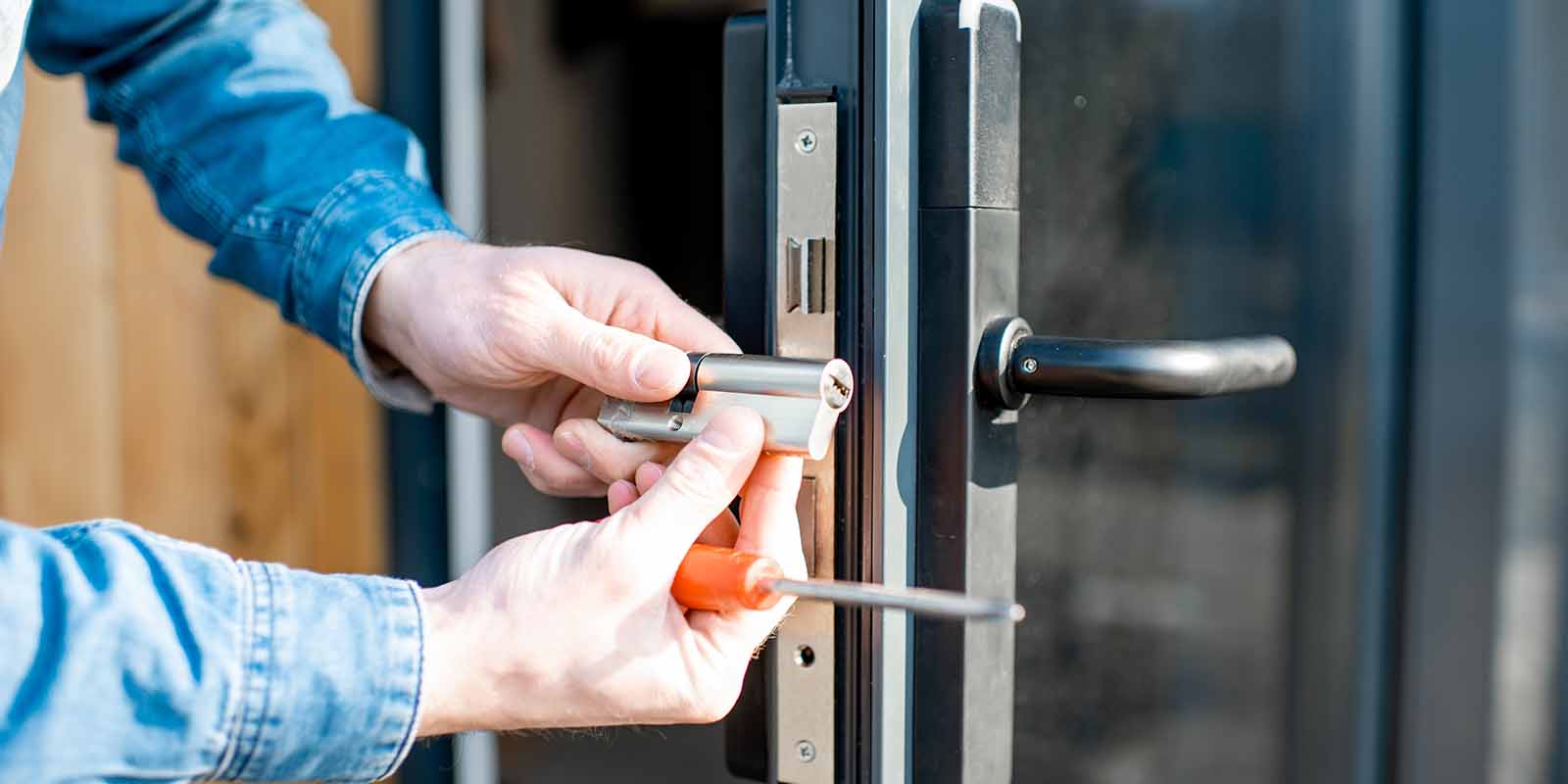
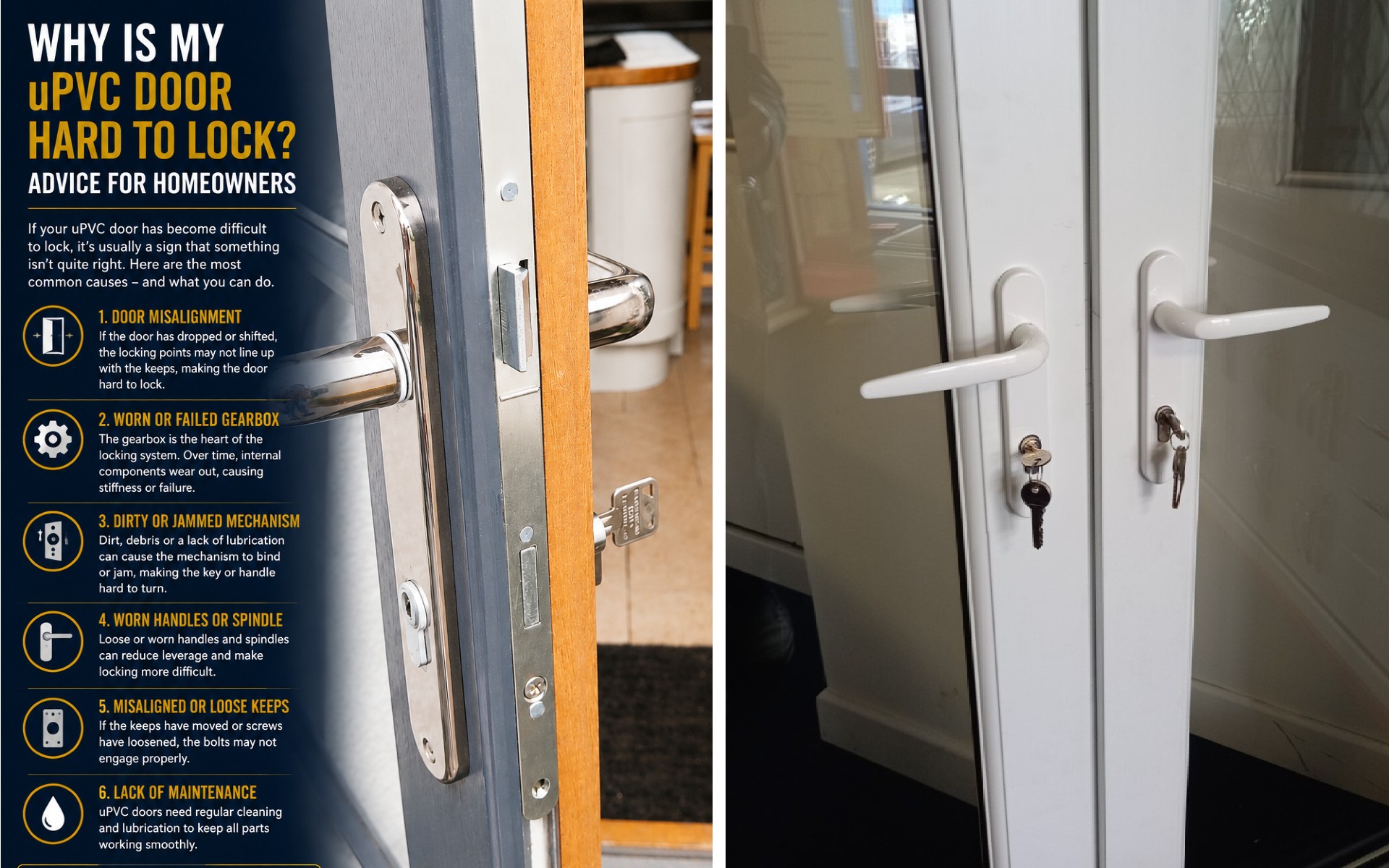
A uPVC door should lock smoothly with very little effort. If you suddenly find yourself having to force the handle, push the door closed, or struggle to turn the key, it's a sign that something isn't working as it should.
Ignoring the problem can place extra strain on the lock mechanism and eventually lead to a complete lock failure or lockout.
A Dropped Door
The most common cause of a difficult-to-lock uPVC door is poor alignment.
Over time, the weight of the door and everyday use can cause it to drop slightly on its hinges.
Common signs include:
- The door catching the frame
- Difficulty lifting the handle
- Having to push or pull the door to lock it
- Uneven gaps around the frame
A simple adjustment is often enough to restore smooth operation.
The Gearbox Is Wearing Out
The gearbox is the heart of a multipoint locking system.
As it wears, you may notice:
- The handle becoming harder to lift
- The key feeling stiff
- The lock working intermittently
- The locking points not engaging smoothly
- Siezed locking points
Replacing the gearbox early can often prevent a complete failure.
The Lock Cylinder Is Worn
If the key is becoming difficult to turn but the handle feels normal, the lock cylinder may be wearing out.
Warning signs include:
- Rough key operation
- Difficulty removing the key
- The key sticking in the lock
- Having to jiggle the key before it turns
A worn cylinder is usually a straightforward replacement.
The Locking Points Need Attention
Hooks, rollers, and deadbolts move every time you lock the door.
Over time they can become:
- Dirty
- Dry
- Stiff
- Corroded
This increases resistance and makes the door harder to lock.
Seasonal Temperature Changes
Hot weather can cause uPVC doors to expand slightly, while colder weather can cause them to contract.
This may make existing alignment issues more noticeable, particularly if the door is exposed to direct sunlight.
If your door is only difficult to lock during certain times of the year, alignment is often the underlying cause.
Worn or Broken Handles
Handles that are worn or have weak springs can affect the operation of the locking mechanism.
You may notice:
- A drooping handle
- The handle not returning properly
- Excessive movement
- Difficulty operating the handle
Replacing worn handles can improve the feel of the door and reduce unnecessary strain on the gearbox.
Poorly Cut Keys
A worn or badly cut key can also make a lock feel stiff.
For best results:
- Replace bent or damaged keys
- Avoid copying worn copies
- Use a reputable key cutting service
Sometimes the key, rather than the lock, is the source of the problem.
Don't Force the Door
If your uPVC door becomes difficult to lock, avoid using excessive force.
Forcing the handle or key can damage:
- The gearbox
- The lock cylinder
- The handles
- The locking points, hooks, deadbolts
- The multipoint mechanism
A small fault can quickly become a much more expensive repair.
Most Problems Can Be Repaired
A difficult-to-lock door doesn't usually mean you need a new door.
In many cases, the solution is simply:
- Realigning the door
- Replacing a worn gearbox
- Fitting a new lock cylinder
- Replacing worn handles
- Servicing the locking mechanism
A proper diagnosis ensures the real cause is repaired rather than simply treating the symptoms.
Don't Wait Until You're Locked Out
If your uPVC door is becoming harder to lock, it's worth having it checked before it fails completely. Most locking problems start gradually, and dealing with them early can help prevent a lockout, reduce repair costs, and extend the life of your door and locking system.