Every Door Component Has Its Own Lifespan
Many homeowners ask how long their front door should last. The answer isn't straightforward because a modern entrance door isn't a single product—it's a collection of components, each with its own expected lifespan.
The door itself may remain in excellent condition for decades, while parts such as the locking mechanism, handles, hinges or weather seals may require attention much sooner.
Understanding which components wear naturally helps explain why many doors can be repaired rather than replaced.
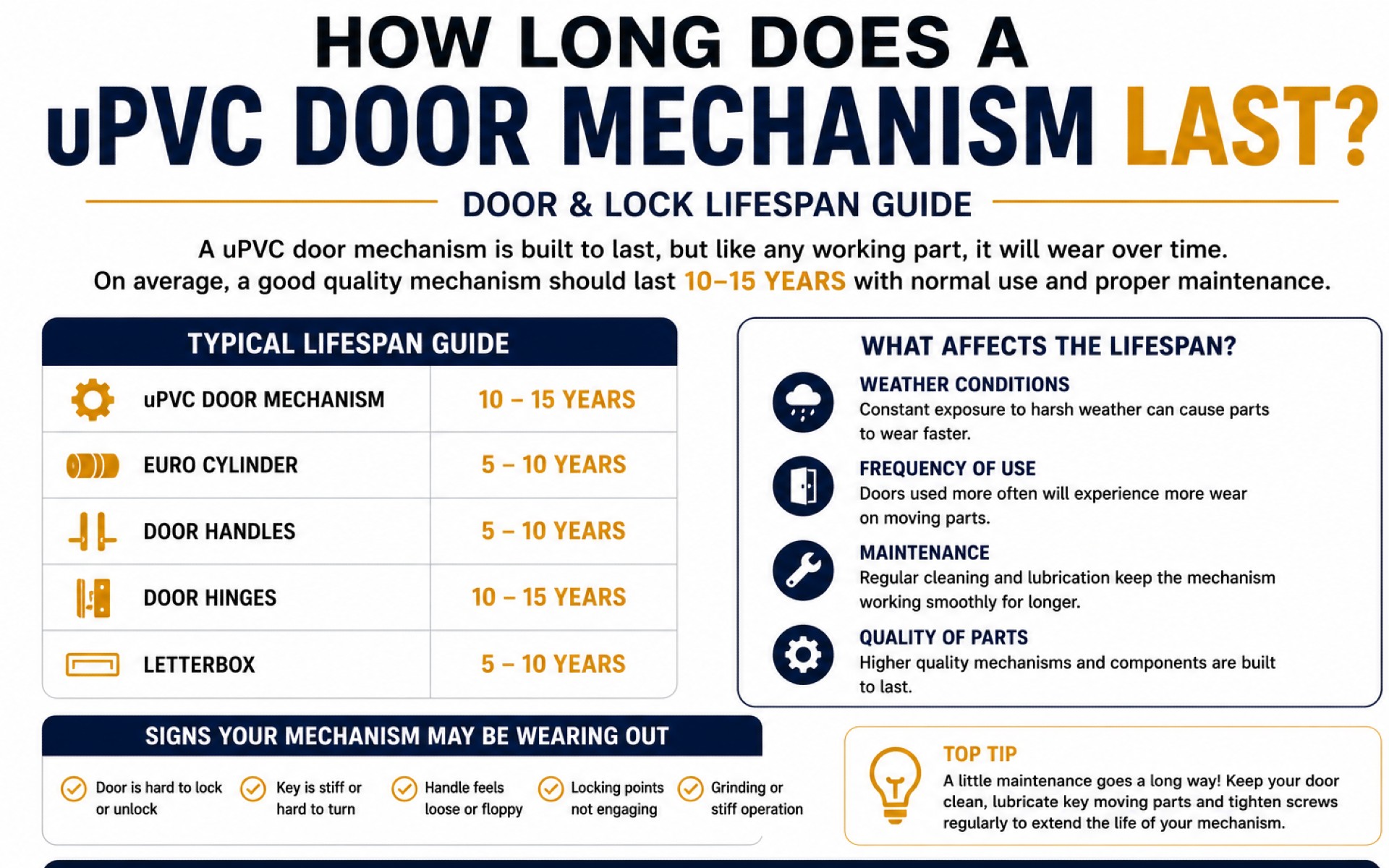
How Long Does a uPVC Door Mechanism Last?
A quality multipoint locking mechanism is designed to withstand many thousands of opening and closing cycles.
Its lifespan depends on several factors, including:
- Frequency of use.
- Door alignment.
- Build quality.
- Maintenance.
- Weather exposure.
- Correct installation.
A well-maintained mechanism operating in a correctly aligned door may provide reliable service for many years.
However, if the door becomes misaligned or difficult to lock, the gearbox and locking points are forced to work much harder every time the handle is lifted or the key is turned. This additional strain can significantly shorten the life of the mechanism.
How Long Should a Composite Door Last?
The door itself generally lasts much longer than the hardware fitted to it.
Composite doors are designed to resist:
- Warping.
- Rot.
- Moisture.
- Everyday wear.
- Weather exposure.
Provided the door remains structurally sound, many components can be repaired or replaced over its lifetime, including:
- Multipoint locking mechanism.
- Euro cylinder.
- Handles.
- Hinges.
- Weather seals.
- Letterplate.
- Door viewer.
This means that a locking problem rarely means the door itself has reached the end of its service life.
Why Is My New Lock Still Hard to Use?
One of the biggest misconceptions is that replacing the lock will automatically solve every locking problem.
In reality, a brand-new mechanism may still feel stiff if the underlying cause hasn't been addressed.
Common reasons include:
- A dropped door.
- Misaligned keeps.
- Worn hinges.
- Incorrect compression.
- Frame movement.
- Threshold contact.
The new lock is simply working against the same resistance as the old one.
Unless the alignment is corrected, unnecessary strain will continue to affect the replacement mechanism.
Which Components Wear First?
Not every part wears at the same rate.
The components most commonly replaced include:
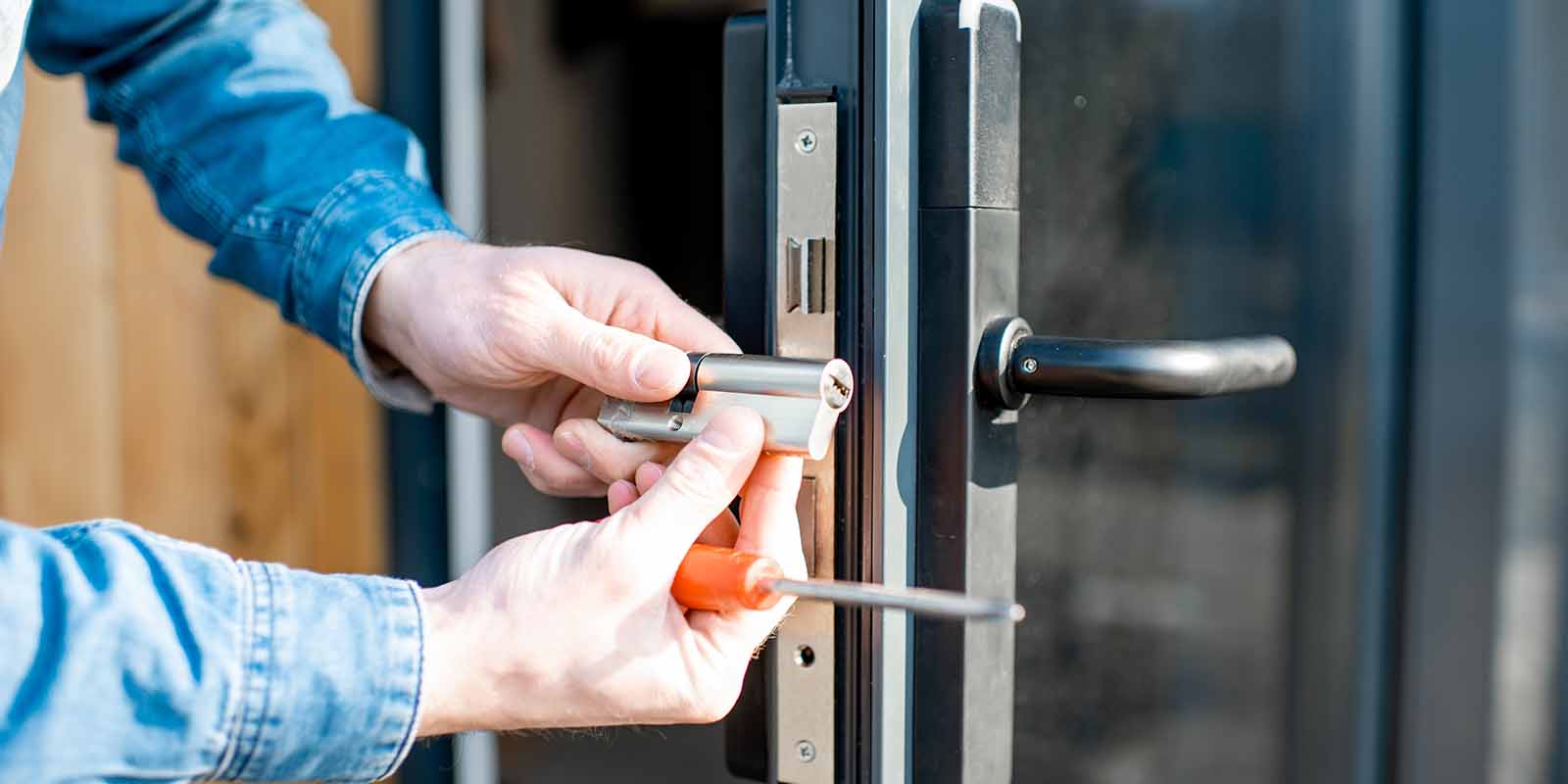
- Gearboxes.
- Euro cylinders.
- Door handles.
- Springs.
- Hinges.
- Weather seals.
- Rollers.
These parts experience constant movement and naturally wear over time.
The door panel and frame usually last considerably longer.
Signs Components Are Reaching the End of Their Service Life
Watch for changes such as:
- Handle becoming progressively stiffer.
- Key becoming difficult to turn.
- Lock only working with the door open.
- Clicking or grinding noises.
- Door rubbing the frame.
- Handles dropping.
- Door needing to be lifted before locking.
These are often signs that maintenance or repairs are needed rather than complete replacement.
Maintenance Extends Service Life
Simple routine maintenance can significantly increase the lifespan of both the door and its hardware.
Regularly:
- Clean the door and frame.
- Lubricate moving parts.
- Check hinges for movement.
- Inspect weather seals.
- Tighten loose fixings.
- Ensure the locking mechanism operates smoothly.
Addressing small alignment issues early helps reduce unnecessary wear on the gearbox and locking points.
Repairing Components Is Often More Economical
Because modern entrance doors are modular systems, many worn parts can be replaced individually.
Depending on the fault, repairs may involve:
- A new gearbox.
- A replacement euro cylinder.
- New door handles.
- Hinge adjustment.
- Door realignment.
- New weather seals.
Replacing these components is usually far more cost-effective than replacing a structurally sound door.
Look Beyond the Lock
A new lock should operate smoothly, but only if the rest of the door is functioning correctly. If the door has dropped, the hinges have worn or the frame has moved slightly over time, the replacement lock will still be subjected to unnecessary strain. Understanding that the door, frame and locking mechanism work as one system helps explain why accurate diagnosis is so important. In many cases, correcting the alignment and replacing only the worn components restores smooth operation while extending the life of the entire door.