Introduction
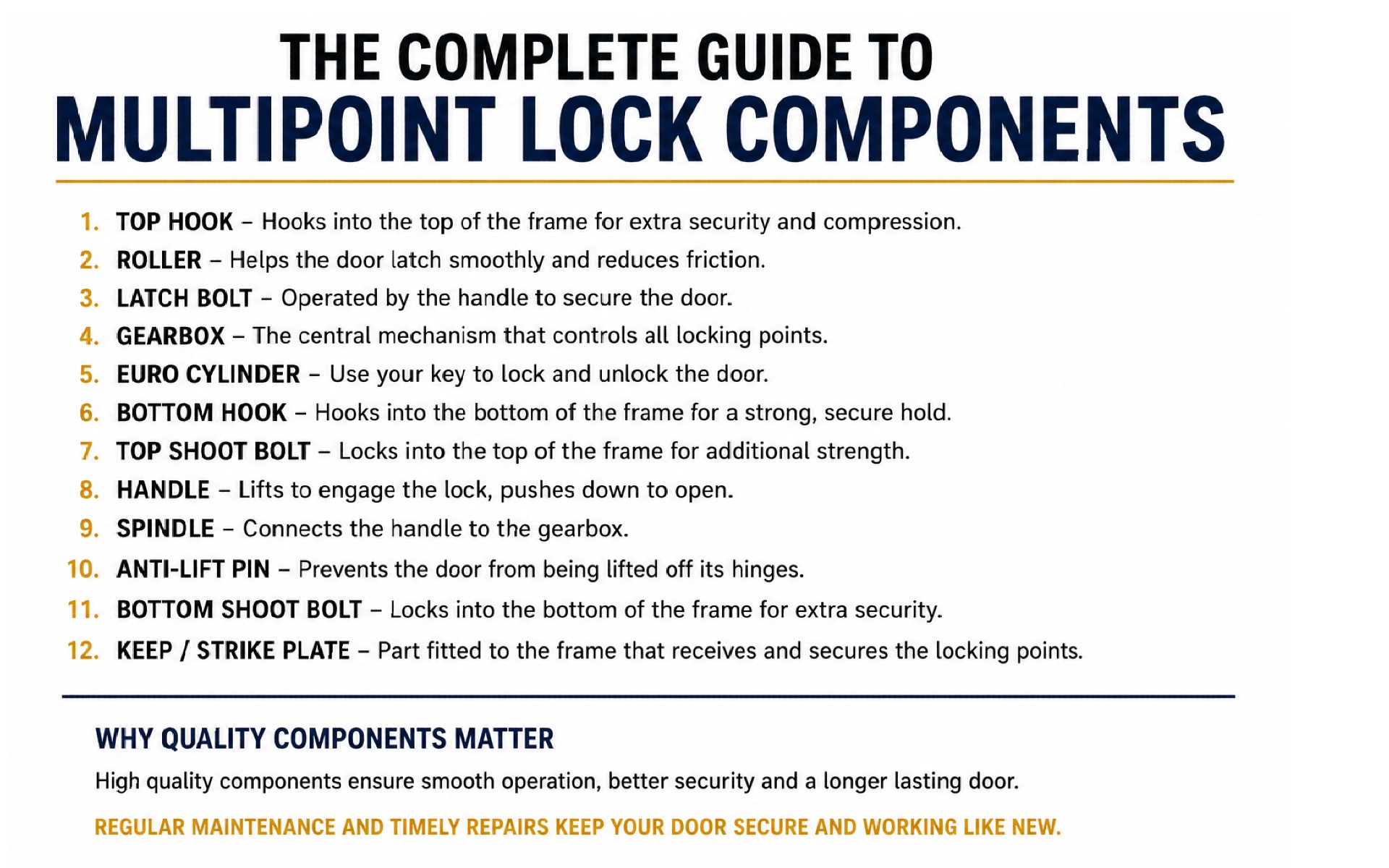
Modern uPVC and composite doors use sophisticated multipoint locking mechanisms containing dozens of individual components. While many homeowners simply refer to "the lock", a complete multipoint locking mechanism is made up of many precision-engineered parts working together to secure the door.
Understanding these components makes it easier to identify faults, understand repair recommendations and appreciate why accurate replacement parts are so important.
A Typical Multipoint Lock Consists Of
Faceplate
The long steel strip visible on the edge of the door.
Purpose
- Holds the complete mechanism together
- Supports all locking points
- Usually stamped with the manufacturer's name
Gearbox (Centre Case)
The heart of the locking mechanism.
Contains:
- Latch
- Deadbolt
- Cam follower
- Spindle follower
- Internal drive system
The gearbox coordinates the operation of every locking point.
Gearbox Casing
The steel housing protecting the gearbox components while maintaining the correct alignment of all internal moving parts.
Internal Drive Bars (Connecting Rods)
Steel bars running throughout the locking strip transferring movement from the gearbox to:
- Hooks
- Rollers
- Shoot bolts
- Mushroom cams
Latch
The spring-loaded bolt keeping the door closed until the handle is operated.
Usually the busiest moving component within the entire mechanism.
Latch Screw
Secures the latch assembly within the gearbox.
Reversible Latch
Many latches can be reversed for left- or right-hand opening doors.
Deadbolt
A solid steel locking bolt operated by the key.
Provides the primary locking point at the centre of the door.
Hooks
Curved steel locking points available in several designs.
Purpose:
- High security
- Resistance against levering
- Pulling the door tightly into the frame
Rollers
Rounded locking points designed to:
- Compress weather seals
- Improve closing
- Reduce draughts
Many are adjustable.
Mushroom Cams
Mushroom-shaped locking points providing:
- Security
- Compression
- Anti-jemmy protection
Anti-Lift Pins
Steel pins preventing the door from being lifted from the frame.
Shoot Bolts
Long steel bolts projecting into the top and bottom of the frame.
Commonly fitted to:
- French doors
- Passive doors
- Composite doors
Shoot Pins
Additional locking pins providing extra security.
Hook & Pin Combinations
Some mechanisms combine hooks and pins to improve both security and door compression.
Roller-Only Mechanisms
Some manufacturers use rollers together with a central deadbolt rather than hook bolts, prioritising smooth operation and weather sealing.
Cam Follower
Located inside the gearbox.
Transfers movement from the euro cylinder into the locking mechanism.
Spindle Follower
Receives the square spindle from the door handles and operates:
- Latch
- Hooks
- Rollers
Spindles
Connect both handles through the gearbox.
Available as:
- Single spindle
- Double spindle
- Split spindle
Spring Cassette
Located inside sprung door handles.
Returns the lever to its horizontal position after use.
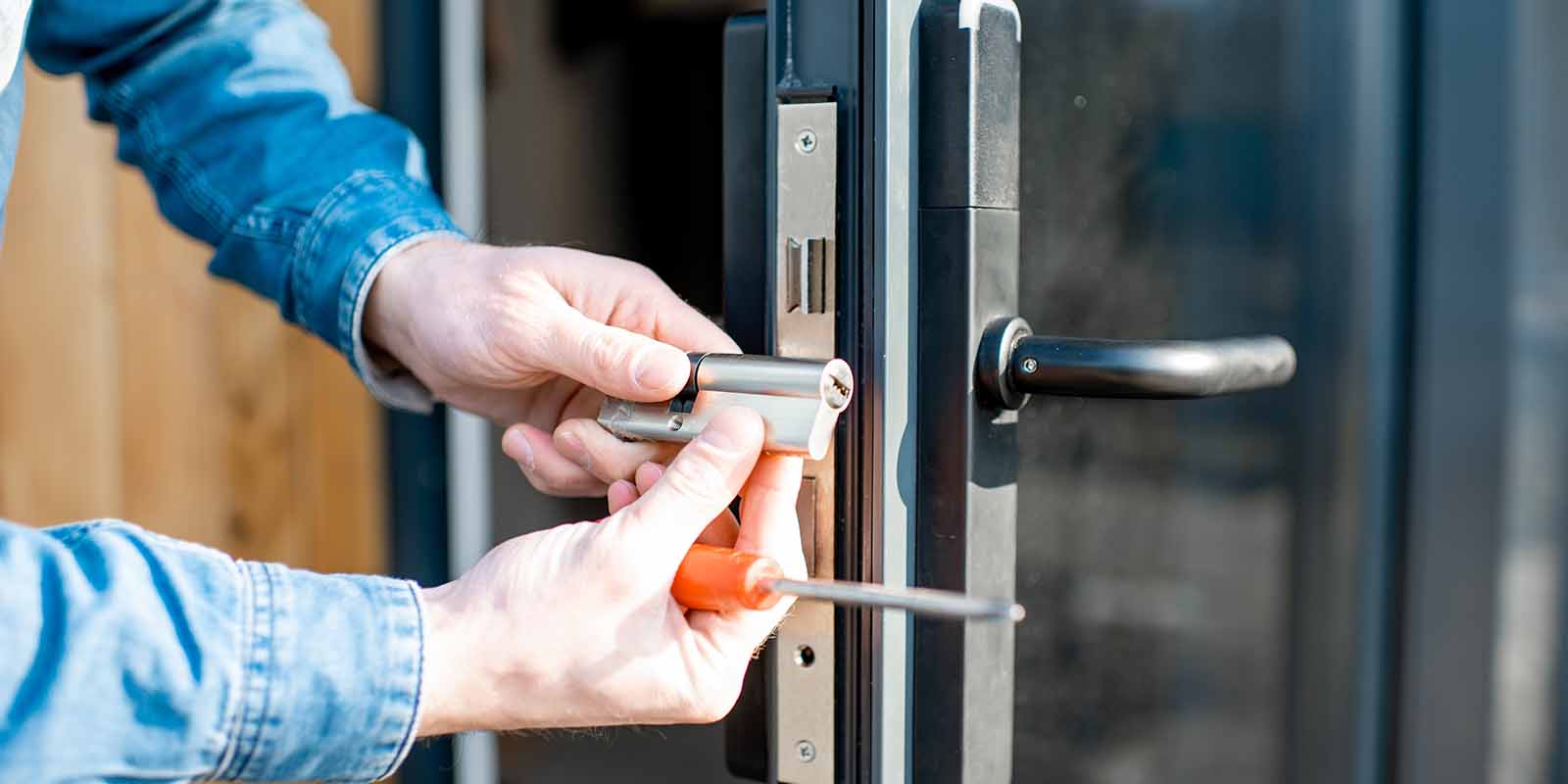
Euro Cylinder
The removable cylinder operated by the key.
Available as:
- Double cylinder
- Thumbturn cylinder
- Half cylinder
- Single cylinder
High-security versions include:
- Anti-snap
- Anti-drill
- Anti-pick
- Anti-bump
Scandinavian Cylinder
Used on some Scandinavian locking systems and secured differently from a Euro cylinder.
Handles
Operate the spindle and gearbox.
Available as:
- Lever/Lever
- Lever/Pad
- Fixed Pad
- Inline
- Offset
- TS007 Security
- Sprung
- Unsprung
Cylinder Retaining Screw
The single long screw securing the euro cylinder within the gearbox.
Located through the edge of the door.
Fixing Screws
Secure:
- Handles
- Gearbox
- Faceplate
- Keeps
Lock Measurements
Correct measurements are critical when replacing any component.
Backset
Distance from the faceplate to the centre of the spindle.
Centres (PZ)
Distance between:
- Handle spindle
- Euro cylinder
Correct PZ measurement is essential when replacing handles.
Lock Handing
Mechanisms may be:
- Left-handed
- Right-handed
- Non-handed
- Fully reversible
Manufacturers
Different manufacturers produce mechanisms with unique dimensions, locking point layouts and internal designs.
Frame Keeps (Striker Plates)
Every locking point engages with a corresponding keep fitted to the frame.
Correct alignment of these keeps is essential for smooth operation.
Types include:
- Central latch & deadbolt keeps
- Hook keeps
- Roller and mushroom keeps
- Shoot bolt keeps
- Full-length keeps
How Everything Works Together
When the handle is lifted or the key is turned, the spindle rotates the follower inside the gearbox. The gearbox transfers movement through the internal drive bars, engaging the hooks, rollers, mushroom cams, deadbolts and shoot bolts with their matching keeps in the frame. The euro cylinder controls access to the gearbox, while the handles provide the everyday operating force.
Every component must be correctly aligned and in good condition for the locking system to operate smoothly, securely and reliably.
Continue Reading
- The Complete Guide to Door Locks
- The Complete Guide to French Door Repairs
- The Complete Guide to uPVC & Composite Door Handles
- The Complete Guide to Home Door Security
- The Complete Guide to uPVC & Composite Door Problems
- The Complete Guide to Looking After Your uPVC and Composite Door – Simple Maintenance That Helps Your Door Last Longer
- The Complete Guide to Conservatory Door Repairs
- The Complete Guide to French Door Security, Maintenance and Repairs
Conclusion
A multipoint locking mechanism is far more than a single lock. It is a carefully engineered system made up of dozens of individual components, each performing a specific function. From the gearbox and drive bars to the hooks, rollers, keeps and euro cylinder, every part must work together to provide security, smooth operation and long-term reliability. Understanding these components helps homeowners appreciate why accurate diagnosis, correct measurements and quality replacement parts are essential when repairing or maintaining a modern uPVC or composite door.