Introduction
Most residential burglaries are believed to be opportunistic rather than the result of careful planning or detailed surveillance. Rather than choosing the most valuable-looking property, an offender may simply look for a home that appears easier to approach, easier to enter and easier to leave without attracting attention.
This doesn't mean burglars follow a fixed checklist or that any particular feature makes a property a target. Instead, they may assess a combination of visible factors such as maintenance, access, lighting, natural surveillance and signs of occupancy before deciding whether to continue or move on.
Fortunately, many of these factors are within a homeowner's control. Small improvements to maintenance, property layout and everyday security can make a home appear better cared for and reduce obvious opportunities for opportunist crime.
This guide explains the environmental and practical factors that can influence how a property is perceived and why good maintenance and layered security remain important parts of protecting your home.
Security Starts Before Anyone Reaches the Door
Home security begins long before someone stands in front of the lock.
Anyone approaching a property first encounters:
- The front boundary.
- Gates.
- Paths and driveways.
- Gardens.
- Exterior lighting.
- Windows.
- The front door.
Each of these contributes to the overall impression of the property.
A home that appears well maintained, occupied and difficult to approach unnoticed may present more uncertainty than one with obvious weaknesses.
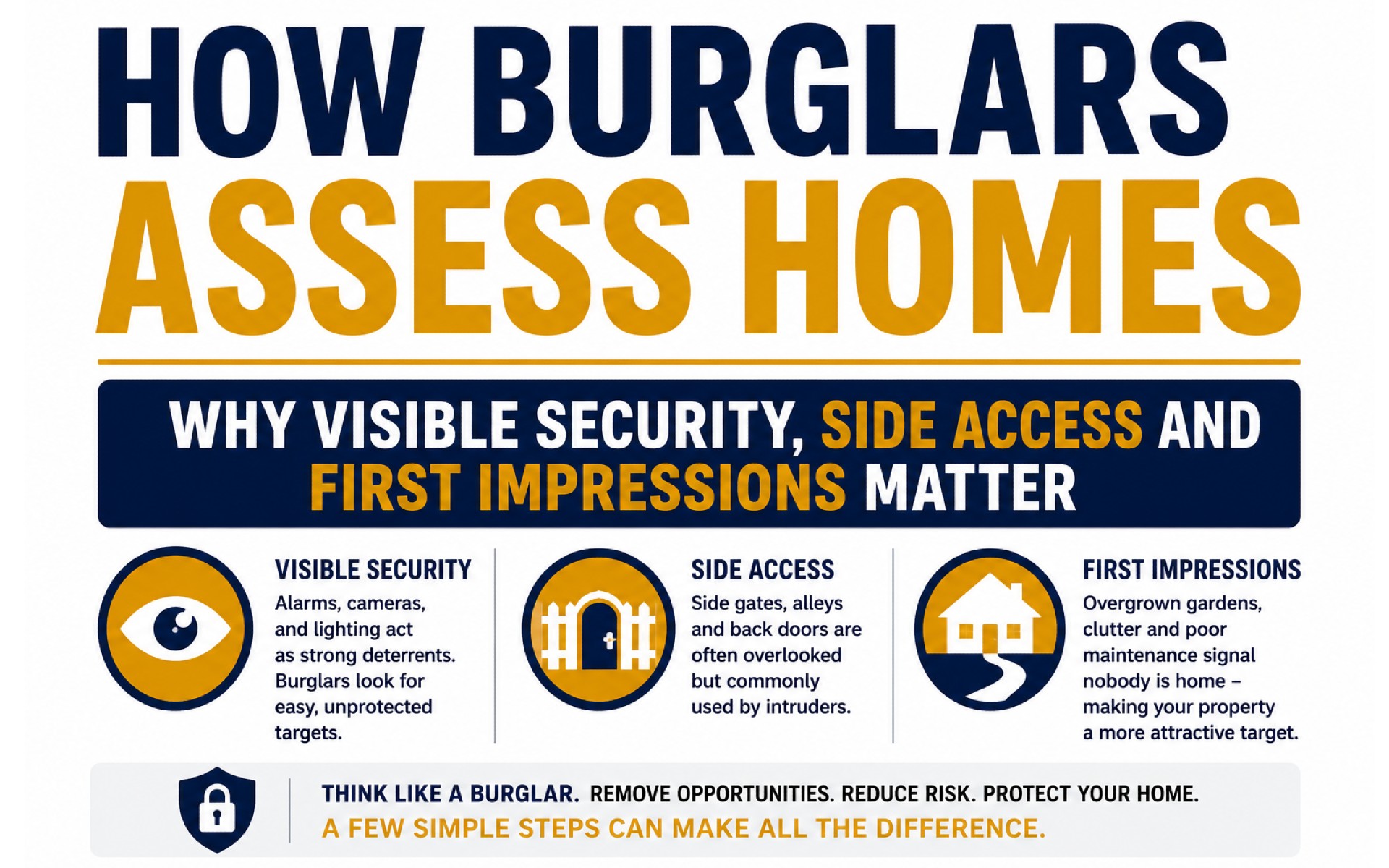
First Impressions Matter
People naturally form opinions within seconds, and an opportunist offender is no different.
The first impression of a property may be influenced by features such as:
- A clean, well-maintained front door.
- Secure, good-quality door hardware.
- Gates that close properly.
- Well-maintained fencing.
- Trimmed hedges.
- Clear house numbers.
- Functional exterior lighting.
- Windows in good condition.
These features don't guarantee security, but they suggest that the property is regularly cared for and that maintenance issues are addressed promptly.
By contrast, visible neglect may unintentionally suggest that faults have been left unresolved.
Why Visible Security Still Matters
Visible security measures can influence how difficult a property appears to access.
Examples include:
- A well-maintained entrance door.
- High-security door handles.
- Quality locks.
- Secure letterplates.
- Good exterior lighting.
- Strong gates.
- Well-maintained fences.
- Clearly defined property boundaries.
Visible security isn't about creating an intimidating appearance.
Instead, it reinforces the impression that the property receives regular attention and is actively maintained.
Natural Surveillance Reduces Opportunities
One of the most important principles of crime prevention is natural surveillance.
People are generally less likely to engage in suspicious behaviour when they believe they can easily be seen.
Natural surveillance can be improved by:
- Maintaining clear sight lines.
- Avoiding excessive overgrown vegetation.
- Keeping entrances visible.
- Providing appropriate lighting.
- Allowing neighbours to overlook access routes naturally.
The objective is not to remove privacy but to reduce hidden areas where someone could remain unnoticed.
How Opportunist Offenders May Assess a Property
Without entering the property, someone may quickly observe factors such as:
- Easy access to the rear garden.
- Poorly maintained doors.
- Weak windows.
- Loose door furniture.
- Hidden access routes.
- Unlocked gates.
- Damaged fencing.
- Signs that nobody is home.
- Valuable items visible through windows.
These observations can often be made within moments.
Removing obvious vulnerabilities simply reduces the number of opportunities that appear available.
Side Access Is Often Forgotten
Many homeowners focus most of their attention on the front entrance.
However, side access frequently receives much less consideration.
Common issues include:
- Gates left unlocked.
- Low or damaged fencing.
- Poor lighting.
- Overgrown shrubs.
- Easy access to the rear garden.
Once someone reaches the back of a property they are often less visible from the street.
Securing side access therefore forms an important part of overall home security.
Rear Doors Deserve Equal Protection
The front door often receives the highest level of security, while rear entrances are sometimes overlooked.
Rear access points include:
- Patio doors.
- French doors.
- Conservatory doors.
- Rear entrance doors.
- Garden gates.
- Garages.
- Sheds.
Every external entrance should provide a comparable standard of security.
The overall protection of a property is often determined by its weakest access point rather than its strongest.
Property Boundaries Help Define Space
Well-maintained boundaries contribute to both appearance and security.
Effective boundaries can include:
- Secure fencing.
- Properly closing gates.
- Walls in good condition.
- Clearly defined access routes.
- Appropriate planting.
Clearly identifying where private property begins can discourage casual access while making unusual activity easier to notice.
Lighting Improves Visibility
Appropriately positioned exterior lighting provides several advantages.
It can:
- Improve visibility around entrances.
- Reduce concealed areas.
- Assist visitors.
- Support natural surveillance.
- Draw attention to unexpected movement.
Lighting should illuminate important access routes without causing unnecessary glare or disturbance to neighbouring properties.
Signs of Occupancy Matter
Many opportunist offenders are thought to prefer properties that appear unoccupied.
Everyday occupancy cues may include:
- Vehicles on the driveway.
- Lights used naturally.
- Curtains or blinds opening and closing.
- Regular garden maintenance.
- Collected deliveries.
- Wheelie bins moved routinely.
These ordinary signs suggest that the property is regularly used without requiring elaborate security measures.
Maintenance Supports Security
Routine maintenance helps preserve both the appearance and function of a property.
Regularly inspect:
- Door handles.
- Locks.
- Hinges.
- Door alignment.
- Gates.
- Fencing.
- Outdoor lighting.
- Letterplates.
- Weather seals.
Addressing small faults promptly often prevents larger problems from developing while maintaining the overall integrity of the property.
Layered Security Works Best
Effective home security rarely depends upon a single product.
Instead, several complementary measures work together.
These may include:
- Strong locks.
- Secure entrance doors.
- Well-maintained hardware.
- Exterior lighting.
- Secure boundaries.
- Clear sight lines.
- Sensible key management.
- Neighbourhood awareness.
- Regular maintenance.
Each measure adds another layer of protection and helps reduce opportunities for opportunist crime.
Related article: Understanding security through environmental design.
Small Improvements Can Have a Big Effect
Improving home security doesn't always require expensive upgrades.
Simple improvements may include:
- Tightening a loose handle.
- Adjusting a misaligned door.
- Locking a side gate.
- Replacing worn locks.
- Repairing damaged fencing.
- Trimming overgrown shrubs.
- Installing improved exterior lighting.
- Keeping entrances tidy and visible.
Individually these changes may seem minor.
Together they create the impression of a well-maintained property where obvious weaknesses have been addressed.
Community Awareness Adds Another Layer
Neighbourhood awareness has long been recognised as a valuable part of residential security.
Neighbours who know one another are often more likely to notice:
- Unusual visitors.
- Open gates.
- Deliveries left unattended.
- Storm damage.
- Unexpected activity.
Simple cooperation—such as collecting parcels during holidays or reporting suspicious behaviour—can help reduce opportunities for opportunist crime while strengthening the local community.
Security Is About the Whole Property
A secure home is created through the combination of many small decisions rather than one expensive security product.
The strongest protection usually comes from:
- Good maintenance.
- Strong physical security.
- Secure boundaries.
- Thoughtful landscaping.
- Appropriate lighting.
- Natural surveillance.
- Reliable locking systems.
- Everyday security habits.
Each element complements the others to create a property that appears occupied, cared for and more difficult to approach unnoticed.
Conclusion
Understanding what makes a property more or less attractive to an opportunist burglar isn't about creating fear—it's about recognising that the overall condition and presentation of a home can influence how it is perceived from the outside. Visible maintenance, secure boundaries, good lighting, natural surveillance and well-maintained doors all contribute to the impression that a property is occupied, cared for and less likely to provide an easy opportunity.
No individual security measure can eliminate the risk of burglary. However, combining quality locks with sensible property maintenance, secure access points and everyday security habits creates multiple layers of protection. By addressing small weaknesses before they become larger problems, homeowners can improve both the resilience of their property and their confidence in its overall security.
Frequently Asked Questions
Do burglars always target the most expensive-looking homes?
Not necessarily. Many residential burglaries are considered opportunistic, with offenders often seeking properties that appear easier to access or less likely to attract attention rather than simply the most valuable.
Does keeping my property well maintained improve security?
Good maintenance doesn't guarantee security, but it can suggest that the property is regularly occupied and that issues are dealt with promptly, reducing obvious signs of vulnerability.
Why is side access important?
Side gates and pathways often provide access to less visible areas at the rear of a property. Keeping these routes secure can reduce opportunities for someone to approach unnoticed.
Should rear doors be as secure as the front door?
Yes. Rear doors, patio doors and conservatory doors should provide a similar standard of security because the overall protection of a property is often determined by its weakest access point.
What is layered security?
Layered security means combining several complementary measures—such as strong locks, secure doors, good lighting, regular maintenance and secure boundaries—rather than relying on a single product to protect the home.
Related Articles: