How to Tell if Someone Has Tried to Break Into Your Door
Introduction
An attempted burglary doesn't always result in a broken lock or smashed door. In many cases, the damage is subtle and easy to overlook. However, even a failed attempt can weaken your locks, handles or door frame, leaving your property more vulnerable to a future attack.
Knowing what to look for allows you to identify hidden damage early, repair affected components and restore your home's security before they fail completely.
If you suspect someone has targeted your property, it's worth carrying out a careful inspection of every external door.
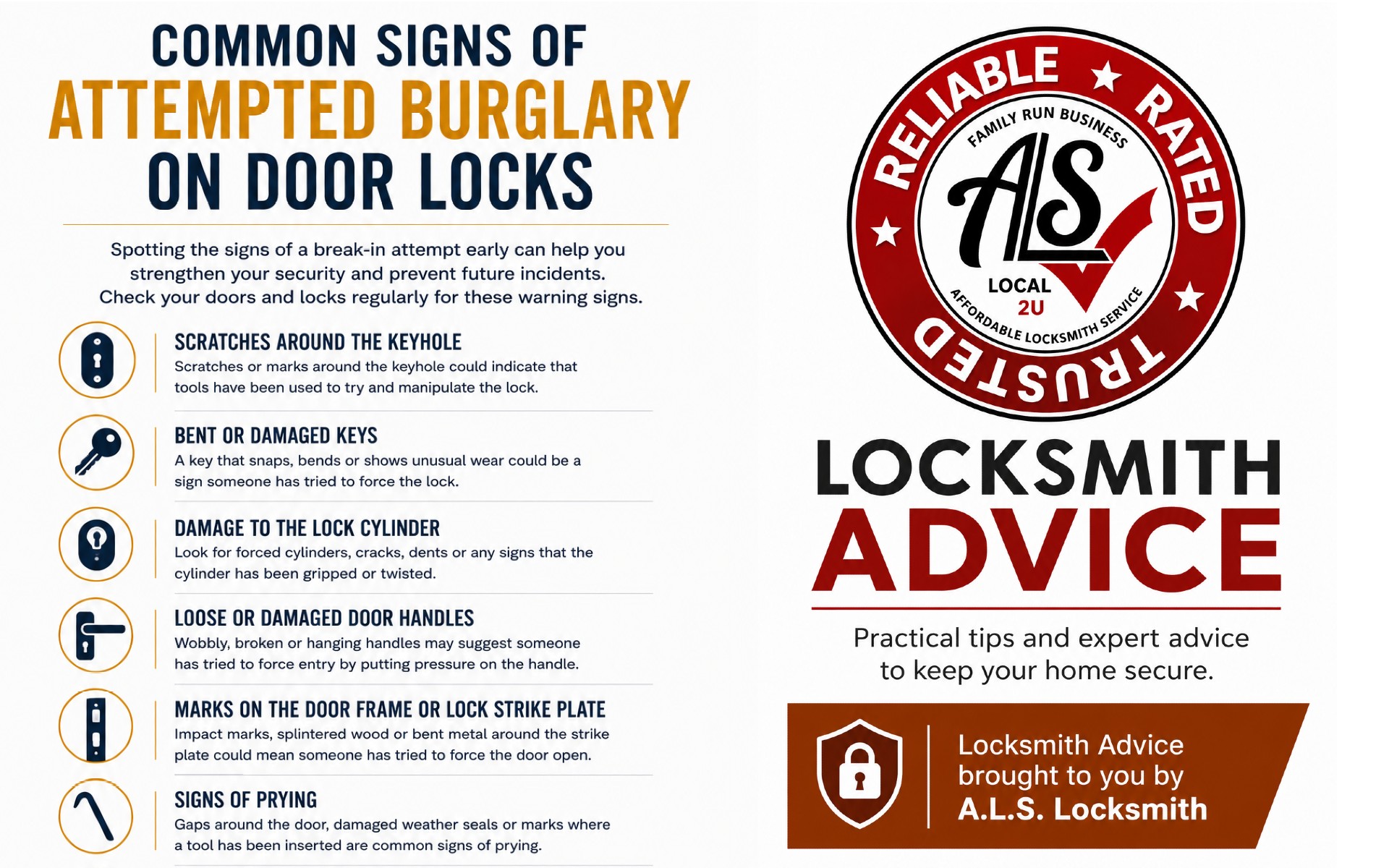
Scratches Around the Lock Cylinder
One of the most obvious signs of an attempted attack is fresh damage around the euro cylinder.
Look for:
- Deep scratches.
- Fresh tool marks.
- Gouges around the cylinder.
- Damage around the fixing screw.
- Marks on the face of the cylinder.
These can indicate an attempt to:
- Snap the lock.
- Drill the cylinder.
- Pick the lock.
- Pull the cylinder from the door.
While minor wear is normal over time, fresh or severe damage should never be ignored.
Damaged Door Handles
Security handles are designed to help protect the lock cylinder, but they often show signs if force has been applied.
Inspect them for:
- Dents.
- Heavy scratches.
- Bent handles.
- Loose backplates.
- Cracks.
- Distorted fixing points.
Even if the handle still operates, hidden damage may have weakened it.
A Loose or Damaged Lock Cylinder
A cylinder that suddenly feels different should always be investigated.
Signs include:
- The cylinder feels loose.
- It has shifted position.
- Visible cracks.
- Difficulty turning the key.
- Rough operation.
- Excessive movement.
An attempted snapping or twisting attack may damage the cylinder internally, even if entry wasn't gained.
Related Article: How burglars target weak locks?
The Key Suddenly Becomes Stiff
If the lock was operating normally before but has suddenly become difficult to use, internal damage may have occurred.
Watch for:
- Increased resistance.
- The key sticking.
- Difficulty inserting the key.
- Rough or inconsistent operation.
- The key becoming difficult to remove.
Avoid forcing the key, as this may cause additional damage or result in a snapped key.
Damage Around the Door Frame
Not every burglar attacks the lock itself.
Examine the frame carefully for:
- Splintered timber.
- Bent keeps.
- Damaged strike plates.
- Scrape marks.
- Signs of levering.
- Cracked frame sections.
Frame damage can affect both the security of the door and the way the locking mechanism operates.
The Door No Longer Closes Properly
An attempted forced entry can knock the door out of alignment.
Common symptoms include:
- The door catching the frame.
- Uneven gaps.
- Difficulty lifting the handle.
- Increased resistance when locking.
- Having to push or pull the door.
Even slight movement can place additional strain on the locking mechanism and gearbox.
Bent or Damaged Locking Points
If you have a uPVC or composite door, inspect the multipoint locking mechanism.
Look for:
- Bent hooks.
- Damaged rollers.
- Mushroom cams that don't engage correctly.
- Locking points that remain extended.
- Increased resistance when operating the handle.
A mechanism may continue working after an attempted attack but fail later because of hidden damage.
Signs Around the Letterbox
Some burglars attempt to manipulate internal handles or keys through the letterbox.
Check for:
- Scratches around the flap.
- Bent letterbox components.
- Damage to the internal flap.
- Signs that tools have been inserted.
If you're concerned about this type of attack, a letterbox guard or internal cage can provide additional protection.
Check Every External Door
If one door has been targeted, inspect the rest of the property as well.
Don't forget to check:
- Front door.
- Back door.
- French doors.
- Patio doors.
- Conservatory doors.
- Garage access doors.
- Side entrances.
Burglars often look for the weakest point of entry rather than focusing on one particular door.
Upgrade Security After an Attempt
Even if entry wasn't gained, an attempted burglary is a good opportunity to review your home's security.
Consider upgrading to:
- Snap-resistant lock cylinders.
- TS007 2 Star security handles.
- BS3621 mortice locks on timber doors.
- Correctly sized lock cylinders.
- Additional security lighting.
- Video doorbells or CCTV.
Improving security now may discourage future attempts.
What Should You Do?
If you discover signs of an attempted burglary:
- Inspect every external door and window.
- Check that all locks operate smoothly.
- Replace damaged cylinders.
- Repair or replace damaged handles.
- Realign any doors that have moved.
- Report the incident to the police if appropriate.
- Photograph any damage for insurance purposes.
Even if the lock still works, damaged components should not be relied upon.
Hidden Damage Can Cause Future Failures
One of the biggest mistakes homeowners make is assuming that because the door still locks, everything is fine.
Internal damage caused by an attempted attack can eventually lead to:
- Gearbox failure.
- Broken handles.
- Snapped keys.
- Stiff locks.
- Complete lockouts.
Repairing or replacing damaged components early is usually far cheaper than dealing with an emergency failure later.
Conclusion
Not every attempted burglary leaves obvious damage, but even a failed attack can weaken your locks, handles and door hardware. Taking the time to inspect your doors after a suspected attempt allows you to identify hidden problems before they develop into security risks or lock failures.
If you notice fresh tool marks, damaged handles, stiff locks or changes in how your door operates, it's worth having the locking system checked. Prompt repairs and sensible security upgrades will help restore your home's protection and reduce the likelihood of future problems.
Related Articles: