Contents
- Can Modern Doors Be Repaired?
- Repair vs Replacement
- How a Door Is Diagnosed
- Door Alignment Repairs
- Gearbox Repairs
- Multipoint Lock Repairs
- Obsolete Mechanisms
- Handle Repairs
- Lock Cylinder Replacement
- Mortice Lock Repairs
- Hinge Repairs
- French Door Repairs
- Conservatory Door Repairs
- Emergency Door Repairs
- Upgrading Older Doors
- How Much Do Repairs Cost?
- Frequently Asked Questions
- Conclusion
Introduction
One of the biggest myths surrounding uPVC and composite doors is that once the locking mechanism fails, the only option is to replace the entire door.
Fortunately, that's rarely true.
Modern doors are designed as modular systems. Individual components such as gearboxes, locking mechanisms, handles, cylinders, hinges and keeps can often be repaired or replaced independently, restoring the door to full working order without the expense of a new installation.
The key is identifying the actual fault. A heavy handle, stiff key or jammed door doesn't always mean the same thing, and replacing the wrong component can be both frustrating and expensive. This guide explains how modern doors are repaired, the different repair options available and why correct diagnosis is the foundation of every successful repair.
Can Modern Doors Be Repaired?
Explain:
- Modular construction
- Replaceable components
- Why most repairs are possible
- Why doors are often condemned unnecessarily
Modern uPVC and composite doors are designed using a modular construction. Rather than being made as a single sealed unit, they consist of individual components such as the multipoint locking mechanism, gearbox, euro cylinder, handles, hinges, keeps and seals. If one part fails, it can usually be replaced without replacing the entire door.
This modular design means that most door faults are repairable. Worn locks, failed gearboxes, damaged handles, misaligned hinges and faulty cylinders can all be replaced individually, restoring the door to full working order. In many cases, a repair is quicker, less disruptive and far more cost-effective than fitting a new door.
Unfortunately, many doors are condemned unnecessarily because the fault isn't diagnosed correctly or because replacement is more profitable than repair. Unless the door slab or frame has suffered severe structural damage, most modern door problems can be resolved by replacing the failed component rather than the complete door.
Repair vs Replacement
Discuss:
When repair is appropriate:
- Failed gearbox
- Broken handles
- Door alignment
- Cylinder replacement
- Hinges
- Keeps
When replacement may be necessary:
- Severe structural damage
- Failed door slab
- Rotten timber
- Fire damage
- Impact damage
Most modern doors can be repaired by replacing the failed component rather than the entire door. Common repairs include failed gearboxes, broken handles, worn cylinders, misaligned doors, worn hinges and damaged keeps. As long as the door slab and frame are sound, repair is usually the quickest and most cost-effective solution.
Replacement is normally only necessary when the door has suffered severe structural damage, such as a cracked door slab, rotten timber, fire damage or major impact damage that cannot be repaired safely.
How a Door Is Diagnosed
Our Diagnostic Process
Every repair starts with a proper diagnosis. We listen to the symptoms, operate the door, test it both open and closed, identify the locking mechanism, check the hinges, keeps and alignment, and strip the lock down if necessary to find the exact fault.
Replacing parts without identifying the cause often wastes time and money. The correct approach is to diagnose the problem first, then replace only the component that has actually failed.
Door Alignment Repairs
Many locking problems are caused by poor door alignment rather than a faulty lock. By adjusting the hinges, keeps and compression, the door can be returned to its correct position so the locking points engage smoothly without excessive force.
Correct door geometry is essential for reliable operation. A door that is square, level and properly compressed places far less strain on the multipoint locking mechanism and gearbox. Correcting the alignment not only restores smooth operation but also helps prevent premature wear and extends the life of the locking system.
Gearbox Repairs
The gearbox is the central part of a multipoint locking mechanism. It controls the latch, deadbolt and locking points, allowing the door to lock and unlock correctly.
Common faults include worn internal components, broken springs and seized mechanisms. When a gearbox fails, it is replaced with the correct compatible unit before the lock is fully tested.
Once the new gearbox is working correctly, the door alignment is checked and adjusted if required. This ensures the new gearbox is not placed under unnecessary strain and helps maximise its service life.
Multipoint Lock Repairs
A multipoint locking mechanism consists of several working parts, including hooks, rollers, mushroom cams, drive rails, the latch and deadbolt. If any of these components become worn or damaged, the lock may become difficult to operate or fail completely.
Depending on the fault, individual components can sometimes be repaired, but in many cases replacing the complete multipoint locking mechanism is the most reliable solution. Fitting the correct replacement restores smooth operation, security and long-term reliability.
Obsolete Mechanisms
Some multipoint locking mechanisms are no longer manufactured, making an exact replacement impossible. Where this happens, a compatible replacement or conversion can often be fitted by adapting the door to accept a newer mechanism.
Original replacement parts are always the preferred option because they maintain the door's original design and operation. Universal repair locks can provide a solution when no original parts are available, but they are often a compromise, requiring modifications and not always matching the performance of the original mechanism.
Handle Repairs
Door handles can fail through worn spring cassettes, loose levers or worn spindles, causing the handle to feel floppy or fail to return properly. Replacing the faulty handle restores smooth operation and prevents unnecessary strain on the locking mechanism.
Where appropriate, heavy-duty replacement handles can provide greater durability than the originals. For improved security, TS007-rated handles offer additional protection against common methods of attack while maintaining full functionality.
Lock Cylinder Replacement
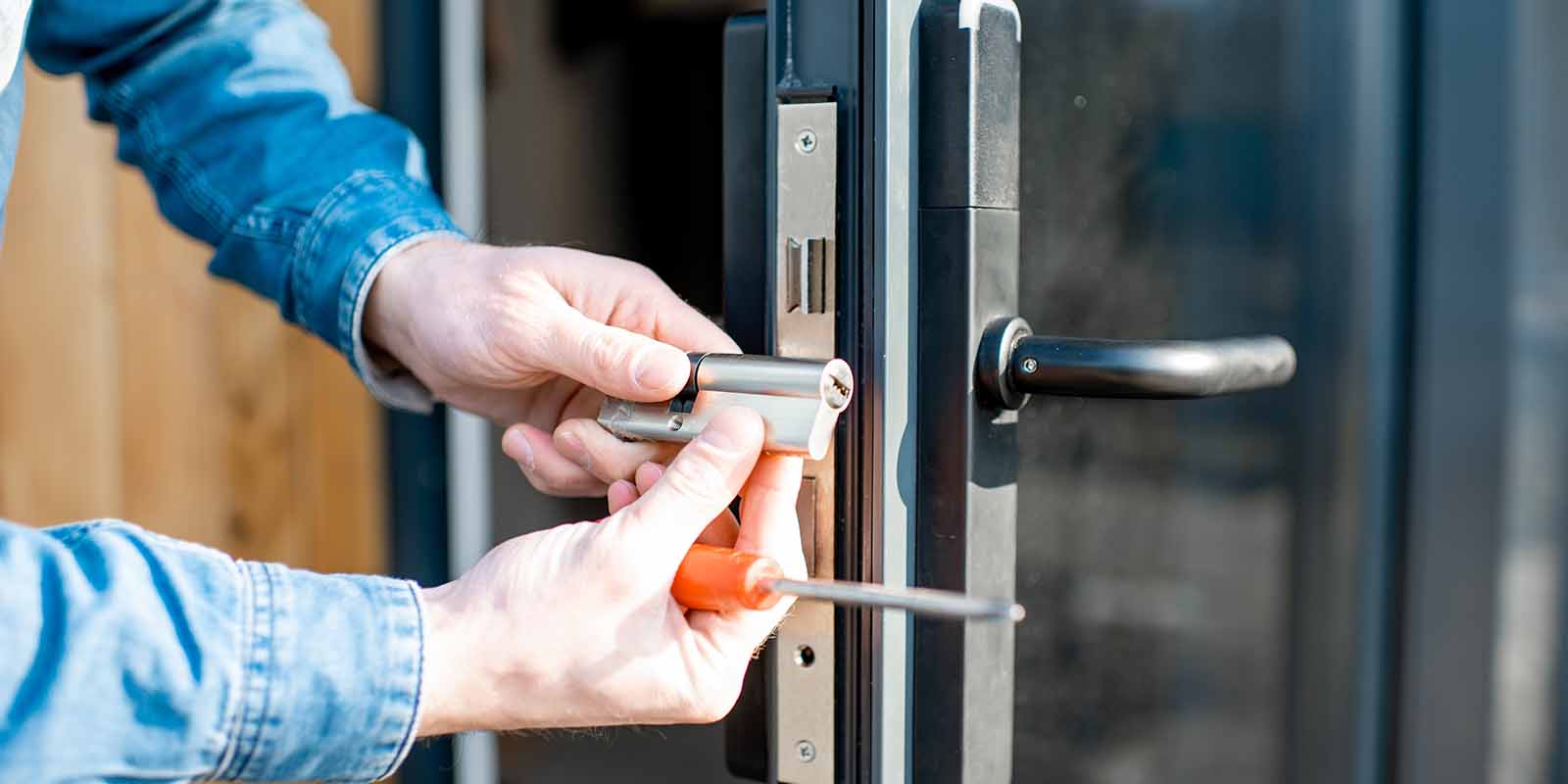
Replacing the lock cylinder is recommended if your keys have been lost, you've moved into a new property, or you want to improve your home's security. It's also important to fit the correct cylinder size, as an incorrectly sized cylinder can reduce security and leave the lock vulnerable.
Modern replacements include anti-snap cylinders for increased protection and thumbturn cylinders, which allow the door to be locked and unlocked from the inside without a key. Choosing the correct cylinder improves both security and everyday convenience.
Mortice Lock Repairs
Include:
- BS3621
- Sash locks
- Deadlocks
- ERA Vectis
- Timber doors
Mortice locks are commonly fitted to timber doors and include deadlocks, sash locks and insurance-approved BS3621 locks. Many faults, such as worn mechanisms or damaged latches, can be repaired by replacing the lock case with a matching unit.
Specialist mortice locks, including the ERA Vectis, can also be repaired or replaced where suitable parts are available. Using the correct replacement ensures the lock operates properly and maintains the door's security.
Hinge Repairs
Door hinges can become worn, loose or damaged over time, causing the door to drop, become difficult to lock or catch on the frame. Many problems can be resolved by adjusting the hinges, tightening loose fixings or replacing worn hinges with the correct type.
Heavy uPVC and composite doors place greater strain on their hinges, making correct adjustment and suitable replacement parts essential for smooth operation and long-term reliability.
French Door Repairs
French doors have both an active door, which is used every day, and a passive door secured by shoot bolts. Problems can occur with the shoot bolts, centre keeps, locking mechanisms or door alignment, preventing both doors from closing and locking correctly.
Most faults can be repaired by adjusting the alignment, replacing worn components or repairing the active door's locking mechanism. Correct adjustment ensures both doors operate together smoothly and lock securely.
Conservatory Door Repairs
Conservatory doors are particularly affected by seasonal expansion and contraction, which can cause alignment problems and place extra strain on the locking mechanism. This often leads to stiff operation or difficulty locking the door.
Most faults can be resolved by adjusting the alignment, replacing worn hinges, repairing or replacing the gearbox, or fitting a new multipoint locking mechanism where required. Correct alignment helps restore smooth operation and reduces stress on the lock.
Emergency Door Repairs
Emergency repairs are often needed when a door is jammed shut, won't lock securely, has a failed gearbox, a snapped key or has been damaged during a burglary. Lockouts can also require urgent assistance to regain access safely.
The priority is to make the door secure and restore normal operation wherever possible. In most cases, the faulty component can be repaired or replaced without the need for a complete new door.
Upgrading Older Doors
Explain:
Examples include:
- Anti-snap cylinders
- New handles
- Better gearboxes
- Modern mechanisms
- ERA Vectis conversions
- Improved security
Older doors can often be upgraded without replacing the entire door. Improvements include fitting anti-snap cylinders, heavy-duty or TS007 security handles, improved gearboxes, modern multipoint locking mechanisms and, where suitable, ERA Vectis conversions.
These upgrades improve security, reliability and ease of operation while extending the life of the existing door, making replacement unnecessary in many cases.
How Much Do Repairs Cost?
Discuss:
Factors affecting price:
- Type of repair
- Parts required
- Availability
- Alignment
- Obsolete mechanisms
Include your approach:
- Fixed-price repairs
- No hourly rates
- Diagnosis first
- Parts and labour included
- If parts need ordered and a return visit is required, the agreed price remains the same
The cost of a door repair depends on the type of fault, the parts required, their availability, whether the door needs realigning, and whether the locking mechanism is still in production. Obsolete mechanisms can sometimes require conversion parts, which may affect the overall cost.
We work on a fixed-price basis with no hourly rates. Every job starts with a proper diagnosis before any parts are replaced, and our quoted price includes both parts and labour. If replacement parts need to be ordered and a return visit is required, the agreed price stays exactly the same.
Frequently Asked Questions
Can every door be repaired?
Most modern uPVC, composite and timber doors can be repaired. Replacement is usually only necessary if the door or frame has suffered severe structural damage.
Can you replace just the gearbox?
Yes. If the gearbox has failed and the rest of the mechanism is serviceable, it can often be replaced on its own.
Can you replace just the lock?
Yes. Lock cylinders, multipoint mechanisms and mortice locks can all be replaced without fitting a new door.
Can you repair obsolete mechanisms?
In many cases, yes. Where original parts are unavailable, compatible replacements or conversion mechanisms may be fitted.
Do I need a new door?
Not usually. Most faults are caused by worn or damaged components that can be repaired or replaced.
Is repairing cheaper than replacing?
In most cases, yes. Repairing the faulty component is normally far more cost-effective than installing a new door.
How long does a repair take?
Many repairs can be completed in a single visit, although obsolete or special-order parts may require a return visit.
Should I upgrade while repairing?
It can be worthwhile. Upgrading to anti-snap cylinders, TS007 handles or improved locking mechanisms can increase both security and reliability.
Can you repair French doors?
Yes. French door repairs commonly involve alignment, shoot bolts, centre keeps and multipoint locking mechanisms.
Can conservatory doors be repaired?
Yes. Most conservatory door problems can be resolved by adjusting the alignment or replacing worn hinges, gearboxes or locking mechanisms.
Conclusion
Modern uPVC and composite doors are designed to be repaired, not simply replaced. Most faults occur in individual components such as the gearbox, locking mechanism, handles, hinges or cylinder, all of which can often be replaced independently. In many cases, a correctly diagnosed repair restores the door to smooth, reliable operation at a fraction of the cost of fitting a new door.
The most successful repairs begin with understanding why the fault occurred, not just replacing the part that appears to have failed. Correct alignment, quality replacement components and careful testing are just as important as the repair itself. When these principles are followed, many doors can continue providing years of reliable service without the need for a complete replacement.