A Composite Door Jammed Shut
The call-out in Dumbarton involved a composite door that had become completely jammed.
The homeowner could turn the key, but it wasn't unlocking the door. From the owner's perspective, the problem appeared serious enough to raise the possibility of replacing the entire door.
However, a door that won't unlock doesn't automatically need replacing.
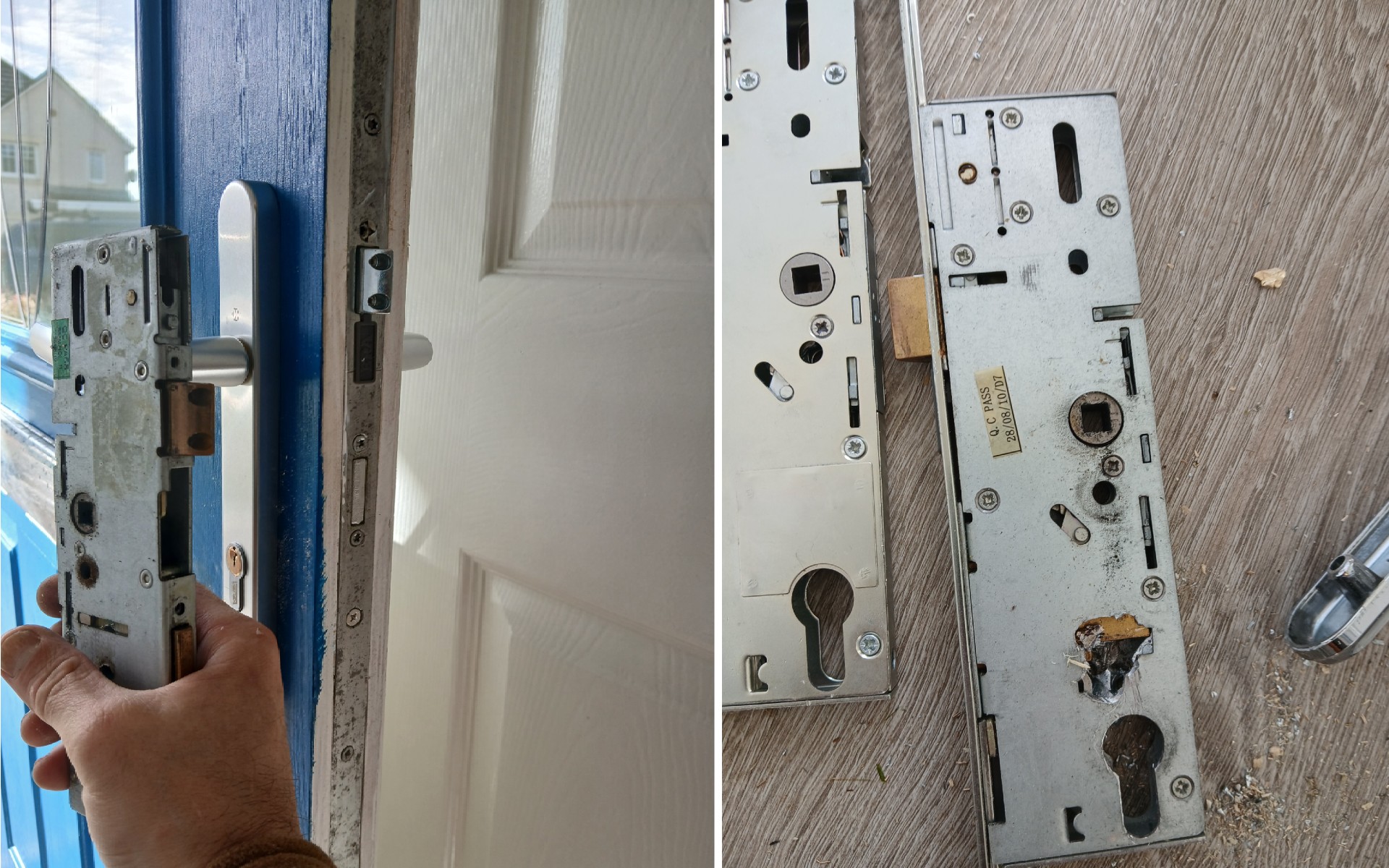
The fault may be inside the gearbox, which transfers movement from the handle and cylinder into the multipoint locking mechanism. If the gearbox fails internally, it can prevent the locking bolt and other components from moving correctly.
The first step was to establish exactly which mechanism was fitted.
Identifying the ERA Mechanism
Identifying the mechanism before attempting to open the door was particularly important in this case.
With 18 years of experience repairing door locks and mechanisms, I recognised the system as an ERA locking mechanism.
I have encountered this type of failure before. Certain ERA gearbox designs can seize internally, leaving the mechanism completely jammed.
When this happens, the key may still turn without successfully retracting the locking bolt.
That is an important distinction: a key turning does not necessarily mean the gearbox is functioning.
The cylinder may be turning normally, but if the gearbox cannot transfer that movement to the locking components, the door can remain locked shut.
Knowing the type of mechanism and understanding how it operates helps determine the appropriate method of gaining entry.
Why a Seized Gearbox Requires Careful Diagnosis
When a multipoint mechanism jams, the priority is to open the door while minimising damage and avoiding unnecessary replacement of components.
There are different ways a failed mechanism can be approached, but not every method is appropriate for every lock.
One issue I have encountered is locking points being cut to release a jammed door. Depending on the mechanism and the damage caused, this can leave the entire locking strip needing replacement, substantially increasing the repair cost.
In this case, I wanted to avoid that outcome.
After identifying the ERA mechanism, I determined that I could access and manipulate its internal working parts to release the bolt.
Opening the Door Without Replacing the Mechanism or Door
Opening this door took approximately 30 minutes.
I carefully drilled an access hole through the composite door at the appropriate position, allowing me to reach the internal working components of the seized mechanism.
I then manipulated those components to release the locking bolt.
Eventually, the door opened.
The important result was that I had gained access without having to cut through the mechanism's locking points or replace the entire door.
This type of repair requires knowledge of the mechanism involved. Applying the wrong method to a jammed door can turn a repairable fault into a more expensive job.
Once the door was open, I could assess the remaining components and complete the repair.
Replacing the Broken Handles and Lock
After opening the door, I found that the existing handles were also broken.
I replaced the handles and fitted a new lock cylinder.
The replacement handles were positioned so that they covered the access hole made during the opening process, leaving the door with a neat finish.
The new cylinder was fitted correctly, and the handles were secured in position.
This addressed the broken external components as well as restoring the door's locking function.
It was important to make sure the new components worked properly with the existing multipoint mechanism rather than simply fitting them and assuming the job was complete.
Correcting the Door Alignment
With the door reassembled, I carried out a door alignment adjustment.
Alignment matters because a multipoint locking system relies on the hooks, rollers and bolts meeting their corresponding keeps in the frame.
If the door has moved out of position, the locking points can bind against the keeps. This can increase resistance and put additional strain on the handle, gearbox and other components.
A new cylinder and replacement handles won't correct that underlying problem.
The door must be correctly positioned so the locking mechanism can operate without unnecessary resistance.
After realigning the door, I tested the locking system again.
The door worked perfectly.
The Homeowner Avoided Replacing the Door
The homeowner had initially thought a new door might be needed because the existing one was jammed shut.
However, the fault was within the locking system, and the door could be restored to working order without replacing the complete assembly.
The seized ERA mechanism had been released, the broken handles and lock replaced, and the door realigned.
The homeowner was happy with the result and left a 5-star review.
What This Dumbarton Repair Demonstrates
1. A key that turns doesn't guarantee the gearbox is working
The cylinder can turn while an internal gearbox failure prevents the bolt from retracting.
2. Identifying the mechanism matters
Recognising the ERA mechanism helped determine how to approach the problem.
3. The wrong opening method can increase the repair cost
Cutting locking points can leave the complete mechanism needing replacement. The appropriate approach depends on the mechanism and the nature of the failure.
4. Broken handles and a jammed lock are separate issues
Both needed attention before the door could be returned to proper working order.
5. Alignment should be checked after repairs
Even after the locking components have been addressed, poor alignment can affect how the door locks and unlocks.
6. A jammed door doesn't automatically require a new door
The existing composite door was retained, and the locking system was restored without replacing the complete assembly.
Conclusion: Repair Rather Than Replace
This Dumbarton job is a good example of why experience and correct diagnosis matter when dealing with a jammed composite door.
The key turned, but the door wouldn't unlock. After identifying the ERA mechanism, I recognised the likely internal seizure and selected an approach that allowed the locking bolt to be released without cutting through the locking points.
The door was opened after approximately 30 minutes. I then replaced the broken handles and lock, ensured the access hole was covered by the new handles, corrected the door alignment and tested the complete system.
The result was a door that worked perfectly again.
The key lesson is that a jammed composite door is not necessarily a failed door. When the actual fault can be identified and repaired, it may be possible to restore the existing door without the cost and disruption of replacing it.
The homeowner was happy, the door was working properly, and the job ended with a 5-star review.