
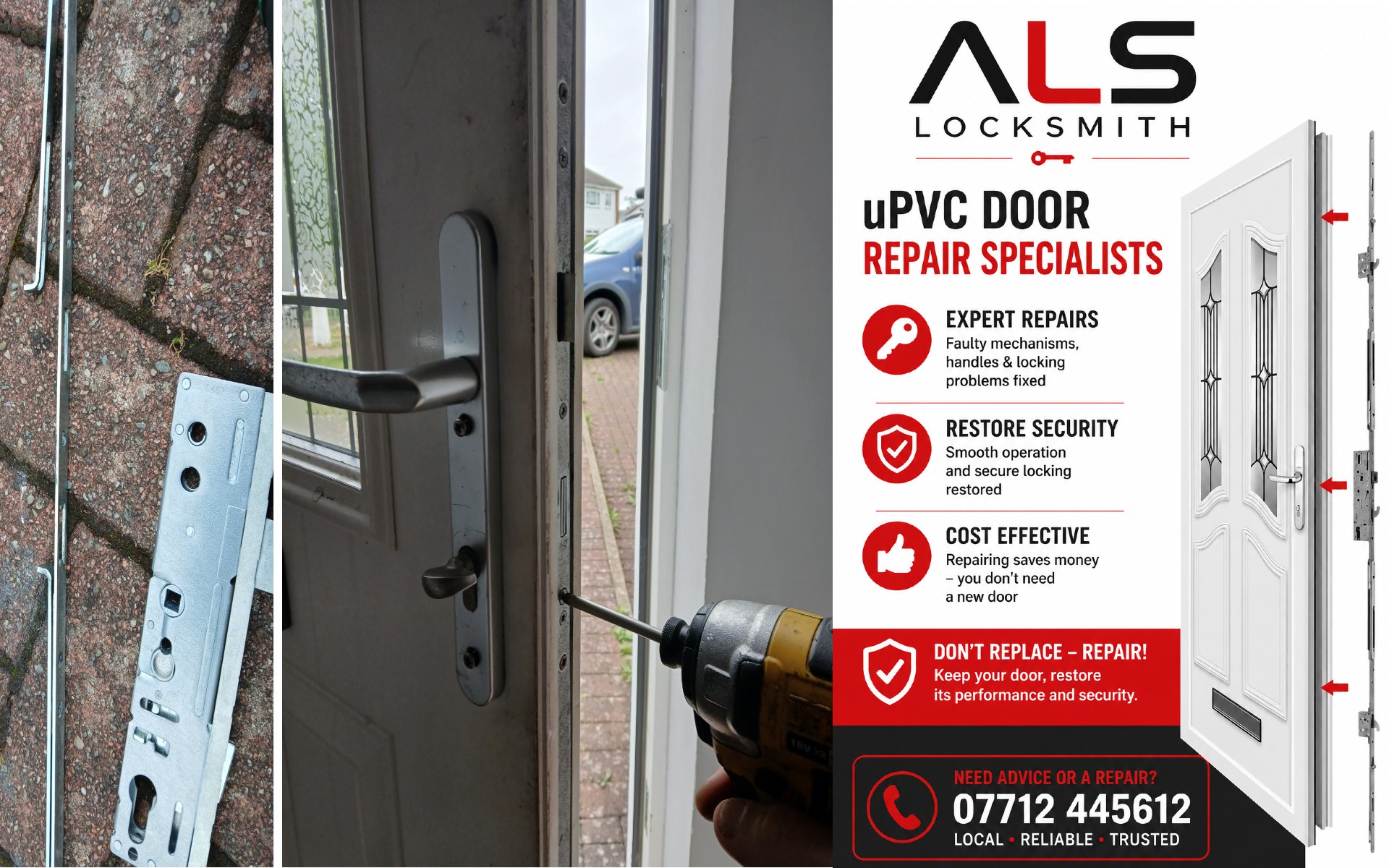
A Composite Door Declared Beyond Repair
The homeowner in Paisley had already been told by another company that their composite door needed replacing.
The reason given was that the existing locking mechanism was obsolete.
This is a situation that can leave homeowners with limited options, particularly when they assume that an obsolete mechanism cannot be replaced or adapted.
However, an obsolete mechanism doesn't automatically mean that the entire door is beyond repair.
The important question is whether a suitable replacement can be fitted while retaining the existing door, provided the door itself and its supporting components remain serviceable.
After inspecting the door, I believed a replacement mechanism was a practical option.
The existing handles were also loose, and the lock needed attention. Rather than addressing these components separately, I suggested replacing the mechanism, handles and cylinder together.
This would give the door a new set of important working components and potentially extend its useful life considerably.
The homeowner agreed to proceed.
Planning the Replacement
Because the original mechanism was obsolete, the replacement needed to be selected carefully.
A replacement mechanism cannot simply be chosen because it looks similar to the original.
Its dimensions, gearbox position, locking points and relationship with the door's existing handles and frame all need to be considered.
The aim was to find a mechanism that could be adapted to work with the existing door while maintaining proper locking operation.
I ordered the replacement mechanism, handles and additional components required for the installation.
Once the parts arrived, I returned to the property to carry out the conversion.
Removing the Old Mechanism and Handles
The first stage was to strip the existing locking mechanism and handles out of the door.
With the old components removed, I could prepare the door for the replacement mechanism and assess the adjustments required.
The new mechanism was close to the dimensions of the original, which made the conversion possible. However, it wasn't a completely straightforward drop-in replacement.
Some careful modification was needed to accommodate the new gearbox and ensure the locking strip could operate freely.
Adjusting the Door to Accommodate the New Gearbox
The new gearbox needed additional clearance in the centre section of the door.
I carefully routed out the required area to allow the gearbox to operate freely without catching against the door material.
This is an important detail when adapting an older door to accept a replacement locking mechanism.
The gearbox must have sufficient clearance to move as intended. If the surrounding material interferes with its operation, the mechanism may bind or experience unnecessary resistance.
The adjustment therefore needed to provide the necessary clearance without removing more material than required.
Once the centre section had been prepared, I inserted the new mechanism and checked its fit.
Trimming the Locking Strip to Fit the Door
Although the replacement mechanism was close in size to the original, the locking strip also needed adjustment.
I trimmed it so that it extended down the full length of the door, allowing the replacement mechanism to sit correctly within the existing installation.
The positioning of the strip matters because the locking points must line up with their corresponding receivers in the frame.
A replacement mechanism may fit inside the door but still require adjustments before every locking point can engage correctly.
Once the strip had been fitted and checked, I installed the new handles and lock cylinder.
Installing the New Handles and Lock
The original handles were loose, so replacing them was an important part of the overall repair.
New handles provided a fresh operating interface for the replacement gearbox, while the new cylinder renewed another key component of the locking system.
With the mechanism, handles and cylinder installed, I tested the door's operation.
The mechanism worked correctly.
However, there was one more stage to complete: testing the door in its frame.
Testing the Door Revealed a Problem at the Bottom Locking Point
Testing a multipoint mechanism outside the frame or with the door open is useful, but it doesn't prove that the complete door will lock properly when closed.
When I tested the replacement mechanism with the door in its frame, I found that the bottom locking point wasn't meeting its receiver correctly.
The replacement mechanism was close in dimensions to the original, but the bottom locking point required a corresponding adjustment to the frame.
I altered the bottom mortise so that the locking point could meet the receiver correctly.
This allowed the bottom of the locking system to engage as intended.
The door was then tested again, this time with the mechanism operating in its normal position.
The door worked well.
Why the Final Adjustment Mattered
This final adjustment illustrates an important principle when replacing obsolete mechanisms.
Even when a replacement gearbox fits the door and operates correctly, the locking points must still align with the keeps and receivers in the frame.
If one locking point is out of position, it can prevent the door from locking properly or introduce resistance into the system.
The job therefore involved more than simply fitting a new mechanism.
It required:
-
Selecting a suitable replacement.
-
Preparing the door for the new gearbox.
-
Ensuring the locking strip fitted correctly.
-
Installing new handles and a cylinder.
-
Checking the locking points against the frame.
-
Adjusting the bottom mortise.
-
Testing the complete door again.
Each stage contributed to the final result.
Saving the Existing Composite Door
The homeowner had initially been told that the door needed replacing because its original mechanism was obsolete.
After the conversion, the existing door was still in place and working properly.
The old mechanism and loose handles had been removed, a replacement locking system installed, and the bottom locking point adjusted to engage correctly with the frame.
This avoided the expense and disruption of replacing the entire door.
Of course, not every obsolete mechanism can be replaced economically. The condition of the door, the availability of suitable parts and the work needed to adapt the installation all have to be considered.
In this case, the replacement was practical, and the homeowner was able to keep the door.
What This Paisley Repair Demonstrates
1. An obsolete mechanism doesn't automatically mean a new door
A suitable replacement may be available, even if the original mechanism is no longer manufactured.
2. Replacement mechanisms may need adaptation
Similar dimensions don't guarantee a direct fit. The gearbox clearance and locking strip may require careful adjustment.
3. Loose handles should be considered as part of the repair
Replacing the handles alongside the mechanism and cylinder renewed several important working components at once.
4. The frame must match the replacement mechanism
The bottom locking point needed an adjustment to its receiver so that it could engage properly.
5. Testing must include the complete door
The mechanism worked, but the final frame adjustment was needed to ensure the door locked correctly in its normal operating position.
Conclusion: Repair Rather Than Replace
This Paisley job is a good example of how an older composite door can sometimes be saved even when its original locking mechanism is obsolete.
The homeowner had been advised to replace the entire door, but after inspecting the installation, I identified a practical alternative.
I removed the old mechanism and loose handles, adapted the door to accept the replacement gearbox, trimmed the locking strip, fitted new handles and a new lock cylinder, and adjusted the bottom mortise to align with the replacement locking point.
After final testing, the door worked well.
The original mechanism was obsolete, but the door itself didn't need replacing.
By selecting a suitable replacement and adapting the installation carefully, I was able to restore the locking system and allow the homeowner to keep their existing composite door.