The problem: a DIY lockout attempt
I was called to a property in Bearsden after the homeowner had become locked out. Rather than immediately calling a locksmith, he decided to drill out the lock himself in the hope of saving money.
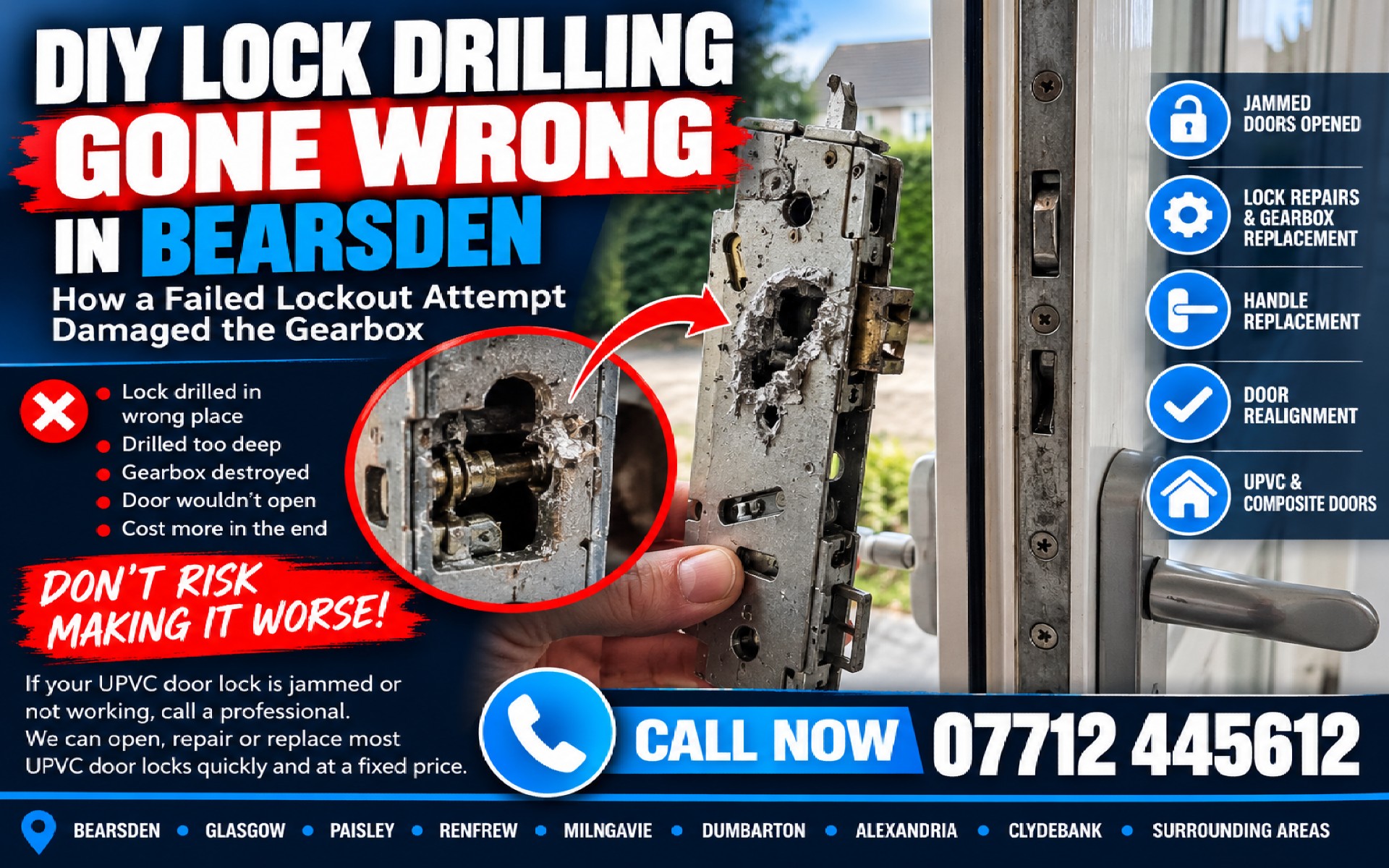
Unfortunately, the drilling was not correctly positioned and went too far into the door. Instead of damaging only the lock cylinder, the drill penetrated the gearbox behind it and destroyed the locking mechanism.
This is a significant distinction. The cylinder is the part into which the key is inserted, but it operates as part of a larger locking system. Behind it sits the gearbox, which transfers the movement of the key and handle into the mechanism that controls the locking points.
Once the gearbox had been damaged, removing the cylinder alone was no longer enough to release the door. The homeowner was still locked out, and the repair had become considerably more complicated.
Removing the destroyed lock
My first task was to remove the cylinder that had already been damaged by the DIY drilling attempt.
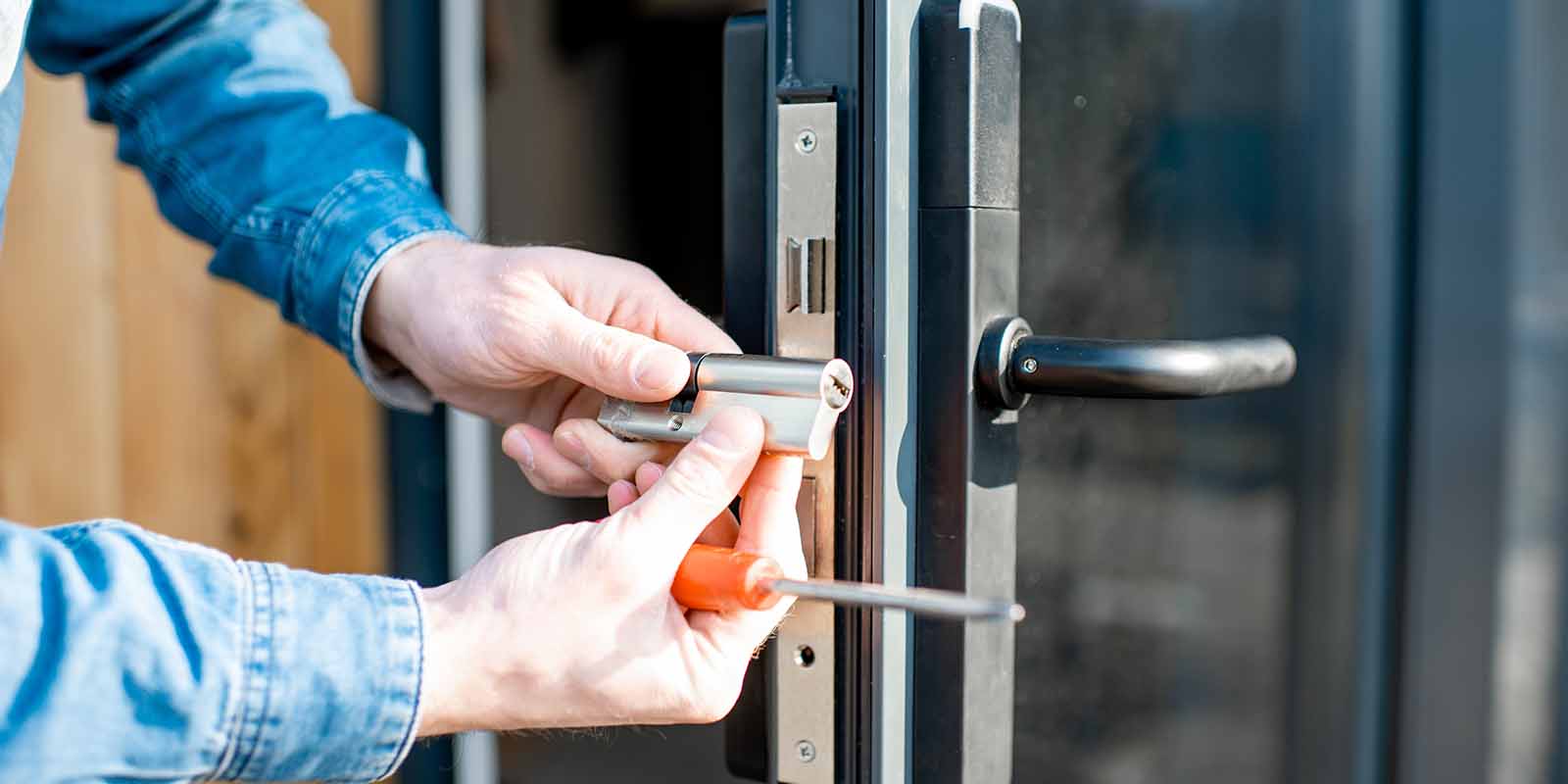
In this case, I used a bell puller to extract and snap the damaged cylinder. This required drilling a small 3mm pilot hole into the cylinder so that the pull screw could be inserted securely.
Once the cylinder had been removed, I could assess whether the remaining mechanism would still operate.
Unfortunately, it would not. The mechanism simply turned without releasing the door, confirming that the damage extended beyond the cylinder itself.
Releasing the damaged gearbox and opening the door
With the cylinder out, I manually manipulated the locking cam to allow the handles to drop and release their hold on the mechanism.
That was only part of the process. The locking points were still engaged, and the door remained shut.
I carefully spread the door slightly and manually manipulated the mechanism to release the locking points. This allowed me to open the door and gain access to the full locking assembly.
Opening the door was an important step because it allowed me to remove the damaged mechanism, inspect the extent of the damage and determine what was required to restore the door to working order.
Had I simply replaced the cylinder without addressing the gearbox, the door would still not have locked or unlocked correctly.
Why the gearbox had to be replaced
After opening the door, I removed the locking mechanism and inspected it. The DIY drilling had damaged the gearbox, so replacing the cylinder alone could not resolve the problem.
A multipoint locking mechanism relies on several components working together. The cylinder operates the locking cam, while the gearbox transfers the movement through the mechanism to operate the locking points. If the gearbox is damaged, the key may turn without producing the movement required to release the door.
This is why it is important to establish exactly what has failed before ordering parts. A lockout can be caused by a faulty cylinder, a failed gearbox, seized locking points, poor alignment or a combination of faults.
In this case, the damage caused by drilling meant that the gearbox itself needed to be replaced.
Securing the property with a temporary lock
When I removed the damaged mechanism, I discovered that I did not have the exact replacement part required in my vehicle stock.
Rather than leave the property unsecured while waiting for the correct component, I fitted a temporary overnight lock and cylinder. This secured the door until I could obtain the necessary replacement.
I then ordered a genuine replacement mechanism. It took a couple of days for the part to arrive, so I arranged to return once it was available.
Using a temporary lock in this situation meant the homeowner did not have to leave the property without a working means of securing the door while waiting for the repair to be completed.
Returning to fit the genuine replacement mechanism
Once the replacement part arrived, I returned to the property in Bearsden.
I removed the temporary lock and cylinder, then fitted the genuine replacement gearbox. Using the correct part was important to ensure the new mechanism was compatible with the existing door and locking system.
I also fitted a new locking cylinder and carried out the necessary door alignment adjustments.
Alignment is an important part of any gearbox replacement. Even a new mechanism can be placed under unnecessary strain if the door's hooks, rollers or other locking points are pressing against the keeps in the frame.
When the door is correctly aligned, the locking points should enter their receivers without excessive resistance. The handle should lift smoothly, and the key should turn without having to force it.
I checked the complete installation and tested the door repeatedly. The new mechanism operated correctly, the door locked and unlocked as intended, and the repair was completed successfully.
Did the DIY attempt actually save money?
The homeowner's original intention was understandable: he wanted to avoid the cost of calling a locksmith. However, the attempt to drill out the lock caused damage beyond the original problem.
Instead of dealing with a lockout and assessing the condition of the existing components, the repair now required:
-
Removal of the destroyed cylinder.
-
Specialist work to release the damaged mechanism and open the door.
-
Replacement of the damaged gearbox.
-
A temporary lock and cylinder to secure the property.
-
A return visit once the genuine replacement part arrived.
-
A new locking cylinder and door alignment adjustments.
Not every DIY lockout attempt will cause this level of damage, but drilling without knowing the internal layout of the lock can have expensive consequences. The cylinder, gearbox and surrounding components are positioned close together, and drilling in the wrong place or too deeply can damage parts that were not originally faulty.
The cost of a repair is not determined by the original fault alone. Additional damage can increase both the parts required and the labour involved.
In this case, the attempt to save money ultimately made the repair more extensive and expensive than it needed to be.
Why correct diagnosis matters
A locked door does not automatically mean that the entire locking mechanism has failed. Sometimes the fault is limited to the cylinder, while in other cases the gearbox or another part of the mechanism is responsible.
The challenge is identifying the fault without causing unnecessary damage.
A locksmith can assess the type of lock, determine the likely failure point and choose an appropriate method of entry. Where possible, the aim is to open the door while preserving components that remain serviceable.
Once the door is open, the mechanism can be inspected properly and the correct replacement parts identified.
In this Bearsden case, the drilling had already destroyed the gearbox, so replacement was unavoidable. The priority was to open the door, secure the property temporarily and complete the permanent repair with the correct genuine component.
Conclusion: avoid turning a lockout into a larger repair
This job in Bearsden demonstrates how a DIY attempt to save money can have the opposite effect. The homeowner drilled the lock in the wrong place and too deeply, damaging the gearbox as well as the cylinder. As a result, the door remained shut and required a more involved repair.
I removed the damaged cylinder, manually released the mechanism, opened the door, fitted a temporary lock and returned with the genuine replacement gearbox. After fitting a new cylinder and correcting the door alignment, I tested the locking system and restored the door to proper working order.
The lesson is simple: if you are locked out, drilling the lock yourself can cause damage that makes the eventual repair more expensive. Getting the fault assessed before attempting to remove the lock can help avoid unnecessary damage and replacement costs.
A.L.S. Locksmiths specialises in uPVC and composite door locking problems, including jammed doors, failed gearboxes, lock changes and door realignment across Glasgow, Bearsden and surrounding areas. In many cases, repairing the existing door is possible without replacing the entire door assembly.