Contents
- What Makes a Door Secure?
- Understanding Forced Entry
- The Weakest Link Principle
- Modern Door Construction
- Multipoint Locking Systems
- Euro Cylinders
- Anti-Snap Locks
- Door Handles & Handle Security
- Door Hinges
- Glass & Glazing Security
- Door Frames
- TS007 Explained
- PAS24 Explained
- Secured by Design
- BS3621 Explained
- Insurance Requirements
- Burglary Prevention
- Security Upgrades
- Common Security Mistakes
- Frequently Asked Questions
- Conclusion
Introduction
When people think about door security, they often think about the lock.
But a lock is only one part of the security system.
A genuinely secure external door depends on the door itself, the frame, locking mechanism, cylinder, handles, hinges, keeps, glass and installation all working together.
A high-security cylinder fitted to a weak door does not automatically create a secure entrance.
Likewise, an excellent multipoint locking mechanism cannot compensate for a badly fitted frame or poorly secured keeps.
Door security is therefore best understood as a complete system.
This guide explains how the different components contribute to security, the common methods used to attack doors, the standards homeowners should understand and the practical upgrades that can improve an existing door without necessarily replacing it.
What Makes a Door Secure?
A secure door is made up of several interconnected components.
These include:
- Door slab
- Door frame
- Locking mechanism
- Cylinder or mortice lock
- Handles
- Hinges
- Keeps
- Glass
- Fixings
- Installation
Every component contributes something different.
The Door Slab
The door itself provides the primary physical barrier.
A door constructed from uPVC, composite, timber or aluminium will have different characteristics and different potential weaknesses.
The strength of the door matters because the locking system ultimately transfers forces into the door and frame.
The Frame
The frame is equally important.
A strong lock fitted into a weak frame has limited value.
The frame needs to provide a secure structure for:
- Keeps
- Hinges
- Locking points
- Fixings
If the frame or its fixings are weak, an attacker may not need to defeat the lock at all.
The Locking Mechanism
Modern external doors commonly use multipoint locking systems.
These may incorporate:
- Hooks
- Rollers
- Mushroom cams
- Deadbolts
- Shoot bolts
Multiple locking points distribute the securing force over a greater area of the door.
The Cylinder
On a euro-cylinder system, the cylinder controls the central locking mechanism.
Its security characteristics can therefore have a significant effect on the overall door.
Modern security cylinders may incorporate protection against:
- Snapping
- Drilling
- Picking
- Bumping
The Handles
Handles aren't simply cosmetic.
They operate the locking mechanism and can also provide protection around the cylinder.
Security handles can make certain forms of attack more difficult by shielding the cylinder and providing a stronger connection to the door.
Hinges
Hinges support the door and allow it to pivot.
Their condition and installation matter particularly on doors that open outward.
Security features can include:
- Hinge bolts
- Dog bolts
- Anti-lift arrangements
- Security hinges
Keeps
Keeps are the components attached to the frame that receive the locking points.
They therefore form the connection between the locking mechanism and the frame.
Correctly positioned and securely fixed keeps are essential.
Glass
Glass can sometimes represent a different attack route.
The type of glazing, its construction and how it is retained in the door can all influence security.
Installation
Even high-quality hardware can perform poorly if incorrectly installed.
Security therefore isn't simply about what products are fitted.
It is also about:
How they are fitted.
Understanding Forced Entry
Burglars generally aren't interested in proving how strong a door is.
They want the quickest and quietest route into the property.
Common methods of attack can include:
- Lock snapping
- Lock picking
- Drilling
- Levering
- Kicking
- Glass attack
- Hinge attack
- Opportunist entry
The vulnerability depends on the particular door and hardware.
Lock Snapping
Lock snapping is associated primarily with vulnerable euro-cylinder designs.
The cylinder can be attacked at a point where it is exposed, potentially allowing the attacker to manipulate the locking mechanism.
Modern anti-snap cylinders are designed specifically to make this type of attack considerably more difficult.
Correct cylinder sizing and installation remain important.
Lock Picking
Picking attempts to manipulate the internal components of a cylinder without using the correct key.
Quality cylinders can incorporate design features intended to increase resistance to picking.
However, homeowners should consider the complete door rather than focusing exclusively on cylinder technology.
Drilling
Drilling attacks the cylinder or other locking components in an attempt to disable or bypass them.
Security cylinders can incorporate anti-drill features using hardened materials or protective components.
Levering
Levering attacks the relationship between the door and frame.
The attacker attempts to force the door away from the frame.
This is one reason multipoint locking points and properly secured keeps are important.
Kicking
Physical impact can place substantial loads on:
- Door slab
- Frame
- Keeps
- Locking points
- Fixings
The resistance of the complete assembly therefore matters.
Glass Attack
Where vulnerable glazing is present, an attacker may attempt to gain access through the glass or manipulate the door from the other side.
The type of glass and the way it is secured within the door can therefore contribute to overall security.
Hinge Attack
On outward-opening doors, hinges can represent another potential attack area.
Security features such as hinge bolts and dog bolts can help maintain the connection between the door and frame if the hinges themselves are attacked.
Opportunist Entry
Not every burglary involves a sophisticated attack.
An unlocked door, accessible key, open window or poorly secured side entrance can provide an easier route.
This is why basic security habits remain important even when high-quality hardware is installed.
The Weakest Link Principle
A door security system is only as strong as its vulnerable components.
Consider these examples.
High-Security Cylinder + Weak Handles
A high-security cylinder may provide excellent resistance to cylinder attacks.
But if the surrounding hardware is weak, another attack route may remain available.
Strong Lock + Weak Frame
A high-quality multipoint mechanism cannot compensate for inadequate frame construction or weak fixings.
The locking points need something strong enough to resist the forces being applied to them.
Secure Door Left Unlocked
The best locking system in the world provides little benefit if it isn't properly engaged.
Many multipoint systems require the handle to be lifted and the cylinder turned before the locking points are fully secured.
Good Hardware + Poor Installation
Incorrect cylinder sizing, badly positioned keeps, inadequate fixings or poor adjustment can all reduce the effectiveness of otherwise good hardware.
Modern Door Construction
Different door materials behave differently and provide different security characteristics.
Composite Doors
Composite doors generally use a substantial door construction combined with a multipoint locking system.
Security depends on the complete door assembly, including:
- Core construction
- Locking mechanism
- Cylinder
- Handles
- Frame
- Glass
- Installation
A composite door isn't automatically secure simply because it is a composite door.
uPVC Doors
uPVC doors commonly use multipoint locking mechanisms.
Their security depends heavily on:
- Mechanism design
- Cylinder
- Handles
- Keeps
- Door construction
- Reinforcement
- Installation
The condition of the mechanism also matters.
A damaged or poorly aligned multipoint system cannot provide the same level of performance as one operating correctly.
Timber Doors
Timber doors traditionally use mortice locks, often alongside additional security hardware.
Depending on the door, this can include:
- 5-lever mortice locks
- Deadlocks
- Sash locks
- Night latches
- Security escutcheons
- Additional bolts
The strength and construction of the timber door and frame are important parts of the overall system.
Aluminium Doors
Aluminium doors can use multipoint mechanisms and modern locking systems.
Their security depends on the particular profile, reinforcement, locking system, hardware and installation.
Multipoint Locking Systems
Multipoint locking systems secure the door at several positions rather than relying on a single central locking point.
Common locking points include:
Hooks
Hooks engage into the frame and provide resistance against attempts to pull the door away from the frame.
Rollers
Rollers provide compression against the frame and can also form part of the locking system.
Mushroom Cams
Mushroom-shaped cams engage with corresponding keeps and can provide additional resistance against manipulation of the door.
Deadbolts
A deadbolt provides a rigid locking point rather than relying on a spring-loaded latch.
Shoot Bolts
Shoot bolts extend vertically or horizontally into corresponding keeps.
The exact combination varies between manufacturers and mechanisms.
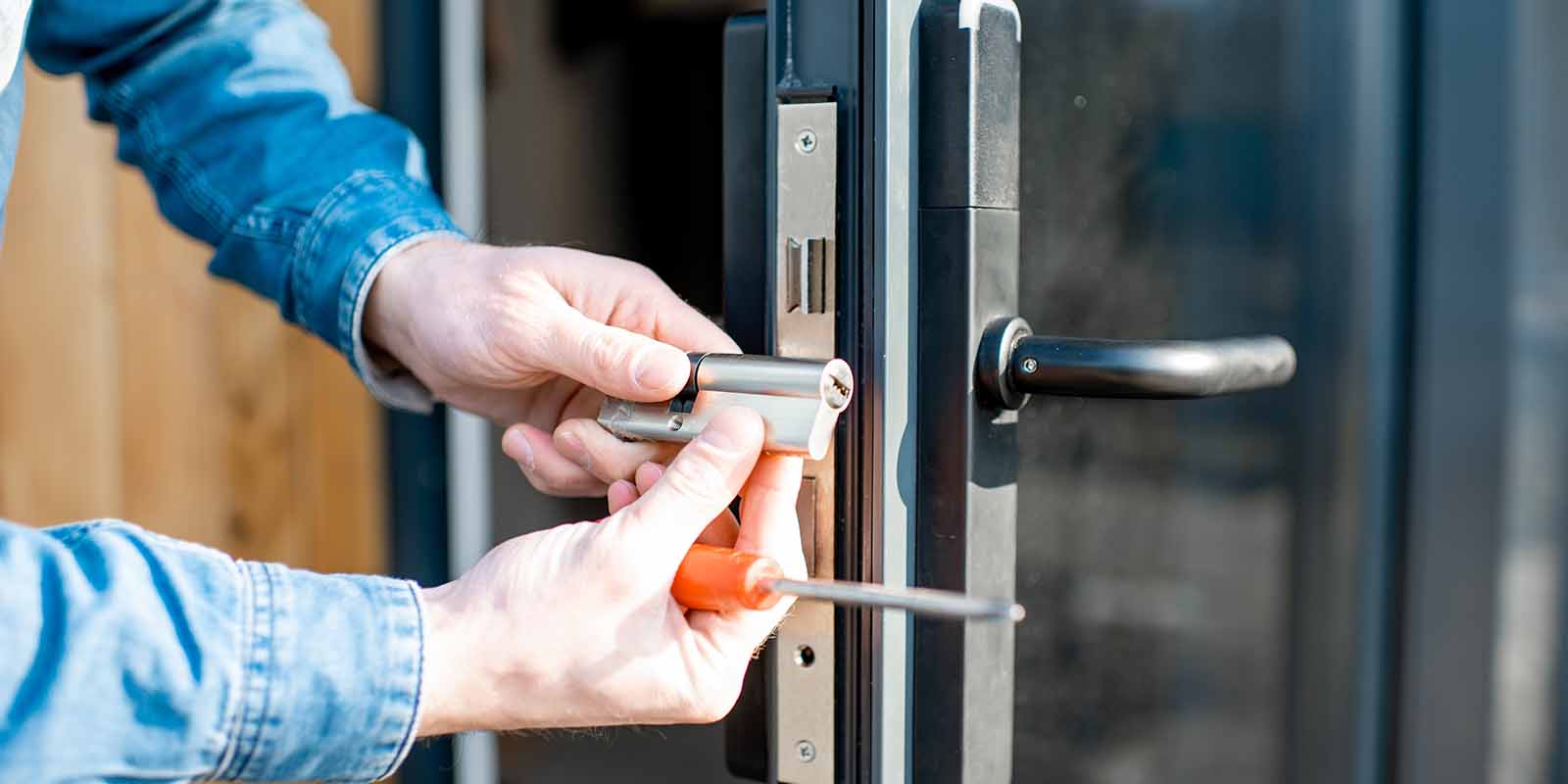
Euro Cylinders
Euro cylinders are common on modern uPVC, composite and some aluminium doors.
The cylinder operates the gearbox or central locking mechanism through its internal cam.
Security considerations include:
- Cylinder design
- Correct sizing
- Anti-snap protection
- Anti-drill protection
- Anti-pick protection
- Cylinder projection
- Handle protection
Standard Cylinders
Older or basic cylinders may have limited protection against modern attack methods.
This doesn't necessarily mean they will fail, but they may offer less resistance than modern security cylinders.
Anti-Snap Cylinders
Anti-snap cylinders are designed to resist attempts to break the cylinder in a way that allows access to the locking mechanism.
Many incorporate a controlled or sacrificial section intended to break in a way that protects the operating portion of the cylinder.
However, the cylinder must still be correctly sized and fitted.
Correct Cylinder Sizing
A cylinder should not simply be chosen because it fits the lock.
It needs to be measured correctly.
Common sizes include:
- 30/30
- 35/35
- 35/40
- 40/40
- 40/45
- 45/45
- 45/50
- And many others
The two measurements refer to the cylinder dimensions on either side of its central fixing position.
An incorrectly sized cylinder may protrude excessively from the door.
Why Cylinder Protrusion Matters
A cylinder projecting significantly beyond the handle can provide an attacker with more of the cylinder to target.
This is why correctly measuring the cylinder is important when upgrading security.
The objective isn't simply to install the longest cylinder that fits.
It is to install the correct size.
Anti-Snap Locks
The term "anti-snap lock" normally refers to a cylinder designed to resist snapping attacks.
The cylinder may incorporate a sacrificial section that allows part of the cylinder to break while protecting the internal locking mechanism.
However, anti-snap protection is only one part of the security system.
The handle, door, frame and mechanism still matter.
Door Handles & Handle Security
Handles operate the locking mechanism and can also provide physical protection around the cylinder.
Security handles can incorporate:
- Reinforced construction
- Cylinder protection
- Stronger backplates
- Security escutcheons
TS007 Security Handles
TS007 is a British security standard used for certain door hardware.
Security handles can be tested and rated according to the standard.
A security upgrade should therefore consider the cylinder and handle as a combined system rather than treating them as completely separate components.
Door Hinges
Hinges need to support the weight of the door while maintaining its correct position relative to the frame.
Security considerations include:
- Hinge strength
- Fixings
- Hinge bolts
- Dog bolts
- Anti-lift features
These can be particularly important on outward-opening doors.
Glass & Glazing Security
Glass is another component of the overall security system.
Common glazing types include:
- Toughened glass
- Laminated glass
- Double glazing
- Triple glazing
The security characteristics aren't determined solely by whether the glass is double or triple glazed.
The type of glass and construction of the complete glazed unit matter.
Toughened Glass
Toughened glass is manufactured to increase its strength compared with ordinary annealed glass.
When broken, it generally fractures into many smaller pieces.
It is widely used in doors and windows.
Laminated Glass
Laminated glass consists of glass layers bonded around an interlayer.
When damaged, the interlayer can help hold the glass together.
This can make laminated glazing useful where enhanced security or impact resistance is required.
Glazing Beads
The way the glazing is retained also matters.
A secure glass unit still needs to be correctly retained within the door.
The glazing system should therefore be considered as a complete assembly.
Door Frames
The frame provides the structure into which the locking points engage.
Important factors include:
- Frame strength
- Reinforcement
- Keep design
- Keep position
- Fixings
- Installation
A strong multipoint mechanism needs a suitable frame to work against.
TS007 Explained
TS007 is a British Standard specification covering security requirements for certain cylinders and associated door hardware.
Security ratings are commonly expressed using stars.
1 Star
Basic tested security level.
2 Star
Higher security level.
3 Star
The highest rating within the TS007 star system.
A commonly used security combination is:
1-star cylinder + 2-star security handle = 3-star overall cylinder/handle combination.
This can provide an alternative to using a 3-star cylinder on its own, where the relevant products are tested and approved for the required combination.
The important point is that the rating applies to tested combinations and should not be interpreted as simply adding arbitrary star ratings from unrelated products.
PAS24 Explained
PAS 24 is concerned with the security performance of complete door, window or entrance-set assemblies, rather than simply testing one lock component in isolation.
This is important because real-world security depends on how the components work together.
A PAS24-tested door assembly can therefore provide evidence that the complete construction has been subjected to defined security testing.
This is very different from simply saying that an individual cylinder or lock is "high security."
Secured by Design
Secured by Design is a police-led security initiative associated with designing buildings and products to reduce opportunities for crime.
Its approach focuses on security being considered as part of the overall design rather than added as an afterthought.
Products and developments associated with Secured by Design have to meet relevant requirements and standards.
BS3621 Explained
BS3621 is a British Standard associated with thief-resistant, key-operated locks incorporating a deadlocking mechanism and used extensively on timber doors.
It is particularly relevant to traditional wooden external doors.
A BS3621 lock can form an important part of meeting certain insurance or security requirements.
However, homeowners should always check the specific requirements of their insurance policy rather than assuming that one standard automatically satisfies every insurer.
Insurance Requirements
Insurance companies may specify particular security requirements for external doors.
These can include requirements relating to:
- Multipoint locking systems
- BS3621 locks
- Security cylinders
- Door standards
- Window locks
- Key management
Requirements can vary between policies and properties.
New-build properties may also have security specifications incorporated into their design.
If security requirements are important for insurance purposes, check the actual policy wording rather than relying solely on general advice.
Burglary Prevention
Good home security works best in layers.
The objective isn't simply to create one extremely strong component.
It is to remove as many easy opportunities as possible.
Visible Security
Visible security measures can influence how attractive a property appears as a target.
Examples include:
- Good-quality locks
- Security lighting
- Alarms
- CCTV
- Visible door hardware
Lighting
External lighting can reduce opportunities for someone to approach a property unnoticed.
Particular attention should be given to:
- Front entrances
- Side entrances
- Rear doors
- Dark access routes
Side Access
Side gates and passages can provide easy access to the rear of a property.
Securing side access can therefore be just as important as upgrading the front door.
Garden Security
Garden equipment, ladders and tools can potentially assist an opportunist.
Keeping such items secured removes another source of opportunity.
Key Management
Keys should be treated as security devices.
Avoid:
- Leaving keys beside accessible letterplates
- Hiding keys in obvious outdoor locations
- Giving unnecessary copies to others
- Leaving spare keys unsecured
If you've moved into a property and don't know who has copies of the keys, changing the cylinder is a straightforward way to regain control of access.
Occupancy Simulation
When a property is empty, simple measures can make it appear occupied.
Examples include:
- Timed lighting
- Curtains operated normally
- Avoiding obvious signs that nobody is home
CCTV and Alarms
CCTV and alarms provide additional layers of protection.
They don't replace physical security.
Instead, they complement:
- Door security
- Window security
- Lighting
- Access control
Target Hardening
Target hardening means making the property more difficult or less attractive to attack.
For doors, this can include:
- Security cylinders
- Strong handles
- Good locking mechanisms
- Secure keeps
- Strong frames
- Correct alignment
- Proper maintenance
Security Upgrades
You don't necessarily need a new door to improve security.
Depending on the existing system, upgrades can include:
Anti-Snap Cylinder
A modern security cylinder can improve resistance to cylinder attacks.
Security Handles
Security handles can provide additional protection around the cylinder.
New Locking Mechanism
An old or damaged mechanism can potentially be replaced or upgraded.
Improved Keeps
Damaged, weak or incorrectly positioned keeps can sometimes be replaced or improved.
Reinforced Frames
Where appropriate, improving frame reinforcement and fixings can strengthen the locking system.
Hinge Upgrades
Security bolts or other hinge-side measures can improve protection on suitable doors.
Smart Locks
Smart locks can provide additional access-control functionality.
However, smart technology doesn't automatically make a door physically stronger.
The underlying mechanical security of the door remains important.
Common Security Mistakes
Old Standard Cylinders
Older cylinders may not provide the same level of resistance as modern security designs.
Incorrectly Sized Cylinders
A cylinder that projects excessively can create unnecessary exposure.
Poor Key Management
A secure lock is of little benefit if unauthorised people have access to the keys.
Not Fully Locking the Door
On many multipoint doors, simply closing the door and leaving the handle down does not engage all the locking points.
The locking procedure specified for the particular door should be followed.
Ignoring Alignment
A badly aligned door can create excessive resistance and prevent the locking mechanism from operating correctly.
It can also place unnecessary stress on the hardware.
Cheap or Poorly Cut Keys
Poor keys can make cylinders difficult to operate and can contribute to unnecessary wear.
Neglecting Maintenance
Security hardware is still mechanical hardware.
Loose handles, damaged keeps, stiff locking points and worn cylinders should not simply be ignored.
A door that operates smoothly is generally easier to secure correctly than one requiring excessive force.
Frequently Asked Questions
Is a composite door more secure than uPVC?
Not automatically.
Both can provide good security when correctly designed, manufactured, installed and maintained.
The complete door assembly matters more than simply choosing one material.
Do anti-snap cylinders really work?
Anti-snap cylinders are specifically designed to provide greater resistance to snapping attacks than vulnerable conventional designs.
However, they are only one part of the complete security system.
What does TS007 mean?
TS007 is a British Standard specification relating to security requirements for certain cylinders and door hardware.
It uses a star-rating system to indicate tested security performance.
Is PAS24 a lock standard?
No.
PAS24 concerns the security performance of complete door, window or entrance-set assemblies rather than simply rating an individual lock.
What is Secured by Design?
Secured by Design is a police-led initiative promoting crime-resistant design and security products that meet appropriate requirements.
Can I upgrade my existing door?
Often, yes.
Depending on the door, possible upgrades include:
- Anti-snap cylinder
- Security handles
- Locking mechanism
- Keeps
- Hinge security
- Other hardware
The existing door should be assessed first to determine what upgrades are compatible and worthwhile.
Are smart locks secure?
Smart locks introduce electronic access control but don't automatically solve mechanical security weaknesses.
The physical door, frame and locking mechanism remain important.
Should I replace my locks after moving house?
Changing the cylinder can be a sensible way of ensuring that previous occupants, contractors or other people who may have had keys no longer have access.
It is often possible to change the cylinder without replacing the complete locking mechanism.
How can I improve security without replacing the door?
Start with the existing system.
Consider:
- Cylinder security
- Handle security
- Locking mechanism condition
- Keeps
- Frame
- Hinges
- Alignment
- Glass
A targeted upgrade can often provide more value than replacing an otherwise sound door.
Does alignment affect security?
Yes.
A badly aligned door can prevent locking points from engaging correctly and can increase mechanical resistance.
Correct alignment allows the locking system to operate as intended and reduces unnecessary loading on the hardware.
Conclusion
A secure door is not defined by one particular lock.
It is the result of a complete system working together.
The door slab provides the barrier.
The frame provides the structure.
The locking mechanism secures the door at multiple points.
The cylinder controls the locking system.
The handles operate it and can provide additional cylinder protection.
The hinges maintain the door's position.
The keeps receive the locking points.
The glass and glazing contribute to the overall resistance of the entrance.
And the installation determines whether all of these components actually work together as intended.
This is why upgrading one component should always be considered in the context of the complete door.
A high-security cylinder is worthwhile, but it shouldn't be viewed in isolation.
A strong multipoint mechanism is useful, but only if the locking points engage correctly with a suitably constructed frame.
Security handles can protect the cylinder, but they cannot compensate for a weak door or frame.
And even the best hardware cannot protect an entrance that is routinely left unlocked.
For many homeowners, improving security doesn't require replacing the entire door. An existing uPVC, composite or timber door may be capable of a significant security upgrade through better cylinders, security handles, improved locking components, stronger keeps, hinge protection and correct alignment.
The most effective approach is therefore to look at the door as a complete security system, identify its weakest points and improve those areas first.
Good door security isn't about finding one unbeatable component. It's about removing the easiest ways into the property.