Contents
- What Is Door Hardware?
- Why Door Hardware Matters
- Door Handles
- Door Hinges
- Euro Cylinders
- Mortice Locks
- Door Keeps
- Weather Seals
- Thresholds
- Letterplates
- Door Knockers
- Door Viewers
- Escutcheons
- Door Closers
- Fixings & Screws
- Choosing Quality Hardware
- Common Hardware Problems
- Repair or Replace?
- Frequently Asked Questions
- Conclusion
Introduction
Most homeowners think of door hardware as the visible parts of a door — the handles, hinges and lock.
In reality, a modern external door contains a collection of mechanical components that all have to work together.
The handle operates the locking mechanism.
The spindle transfers movement from the handle into the gearbox.
The gearbox operates the locking points.
The locking points engage with the keeps in the frame.
The hinges support the weight of the door and control its position within the frame.
The weather seals provide compression around the perimeter.
The cylinder controls the locking and unlocking of the mechanism.
A problem with one component can therefore affect several others.
For example, a door that has dropped on its hinges may cause the locking points to rub against the keeps. The resulting resistance can make the handle feel heavy and place additional stress on the gearbox.
This is why diagnosing the complete door is often more important than simply replacing the component that appears to be causing the problem.
This guide explains the main hardware found on uPVC, composite and traditional external doors, what each component does, common problems and why correct installation matters.
What Is Door Hardware?
Door hardware refers to the mechanical and functional components fitted to a door and its frame.
Depending on the type of door, this can include:
- Handles
- Hinges
- Euro cylinders
- Mortice locks
- Multipoint mechanisms
- Gearboxes
- Locking points
- Keeps
- Weather seals
- Thresholds
- Letterplates
- Door knockers
- Door viewers
- Escutcheons
- Door closers
- Fixings and screws
Not every door will have every component.
A modern uPVC door, a composite door, a traditional timber door and a commercial fire door can all use very different hardware.
Why Door Hardware Matters
Door hardware affects considerably more than the appearance of the door.
Correctly selected and installed hardware contributes to:
- Security
- Reliability
- Smooth operation
- Weather resistance
- Durability
- User safety
- Energy efficiency
The hardware also determines how the door feels when it is operated.
A properly functioning door should normally open, close and lock without excessive force.
If the handle suddenly becomes difficult to lift, the key becomes stiff or the door needs to be pushed or pulled to lock, something has changed.
It may be the hardware itself, but it may also be alignment.
This distinction is important.
Replacing a gearbox when the actual problem is a dropped door may temporarily solve the problem but doesn't address the underlying cause.
Door Handles
The handle is the main point of interaction between the user and the locking mechanism.
On a typical uPVC multipoint door, operating the handle rotates a square spindle.
The spindle enters the gearbox and transfers the movement into the locking mechanism.
Depending on the system, this can operate the latch and move multiple locking points simultaneously.
Types of Door Handles
Common configurations include:
Lever/Lever
A lever handle is fitted to both sides of the door.
This is common on residential uPVC and composite doors.
Lever/Pad
A lever is fitted internally while the outside has a fixed pad.
The external pad cannot normally operate the mechanism in the same way as an internal lever.
Lever/Fixed Pad
Similar to a lever/pad arrangement, with a fixed external handle or pad.
Split Spindle
A split spindle allows different operation from each side of the door.
This can be used in conjunction with certain security and access arrangements.
Sprung & Unsprung Handles
One of the most important differences between handles is whether they are sprung.
Sprung Handles
A sprung handle contains a spring mechanism that assists in returning the lever to its normal position.
This is particularly useful where the locking mechanism requires assistance returning the handle.
A good sprung handle can provide:
- Positive handle return
- Reduced drooping
- Better feel
- Reduced load on the gearbox
- Improved long-term operation
Unsprung Handles
Unsprung handles don't contain the same internal spring assistance.
They rely more heavily on the door mechanism to return the handle.
Whether a sprung or unsprung handle is appropriate depends on the locking system and door configuration.
Common Handle Problems
Handles can suffer from:
- Drooping
- Loose levers
- Broken springs
- Cracked backplates
- Worn spindles
- Worn followers
- Loose fixing screws
- Excessive movement
- Corrosion
A drooping handle doesn't automatically mean the gearbox has failed.
The handle itself, spring cassette, spindle or mechanism may be responsible.
Door Hinges
Hinges support the door and allow it to pivot open and closed.
They are also one of the most important components affecting door alignment.
Common types include:
- Flag hinges
- Butt hinges
- Adjustable hinges
- Heavy-duty hinges
- Composite door hinges
Modern uPVC and composite doors can be surprisingly heavy, particularly when fitted with large glazed units.
The hinges therefore carry a substantial load every time the door is opened.
Adjustable Hinges
Many modern door hinges allow the position of the door to be adjusted.
Depending on the hinge design, adjustment may include:
Height Adjustment
Moves the door vertically.
Useful where the door has dropped.
Side-to-Side Adjustment
Moves the door laterally within the frame.
Compression Adjustment
Changes how tightly the door sits against the seals.
Correct adjustment is important.
Too little compression can produce draughts and poor sealing.
Too much compression can make the door difficult to close and place unnecessary load on the locking system.
Why Hinges Affect Locks
The locking mechanism and hinges are directly connected through the position of the door within the frame.
If the door drops, the locking points move relative to the keeps.
The result can be:
- Heavy handles
- Stiff keys
- Hooks hitting keeps
- Rollers rubbing
- Shoot bolts catching
- Difficulty locking
- Premature mechanism wear
This is why alignment should always be considered when diagnosing a locking problem.
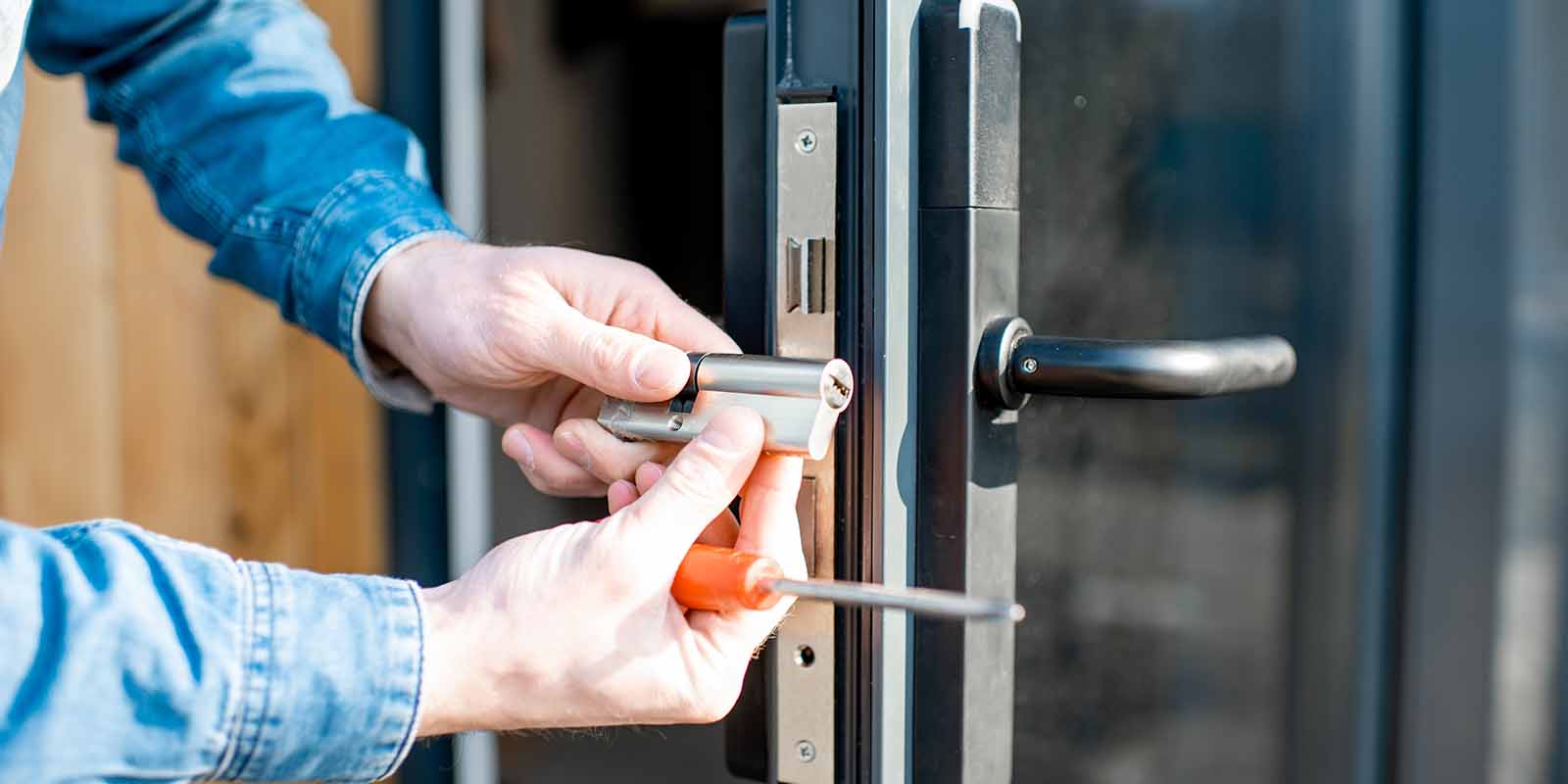
Euro Cylinders
The euro cylinder is one of the most common locking components fitted to modern uPVC and composite doors.
The cylinder contains the key-operated mechanism.
Inside a conventional euro-cylinder system, turning the key rotates the cylinder cam.
The cam operates the central gearbox.
The gearbox then operates the locking mechanism.
The cylinder therefore forms the interface between the key and the multipoint mechanism.
Types of Euro Cylinder
Double Cylinder
A key operates the cylinder from both sides.
Thumbturn Cylinder
The external side is operated by a key while the internal side uses a thumbturn.
Half Cylinder
The cylinder is designed to operate from one side only.
Anti-Snap Cylinder
Anti-snap cylinders are designed to resist cylinder snapping attacks.
Other security features can include:
- Anti-drill protection
- Anti-pick protection
- Anti-bump protection
The exact protection depends on the cylinder.
Cylinder Measurements
Euro cylinders are normally specified by the dimensions on each side of the central fixing point.
Common sizes include:
- 30/30
- 35/35
- 35/40
- 40/40
- 40/45
- 45/45
- 45/50
- 50/50
- And many others
Correct sizing is important.
A cylinder that is too short may not engage correctly.
A cylinder that projects excessively from the door can create an unnecessary security vulnerability and may also look untidy.
The cylinder should therefore be correctly measured rather than simply choosing a size that appears close.
Mortice Locks
Mortice locks are installed inside a recess cut into the door.
They are particularly common on:
- Timber doors
- Traditional doors
- Some composite doors
Common types include:
- 3-lever locks
- 5-lever locks
- Sash locks
- Deadlocks
- BS3621 locks
- Specialist mortice systems
The locking principle is different from many uPVC multipoint systems.
ERA Vectis
The ERA Vectis is an unusual locking system because it doesn't use a conventional euro cylinder.
Instead, the mortice key operates internal levers.
Those levers operate a curtain and the locking mechanism.
This makes the Vectis fundamentally different from the conventional euro-cylinder and gearbox arrangement found on many modern uPVC doors.
It can provide effective security, but in our experience the Vectis can be less reliable than a good conventional multipoint system.
Where appropriate, the Vectis can sometimes be replaced with a conventional gearbox and euro-cylinder arrangement.
This normally requires changing the handles as well as adapting or replacing the relevant mechanism components.
Door Keeps
A keep is the component fitted to the frame that receives a locking point from the door.
There isn't just one type of keep.
Common examples include:
- Latch keeps
- Deadbolt keeps
- Hook keeps
- Roller keeps
- Mushroom keeps
- Shootbolt keeps
- One-piece keeps
The keep must be positioned correctly relative to the locking point.
Why Keeps Matter
A perfectly functioning gearbox can struggle if the locking points are hitting the keeps.
For example, if a door has moved slightly downward, the hook may no longer enter the hook keep centrally.
Instead, it may strike the edge of the keep.
The handle then becomes difficult to lift.
The user may assume the gearbox has failed when the actual problem is alignment.
This is why adjusting or repairing the keep can sometimes restore the operation without replacing expensive locking components.
Weather Seals
Weather seals run around the door and prevent air and water from entering between the door and frame.
Common types include:
- Bubble seals
- Flipper seals
- Compression seals
Over time, seals can:
- Shrink
- Harden
- Split
- Flatten
- Become detached
- Lose their elasticity
A failed seal can cause draughts and water ingress.
Weather Seals & Locking Pressure
Weather seals also influence the amount of force required to close and lock the door.
If a seal is excessively compressed, the door may resist closing.
This can increase the force required to operate the locking mechanism.
Conversely, insufficient compression can leave the door poorly sealed.
Correct adjustment is therefore a balance between:
Security + sealing + smooth mechanical operation.
Thresholds
The threshold is the lower section of the door assembly.
It can provide:
- Weather protection
- Support
- Sealing
- Drainage
- Accessibility
Different thresholds are available for different applications.
Low Thresholds
Often used where accessibility is important.
Mobility Thresholds
Designed to reduce the step or obstruction at the doorway.
Weather Bars
These help control water around the bottom of the door.
Threshold design is particularly important on external doors because the bottom of the door is exposed to weather and water.
Letterplates
Letterplates are fitted to doors where mail is delivered directly through the door.
They need to perform two functions:
- Allow mail to pass through.
- Maintain the security and weather resistance of the door.
Features can include:
- Brush seals
- Spring-loaded flaps
- Security plates
- Draught exclusion
- Different aperture sizes
The fixing method is also important.
Door Knockers
Door knockers are primarily functional and decorative hardware.
They can be manufactured from:
- Brass
- Chrome
- Stainless steel
- Other metals and finishes
Quality installation is important.
Where appropriate, through-bolted fixings can provide a stronger installation than simple short screws.
Door Viewers
A door viewer allows occupants to see who is outside before opening the door.
Traditional viewers use an optical lens.
Modern options can include:
- Wide-angle viewers
- Digital viewers
- Camera-based systems
- Smart door viewers
The viewer should provide a useful field of vision without unnecessarily compromising the door.
Escutcheons
An escutcheon is a plate surrounding a keyhole or cylinder.
It can be:
- Decorative
- Protective
- Security-focused
Security escutcheons can provide additional protection around the cylinder or keyway.
The escutcheon should complement the locking system rather than interfere with its operation.
Door Closers
Door closers control the closing movement of a door.
They are commonly found on:
- Commercial doors
- Fire doors
- Communal entrances
- Office doors
- High-traffic entrances
Types include:
- Overhead closers
- Concealed closers
- Floor-mounted systems
On fire-rated doors, the closer forms part of the complete fire-door arrangement and must be suitable for the application.
A closer that is incorrectly adjusted can make a door unnecessarily difficult to operate.
Fixings & Screws
Small fixings are easy to overlook, but they are fundamental to the reliability of door hardware.
Examples include:
- Handle screws
- Cylinder retaining screws
- Faceplate screws
- Hinge screws
- Keep screws
- Reinforcement fixings
A loose handle can gradually become worse.
A loose hinge can allow the door to move.
A loose keep can change the position of the locking point.
A missing or incorrect cylinder retaining screw can compromise the cylinder installation.
Using the correct fixing is therefore part of a proper repair.
Choosing Quality Hardware
Not all door hardware is manufactured to the same standard.
There can be significant differences between inexpensive hardware and quality components.
These differences can include:
- Material quality
- Spring quality
- Corrosion resistance
- Manufacturing tolerances
- Internal component strength
- Surface finish
- Durability
- Security performance
Cheap hardware can sometimes work perfectly well initially but deteriorate considerably faster.
This is particularly relevant to handles and locking components because they are operated repeatedly throughout the life of the door.
Quality Doesn't Just Mean Expensive
The most expensive component isn't automatically the best choice.
The important question is whether the component is:
- Suitable for the door.
- Compatible with the existing mechanism.
- Correctly sized.
- Correctly installed.
- Appropriate for the level of security required.
- Suitable for the expected usage.
A quality component that isn't correctly matched to the door is still the wrong component.
Common Hardware Problems
Door hardware can fail in many different ways.
Loose Handles
Usually caused by loose fixings, wear or internal component failure.
Drooping Handles
Can be caused by failed springs, a spring cassette, worn handles or problems within the mechanism.
Stiff Cylinders
Can result from cylinder wear, alignment problems or excessive pressure within the locking system.
Worn Hinges
Can allow the door to drop or move within the frame.
Loose Keeps
Can alter the position of the locking points.
Broken Cylinders
Can occur through mechanical failure, damage or attempted attack.
Corrosion
Can affect exposed hardware, particularly where the door is exposed to moisture and weather.
Loose Fixings
Can cause movement in handles, hinges and keeps.
Common Hardware Problems vs Underlying Causes
One important point is that the component showing the symptom isn't necessarily the component causing the fault.
For example:
| Symptom | Possible Cause |
|---|---|
| Drooping handle | Handle spring, spring cassette or gearbox |
| Stiff key | Cylinder, alignment or gearbox |
| Heavy handle | Alignment, keeps, locking points or gearbox |
| Door won't lock | Gearbox, cylinder, alignment or keeps |
| Door catches frame | Hinge adjustment or building movement |
| Loose handle | Fixings, handle or spindle |
| Door needs lifting to lock | Hinge movement or alignment |
| Locking points won't engage | Mechanism or frame alignment |
This is why replacing parts without diagnosis can become expensive very quickly.
Repair or Replace?
Not every hardware fault requires replacement.
Some components can be:
- Adjusted
- Realigned
- Tightened
- Serviced
- Repaired
- Replaced individually
For example, a door that has dropped may only require hinge adjustment.
A loose keep may need repositioning.
A worn cylinder can be replaced without replacing the entire mechanism.
A failed gearbox may be replaceable without replacing the complete multipoint mechanism.
However, replacement becomes more appropriate where a component is:
- Structurally damaged.
- Severely worn.
- Corroded.
- Obsolete.
- Beyond economical repair.
- No longer reliable.
Why Diagnosis Comes First
The most important part of a door repair is identifying what has actually failed.
A door that won't lock could have a failed gearbox.
It could also have:
- A dropped door.
- A damaged keep.
- A seized locking point.
- Excessive seal pressure.
- A worn cylinder.
- A damaged handle.
- A combination of several problems.
The correct repair addresses the cause rather than simply replacing the most obvious component.
Frequently Asked Questions
What does a door handle actually do?
On a typical multipoint door, the handle rotates a spindle which operates the gearbox and locking mechanism.
Why have my handles dropped?
Possible causes include worn handle springs, a failed spring cassette, excessive mechanism resistance or gearbox problems.
Should I fit sprung handles?
Sprung handles are generally preferable where the door and locking system benefit from positive handle return, but the correct handle depends on the particular mechanism.
What size cylinder do I need?
The cylinder should be measured from its central fixing position to each side. The correct size depends on the thickness of the door, hardware and position of the cylinder.
Can I replace just the handles?
Often, yes. However, the replacement handles must match the required PZ, spindle, fixing centres and configuration.
Why is my cylinder sticking?
Possible causes include cylinder wear, poor alignment or pressure being placed on the locking mechanism.
How long do hinges last?
There is no universal lifespan. Usage, door weight, environmental conditions, hinge quality and adjustment all affect service life.
Can worn hardware damage the locking mechanism?
Yes.
Excessive friction or misalignment can place additional load on the gearbox, locking points, handles and other components.
Do I need to replace the whole door if the lock fails?
Usually not.
A failed cylinder, handle, gearbox or multipoint mechanism can often be repaired or replaced without replacing the door itself.
Can a keep cause a lock to fail?
A keep normally doesn't cause the internal gearbox to fail directly, but poor keep alignment can place excessive resistance on the locking system and contribute to premature wear.
Why does my door work when open but not when closed?
This is a classic indication that alignment may be involved.
With the door open, the locking points don't have to engage with the frame keeps.
When the door is closed, any misalignment or excessive compression can prevent them from operating correctly.
Conclusion
Door hardware is much more than the visible handle and lock.
It is a complete system of components that work together every time the door is opened, closed and secured.
The handle transfers movement into the locking mechanism. The cylinder controls the locking operation. The gearbox distributes movement to the locking points. The keeps receive those locking points. The hinges control the position of the door, while the weather seals provide compression and protection from the elements.
Because all these components interact, a problem with one part can affect the entire system.
A door that feels difficult to lock isn't necessarily suffering from a failed gearbox. A stiff key doesn't automatically mean the cylinder needs replacing. A drooping handle doesn't necessarily mean the entire mechanism has failed.
Sometimes the real problem is alignment.
Sometimes it is a worn component.
Sometimes several relatively small problems have combined to create one major symptom.
That is why good door repair starts with diagnosis rather than replacement.
Quality hardware, correct measurements, proper installation and accurate adjustment all contribute to a door that operates smoothly, locks reliably and lasts longer.
For homeowners, understanding the individual components makes it much easier to recognise problems before they become major failures — and helps explain why a proper repair should consider the whole door, not just the part that happens to be showing the symptom.