Introduction
When a uPVC or composite door suddenly becomes difficult to lock, many people assume the key or lock cylinder has failed.
In reality, the culprit is often the gearbox.
The gearbox is the heart of a multipoint locking mechanism. Every time you lift the handle or turn the key, the gearbox transfers that movement to the hooks, rollers, mushroom cams and deadbolt. Without it, the rest of the locking system simply can't function properly.
The good news is that a broken gearbox doesn't usually mean you need a new door—or even a complete new locking mechanism.
What Is a Door Gearbox?
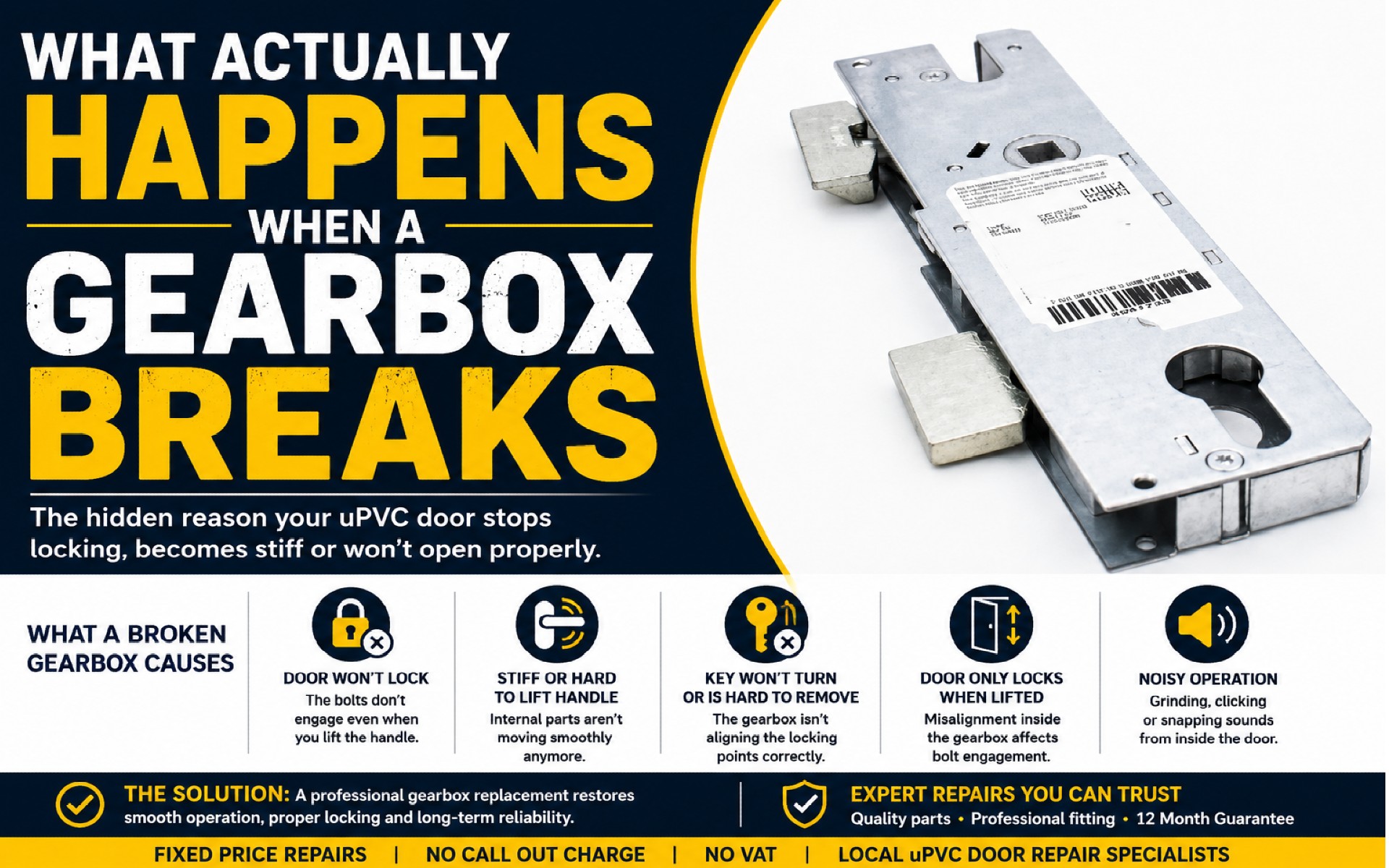
The gearbox is the central operating unit inside the multipoint locking mechanism.
Located behind the door handles, it connects everything together.
When you operate the handle or turn the key, the gearbox:
- Retracts the latch.
- Operates the deadbolt.
- Moves the hooks.
- Drives the rollers.
- Operates the mushroom cams.
- Transfers movement to every locking point.
Think of it as the engine of the locking system. If the engine stops working, the rest of the mechanism can't do its job.
What Actually Breaks?
People often imagine the gearbox shattering into pieces.
Usually, that's not what happens.
Instead, one of the internal moving components wears or breaks.
Depending on the manufacturer, this could include:
- The cam.
- The follower.
- The internal gate.
- Springs.
- Drive plates.
- Small retaining pins.
- Internal cast components.
Some manufacturers are known for certain weaknesses. One brand may regularly suffer broken followers, while another may develop worn gates or cracked cams.
Why Do Gearboxes Fail?
Most failures are caused by years of use.
Every time you:
- Open the door.
- Close the door.
- Lift the handle.
- Turn the key.
…the gearbox completes another operating cycle.
After thousands of cycles, components naturally wear.
However, wear isn't always the only reason.
Poor Door Alignment
One of the biggest causes of premature gearbox failure is poor alignment.
If the locking points scrape against the frame keeps every time the handle is lifted, extra force is transmitted directly into the gearbox.
Instead of operating smoothly, the internal components are forced to work much harder.
Eventually something gives way.
Lack of Maintenance
Hooks or rollers that become stiff place extra strain on the gearbox.
Sometimes simply cleaning and lubricating these components early can prevent unnecessary wear.
Excessive Force
Forcing a stiff handle or repeatedly trying to lock a door that's out of alignment can damage the gearbox.
The locking mechanism is designed to work smoothly, not under excessive pressure.
Common Symptoms of a Failed Gearbox
A broken gearbox can produce several different symptoms.
These include:
- The handle won't lift.
- The handles droop.
- The key turns but nothing happens.
- The latch won't retract.
- The door won't unlock.
- The door won't lock.
- The door jams shut.
- The hooks don't move.
- The deadbolt won't engage.
- The lock works with the door open but not when closed.
Different gearboxes fail in different ways, which is why diagnosis is so important.
Why the Key Still Turns
One question I hear regularly is:
"If the gearbox has broken, why does the key still turn?"
The answer is simple.
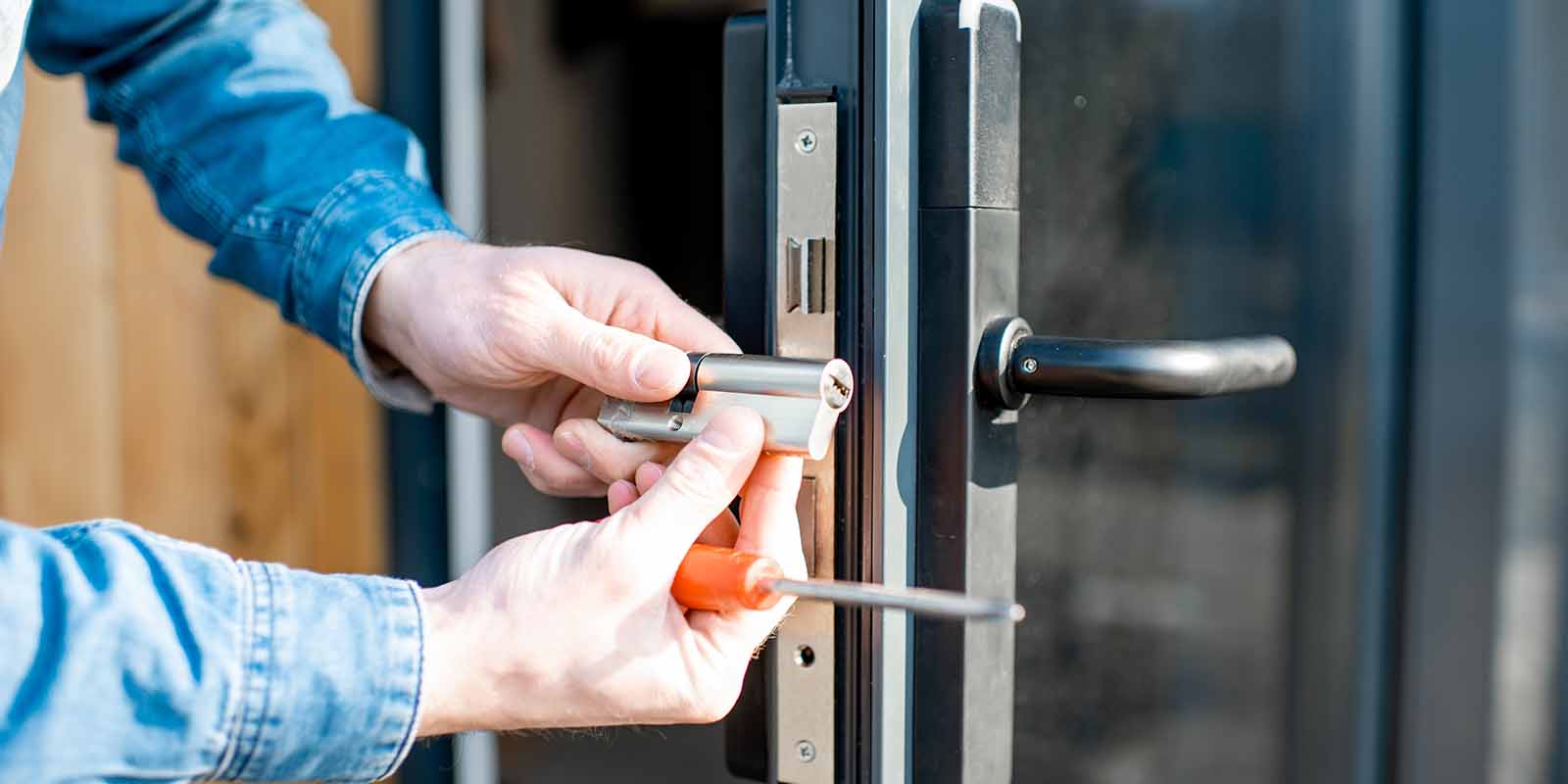
The euro cylinder and the gearbox are two separate components.
The key turns the cylinder.
The cylinder turns the cam inside the gearbox.
If the gearbox has broken internally, the cylinder can still rotate perfectly normally, but the movement never reaches the locking points.
To the homeowner, it feels as though the lock is working.
Inside the door, nothing is actually happening.
Can a Broken Gearbox Jam the Door Shut?
Yes.
Some gearbox failures occur while the locking points are still engaged.
If the internal mechanism breaks before it can retract the hooks or latch, the door may become completely jammed.
Fortunately, many jammed doors can be opened without damaging the door or frame when the fault is correctly diagnosed.
Does the Whole Mechanism Need Replacing?
Not always.
Many repairs only require replacing the centre gearbox.
If the faceplate, hooks, rollers and drive bars are still in good condition, replacing the gearbox is often the most economical solution.
In other cases, where several components have worn or replacement parts are unavailable, fitting a complete mechanism may be the better option.
Why Testing Matters
Replacing the gearbox is only part of the repair.
Before reassembling the door, it's important to test the mechanism outside the door.
Once reinstalled, the door should be tested again with the door open and finally with the door closed.
This often reveals another issue.
Many gearboxes fail because the door has gradually moved out of alignment.
If the alignment isn't corrected, unnecessary strain is placed on the new gearbox from day one.
Can You Prevent Gearbox Failure?
While no gearbox lasts forever, you can help extend its life by:
- Having the door adjusted if it becomes difficult to lock.
- Avoiding excessive force on the handle.
- Lubricating moving locking points periodically.
- Replacing worn handles before they overload the gearbox.
- Having alignment issues corrected early.
Small adjustments today can prevent major repairs later.
Conclusion
The gearbox is the heart of every multipoint locking mechanism, transferring movement from the handle and key to every locking point in the door. Although gearboxes eventually wear through normal use, many failures are accelerated by poor door alignment, stiff locking points and excessive strain. Understanding what happens inside the mechanism helps explain why a door suddenly stops locking or unlocking, even when the key still turns normally. In many cases, replacing the faulty gearbox and correctly realigning the door is all that's needed to restore smooth, reliable operation.
Gearbox Repairs by A.L.S. Locksmiths
At A.L.S. Locksmiths, gearbox replacement is one of the most common repairs carried out on uPVC and composite doors. Every repair begins with identifying why the gearbox failed in the first place. Where necessary, the door is also realigned, locking points serviced and the complete mechanism tested to ensure the new gearbox isn't placed under unnecessary strain. The result is a repair designed to last, rather than simply replacing one worn component.