If you've been shopping for a new front door or researching home security, you've probably come across the term PAS 24.
It's often advertised as a sign of a secure door, but what does it actually mean? More importantly, does it matter if your existing door doesn't have it?
Understanding PAS 24 can help you make informed decisions about your home's security and avoid confusing it with the security rating of individual locks.
What Is PAS 24?
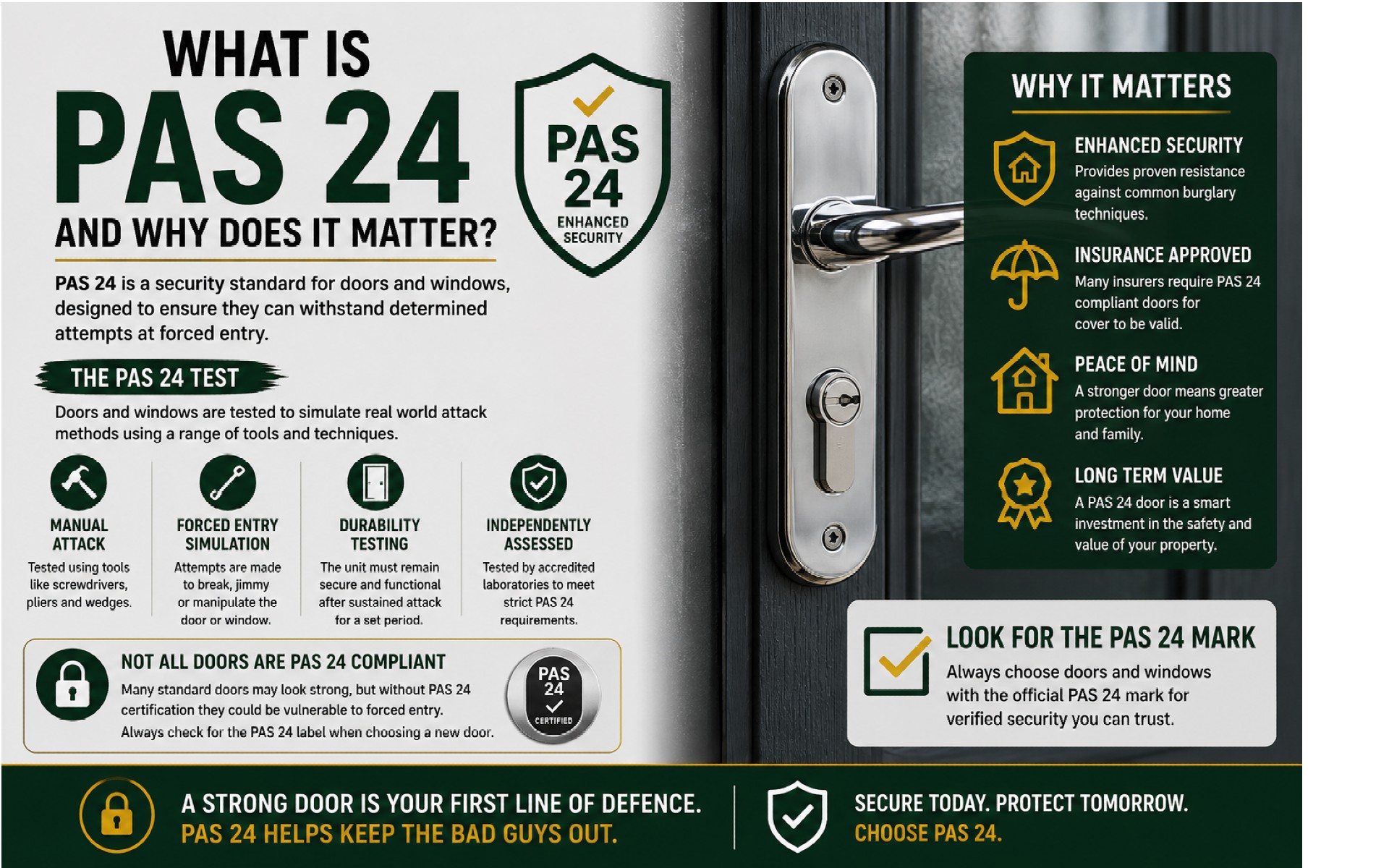
PAS 24 is a British security standard that assesses the overall security performance of a complete door or window set.
It isn't a test for just the lock, handle or cylinder.
Instead, the entire door assembly is tested, including:
- Door leaf
- Door frame
- Hinges
- Locking mechanism
- Euro cylinder
- Handles
- Glazing
- Fixings
The goal is to determine how well the complete door resists common methods of forced entry.
For a broader explanation of UK door security standards, read Understanding Door Lock Security Standards: TS007, Secured by Design and Insurance Requirements Explained.
What Does PAS Stand For?
PAS stands for Publicly Available Specification.
PAS 24 was developed to establish a recognised method of testing the security of doors and windows against opportunistic attacks.
Manufacturers submit complete door sets for testing under controlled conditions.
What Does the Test Involve?
During testing, the complete door assembly is subjected to a range of physical attacks that simulate common burglary methods.
These include attempts to:
- Force the door open
- Attack the lock
- Damage the glazing
- Apply pressure to weak points
- Manipulate the hardware
Only doors that successfully pass the testing process can be described as PAS 24 compliant.
PAS 24 Isn't Just About the Lock
One of the biggest misunderstandings is believing that fitting a PAS 24 lock makes a door PAS 24 compliant.
It doesn't.
PAS 24 applies to the entire tested door set.
Replacing an individual component doesn't automatically make an older door comply with PAS 24.
To learn more about the lock itself, see The Complete Guide to Euro Cylinder Door Locks.
How Does PAS 24 Differ From TS007?
These two standards are often confused.
PAS 24 tests the complete door assembly.
TS007 applies to the security of the euro cylinder and door furniture.
For example:
- A door may have a TS007 3 Star cylinder but not be PAS 24 certified.
- A PAS 24-certified door will usually incorporate high-security locking components, but the certification relates to the complete door rather than one individual part.
They work together but measure different aspects of security.
Does My Existing Door Need to Be PAS 24?
Not necessarily.
Many older uPVC and composite doors provide excellent security despite being manufactured before PAS 24 became widely adopted.
The important questions are:
- Is the door structurally sound?
- Does the multipoint locking mechanism operate correctly?
- Is the door properly aligned?
- Is the lock cylinder suitably secure?
Upgrading worn components can significantly improve the security of an existing door.
Improving the Security of Older Doors
If your door isn't PAS 24 certified, you may still be able to improve its security by upgrading:
- The euro cylinder
- Door handles
- Multipoint locking mechanism
- Hinges where appropriate
- Keeps and strike plates
Combined with proper door alignment, these improvements can greatly increase the overall security of the door.
For advice on the most effective upgrades, read The Complete Guide to Upgrading Your Door Locks for Better Home Security.
PAS 24 and New Doors
If you're purchasing a new front or back door, checking whether the complete door set has been tested to PAS 24 is worthwhile.
It demonstrates that the door has successfully undergone recognised security testing as a complete assembly.
Always ensure you're comparing complete certified door sets rather than individual components.
If you're comparing products, How to Compare Lock Specifications explains what to look for.
Good Security Depends on More Than a Standard
A door that passed PAS 24 testing when it was new still needs maintaining.
Worn components, poor alignment or damaged hardware can reduce both reliability and security over time.
Regular inspection and timely repairs help ensure the door continues performing as intended.
To understand how all the parts of a modern door work together, read Every Part of a uPVC Door Explained.
Security Is About the Whole Door
PAS 24 is an important benchmark because it evaluates how the complete door performs under attack, not just the lock. While it provides reassurance when buying a new door, homeowners shouldn't assume an older door is automatically insecure because it doesn't carry PAS 24 certification. A well-maintained door with quality locks, a correctly functioning multipoint locking mechanism and proper alignment can still provide excellent protection. The key is keeping every part of the door working together as it was designed.
For an overview of the main UK security standards used on doors and locks, see A–Z of Door & Lock Security Standards.