A Worn Lock Ready to Fail
I was recently called to a customer who wanted the front door lock replaced because the keys were becoming increasingly difficult to turn. The lock still worked, but it was showing all the signs of a mechanism nearing the end of its service life.
The key would occasionally jam, requiring extra force to lock and unlock the door. These are often warning signs that the internal components are wearing, and continuing to use the lock risks it failing completely.
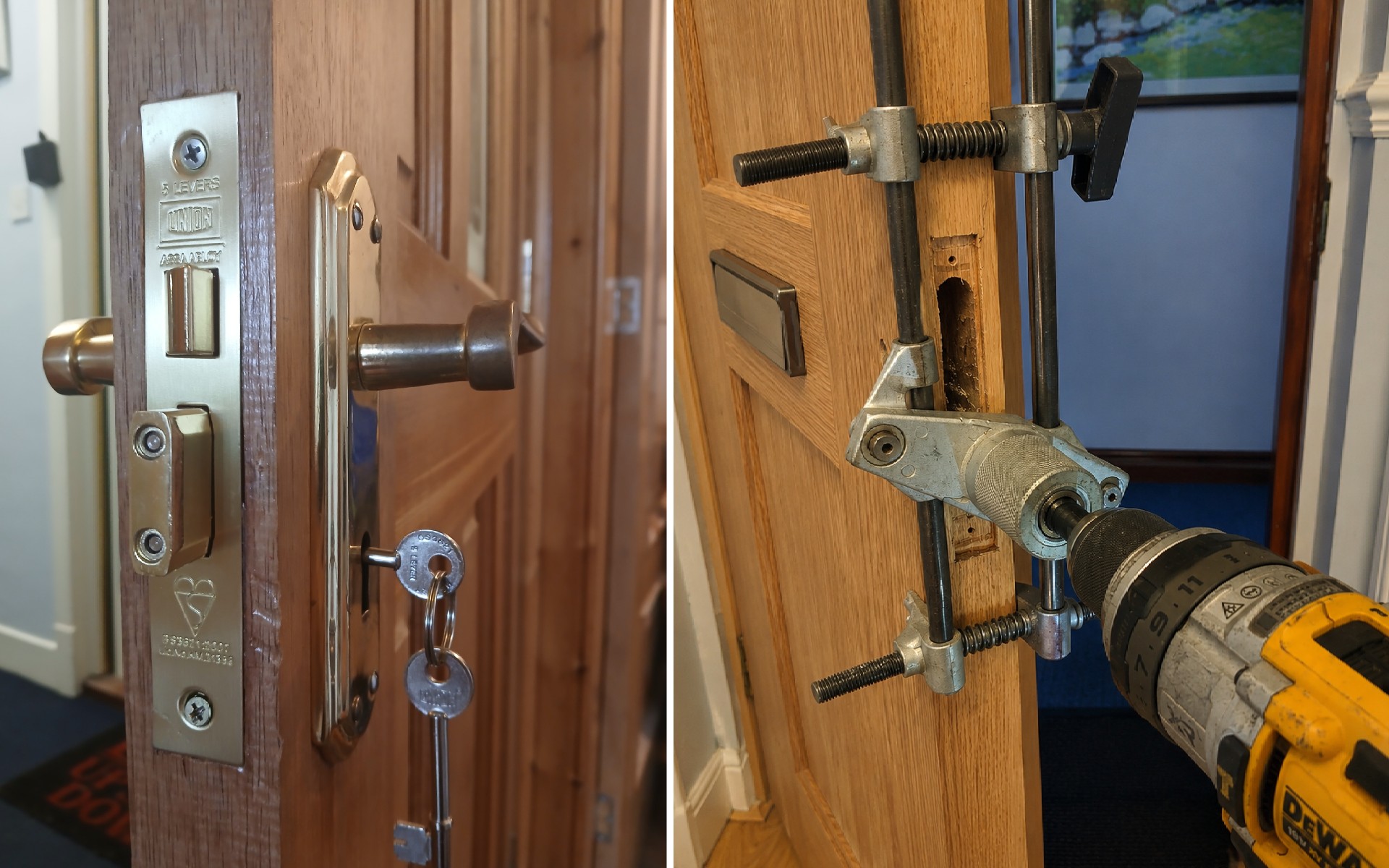
Rather than waiting until the lock stopped working altogether, the customer decided to replace it with a modern BS3621 insurance-approved mortice sashlock.
Why Upgrade to BS3621?
Many home insurance policies specify a BS3621 mortice lock for timber entrance doors.
These locks are independently tested for resistance to common methods of forced entry and typically include features such as:
- Hardened anti-drill plates.
- Anti-saw deadbolt.
- Five-lever locking mechanism.
- British Standard Kitemarked certification.
Upgrading provides improved security while helping meet the requirements of many insurance policies.
Preparing the Door
Although the existing lock was also a five-lever mortice lock, the new BS3621 lock body was slightly larger.
To achieve a proper fit, I needed to enlarge the existing mortice pocket by approximately 2–3mm.
Using a mortice jig allowed the work to be carried out accurately, producing a clean, square recess without damaging the surrounding timber. The sides of the mortice were carefully trimmed so the new lock body, including its hardened anti-drill plates, slid comfortably into position.
Taking time at this stage is important. A lock should fit neatly within the door rather than being forced into place.
Keeping the Original Appearance
One detail that mattered to the customer was maintaining the appearance of the front door.
The door had been varnished several years earlier, but not underneath the handles and escutcheons. If the new lock had been positioned even slightly higher or lower, the old outline would have remained visible.
By carefully positioning the new lock so that the handles fitted in exactly the same location as before, the existing finish remained untouched and the repair looked original once completed.
Good locksmith work isn't just about making the lock fit—it's also about preserving the appearance of the door wherever possible.
Replacing the Keep
A new lock should always be installed with its matching keep.
The old keep was removed and replaced with the keep supplied with the BS3621 lock.
Correct positioning is essential to ensure:
- The latch enters smoothly.
- The deadbolt engages fully.
- The door closes securely.
- There is no movement or rattling once shut.
A properly fitted keep is just as important as the lock itself.
Testing the Lock
With everything installed, the lock was thoroughly tested.
The latch entered the keep smoothly and held the door firmly closed without any rattling.
Turning the key then projected the 20mm anti-saw deadbolt fully into the keep, where it operated smoothly without sticking or requiring excessive force.
Both locking and unlocking were checked several times to ensure the mechanism worked consistently.
Another Successful Upgrade
Once the installation was complete, I demonstrated the new lock to the customer. The key turned smoothly, the latch closed positively and the deadbolt engaged exactly as it should.
Most importantly, the customer now had a reliable BS3621 insurance-approved mortice sashlock fitted neatly into the existing door, improving both security and peace of mind without affecting the appearance of the entrance door.
When Should You Consider Changing Your House Locks?
While this customer's lock was replaced because it had become worn and unreliable, there are many other situations where changing your locks is recommended. If you've recently moved into a new home, lost your keys, experienced a burglary, or simply don't know who may still have copies of your keys, replacing your locks can provide valuable peace of mind.
A lock change is also worth considering if your existing locks no longer meet modern security standards or if you're looking to upgrade to insurance-approved locks with improved resistance to common methods of attack.
Not every lock problem requires a complete replacement. In many cases, a lock can be repaired or serviced instead. An experienced locksmith will assess the condition of the lock and advise whether a repair or replacement is the most sensible and cost-effective solution.