ntroduction
Many people assume that if a key fits into a lock and turns, it must be the correct key. Unfortunately, that isn't always the case. A poorly cut key may appear to work, but even tiny inaccuracies can place excessive strain on the precision components inside a lock every time it is used.
Over weeks, months or even years, this additional wear can lead to stiff operation, damaged internal components and, eventually, complete lock failure. In many cases, homeowners replace the lock without ever realising the key was the real cause of the problem.
Not All Key Copies Are Equal
A correctly cut key should match the original manufacturer's specifications exactly.
If the key-cutting machine is:
- Poorly calibrated.
- Worn.
- Incorrectly adjusted.
- Using a worn cutting wheel.
the finished key may not accurately match the original.
The differences are often only fractions of a millimetre, but inside a precision lock cylinder, those tiny inaccuracies matter.
Copying a Copy
One of the biggest causes of poor-quality keys is copying an already copied key.
Each time a key is duplicated, tiny errors can be introduced.
Over several generations of copies, those inaccuracies gradually increase until the newest key no longer matches the original profile.
This is why locksmiths recommend copying from the original manufacturer's key whenever possible rather than making a copy from another copy.
How a Lock Works
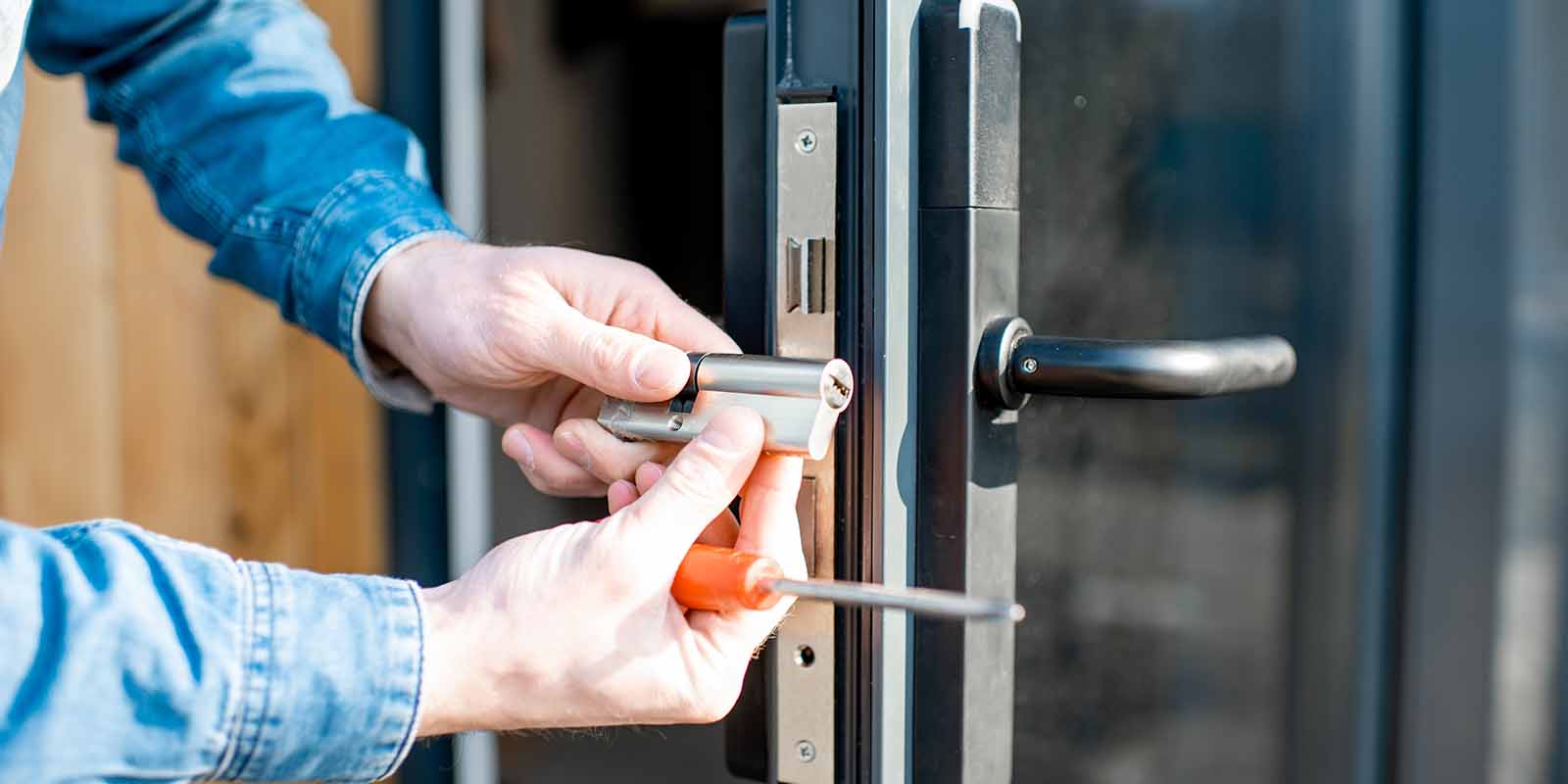
Inside a euro cylinder are precision-engineered components, including:
- Pins.
- Springs.
- Chambers.
- Drivers.
- The cam mechanism.
These parts are designed to line up perfectly when the correct key is inserted.
Only then can the cylinder rotate smoothly.
How a Poorly Cut Key Causes Damage
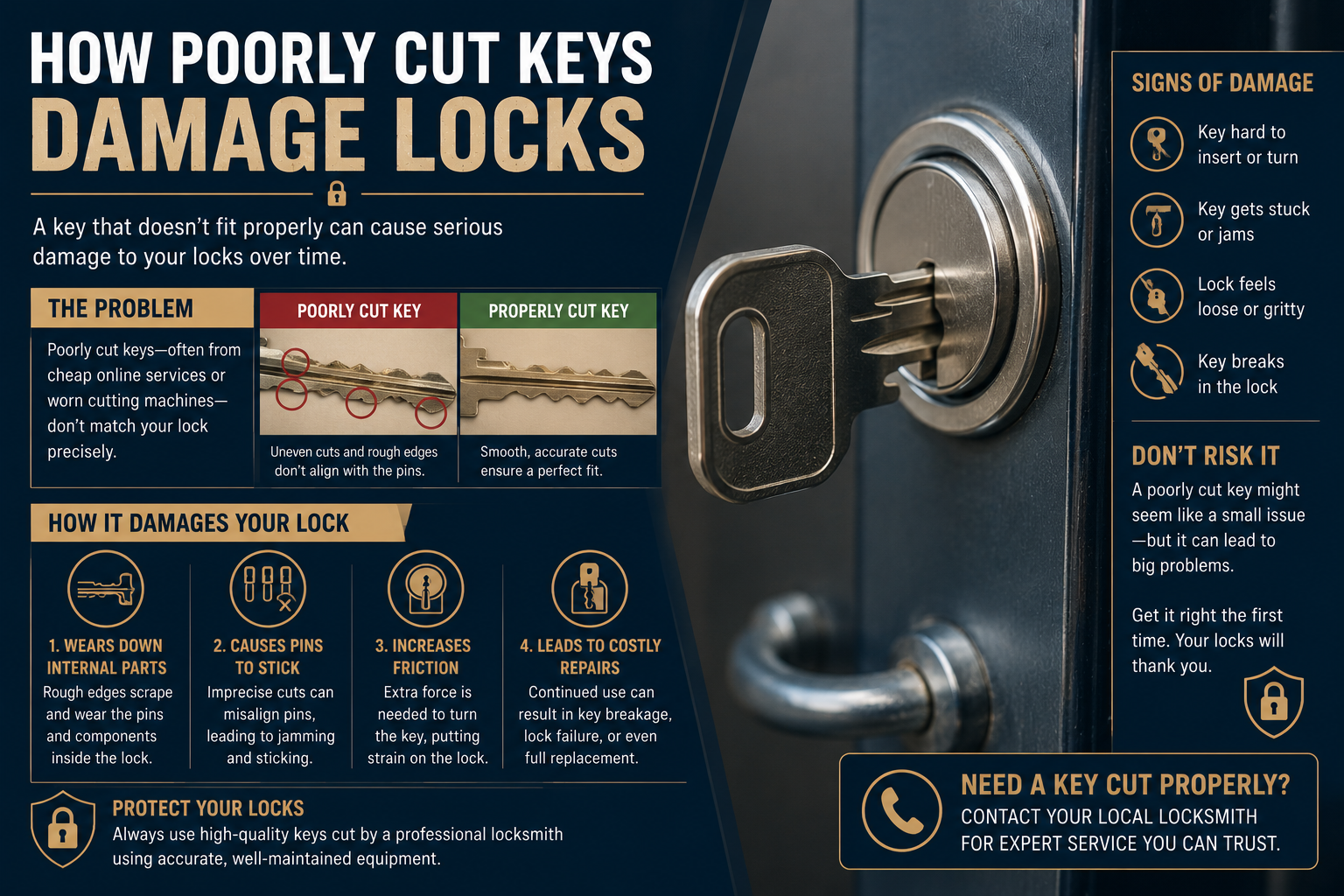
A poorly cut key forces the internal pins and springs into positions they were never designed to occupy.
Every time the key is turned, unnecessary pressure is applied to the lock.
Over time this can cause:
- Premature pin wear.
- Damaged springs.
- Internal scoring.
- Increased friction.
- Metal filings inside the cylinder.
- Premature cylinder failure.
Instead of operating smoothly, the lock gradually wears itself out.
Warning Signs of a Poorly Cut Key
Common symptoms include:
- The key is difficult to insert.
- The key sticks inside the lock.
- The key is difficult to remove.
- The lock feels rough when turning.
- The key needs wiggling before it works.
- The lock works intermittently.
- The key occasionally jams.
Many homeowners assume the lock is worn out when the real problem is actually the key.
Cheap Key Cutting Can Cost More
Low-cost key cutting often focuses on speed rather than precision.
If a copy is made from:
- A worn key.
- A damaged key.
- A previous copy.
the imperfections are reproduced and often become even worse.
Saving a few pounds on a key can ultimately result in replacing an expensive lock cylinder.
High-Security Locks Need Accurate Keys
Modern anti-snap cylinders are manufactured to extremely tight tolerances.
This provides excellent security but also means they are less forgiving of poorly cut keys.
Accurately cut keys allow:
- Smooth operation.
- Reduced wear.
- Longer cylinder life.
- Greater reliability.
Quality locks deserve quality keys.
Poor Keys Can Affect More Than the Cylinder
A stiff or inaccurate key doesn't just damage the cylinder.
When extra force is required to turn the key, additional strain is also transferred to:
- The gearbox.
- The multipoint locking mechanism.
- Door handles.
- Locking points.
Over time this can contribute to:
- Failed gearboxes.
- Broken handle springs.
- Stiff locking mechanisms.
- Increased wear throughout the entire locking system.
- Snapped keys in the lock.
A simple key problem can eventually develop into a much larger repair.
What Should You Do?
If a newly cut key doesn't feel quite right:
- Stop using it if possible.
- Compare it with another working key.
- Try the original key.
- Have the key checked by a reputable locksmith or key-cutting specialist.
- Replace the faulty key before it damages the lock.
The earlier the problem is identified, the less chance there is of permanent damage.
Protect Your Lock Investment
A quality euro cylinder can provide many years of reliable service when used with accurately cut keys.
To maximise its lifespan:
- Always copy from the original key where possible.
- Avoid copying worn or damaged keys.
- Replace bent or badly worn keys.
- Use a reputable key-cutting service.
- Investigate stiff operation early.
These simple steps can significantly reduce wear and help avoid unnecessary repairs.
Conclusion
A poorly cut key may seem like a minor issue, but repeated use can gradually damage the precision components inside a lock. Worn pins, damaged springs, increased friction and excessive strain on the locking mechanism can all result from using an inaccurate key over a long period. By having keys cut accurately from the original, avoiding copies of copies and replacing poor-quality keys as soon as problems appear, you can protect your lock, maintain smooth operation and extend the lifespan of your entire locking system. Sometimes the cheapest key can become the most expensive mistake.
Related articles: