Introduction
A broken key in a lock is one of the most common reasons homeowners find themselves locked out of their property. Although it can seem like bad luck, keys rarely snap without warning. In most cases, the lock, door or key has been showing signs of a problem for weeks or even months.
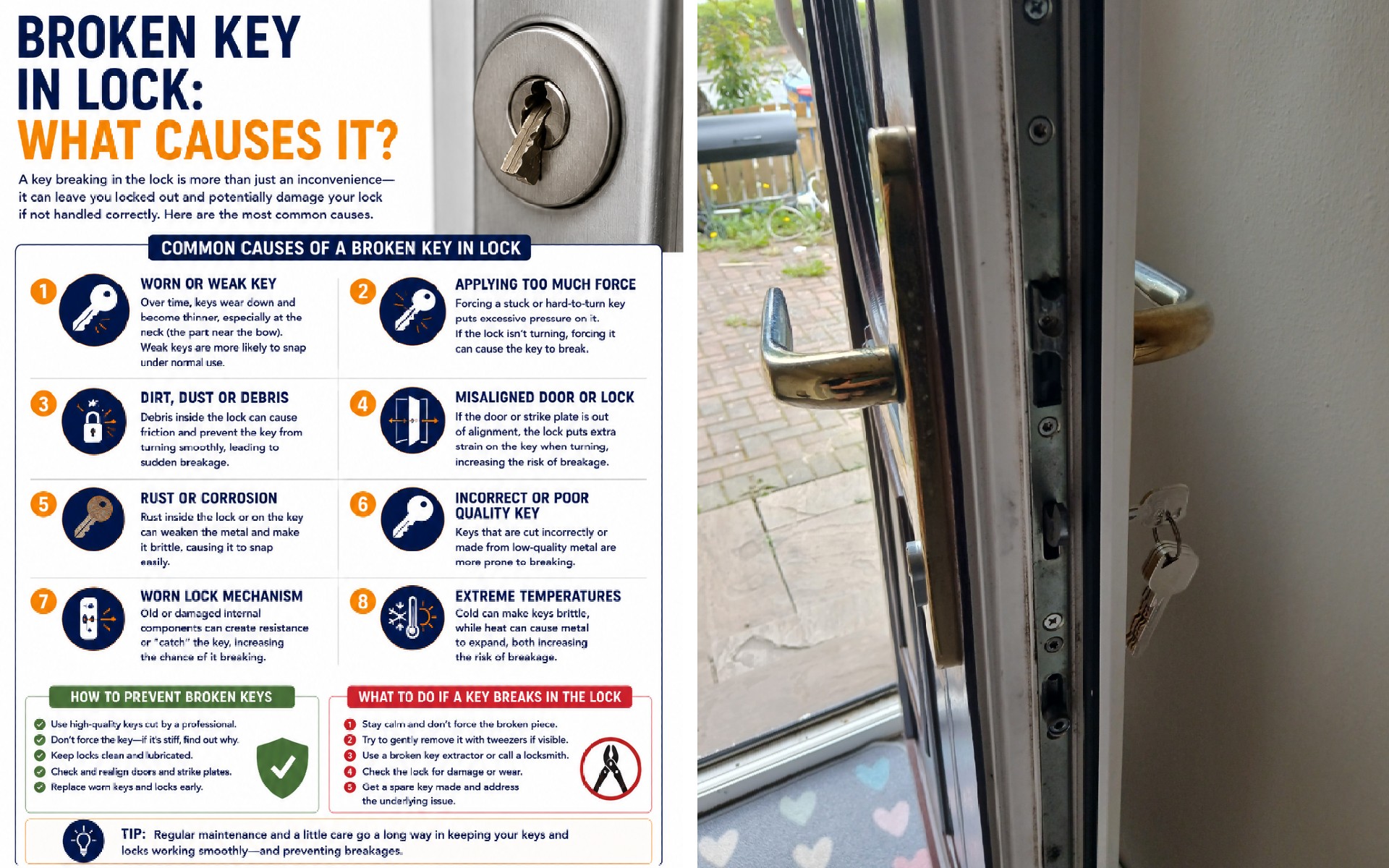
Understanding why keys break can help you prevent it happening again, avoid unnecessary damage to your lock, and reduce the risk of an expensive emergency call-out.
A Stiff Lock
The most common cause of a snapped key is a lock that has become difficult to operate.
Every time you force a stiff lock, extra pressure is placed on the key. Eventually, the key becomes the weakest part of the system and snaps.
Common warning signs include:
- The key becoming difficult to turn.
- The lock feeling rough or gritty.
- The key sticking in the cylinder.
- The key being difficult to remove.
- Having to apply excessive force.
A lock should always operate smoothly. If it doesn't, there's usually an underlying problem that needs attention.
A Misaligned Door
A dropped or poorly aligned uPVC or composite door is another common cause of broken keys.
When the hooks, rollers and locking points no longer line up correctly with the keeps on the frame, extra strain is transferred through the lock cylinder and into the key every time the door is locked.
Typical signs include:
- Difficulty lifting the handle.
- Having to push or pull the door to lock it.
- Stiff locking.
- The key turning freely when the door is open but becoming stiff when the door is closed.
- The door rubbing on the frame.
Correct door alignment removes unnecessary pressure from the lock and greatly reduces the risk of key breakage.
Worn or Damaged Keys
Keys wear out through years of daily use.
Over time they can become:
- Thin.
- Bent.
- Cracked.
- Worn around the cuts.
- Weakened through metal fatigue.
An older key may still work, but it is far more likely to snap if the lock begins placing additional strain on it.
Poorly Cut Key Copies
Not all key copies are cut to the same standard.
A poorly cut key may appear to work, but even slight inaccuracies can place extra stress on the lock's internal pins and springs. This increases resistance every time the key is used.
The problem is often made worse when:
- A copy is made from another copy.
- The original key was already worn.
- The key-cutting equipment is poorly maintained.
Using the original manufacturer's key whenever possible usually produces the most accurate duplicate.
A Worn Lock Cylinder
Lock cylinders contain precision pins, springs and moving components that wear naturally over time.
As the cylinder ages, you may notice:
- Rough operation.
- Increased resistance.
- Intermittent locking problems.
- Difficulty inserting the key.
- Difficulty removing the key.
Eventually, the extra resistance can place enough pressure on the key to cause it to snap.
Dirt and Lack of Maintenance
Dust, dirt and debris gradually build up inside many locks.
This can result in:
- Increased friction.
- Rough operation.
- Uneven wear.
- Additional strain on the key.
Occasional maintenance and inspection can help keep the lock operating smoothly and identify problems before they become serious.
Cold Weather
Cold weather can make an existing problem more noticeable.
Lower temperatures may cause:
- Metal components to contract slightly.
- Moisture inside the lock to increase resistance.
- Existing stiffness to become worse.
Although cold weather rarely causes a key to snap on its own, it often highlights a fault that already exists.
Forcing the Key
Many snapped keys occur because the warning signs have been ignored.
If a key doesn't turn easily, forcing it can result in:
- A broken key.
- A damaged lock cylinder.
- A failed gearbox.
- A complete lockout.
Applying more force rarely solves the problem and usually makes the repair more expensive.
What Should You Do If Your Key Breaks?
If your key snaps inside the lock:
- Don't force the remaining piece further into the cylinder.
- If part of the key is still protruding, avoid gripping it with excessive force.
- Specialist key extraction tools can often remove the broken section without damaging the lock.
- Once the key has been removed, identify and repair the underlying fault before using another key.
Simply cutting a replacement key may not prevent the same problem happening again.
Can the Lock Be Saved?
In many cases, yes.
If the broken key is removed without damaging the cylinder and the lock is otherwise in good condition, the lock may simply require:
- A replacement key.
- Door realignment.
- A mechanism adjustment.
- Cylinder servicing.
- Replacement of a worn cylinder.
The important thing is diagnosing why the key snapped in the first place.
How to Prevent a Broken Key
You can greatly reduce the risk of a snapped key by:
- Addressing stiff locks as soon as they develop.
- Keeping your door correctly aligned.
- Replacing worn or bent keys.
- Using accurately cut key copies.
- Replacing worn lock cylinders before they fail.
- Avoiding excessive force if the key becomes difficult to turn.
- Having locking mechanisms checked if they become stiff.
Preventative maintenance is almost always cheaper than an emergency repair.
The Key Is Usually the Victim
Many people assume the key is at fault when it snaps.
In reality, the broken key is often the final symptom of another problem, such as:
- A dropped door.
- Poor alignment.
- A worn lock cylinder.
- A failing gearbox.
- Seized locking points.
- A poorly cut key.
- Lack of maintenance.
Fixing the underlying cause helps prevent repeat failures and extends the life of your entire locking system.
Conclusion
A snapped key is rarely just bad luck. More often, it's a warning that your door or lock has been under increasing strain for some time. Whether the cause is poor alignment, a worn cylinder, a failing multipoint mechanism or a damaged key, dealing with the problem early can prevent lockouts, reduce repair costs and improve the reliability of your door. If your key has become difficult to turn, don't wait until it breaks—having the cause identified and repaired is usually far simpler than dealing with a broken key in an emergency.