The Complete Homeowner's Guide to Door Parts, Measurements & Terminology
Contents
- Introduction
- A–Z of Components
- Door Measurements Explained
- Lock Terminology
- Security Standards
- Common Faults by Component
- Frequently Asked Questions
- Conclusion
Introduction
If you've ever searched for a replacement door part, you've probably come across unfamiliar terms such as gearbox, PZ centres, backset, mushroom cam, follower, shoot bolt or hook keep.
To a locksmith these are everyday terms.
To most homeowners they can be confusing.
This guide explains the components found inside modern uPVC and composite doors, what each part does, why it's important and how it contributes to the operation of the complete locking system.
Think of it as an encyclopaedia for modern external doors.
A – Anti-Lift Pins
Anti-lift pins are security components designed to make it more difficult to lift a door away from its locking points.
They are generally positioned so that they engage with corresponding sections of the frame or keeps when the door is closed.
Their purpose is to provide additional resistance against attempts to manipulate the door by lifting it.
Common Problems
Anti-lift pins can become:
- Misaligned.
- Bent.
- Damaged.
- Restricted by incorrect adjustment.
They are particularly dependent on correct door alignment.
A – Astragal
An astragal is the vertical strip associated with the meeting edge of a pair of doors, particularly French doors.
On a pair of French doors, one door is normally the active door and the other is the passive door.
The astragal or central meeting assembly helps close the gap between the two doors and can incorporate or conceal components associated with the passive locking system.
Correct positioning is important.
If the central column or astragal is removed during a repair and isn't refitted correctly, the two doors may no longer meet or lock properly.
B – Backplate
The backplate is the plate behind a door handle.
It provides the mounting structure for the handle and can also cover the holes and fixings in the door.
Backplates vary in:
- Length.
- Width.
- Shape.
- Screw positions.
- Security design.
On external doors, the backplate can also form part of the security hardware.
When replacing handles, the size and fixing arrangement need to be considered rather than assuming all handles are interchangeable.
B – Backset
Backset is the distance from the edge of the door or faceplate to the centre of the spindle or keyhole, depending on the type of lock being measured.
It is one of the most important measurements when identifying a replacement lock or gearbox.
Common backsets include:
- 25mm
- 28mm
- 30mm
- 35mm
- 40mm
- 45mm
- 50mm
A replacement component with the wrong backset may not position the spindle or cylinder correctly.
Always establish exactly which component is being measured before taking the measurement, because terminology can vary between manufacturers.
B – Ball Bearing
Ball bearings can be found in some door hardware and handle assemblies.
Their purpose is to reduce friction between moving components and allow smoother movement.
In some handle designs, bearings are used to support the spindle or internal moving parts.
A worn or damaged bearing can contribute to:
- Stiff operation.
- Noise.
- Excessive movement.
- Rough handle operation.
C – Cam
A cam is a rotating component that transfers movement from one part of a lock to another.
The most familiar example is the cam inside a euro cylinder.
When the key turns the cylinder, the cam rotates and operates the central gearbox.
However, the word cam is used for several different components in door hardware.
A multipoint mechanism may contain cams associated with rollers or other locking points.
The ERA Vectis uses a different operating principle, involving internal levers and a curtain rather than a conventional euro cylinder cam.
C – Centres (PZ)
PZ is the measurement between the centre of the spindle and the centre of the keyhole or cylinder.
It is particularly important when replacing door handles.
Common measurements include:
- 48mm
- 68mm
- 70mm
- 72mm
- 85mm
- 92mm
- 92/62mm
- 95mm
- 113mm
- 117mm
The measurement must be taken accurately because even a small difference can prevent replacement hardware from fitting correctly.
C – Cylinder Retaining Screw
The cylinder retaining screw secures the euro cylinder inside the lock case or multipoint gearbox.
It passes through the edge of the door and into the cylinder.
The screw is normally positioned approximately level with the centre of the cylinder.
It is a relatively small component but essential to the security of the cylinder.
A damaged, missing or incorrect retaining screw can prevent the cylinder from being securely installed.
D – Deadbolt
A deadbolt is a solid locking bolt that extends into the frame when the door is locked.
Unlike a spring latch, a deadbolt does not normally retract simply by operating the handle.
Deadbolts provide a rigid locking point.
In a multipoint system, the deadbolt may be operated by the gearbox and then secured by turning the cylinder key.
D – Drive Bar
Drive bars are internal components of many multipoint mechanisms.
They transfer movement from the central gearbox to the locking points positioned above and below it.
When the handle is lifted, the gearbox moves the drive bars.
The drive bars then operate components such as:
- Hooks.
- Rollers.
- Mushrooms.
- Shoot bolts.
- Other locking points.
E – Escutcheon
An escutcheon is a decorative or protective plate surrounding a keyhole, cylinder or lock opening.
It can provide:
- Improved appearance.
- Protection around the opening.
- Additional resistance against certain forms of attack.
Escutcheons are available in many designs and finishes.
E – Euro Cylinder
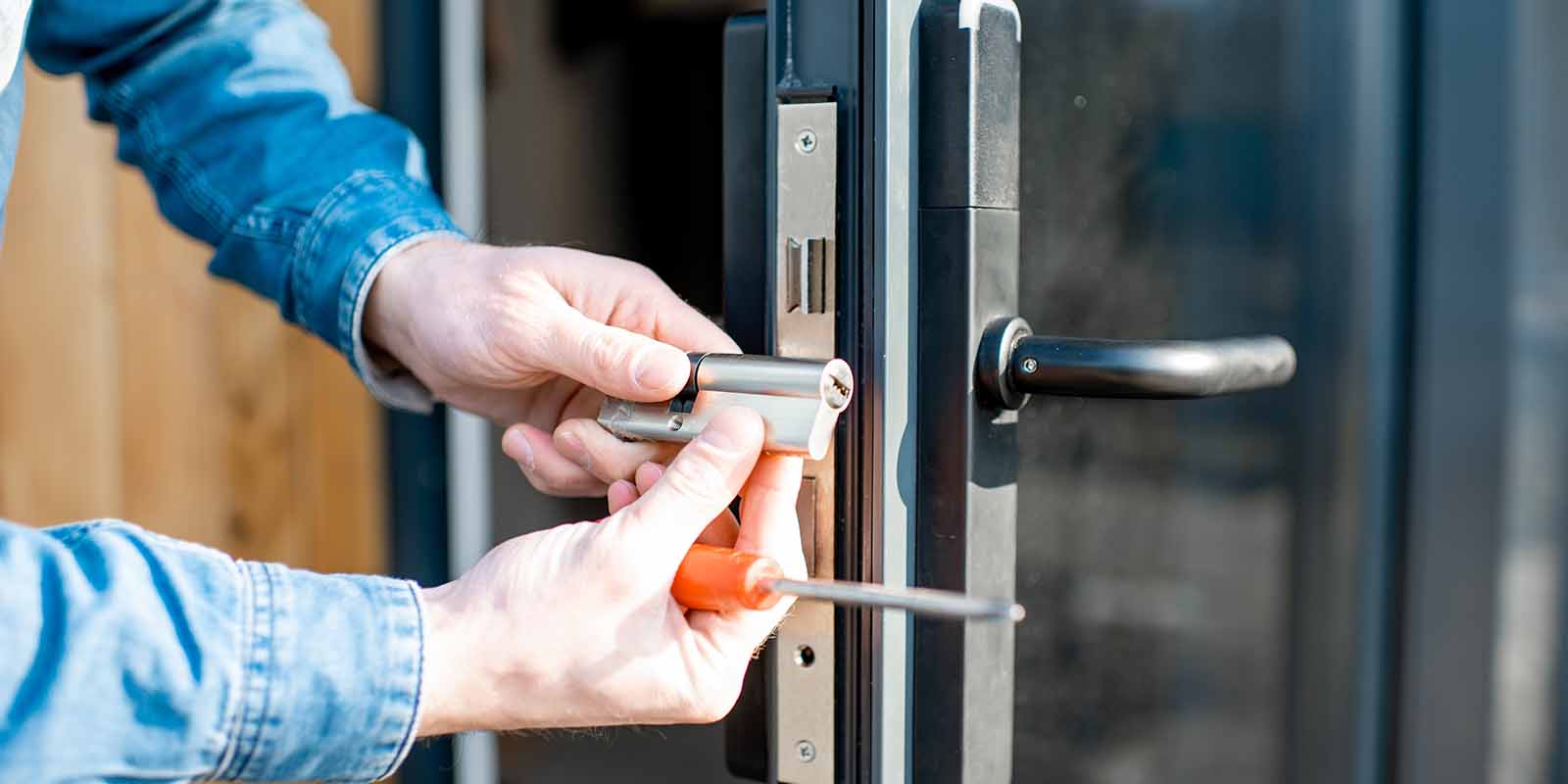
The euro cylinder is one of the most common locking components found on modern uPVC and composite doors.
It contains the key-operated mechanism that interfaces with the central gearbox.
Common types include:
Double Cylinder
A key can operate the cylinder from both sides.
Thumbturn Cylinder
A key operates the outside while a thumbturn operates the inside.
Half Cylinder
A key operates the cylinder from one side only.
Anti-Snap Cylinder
A security cylinder designed to resist common snapping attacks.
The size of the cylinder is important.
A cylinder that protrudes excessively from the outside of the door can provide an unnecessary attack point and may prevent the intended anti-snap protection from working correctly.
Correct sizing is therefore important for both security and appearance.
F – Faceplate
The faceplate is the metal strip visible along the edge of the door.
On a multipoint mechanism it forms part of the mechanism assembly and provides mounting points for the locking components.
Faceplates vary considerably.
Measurements include:
- Overall length.
- Width.
- Thickness.
- Screw-hole positions.
- Locking-point positions.
Some mechanisms have a continuous faceplate while others use different configurations.
Correct identification is essential when sourcing a replacement mechanism.
F – Follower
The follower is the part of the gearbox that receives the square spindle from the door handle.
When the handle is operated, the spindle rotates the follower.
The follower then transfers that movement into the gearbox.
A worn follower can cause:
- Excessive handle movement.
- Loose handles.
- Poor operation.
- Failure to fully operate the mechanism.
G – Gearbox
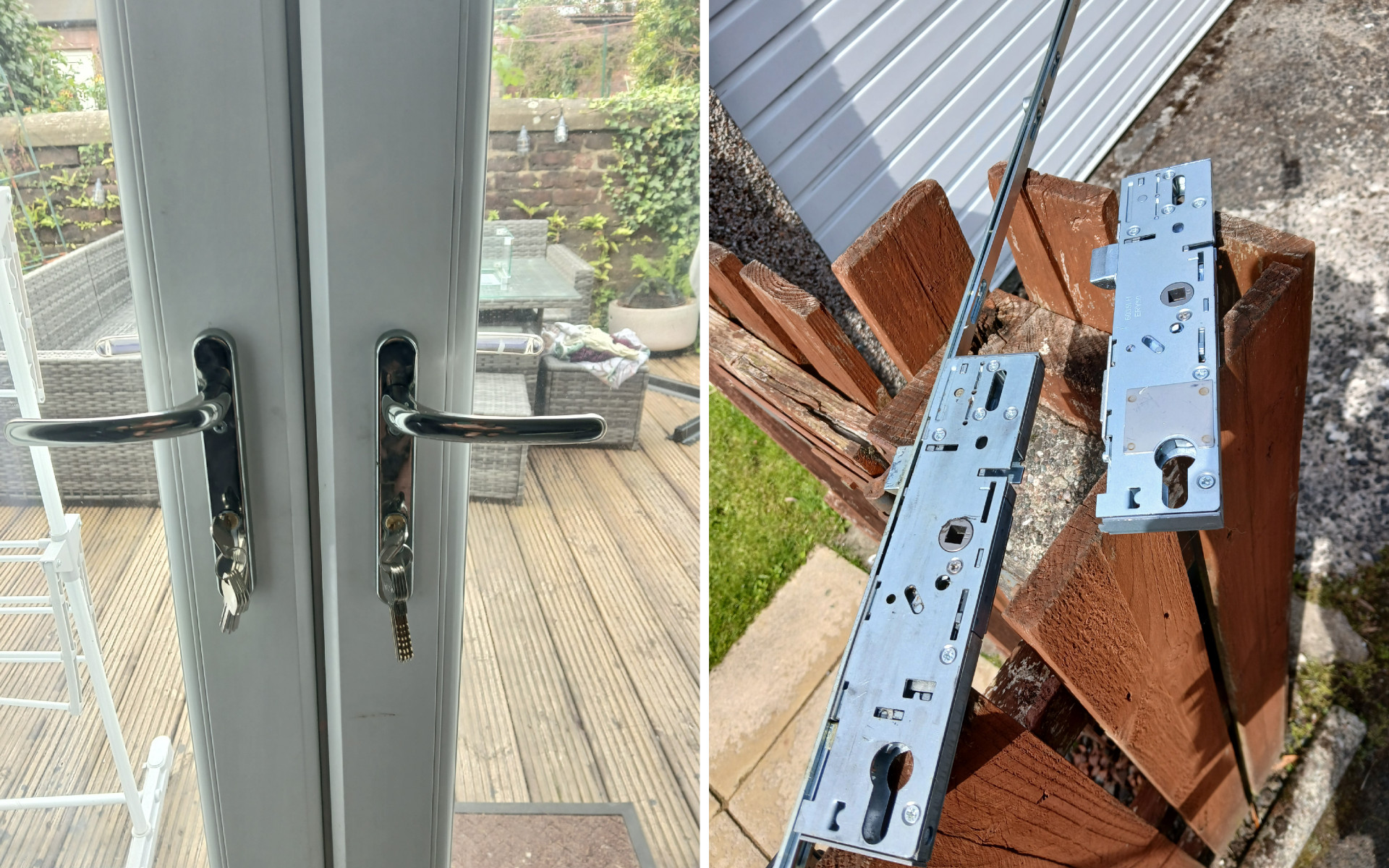
The gearbox is the central operating section of many multipoint locking mechanisms.
Comes in 2 forms, euro lock case and Vectis lock case.
It connects the door handle and cylinder to the rest of the mechanism.
When the handle is lifted, the spindle operates the gearbox, which moves the drive rails and locking points.
Gearboxes can fail internally.
Typical symptoms include:
- Handle won't lift.
- Handle becomes loose.
- Key turns but doesn't operate the mechanism.
- Locking points won't move.
- Door becomes jammed.
- Handle droops.
However, not every one of these symptoms means the gearbox has failed.
Poor alignment, worn handles and seized locking points can produce similar symptoms.
Correct diagnosis should therefore come before replacing the gearbox.
H – Handles
Door handles are the main interface between the user and the locking mechanism.
Common configurations include:
Lever/Lever
A lever handle is fitted on both sides.
This is one of the most common arrangements on uPVC doors.
Lever/Pad
A lever handle is fitted internally while a fixed pad is fitted externally.
Fixed Pad
A non-operating pad is used as the external handle.
Split Spindle
A split spindle allows different operation from each side of the door.
Handles can also be:
- Sprung.
- Unsprung.
- Heavy duty.
- Security rated.
Sprung Handles
Sprung handles contain springs that help return the lever to its normal position after operation.
This can be particularly useful on multipoint doors.
Unsprung Handles
Unsprung handles rely more heavily on the door mechanism to return the lever.
The suitability of sprung or unsprung handles depends on the particular locking system.
Security Handles
Some handles are designed and tested to specific security standards, such as TS007 where applicable.
The handle should always be considered as part of the complete door security system rather than as an isolated component.
H – Hooks
Hooks are locking points that move out from the mechanism and engage with keeps in the frame.
They are commonly found on multipoint locking systems.
Hooks can be configured as:
- Hook up.
- Hook down.
- Opposing hooks.
- Small hooks.
- Large security hooks.
Hooks provide a strong mechanical connection between the door and frame.
Common Hook Problems
- Seizure.
- Misalignment.
- Damage.
- Excessive friction.
- Incorrect keep position.
A hook should move freely before it meets the frame keep.
H – Hinges
Hinges connect the door to the frame and allow the door to pivot.
Common types include:
Flag Hinges
Common on modern uPVC doors.
They usually provide adjustment in several directions.
Butt Hinges
Traditional hinge design used on many timber doors and some modern systems.
Adjustable Hinges
Adjustable hinges allow the position of the door to be altered.
This can be particularly important because door alignment directly affects the locking mechanism.
A door can have a perfectly good gearbox but still be difficult to lock if the hinges have allowed the door to drop.
K – Keeps
Keeps are fitted to the frame and receive the locking points from the door.
There are different keeps for different locking components.
These can include:
- Hook keeps.
- Roller keeps.
- Deadbolt keeps.
- Shootbolt keeps.
- Mushroom keeps.
- Combined or one-piece keeps.
The position of the keeps is critical.
If the door moves relative to the frame, the locking points can begin striking or rubbing against the keeps.
This increases resistance and places additional load on the mechanism.
L – Latch
The latch is the spring-loaded component that holds the door closed when it is shut.
Unlike a deadbolt, the latch can normally retract when the handle is operated.
A typical sequence is:
Handle → Spindle → Gearbox → Latch retracts
A faulty latch can cause:
- Door not releasing.
- Handle becoming stiff.
- Door jamming.
- Difficulty closing.
L – Lock Case
A lock case is the housing containing the internal components of a lock.
Traditional mortice locks use a lock case recessed into the door.
Multipoint mechanisms also contain central cases or gearboxes that perform a similar mechanical role.
The terminology differs between manufacturers, so "lock case", "gearbox" and "centre case" should not automatically be assumed to mean exactly the same thing.
L – Lock Operation
Different locking systems use different operating methods.
Lift-to-Lock
The handle is lifted to engage the multipoint locking points.
The key then locks the gearbox.
Automatic Locking
The locking points engage automatically when the door closes.
Split Spindle
The internal and external handles operate differently.
This can be used with lever/pad arrangements and certain security configurations.
M – Mushroom Cam
A mushroom cam is a locking point with a mushroom-shaped head.
It engages with a corresponding keep on the frame.
The design can provide additional resistance against attempts to manipulate the locking point.
Mushroom cams can also provide compression between the door and frame.
Correct adjustment is essential.
M – Mechanism
The term mechanism generally refers to the complete multipoint locking assembly.
This can include:
- Faceplate.
- Gearbox.
- Drive rails.
- Hooks.
- Rollers.
- Mushrooms.
- Deadbolt.
- Latch.
- Shoot bolts.
The gearbox is therefore only one part of the complete mechanism.
This distinction matters when discussing repairs.
A gearbox may be replaceable while the rest of the mechanism remains perfectly serviceable.
P – Pins
Several types of pins can be found in modern door systems.
Shoot Pins
Shoot pins extend into the frame and provide additional locking points.
They are common on some French doors and multipoint mechanisms.
Anti-Lift Pins
These help prevent manipulation of the door by lifting it.
Pins are generally small components, but their position and interaction with the frame can be important to the overall security and operation of the door.
P – PZ Measurement
PZ is one of the most important measurements when replacing a door handle.
It is measured from the centre of the spindle follower to the centre of the keyhole or cylinder.
For a euro-cylinder multipoint lock, this usually means measuring from the centre of the handle spindle to the centre of the cylinder.
The measurement needs to be taken accurately.
A handle with the wrong PZ measurement may not align with the existing lock.
PZ should not be confused with backset.
Backset relates to the distance from the door edge or faceplate to the operating centre.
PZ relates to the distance between the spindle and cylinder/keyhole centres.
R – Rollers
Rollers are locking points that engage with keeps in the frame.
They perform two important functions:
- They help secure the door.
- They help control compression against the weather seals.
Rollers can usually be adjusted on many mechanisms to alter compression.
If they are adjusted incorrectly, the door can become:
- Too tight.
- Too loose.
- Difficult to lock.
- Difficult to close.
S – Shoot Bolts
Shoot bolts extend into the head or threshold of the frame.
They are particularly common on:
- French doors.
- Some multipoint systems.
- Large door assemblies.
Because they extend into fixed keeps, even relatively small alignment problems can affect their operation.
S – Spindle
The spindle is the square metal bar connecting the handle to the gearbox.
When the handle is operated, the spindle rotates.
Common spindle sizes include:
- 7mm.
- 8mm.
The correct spindle size depends on the lock and handle.
Spindles can also be:
- Single.
- Double.
- Split.
A damaged or incorrectly sized spindle can cause excessive handle movement or prevent the gearbox from operating correctly.
S – Spring Cassette
A spring cassette contains springs that help return the handle to its normal position.
Some handles contain their own spring mechanism while other arrangements rely on a spring cassette associated with the lock.
A failed spring cassette can cause:
- Drooping handles.
- Poor handle return.
- Loose-feeling operation.
Importantly, a drooping handle doesn't automatically mean the gearbox has failed.
T – Threshold
The threshold is the lower section of the door frame.
It provides:
- A sealing surface.
- Structural support.
- A transition between the door and floor.
On some doors, the threshold also contains keeps for shoot bolts or other locking components.
Threshold condition and alignment can therefore affect both weather sealing and locking.
W – Weather Seal
Weather seals prevent water, draughts and air leakage around the door.
They are normally fitted around the perimeter of the door or frame.
Over time, seals can:
- Harden.
- Shrink.
- Split.
- Flatten.
- Become damaged.
Poor weather seals can result in draughts and water ingress.
However, excessive compression can also make a door harder to operate.
The correct balance between sealing and mechanical operation is therefore important.
Door Measurements Explained
Correct measurement is critical when replacing door hardware.
A component can look almost identical to another component while having completely different dimensions.
The most important measurements include:
- Backset.
- PZ.
- Screw centres.
- Cylinder dimensions.
- Faceplate dimensions.
- Spindle size.
- Locking-point positions.
Backsets
Common backsets encountered in door hardware include:
- 25mm
- 28mm
- 30mm
- 35mm
- 40mm
- 45mm
- 50mm
Always establish exactly what component the measurement relates to before ordering a replacement.
PZ Centres
Common PZ measurements include:
- 48mm
- 68mm
- 70mm
- 72mm
- 85mm
- 92mm
- 92/62mm
- 95mm
- 113mm
- 117mm
PZ is particularly important when replacing handles.
Screw Centres
Handle and hardware fixing holes can have many different spacings.
Measurements encountered in replacement door hardware include:
- 122mm
- 123mm
- 160mm
- 180mm
- 195mm
- 200mm
- 203mm
- 210mm
- 211mm
- 212mm
- 214mm
- 215mm
- 216mm
- 221mm
- 237mm
- 240mm
- 264mm
- 265mm
Some handles have adjustable fixing positions.
One example is an adjustable range of approximately 196–252mm.
Never assume that two handles are interchangeable simply because they look similar.
Euro Cylinder Sizes
Euro cylinders are manufactured in different lengths.
Common configurations include:
- 30/30
- 35/35
- 35/40
- 40/40
- 40/45
- 45/45
- 45/50
- 50/50
- 50/55
- 55/55
- 60/60
The first measurement normally refers to one side of the cylinder and the second measurement to the other.
The correct cylinder should be selected so that it sits appropriately within the door.
An excessively protruding cylinder can compromise security and appearance.
Handing
Handing describes which way a door or lock operates.
Common descriptions include:
Left
Used to describe a door or mechanism designed for left-hand operation.
Right
Designed for right-hand operation.
Reversible
Can be configured for either direction.
Universal
Designed to work in more than one configuration.
Non-Handed
Does not have a fixed left- or right-hand configuration.
Handing is particularly important when replacing certain locking mechanisms and handles.
Common Manufacturers
There are many manufacturers of uPVC and composite door hardware.
Multipoint Mechanisms
Common manufacturers include:
- Avocet
- ERA
- Fullex
- Fuhr
- GU
- KFV
- Lockmaster
- Maco
- Mila
- Millenco
- Roto
- Safeware
- Winkhaus
- Yale
Each manufacturer may produce multiple mechanism designs.
Even mechanisms made by the same manufacturer can have different dimensions, locking points and gearbox configurations.
Manufacturer identification is therefore only the starting point when selecting replacement parts.
Common Handle Manufacturers
Common manufacturers and suppliers include:
- Brisant Secure
- Cego
- ERA
- Fab & Fix
- Fullex
- Hoppe
- Mila
- Millenco
Handles can vary considerably in size, fixing centres, PZ, spindle configuration and spring arrangement.
Security Standards
Door hardware can be tested or manufactured against various standards.
TS007
TS007 is associated with security requirements for cylinders and certain door hardware.
It is particularly relevant when discussing high-security euro cylinders.
PAS24
PAS24 is a security standard relating to enhanced security performance for doors and windows.
It considers the performance of the complete product rather than simply one individual component.
BS3621
BS3621 is a British Standard associated with thief-resistant mechanically operated locks for certain doors.
It is commonly associated with traditional mortice locks.
EN1303
EN1303 is a European standard relating to cylinders for locks.
It provides classifications for characteristics including durability and security-related performance.
Secured by Design
Secured by Design is a police security initiative associated with products and developments designed around crime prevention principles.
These standards should not be confused with one another. Each covers a particular area of door or hardware performance.
Common Faults by Component
| Component | Typical Fault |
|---|---|
| Gearbox | Internal failure |
| Handles | Drooping or excessive movement |
| Hinges | Door drops or moves out of alignment |
| Cylinder | Key sticks or won't operate |
| Hooks | Seized or misaligned |
| Rollers | Excessive friction |
| Keeps | Misalignment |
| Spring Cassette | Handle won't return |
| Weather Seal | Draughts or water ingress |
| Faceplate | Corrosion or damage |
| Spindle | Wear or incorrect fit |
| Shoot Bolts | Misalignment or seizure |
| Latch | Won't retract |
| Deadbolt | Won't extend or retract |
Why Components Cannot Always Be Replaced Individually
One of the biggest misconceptions about modern door hardware is that every component is interchangeable.
It isn't.
A replacement component needs to match the existing system.
For example, a gearbox may need to match:
- Backset.
- PZ.
- Faceplate.
- Spindle position.
- Locking-point configuration.
- Drive-bar arrangement.
- Manufacturer.
- Door preparation.
Similarly, handles need to match the spindle size, PZ and fixing arrangement.
Cylinders need to be correctly sized.
Keeps need to correspond with the locking points.
This is why identifying the existing hardware before purchasing replacement parts is so important.
Why Door Alignment Affects Every Component
Door alignment is not technically a component, but it affects almost every component in the locking system.
A door can move because of:
- Hinge wear.
- Door weight.
- Building movement.
- Seasonal movement.
- Frame movement.
- Thermal expansion.
When the door moves, the locking points no longer line up perfectly with the keeps.
The result can be:
- Heavy handles.
- Stiff keys.
- Difficult locking.
- Hooks hitting keeps.
- Rollers rubbing.
- Shoot bolts catching.
- Premature gearbox wear.
This is why replacing a gearbox without checking the alignment can be a short-term repair rather than a complete solution.
Frequently Asked Questions
What is a gearbox?
The gearbox is the central operating component of many multipoint locking mechanisms. It transfers movement from the handle and controls the locking mechanism.
What is PZ?
PZ is the distance between the centre of the handle spindle and the centre of the cylinder or keyhole.
What is backset?
Backset is the distance from the edge of the door or faceplate to the operating centre of the lock, depending on the hardware being measured.
Are all door handles the same?
No. Handles vary in PZ, screw centres, spindle size, backplate dimensions, spring arrangement and overall design.
What is a mushroom cam?
A mushroom cam is a locking point with a mushroom-shaped head that engages with a corresponding keep.
What is a hook keep?
A hook keep is the part of the frame designed to receive a hook locking point.
What does a sprung handle mean?
A sprung handle contains a spring mechanism that helps return the lever to its normal position after operation.
What size spindle do I need?
The correct spindle size depends on the handle and locking mechanism. Common sizes include 7mm and 8mm, but the existing hardware should be measured before ordering.
Can I replace just one component?
Often, yes. Gearboxes, handles, cylinders, locking points and other components can sometimes be replaced individually. Whether this is possible depends on the design and condition of the existing mechanism.
What is the faceplate?
The faceplate is the metal strip running along the edge of the door. On a multipoint mechanism it supports and connects the various locking components.
What is the difference between a gearbox and a mechanism?
The gearbox is normally the central operating section. The mechanism refers to the complete assembly, including the gearbox, faceplate, drive rails and locking points.
Why is my handle difficult to lift?
The mechanism may be failing, but poor door alignment is another very common cause. If the locking points are pressing against the keeps, considerably more force is required to lift the handle.
Why does my key turn but the door won't open?
The cylinder may not be the problem. A failed gearbox or another internal component can prevent the key's movement from being trans
Request a Quote
Please fill out your details below regarding the locksmith repair you'are looking for, and we will be in contact with you shortly. Or call us on 07712 445612.We love talking to our customers, and by calling us, we could help you straight away, and your issue could be fixed.
Our Hotline: 07712 445612