Introduction
A recent job in Paisley was a good example of why a uPVC door problem shouldn't automatically be diagnosed by replacing the first component that appears to have failed.
The customer reported that the door wasn't locking properly.
Initial testing immediately revealed something unusual.
The handle could be lifted, but only part of the multipoint locking mechanism was responding.
The lower locking points were moving, while the upper section of the mechanism wasn't doing anything.
The hooks and rollers at the top of the door weren't moving at all.
That meant there was more going on than a simple cylinder problem.
The mechanism had to be removed and inspected to find out exactly what had failed.
What followed was a combination of:
- A contaminated locking hook.
- A damaged gearbox connection.
- A failed gearbox.
- A sticky cylinder.
- Weak handle spring action.
- Incorrect door compression.
- Alignment adjustment.
Once all of these issues were addressed, the existing door could be returned to proper operation.
The Initial Problem
The complaint was straightforward:
The uPVC door wouldn't lock properly.
The first indication that the problem was within the multipoint mechanism came when the handle was lifted.
On a correctly functioning lift-to-lock system, raising the handle should operate the internal mechanism and move the locking points.
In this case, the upper part of the mechanism wasn't responding.
The rollers and hooks at the top of the door remained stationary.
That immediately suggested that the problem wasn't simply the lock cylinder.
The mechanism wasn't transferring movement through to the upper section.
Removing the Mechanism
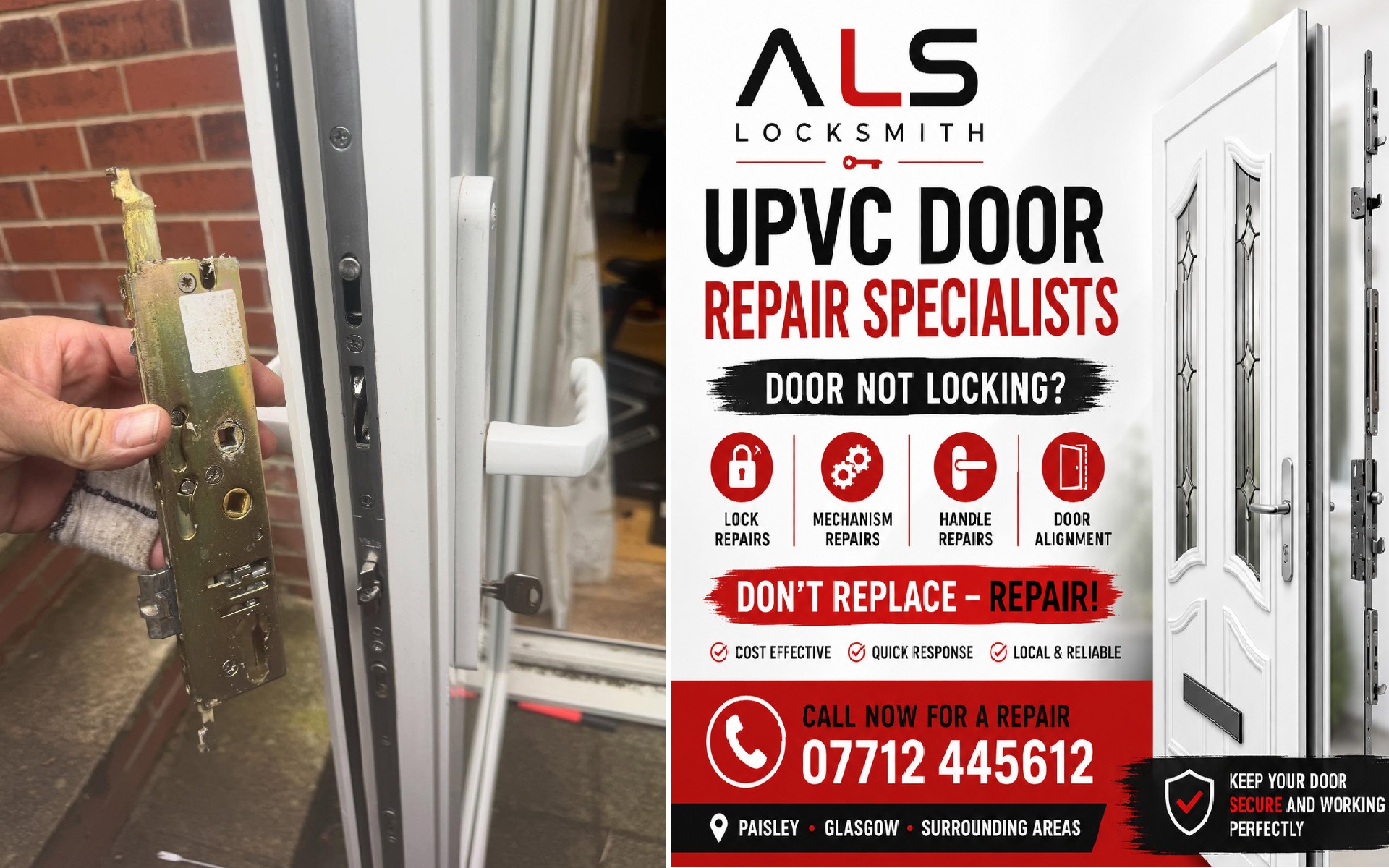
The multipoint mechanism was removed from the door for inspection.
This is where the condition of the components became apparent.
One of the hooks was heavily contaminated with grit.
It was full of dirt and debris, which was affecting its movement.
A locking point needs to move freely within the mechanism.
If dirt and grit build up around moving components, resistance increases and the mechanism has to work harder.
The hook was therefore removed, inspected and cleaned thoroughly.
Cleaning the Hook
After removing the hook, the accumulated grit was cleaned away.
The component was then inspected to make sure there wasn't a more serious mechanical problem.
Once clean, it could be reassembled into the mechanism.
The mechanism was then lubricated appropriately.
This restored free movement to the hook itself.
However, there was still another problem.
The Gearbox Link Was Bent
Further inspection revealed that the top link on the gearbox was bent.
This was significant because the link is responsible for connecting the gearbox to the locking strip.
With the link bent, it wasn't making the correct connection.
So although the handle was being operated, the movement wasn't being transferred properly to the upper section of the multipoint mechanism.
This explained why the rollers and hooks at the top of the door weren't moving.
The symptom had been:
Handle moves → upper locking points don't move.
The actual problem was:
Bent gearbox link → poor connection to locking strip → upper mechanism not operating.
Replacing the Gearbox
The gearbox was therefore replaced.
However, the replacement gearbox came with a latch that wasn't operating smoothly with the existing keep in the door.
Rather than fitting the new latch simply because it came with the gearbox, the original latch was transferred over.
This allowed the existing latch and keep combination to continue working correctly.
This is an important part of mechanical repair.
Replacement components aren't always identical in every detail, even when they are designed to replace the same gearbox.
The interaction between the latch and the existing frame keep still matters.
Reassembling the Mechanism
With the faulty gearbox replaced, the cleaned hook reinstalled and the original latch transferred over, the mechanism was reassembled.
It was lubricated and tested.
The mechanism was then ready to go back into the door.
But there were still other issues to address.
The Sticky Lock
The keys had been becoming sticky.
The cylinder wasn't operating as smoothly as it should.
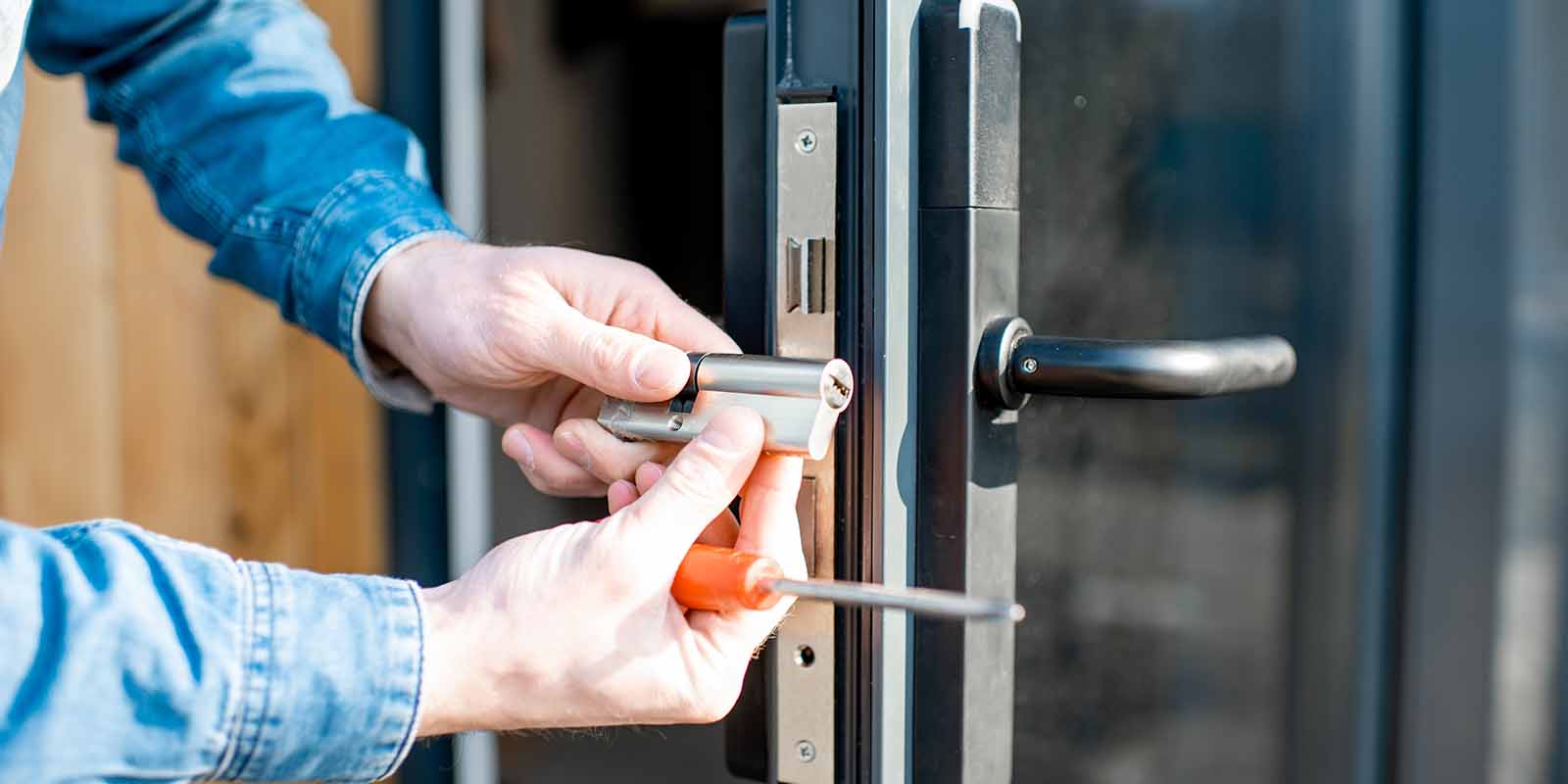
Rather than simply lubricating an old cylinder and leaving it in place, the cylinder was replaced with a snap-resistant cylinder.
This dealt with the immediate problem while also providing a modern security upgrade.
The new cylinder was fitted and tested with the repaired mechanism.
The Handles Had Lost Their Spring
The handles had also lost much of their spring action.
They weren't returning as they should.
This can make a door feel old and worn even when the handles themselves aren't necessarily beyond repair.
Before replacing the handles, the spring cassettes were lubricated.
The result was surprisingly effective.
The springs began operating correctly again and the handles returned to their normal position.
A relatively simple service had effectively restored the feel of the handles without the cost of replacing them.
Testing the Door With the Door Open
Once everything had been reassembled, the mechanism was tested before closing the door.
This is an important diagnostic step.
With the door open, there is no resistance from the frame keeps.
The handle was lifted.
The hooks engaged.
The rollers moved.
The complete mechanism operated as it should.
That was a good indication that the mechanical repair itself had been successful.
But the final test still had to be carried out with the door closed.
And that's where another problem appeared.
The Door Was Too Easy to Lock
The door was closed and the handle was lifted.
It moved almost too easily.
That might initially sound like a good thing.
It wasn't.
A multipoint door needs to close against its weather seals and create the correct level of compression.
This door wasn't doing that.
The door wasn't pressing properly against the seal.
The locking mechanism therefore wasn't operating under the correct conditions.
The problem had changed from a mechanical failure to an alignment and compression issue.
Why Correct Compression Matters
The locking mechanism doesn't operate independently of the door and frame.
When the door closes, the locking points have to enter their keeps while the door simultaneously compresses the weather seal.
If the door isn't correctly positioned, several things can happen.
Too little compression can result in:
- Draughts.
- Poor weather sealing.
- Rattling.
- A loose-feeling door.
Too much compression can result in:
- Heavy handles.
- Difficult keys.
- Excessive load on the gearbox.
- Increased friction.
The objective is the correct balance.
Final Door Adjustments
The door therefore needed further adjustment.
The position of the door was checked and adjustments were made to bring the door and frame into the correct relationship.
The locking points and keeps were checked.
The door compression was corrected.
The objective was not simply to make the handle harder to lift.
It was to make sure that the door sat correctly against the frame and weather seal while allowing the locking points to engage properly.
The Final Test
After the adjustments, the door was tested again.
The door was closed.
The handle was lifted.
This time the mechanism operated correctly.
The hooks engaged.
The rollers engaged.
The door pressed correctly against the weather seal.
The key operated the lock.
The door locked properly.
The complete system was then tested again to make sure everything continued to operate smoothly.
The result was a door that felt and operated as it should.
What Was Actually Wrong With the Door?
What initially appeared to be one fault was actually a combination of problems.
1. Contaminated Hook
The hook was full of grit and required removal and cleaning.
2. Bent Gearbox Link
The gearbox link wasn't connecting correctly to the locking strip.
3. Failed Gearbox
The gearbox therefore required replacement.
4. Latch Compatibility
The replacement gearbox's latch didn't operate correctly with the existing keep, so the original latch was transferred over.
5. Sticky Cylinder
The existing cylinder wasn't operating smoothly and was replaced with a snap-resistant cylinder.
6. Weak Handle Springs
The spring cassettes had lost their effectiveness but responded well to lubrication.
7. Incorrect Door Compression
The door wasn't sitting correctly against the weather seal.
8. Alignment
The door required adjustment so the complete locking system could operate correctly.
This is a perfect example of why diagnosing a uPVC door by looking at just one component can be misleading.
Why Replacing the Gearbox Alone Wouldn't Have Been Enough
Imagine the gearbox had simply been replaced and the job finished.
The gearbox would have been new.
But:
- The hook would still have been contaminated.
- The cylinder would still have been sticky.
- The handles would still have lacked spring action.
- The door would still have had incorrect compression.
- The alignment would still have been wrong.
The customer would therefore have received a new gearbox without receiving a properly functioning door.
A successful repair needs to consider the complete operating system.
The Importance of Testing With the Door Open and Closed
Testing in both conditions is particularly useful with multipoint locks.
Door Open
Testing with the door open establishes whether the mechanism itself operates.
There is no resistance from the frame keeps.
If the handle lifts smoothly and all the locking points move, the basic mechanism is functioning.
Door Closed
The second test introduces the frame.
Now the locking points have to:
- Align with the keeps.
- Enter the keeps correctly.
- Compress the weather seals.
- Complete their locking movement.
If the mechanism works perfectly open but not closed, alignment or compression should be investigated.
Why This Door Didn't Need Replacing
The door itself was fundamentally sound.
The problem was with its hardware, contamination, alignment and adjustment.
Once those issues were dealt with, the existing door could continue to be used.
There was no reason to replace the entire door simply because the locking mechanism had failed.
This is one of the most important principles of uPVC and composite door repair:
A failed component does not automatically mean a failed door.
What This Job Demonstrates
This repair highlights several important points about modern door systems.
A Mechanism Is a System
The gearbox, locking strip, hooks, rollers, latch, handles and cylinder all interact.
Dirt Can Cause Mechanical Problems
Grit inside moving components can increase friction and interfere with operation.
Replacement Parts Must Be Compatible
A replacement gearbox may require components from the original mechanism to achieve correct operation with the existing door and frame.
Handles Can Sometimes Be Serviced
A handle that has lost its spring action doesn't necessarily need immediate replacement.
Alignment Is Part of the Repair
Replacing a gearbox doesn't correct a poorly positioned door.
Testing Is Essential
The door needs to be tested both mechanically and in its actual closed position.
Repair Rather Than Replace
This job is another example of why a faulty uPVC door shouldn't automatically be written off.
The door required several repairs, but none of them required replacing the complete door.
The final result was:
- Repaired locking mechanism.
- Cleaned hook.
- New gearbox.
- Original compatible latch retained.
- New snap-resistant cylinder.
- Serviced handle spring cassettes.
- Corrected alignment.
- Corrected seal compression.
- Fully tested locking system.
The door was effectively brought back to proper working order.
Conclusion
What started as a uPVC door that wouldn't lock properly in Paisley turned out to be a combination of mechanical wear, contamination and poor adjustment rather than one simple fault.
The upper locking points weren't moving because a bent gearbox link was no longer connecting correctly to the locking strip. At the same time, one of the hooks was full of grit, the cylinder was becoming sticky and the handles had lost their spring action.
Replacing the gearbox solved one part of the problem, but it wasn't the end of the repair.
The original latch was transferred to ensure smooth operation with the existing keep. The hook was cleaned and lubricated. The cylinder was replaced with a snap-resistant version. The handle spring cassettes were serviced and the door was then tested.
With the door open, everything worked correctly.
But the closed-door test revealed another problem: the door wasn't sitting correctly against the frame and wasn't creating the necessary seal compression.
After further adjustment, the door closed correctly, the locking points engaged smoothly and the handle operated without unnecessary resistance.
The important lesson from this repair is that a door mechanism cannot be considered in isolation.
The gearbox, locking points, handles, cylinder, hinges, keeps, seals and door alignment all have to work together.
In this case, once the individual problems were identified and dealt with, there was no need for a new door.
The existing door was repaired, adjusted and returned to proper operation — saving the customer the considerably greater cost and disruption of replacing the complete door.