Broken Handles on an Older uPVC Door
The call-out in Bearsden involved an older uPVC door with broken handles.
When handles break, it is tempting to assume that they have simply worn out through age and regular use. On an older door, that may certainly be a factor.
However, there can be another reason.
If a door is badly out of alignment, the locking points can press against the keeps in the frame. The handle then has to work harder to lift the locking mechanism and secure the door.
Homeowners may gradually compensate by pulling harder on the handle or repeatedly lifting it in an attempt to lock the door.
That extra force can put unnecessary strain on the handle, spindle and gearbox.
In this case, I suspected that poor alignment had contributed to the original handles breaking.
Fitting New Handles Revealed Another Problem
I started by removing the broken handles and offering up a replacement set.
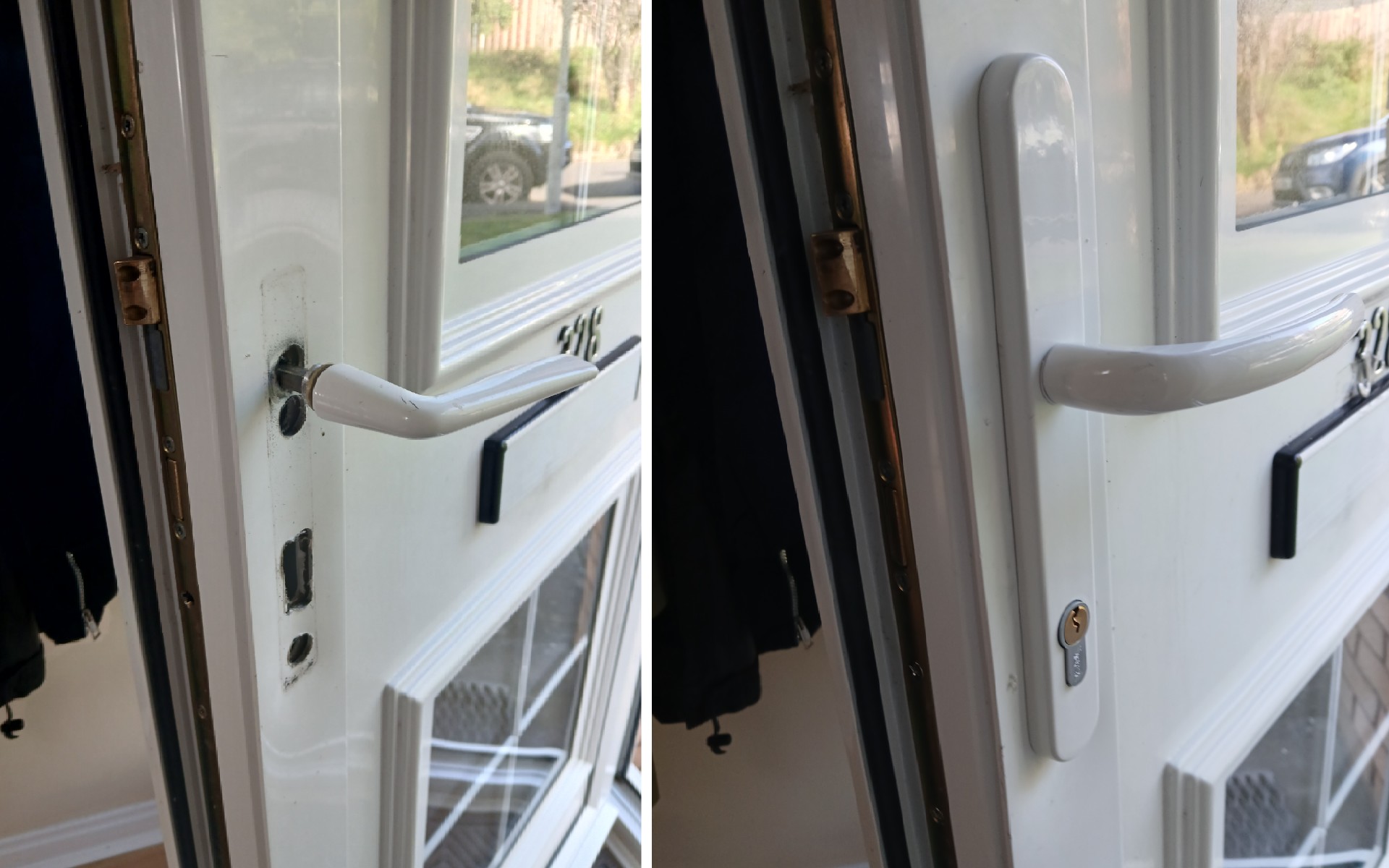
The new handles were suitable, but when I positioned them on the door, part of the old fitting area remained visible underneath.
This can happen when replacement handles have different dimensions from the originals. The backplate may be shorter, the fixing positions may differ, or the old handles may have covered marks and holes that the new ones leave exposed.
Simply fitting the new handles in the original position would have left the door looking untidy.
I wanted the replacement to look right as well as work correctly.
Lowering the Mechanism by 10mm
To solve the problem, I lowered the locking mechanism by approximately 10mm.
This allowed me to position the new handles so that they covered the existing holes and marks left by the original fittings.
It was important to do this carefully because the handles, spindle and gearbox need to remain correctly aligned for the locking mechanism to operate properly.
Moving the mechanism is not simply a cosmetic adjustment. The new position must allow the handle to engage correctly with the gearbox and must not interfere with the operation of the locking strip or its locking points.
Once the mechanism was in the correct position, I fitted the new handles.
However, there was still another issue to address.
Correcting the Door Alignment
The door was already badly out of alignment.
This needed attention regardless of the handle replacement.
I adjusted the frame and corrected the alignment so that the door and its locking points were positioned correctly.
When a uPVC door moves out of alignment, the locking points may no longer meet the keeps cleanly. Instead of moving freely into their correct positions, they can catch or press against the frame.
This creates resistance when the handle is lifted.
The homeowner may then apply additional force, putting more strain on the handles and the mechanism.
That is why I believe the alignment problem had probably contributed to the original handles breaking.
Replacing the handles without correcting the alignment could have left the new handles exposed to the same unnecessary strain.
The aim was to fix the cause of the problem, not just replace the part that had failed.
Testing the Door After the Repair
Once the mechanism had been repositioned, the new handles fitted and the alignment corrected, I tested the door.
The handle operated properly, the locking mechanism engaged correctly and the door worked perfectly.
The replacement handles also covered the old fitting marks, leaving a much tidier finish.
The job had addressed both the broken handles and the underlying operating problem.
The Homeowners Expected a Much Bigger Bill
The owners told me that they and their wife had thought they might need a new door, or that the repair was going to cost considerably more than it did.
That is understandable when an older door develops a problem. It can be difficult to know whether the fault is limited to one component or whether the entire door needs replacing.
In this case, the door was still serviceable.
The handles were replaced, the mechanism repositioned to accommodate the new fittings and the alignment corrected.
There was no need to replace the complete door.
The homeowners were happy with the result and left a 5-star review.
What This Bearsden Repair Demonstrates
1. Broken handles can indicate an underlying problem
Handles wear out, but excessive resistance caused by poor alignment can also contribute to their failure.
2. Replacement handles don't always match the originals
Different backplate dimensions can expose old fixing holes or marks. Careful positioning can help achieve a tidy finish.
3. Moving a mechanism requires care
Lowering the mechanism by 10mm allowed the new handles to cover the old fitting area, but the mechanism still needed to engage correctly and operate freely.
4. Door alignment matters
A door that is difficult to lock can place unnecessary strain on its handles and gearbox.
5. Repairing the door can avoid unnecessary replacement
The homeowners were concerned that they might need an entirely new door. Correcting the actual problems allowed them to keep the existing one.
Conclusion: Repair Rather Than Replace
This job in Bearsden shows why replacing broken handles is not always the end of the story.
The handles had failed, but the door was also badly out of alignment. The homeowners had likely been putting extra force on the handles to overcome the resistance when locking the door.
I fitted new handles, lowered the mechanism by approximately 10mm to cover the old fitting holes, adjusted the frame and corrected the alignment.
The result was a door that looked tidier and worked perfectly.
The homeowners had expected a much more expensive repair, or even the cost of a new door. Instead, the existing door was restored to proper working order, and the customer left a 5-star review.
At A.L.S. Locksmiths, the aim is to identify the actual problem, correct it properly and repair the existing door wherever practical. A broken handle does not automatically mean a new door is needed — and when alignment is contributing to the problem, that needs to be addressed too.