A 25–30-Year-Old Door Facing Replacement
The call-out in Dumbarton came through a referral.
The homeowner's uPVC door was jammed shut, and because it was around 25–30 years old, she had been considering buying a new door.
It's understandable why someone might reach that conclusion. When a door of that age becomes completely jammed, it can appear that the entire assembly has reached the end of its useful life.
However, the age of a door doesn't automatically mean that it needs replacing.
A uPVC door consists of several separate components, including the door leaf, hinges, handles, gearbox, locking strip, hooks, rollers, cylinder and keeps.
A failure within the locking system doesn't necessarily mean the door itself is beyond repair.
The first job was to establish whether I could open the door without damaging it and then determine exactly what had gone wrong.
Opening the Jammed Door Without Damage
Opening this door wasn't straightforward.
The locking mechanism had four hooks, and the bottom two would not move. With those locking points seized, the mechanism couldn't operate normally, making it difficult to release the door.
I worked through the problem and eventually managed to open the door without damaging the door or frame.
This was an important first step. With the door open, I could remove the complete locking mechanism and inspect the individual components rather than trying to diagnose the fault from the symptoms alone.
Dismantling the Mechanism Revealed a Distorted Metal Strip
Once I had removed the locking mechanism and dismantled it, the first significant fault became apparent.
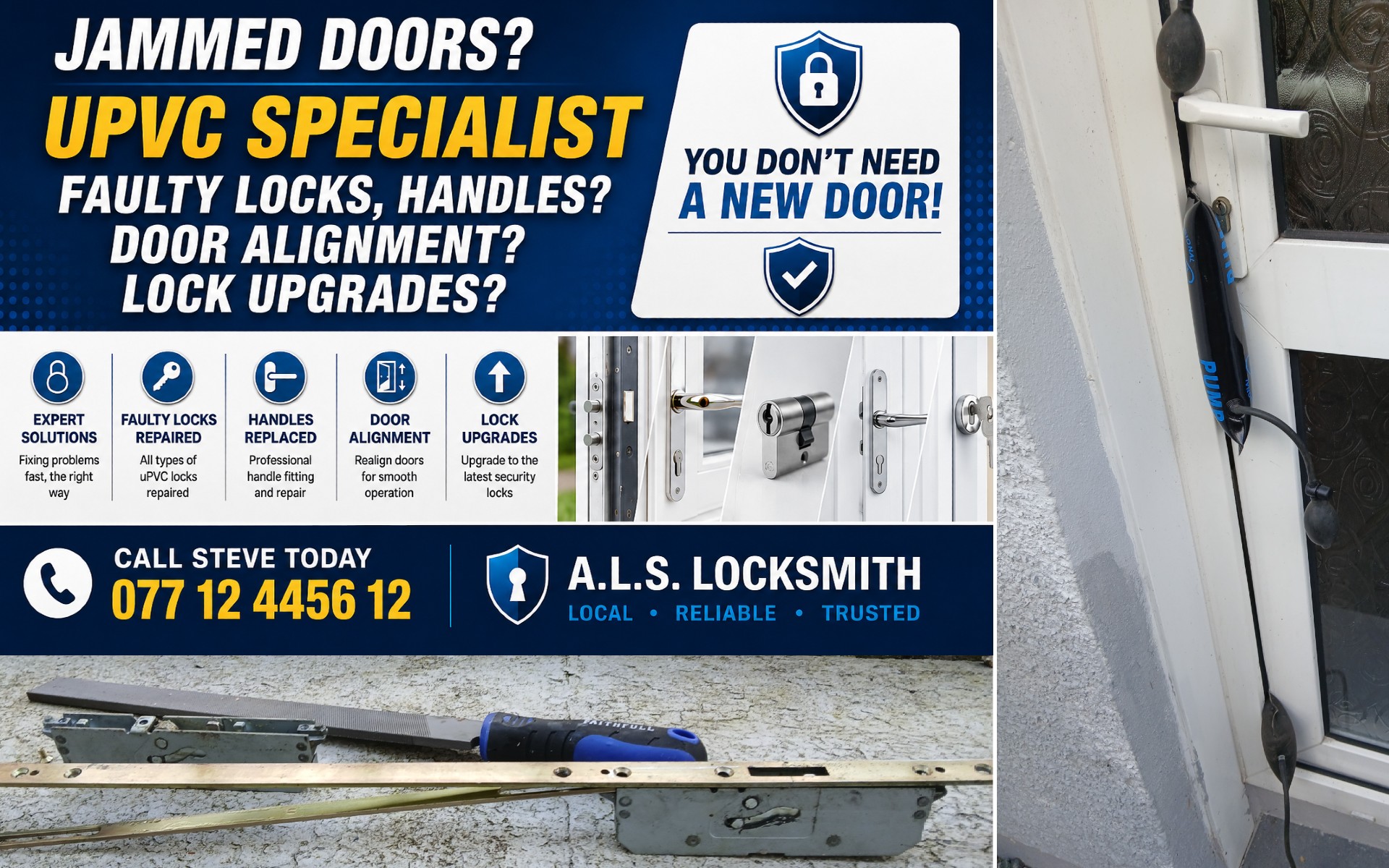
The metal strip beneath the faceplate was badly bent out of shape.
Under normal circumstances, this strip needs to sit at approximately a right angle so that it can slot correctly into the gearbox and transfer movement through the mechanism.
Instead, it had bent to an angle of approximately 30 degrees.
This distortion prevented the strip from sitting and engaging correctly.
Simply fitting a new gearbox without addressing this problem would not have been sufficient. The distorted strip still needed to be corrected so that the components could engage and move as intended.
Carefully reshaping the strip
I carefully reshaped the metal strip and narrowed it slightly so that it could slide correctly into the gearbox.
This required care because the component needed to fit properly without introducing further distortion or restricting the mechanism's movement.
The objective was to restore the correct relationship between the strip and the gearbox, allowing the mechanism to transfer movement properly.
This is one of the advantages of dismantling a mechanism and examining its individual parts: it can reveal faults that would otherwise remain hidden.
Replacing the Gearbox and Freeing the Two Seized Hooks
With the distorted strip corrected, I replaced the gearbox.
I also removed the two seized hooks from the locking mechanism.
These were cleaned and lubricated before being reassembled. The hooks needed to move freely because they form part of the multipoint locking system and must extend and retract correctly when the handle is operated.
A locking mechanism is only as effective as its ability to operate as a complete assembly. A replacement gearbox cannot compensate for hooks that remain seized or components that cannot move through their intended range.
Once the gearbox and hooks had been dealt with, I reassembled the mechanism and tested its operation.
The mechanism was now working correctly.
However, there was still another problem to address.
Refitting the Mechanism Revealed Poor Door Alignment
I refitted the repaired mechanism into the door and tested the locking operation.
As suspected, the door was badly out of alignment.
This is an important distinction: a mechanism can operate correctly when removed from the door, yet encounter considerable resistance once the door is closed and its locking points have to engage with the keeps.
The hooks and other locking points must line up with their corresponding openings in the frame. If the door has moved out of position, those components can catch or press against the keeps instead of moving freely.
This can make the handle difficult to lift, increase the effort needed to lock the door and place additional strain on the mechanism.
In this case, the alignment problem needed to be corrected before the job could be considered complete.
Carrying Out the Door Alignment
I adjusted the door alignment to bring the locking points and keeps back into the correct working relationship.
Door alignment can change over time because of the weight of the door, hinge movement, wear and movement within the building.
Even a relatively small change in position can affect the operation of a multipoint locking system.
When a door becomes difficult to lock, it is therefore important to establish whether the problem lies within the mechanism itself, the alignment of the door or a combination of both.
This job involved several faults:
-
A distorted metal strip beneath the faceplate.
-
A gearbox requiring replacement.
-
Two seized hooks.
-
Poor door alignment.
Each issue needed to be addressed. Replacing just one component would not have resolved the entire problem.
Fitting a New Snap-Resistant Cylinder
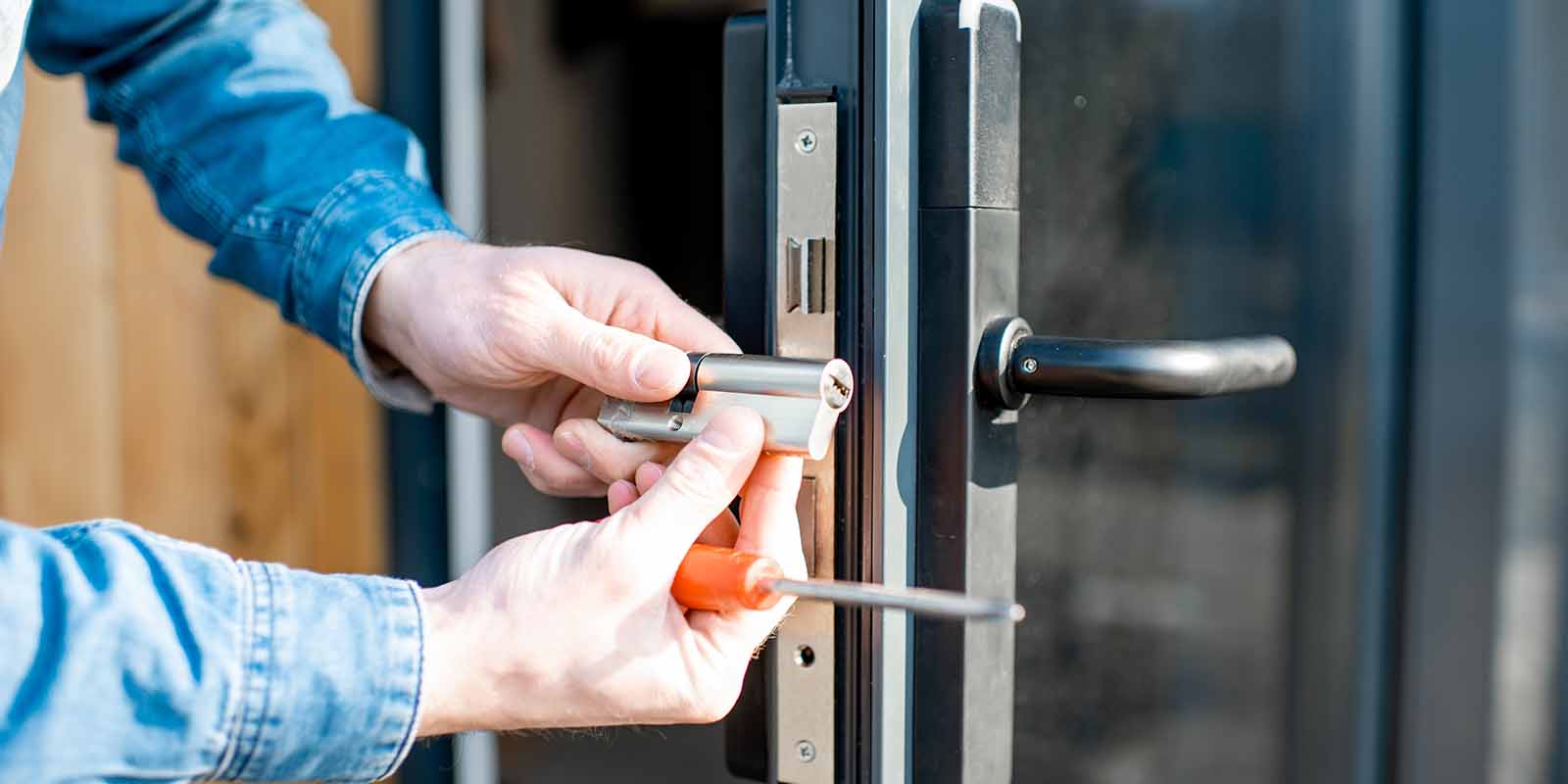
As part of the repair, I replaced the existing cylinder with a new snap-resistant cylinder.
The cylinder is an important part of the door's security, and replacing it provided the homeowner with a new locking component alongside the mechanical repair.
A snap-resistant cylinder is designed to offer protection against certain cylinder-snapping attacks. Correct installation is important, including ensuring that the cylinder is appropriately sized and does not protrude excessively from the handle.
This meant the job addressed both the operation of the door and the condition of its locking cylinder.
Final Testing: The Door Worked Perfectly
With the strip corrected, gearbox replaced, hooks cleaned and lubricated, mechanism reassembled, alignment adjusted and new cylinder fitted, I tested the door again.
This final test was essential.
The mechanism needed to work correctly, but so did the complete door when closed. The handle, gearbox, hooks, cylinder and keeps all needed to operate together without unnecessary resistance.
After the adjustments, the door worked perfectly.
The homeowner no longer needed to proceed with replacing the entire door simply because it had jammed shut.
What This Dumbarton Repair Demonstrates
1. A jammed door isn't necessarily beyond repair
Even though this door was approximately 25–30 years old, its locking system could be repaired and returned to proper operation.
2. Dismantling the mechanism can reveal hidden faults
The distorted metal strip beneath the faceplate was an important part of the problem. It would have been easy to overlook without a proper inspection.
3. A gearbox isn't the only component that can fail
The two seized hooks also needed attention. A complete repair required dealing with all the faults rather than replacing the gearbox and hoping for the best.
4. Alignment is critical to reliable locking
The mechanism was working after repair, but the door was still badly out of alignment. That needed to be corrected to restore proper operation.
5. Repairing the existing door can avoid unnecessary expense
The homeowner was considering a new door because the existing one was old and jammed shut. By identifying and correcting the actual faults, the existing door could remain in service.
Repair Rather Than Replace
This Dumbarton job is a good example of why I prefer to investigate the actual problem before recommending a complete door replacement.
The homeowner had a door that was around 25–30 years old and completely jammed shut. The bottom two hooks were seized, the metal strip beneath the faceplate was badly distorted, the gearbox needed replacing and the door was out of alignment.
Rather than treating the door as beyond repair, I worked through each problem individually.
I opened the door without damage, corrected the distorted strip, replaced the gearbox, freed and lubricated the hooks, adjusted the door alignment and fitted a new snap-resistant cylinder.
The final result was a door that worked perfectly again.
The lesson is simple: an old uPVC door may still have plenty of useful life left in it. A jammed locking mechanism doesn't automatically mean the entire door needs replacing.
Proper diagnosis, appropriate repairs and correct alignment can often restore the door without the cost and disruption of a new installation.