Two uPVC Doors Causing Problems
The call-out involved two uPVC doors at a property in Glasgow G53, each showing different symptoms.
The back door was sticking at the bottom. The homeowner had to lift it to get the locking mechanism to engage properly.
The front door was more intermittent. Sometimes it locked without difficulty, while on other occasions it would play up.
Intermittent faults can be particularly frustrating because the door may appear to work normally one day and then become difficult to lock the next.
The homeowner was concerned that the front door might eventually stop working altogether.
They had already replaced the lock cylinder, assuming that it was responsible for the problem. Unfortunately, the replacement hadn't cured the fault.
This is an important point when diagnosing door locks: a new cylinder cannot correct a problem caused by a faulty gearbox or poor door alignment.
The next step was to establish what was actually causing the difficulties.
Front Door Diagnosis: The Cylinder Wasn't the Problem
A uPVC door's locking system relies on several components working together.
The cylinder allows the key to operate the lock, while the gearbox transfers movement through the multipoint mechanism. The locking rollers, hooks or other locking points must then engage correctly with their corresponding keeps in the frame.
If the door is out of alignment, the locking points may struggle to engage. This can make the handle stiff or inconsistent and put extra strain on the gearbox.
In this case, the cylinder had already been replaced without resolving the problem.
After inspecting the door, I recommended replacing the gearbox and correcting the alignment.
The aim was to deal with the mechanical fault while also addressing the conditions in which the new gearbox would have to operate.
Replacing the Front Door Gearbox
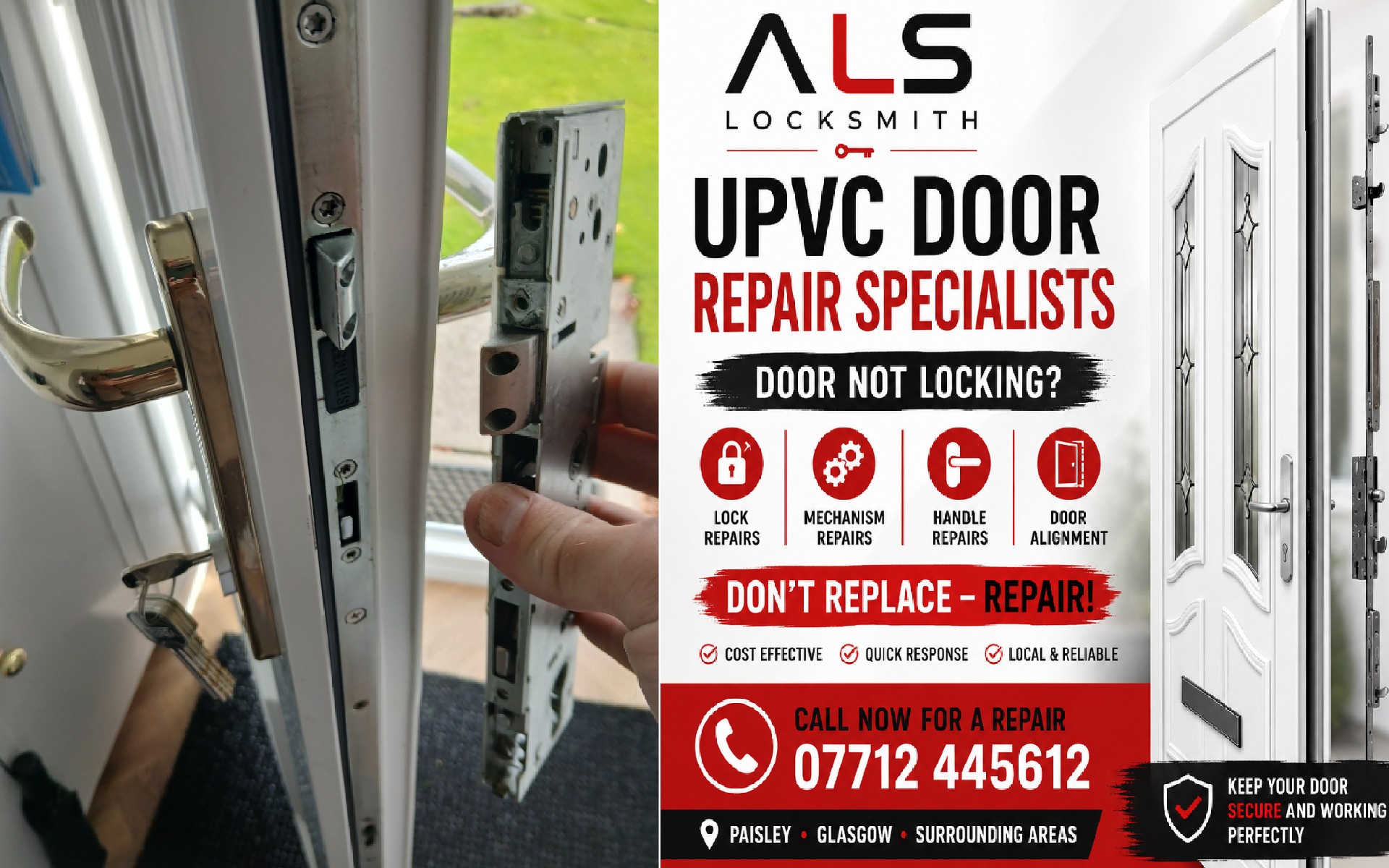
I stripped down the front door mechanism, removed the relevant components and replaced the gearbox.
Once the replacement had been fitted, I reassembled the locking strip and prepared to reinstall it into the door.
During refitting, I raised the mechanism by a few millimetres and tested the operation.
This helped me assess how the locking components were sitting in relation to the door and frame.
It became clear that the problem wasn't limited to the gearbox.
The bottom of the door and the corresponding keep were too far apart.
The Real Problem: The Bottom Rollers Weren't Engaging Properly
The bottom locking rollers weren't meeting their keep correctly.
When the handle was lifted, the rollers weren't engaging as they should. This meant the locking system wasn't pulling the door into its intended position against the seal.
In practical terms, the door wasn't sealing correctly, and the mechanism was being put under additional strain.
This also helps explain why a door can be difficult to lock even when the cylinder has been replaced.
The cylinder might be perfectly serviceable, and the gearbox might be capable of operating, but if the locking points don't line up with the keeps, the mechanism still has to work against unnecessary resistance.
A locking mechanism can be affected by the condition of the door around it.
That is why replacing a failed component should always be followed by checking the alignment and operation of the complete door.
Adjusting the Front Door Alignment
Once I had identified the alignment problem, I adjusted the door so that the bottom locking rollers could engage correctly with the keep.
The objective was to restore the correct relationship between the door, locking points and frame.
After making the adjustment, I tested the door again.
The difference was immediate: the locking mechanism was operating properly, and the door was closing and sealing as it should.
The gearbox replacement had addressed the faulty component, while the alignment adjustment addressed the resistance that could otherwise have continued to affect the mechanism.
Both were necessary to achieve the right result.
The Back Door Had the Same Alignment Problem
With the front door repaired, I turned my attention to the back door.
The homeowner had explained that it was sticking at the bottom and needed to be lifted before it would lock.
This is a common indication that a uPVC door may have dropped or moved out of alignment.
Over time, the weight of a door, hinge movement and general wear can alter its position. The locking points may then start catching against the keeps rather than entering them cleanly.
That can make the handle difficult to operate and encourage the homeowner to lift the door manually to get it to lock.
After checking the back door, I found that it had a similar alignment issue.
I adjusted it to restore the correct relationship between the locking points and the keeps.
The adjustment was relatively straightforward, and the door was soon operating as it should.
Why Door Alignment Matters
Door alignment isn't just about making a door look straight.
It directly affects the way the locking system operates.
When a door is correctly aligned:
-
The locking rollers and hooks meet their keeps properly.
-
The handle can operate without excessive force.
-
The locking points engage as intended.
-
The door can compress the weather seal correctly.
-
The gearbox is not subjected to avoidable resistance.
When a door is badly aligned, the opposite can happen.
The homeowner may need to lift the handle repeatedly, push or pull the door, or even lift the door itself to make the lock engage.
If these symptoms are ignored, the additional strain can contribute to premature wear or failure of the locking components.
In this case, correcting the alignment was an essential part of restoring both doors to proper working order.
Experience Makes a Difference
With 18 years of experience working on uPVC and composite door locking systems, I have seen many situations where the obvious symptom doesn't tell the whole story.
A stiff handle might indicate a failing gearbox, but it can also be caused by locking points catching on the keeps.
A key that turns without unlocking the door may indicate a mechanical failure rather than a faulty cylinder.
A door that needs lifting to lock may have an alignment problem rather than a defective locking mechanism.
The important thing is to establish which problem is actually present.
In this Glasgow job, the front door needed a gearbox replacement and alignment adjustment, while the back door needed its alignment corrected.
Once those issues were addressed, both doors worked properly.
That is the benefit of looking at the complete locking system rather than replacing parts based on symptoms alone.
Final Testing
After completing the repairs, I tested both doors to confirm that they were operating correctly.
The front door's replacement gearbox was working properly, and the bottom rollers were engaging with the keep as intended.
The back door no longer needed to be lifted manually to achieve correct locking.
Both doors were closing and locking properly, with the alignment issues corrected.
The homeowner was happy with the result and left a 5-star review.
What This Glasgow G53 Repair Demonstrates
1. Replacing the cylinder doesn't always solve a locking problem
The front door's cylinder had already been replaced, but the underlying problem remained.
2. Gearbox faults and alignment problems can occur together
Replacing the gearbox was necessary, but it wasn't the complete solution.
3. Locking rollers must engage correctly with their keeps
If the rollers don't meet the keeps properly, the door may fail to seal and the mechanism may experience unnecessary strain.
4. A door that needs lifting is giving you a warning
This often indicates that the door has moved out of alignment and needs to be inspected.
5. Every repair should include proper testing
The complete door needs to be tested after the mechanism has been reassembled, not just the replacement component.
6. Correct diagnosis can prevent repeat problems
Addressing both the failed gearbox and the alignment reduced the risk of leaving the same operating conditions in place.
Conclusion: Repair the Cause, Not Just the Symptom
This job in Glasgow G53 involved two uPVC doors with different symptoms but a similar underlying issue: poor alignment was affecting their operation.
The front door had become intermittent despite the cylinder already being replaced. I replaced the gearbox, reassembled the mechanism and discovered that the bottom rollers weren't engaging correctly with the keep because the door was out of alignment.
After adjusting the door, the locking mechanism worked properly.
The back door had a similar alignment problem, which I corrected during the same visit.
Both doors were left working as they should, and the homeowner was delighted with the result.
The key lesson is that a door lock cannot be considered in isolation from the door itself. A gearbox may need replacing, but if the door is out of alignment, that problem must also be corrected.
With 18 years of experience, the aim is to identify the actual faults, carry out the necessary repairs and leave the complete door operating correctly — rather than simply replacing parts and hoping for the best.