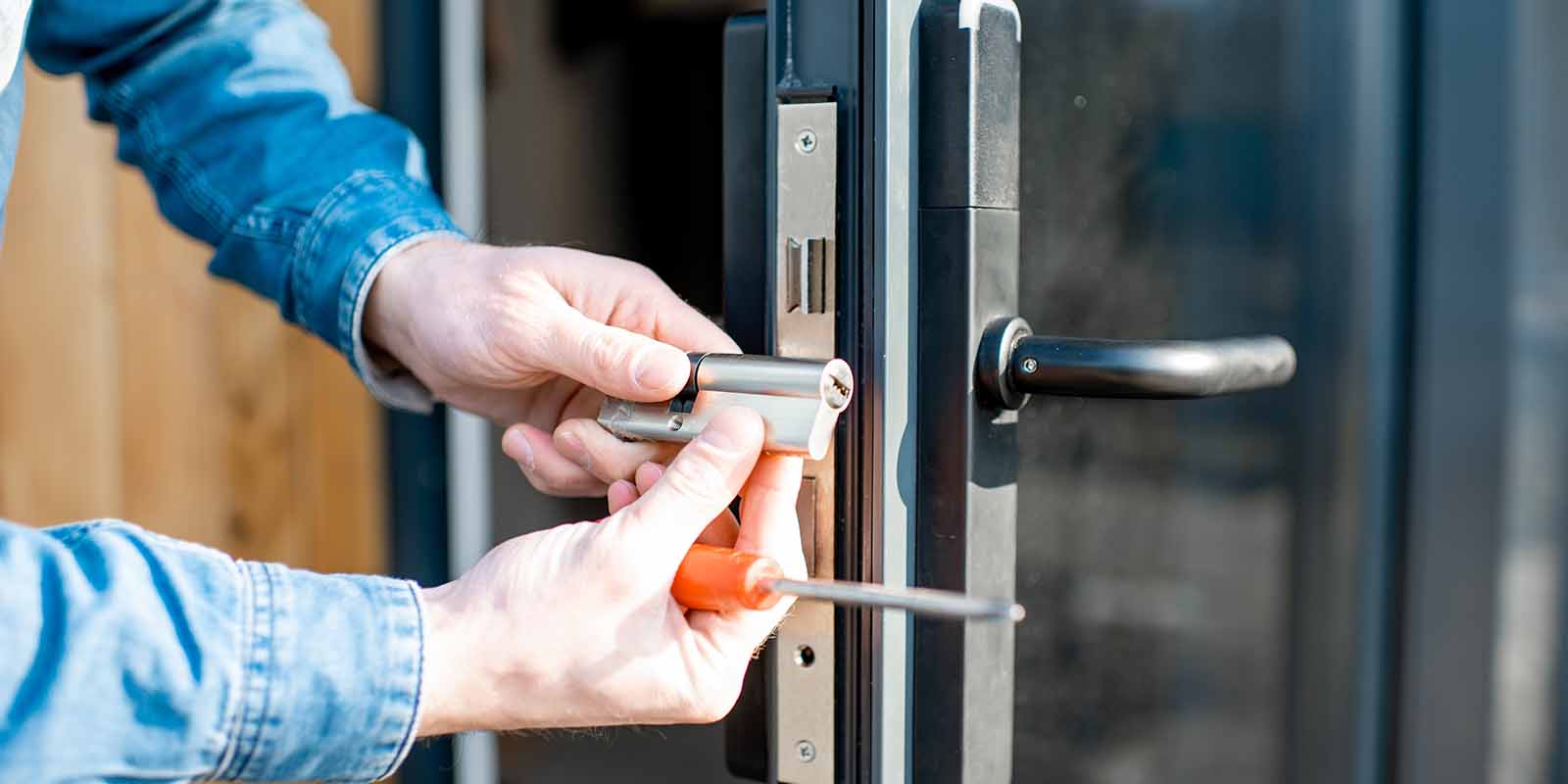
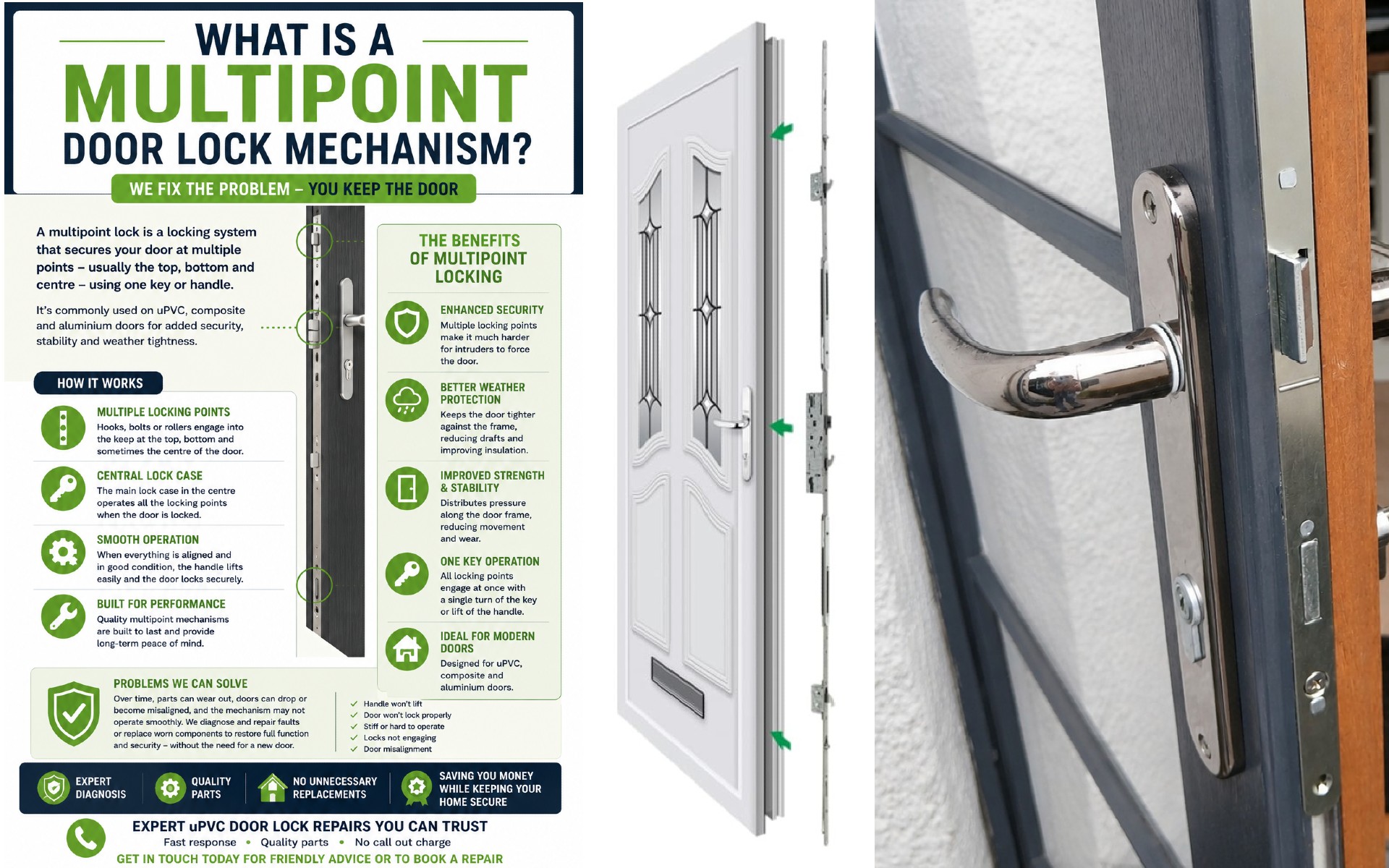
A multipoint door lock mechanism is the long locking system fitted inside most uPVC, composite and French doors. Instead of locking your door at just one point, it secures the door at multiple positions along its height, making it more secure and helping to pull the door tightly against the frame.
It's one of the most important parts of your door, yet it's something most homeowners never see until it develops a fault.
How Does It Work?
When you lift the door handle or turn the key, the multipoint mechanism operates several locking points at the same time.
Depending on the design, these may include:
- Hooks
- Rollers
- Deadbolts
- Mushroom cams
- Latches
These locking points engage with keeps fitted to the door frame, securing the door at several positions rather than just at the centre.
What Is the Gearbox?
At the centre of every multipoint locking mechanism is the gearbox.
The gearbox controls the operation of the entire mechanism and connects the:
- Door handles
- Lock cylinder
- Internal linkages
- Locking points
If the gearbox fails,the door may jam and the locking points may no longer operate correctly, even though the handles or key still move.
Why Do Multipoint Mechanisms Fail?
Like any mechanical system, a multipoint lock wears over time.
Common faults and causes include:
- Everyday use
- Poor door alignment
- A dropped door
- Worn internal components
- Lack of maintenance
- Forcing a stiff handle
Many failures aren't caused by poor-quality parts—they're caused by the mechanism working under constant strain.
Common Signs of a Fault
A multipoint locking mechanism often gives warning signs before it fails completely.
These include:
- A stiff handle
- A key that's difficult to turn
- The door becoming hard to lock
- The handle lifting but nothing happening
- Locking points failing to engage
- Grinding or clicking noises
- The door becoming jammed
Ignoring these symptoms can result in a complete lock failure.
Can It Be Repaired?
Yes, in most cases.
Depending on the fault, the repair may involve:
- Replacing the gearbox
- Replacing the complete multipoint locking mechanism
- Fitting a new lock cylinder
- Replacing worn handles
- Realigning the door
A proper diagnosis will determine which repair is required.
Gearbox or Complete Mechanism?
Not every failure requires a complete replacement.
If only the gearbox has failed and the rest of the mechanism is in good condition, replacing the gearbox is often the most economical solution.
However, if there is:
- Extensive internal wear
- Broken connecting rods
- Damaged hooks or rollers
- Seized locking points
- An obsolete mechanism
then replacing the complete mechanism is usually the better long-term repair.
Door Realignment Is Essential
Replacing the locking mechanism alone isn't enough if the door has dropped out of alignment.
A professional repair should always include checking and adjusting the door to ensure:
- The handle lifts smoothly
- The key turns easily
- Every locking point engages correctly
- The gearbox isn't under unnecessary strain
- The new mechanism achieves its maximum lifespan
Many replacement mechanisms fail prematurely because the underlying alignment problem wasn't corrected.
Do You Need a New Door?
Almost never.
A failed multipoint locking mechanism doesn't usually mean the door itself needs replacing.
If the door and frame remain structurally sound, replacing the faulty locking components is normally a far more cost-effective solution than fitting a completely new door.
Repair the Mechanism, Keep the Door
A multipoint locking mechanism is designed to provide many years of reliable service, but like any mechanical component, it will eventually wear. The good news is that most faults can be repaired by replacing the worn parts rather than the entire door. Whether it's a failed gearbox, worn locking points, or a complete mechanism replacement, the key to a lasting repair is diagnosing the fault correctly and ensuring the door is properly realigned afterwards.