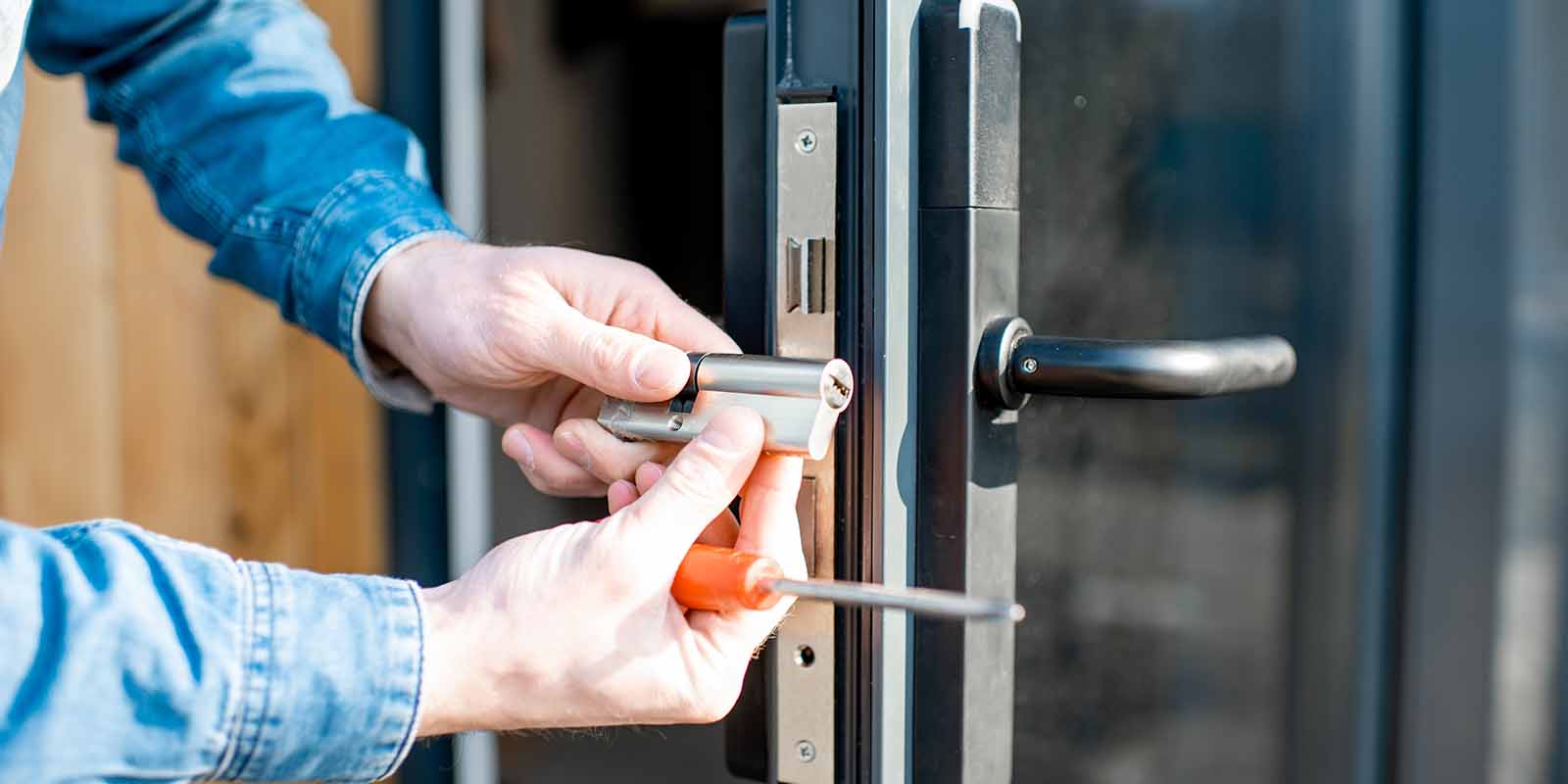
Modern uPVC, composite, French and many conservatory doors rely on multipoint locking systems to provide far greater security than a traditional single lock. While most homeowners simply lift the handle and turn the key, few realise that several different locking components engage simultaneously along the full height of the door.
Understanding how hooks, rollers and deadbolts work helps explain why door alignment is so important, why different manufacturers design their locks differently, and why replacing the correct components matters when repairs are needed.
If you're unfamiliar with how the entire system operates, start with What Is a Multipoint Door Lock Mechanism?, Everything You Need to Know About Multipoint Locking Systems (updated guide) and The Complete Guide to Multipoint Locking Systems (latest pillar guide) before returning to this guide.
What Is a Multipoint Lock?
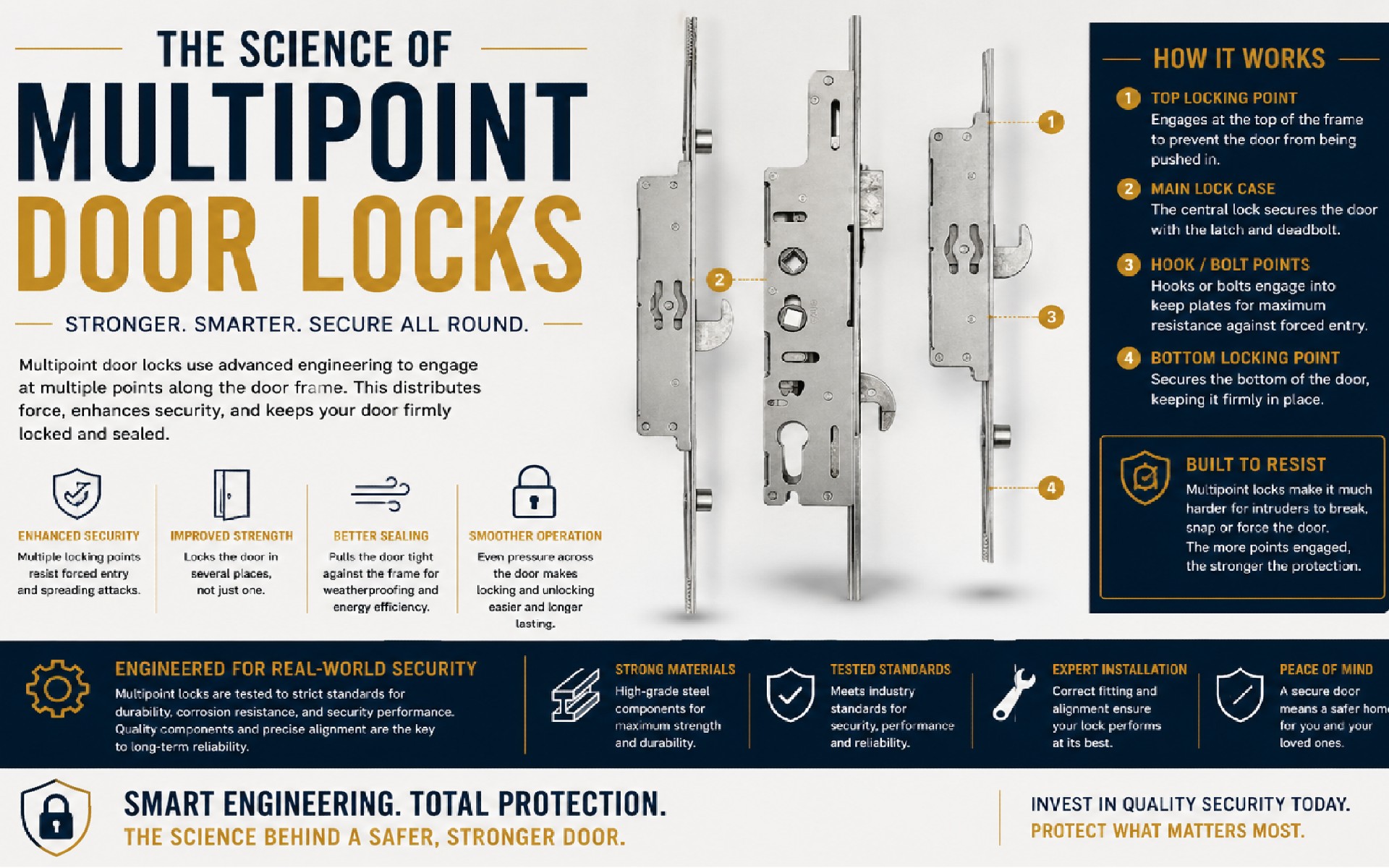
A multipoint lock is a long metal strip fitted inside the edge of a door.
When the handle is lifted, internal cams operate a series of locking points positioned from the top of the door to the bottom. Turning the key then secures the gearbox and prevents the mechanism from retracting.
Rather than relying on one lock in the centre, several locking points engage with keeps fitted to the frame.
Learn more in:
- What Is a Multipoint Door Lock Mechanism?
- Everything You Need to Know About Multipoint Locking Systems
- The Complete Guide to Multipoint Locking Systems
The Three Main Locking Points
Although there are many designs, most mechanisms use one or more of the following locking devices.
Hooks
Hooks rotate into specially shaped keeps fitted to the frame.
Once locked they resist pulling forces extremely well because they "hook" behind the frame.
Advantages
- Excellent resistance against forced entry
- Difficult to pull apart
- Strong wind resistance
- Common on high-security doors
Hooks are particularly effective on doors that experience movement over time because they physically pull into the keeps as they lock.
Rollers
Rollers are round mushroom-shaped locking points.
Rather than hooking behind the frame, they compress tightly into adjustable keeps.
Many rollers can be adjusted during installation to increase or decrease compression.
Advantages
- Improved weather sealing
- Smooth operation
- Reduced draughts
- Helps eliminate rattling
- Less force required when locking
Rollers are often combined with hooks rather than replacing them entirely.
Deadbolts
Deadbolts slide directly into matching keeps.
Unlike hooks, they do not rotate.
They provide strong straight-line security and are commonly positioned around the centre gearbox.
Advantages
- Strong central locking
- Excellent resistance against direct attack
- Reliable and simple design
- Low wear rate
Many mechanisms combine a central deadbolt with upper and lower hooks.
Why Manufacturers Use Different Combinations
No two manufacturers design locking systems exactly the same.
Some may use:
- Three hooks
- Two hooks and two rollers
- Four rollers
- Deadbolts and hooks
- Rollers and mushroom cams
- Compression bolts
- Shootbolts
The design depends on:
- Door style
- Security certification
- Weather performance
- Manufacturing costs
- Handle lift force
- Door size
For more manufacturer information see:
- A–Z of Multipoint Lock Manufacturers
- Understanding Multipoint Lock Types: Lever Lever, Lever Pad, Split Spindle and Keywind Explained
Why Multiple Locking Points Matter
Instead of protecting only the centre of the door, multipoint systems secure almost the entire height.
Benefits include:
- Increased security
- Better weather sealing
- Reduced door movement
- Improved draught protection
- Greater resistance against twisting
- Better compression around seals
- More even pressure on the frame
This is why modern external doors rarely rely on a single locking point.
The Role of the Gearbox
Although hooks and rollers receive most attention, they cannot operate without the gearbox.
The gearbox converts the movement of the handle into motion that drives every locking point.
Inside the gearbox are:
- Followers
- Springs
- Cams
- Levers
- Latches
- Deadbolt components
If the gearbox fails, every locking point may stop working correctly.
Related guides:
- uPVC and Composite Door Gearboxes Explained
- uPVC Door Mechanism Repair
- Can You Replace Just the Locking Mechanism?
Why Alignment Matters
Hooks, rollers and deadbolts must enter their keeps perfectly.
If the door drops by only a few millimetres, locking points begin striking the frame rather than entering cleanly.
This causes:
- Stiff handles
- Keys becoming difficult to turn
- Increased gearbox wear
- Bent locking points
- Broken mechanisms
Many failed mechanisms were actually damaged by poor alignment rather than faulty parts.
Read:
Why No Two Mechanisms Are the Same
Many homeowners believe all multipoint locks are interchangeable.
They are not.
Manufacturers vary:
- Overall length
- Backset
- PZ centres
- Locking point positions
- Hook spacing
- Roller sizes
- Faceplate width
- Gearbox dimensions
- Keep positions
Even mechanisms from the same manufacturer often differ between door models.
This is why identifying the exact mechanism is essential before replacement.
Further reading:
- Why No Two Door Mechanisms Are Exactly the Same
- A–Z of Door Locking Mechanisms – The Complete Homeowner's Guide
Can Individual Locking Points Be Replaced?
Sometimes.
Certain systems allow individual components to be replaced.
Others require:
- New centre gearbox
- Complete mechanism
- Manufacturer-specific parts
Repair options depend entirely on the mechanism fitted.
Read:
- Can You Replace Just the Locking Mechanism?
- Can a Locksmith Repair a Multipoint Lock?
French and Conservatory Doors
French doors and conservatory doors usually use multipoint locking systems very similar to standard uPVC doors.
However they often include:
- Slave door shootbolts
- Coordinated locking systems
- Longer mechanisms
- Different keep arrangements
Related guides:
- Repairing French Door Lock Mechanisms: Everything You Need to Know About French Door Lock Repairs
- Conservatory Door Lock Repairs Explained: Repairing Multipoint Locks Without Replacing the Door
Common Signs Something Is Wrong
Watch for:
- Handle difficult to lift
- Key difficult to turn
- Door catching the frame
- Locking points scraping
- Hooks not engaging fully
- Rollers missing the keeps
- Door needing to be lifted while locking
- Lock only works with the door open
These symptoms usually indicate alignment issues, worn components or gearbox wear rather than a faulty cylinder.
Can You Upgrade an Older Mechanism?
Sometimes.
Depending on the manufacturer, it may be possible to upgrade:
- Security features
- Hook configurations
- Centre gearbox
- Lock cylinder
- Handles
- Keeps
However many older systems have discontinued parts and require specialist identification before repairs can be carried out.
Final Thoughts
Multipoint locking systems are carefully engineered to spread security across the full height of a door. Hooks, rollers and deadbolts each perform different roles, working together with the gearbox to provide strength, weather sealing and smooth operation. When everything is correctly aligned, the mechanism should operate with minimal effort. When alignment is poor or components wear, even a high-quality lock can become difficult to use.
Understanding how these parts work makes it easier to recognise problems early and appreciate why accurate diagnosis is more important than simply replacing parts.
Related Guides
- What Is a Multipoint Door Lock Mechanism?
- Everything You Need to Know About Multipoint Locking Systems (updated guide)
- The Complete Guide to Multipoint Locking Systems (latest pillar guide)
- A–Z of Multipoint Lock Manufacturers
- Understanding Multipoint Lock Types: Lever Lever, Lever Pad, Split Spindle and Keywind Explained
- The Science of Multipoint Door Locks
- A–Z of Door Locking Mechanisms – The Complete Homeowner's Guide
- uPVC and Composite Door Gearboxes Explained
- Hooks, Rollers and Deadbolts – What's the Difference?
- uPVC Door Mechanism Repair
- Can You Replace Just the Locking Mechanism?
- Understanding security standards.
- Why No Two Door Mechanisms Are Exactly the Same
- Can a Locksmith Repair a Multipoint Lock?
- Repairing French Door Lock Mechanisms: Everything You Need to Know About French Door Lock Repairs
- Conservatory Door Lock Repairs Explained: Repairing Multipoint Locks Without Replacing the Door
- The Complete Guide to uPVC Door Locks
- The Complete Guide to Door Alignment and Lock Performance