uPVC doors are one of the most popular choices for homes across the UK. They're durable, low maintenance and highly secure, but like any mechanical system, the locks and moving parts will eventually wear through normal use.
Understanding how your uPVC door lock works, the common problems it develops and when repairs are needed can help prevent unexpected lock failures and unnecessary door replacement.
If you're new to multipoint locking systems, start with What Is a Multipoint Door Lock Mechanism?, Everything You Need to Know About Multipoint Locking Systems and The Complete Guide to Multipoint Locking Systems for a complete overview.
What Type of Lock Does a uPVC Door Have?
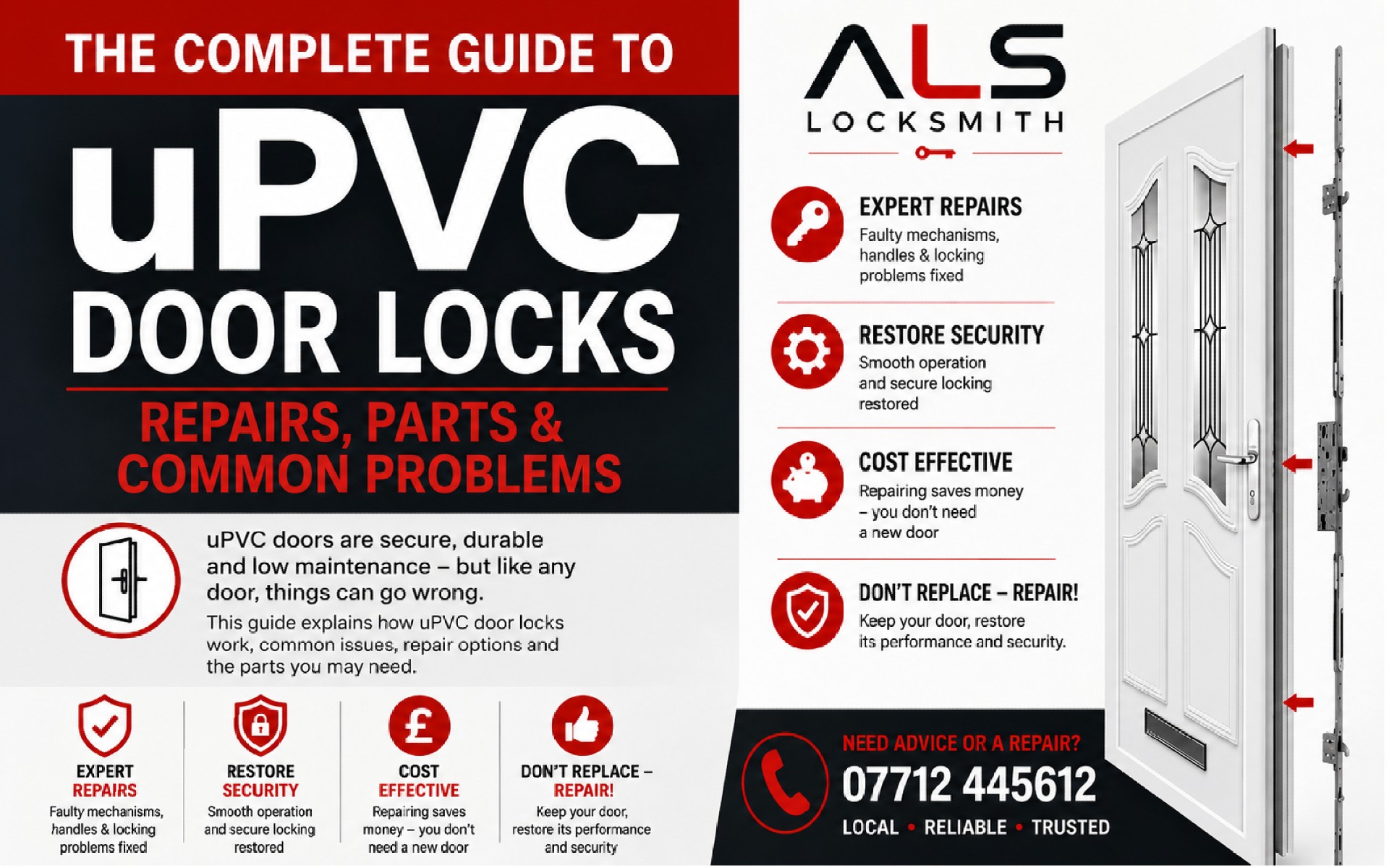
Most modern uPVC doors use a multipoint locking system.
Unlike a traditional lock that secures the door in one place, a multipoint lock secures it at several points along the frame, providing improved security and better weather sealing.
A typical system consists of:
When you lift the handle and turn the key, all of these components work together to secure the door.
The Main Parts Explained
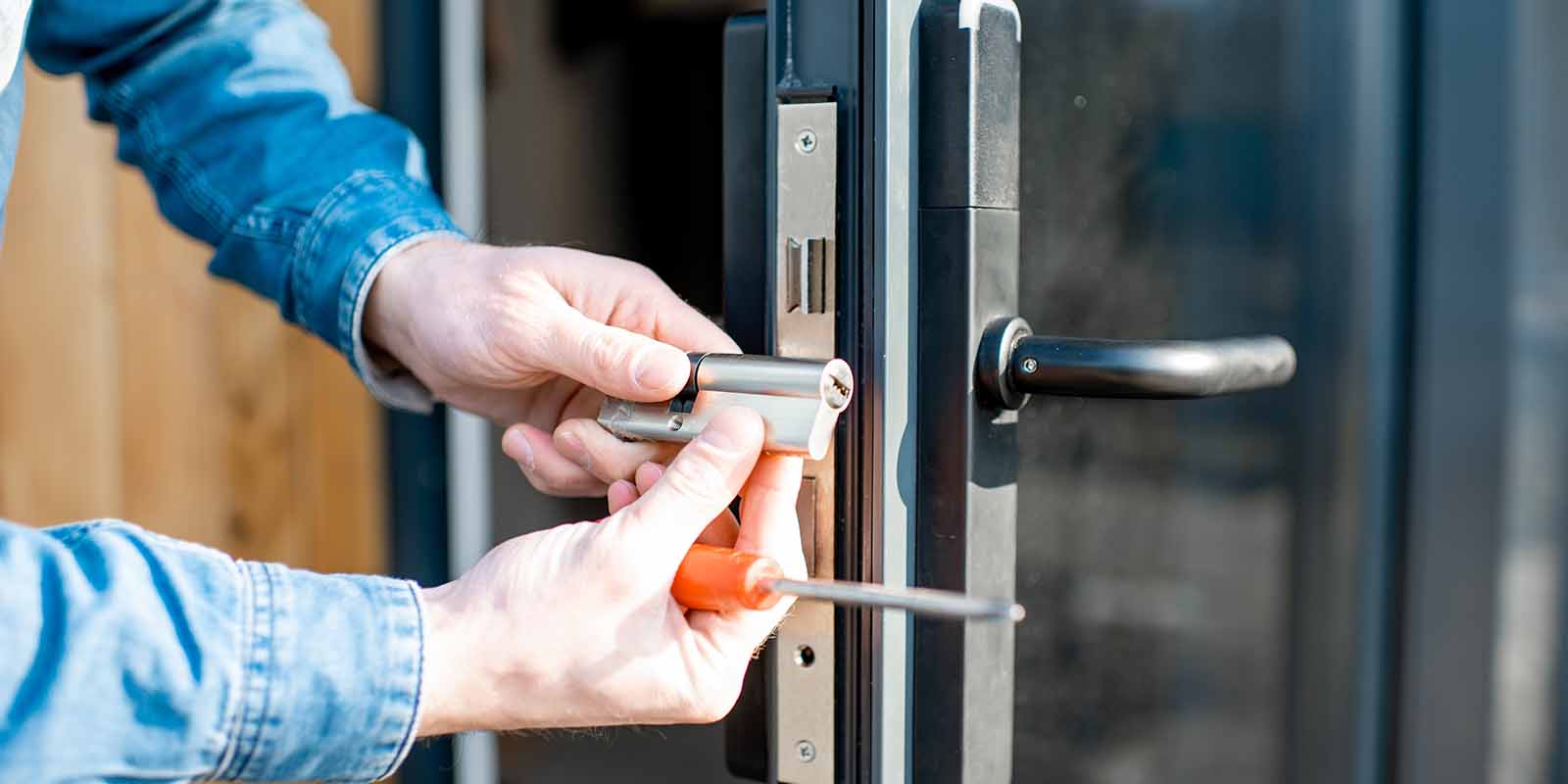
Euro Cylinder
The euro cylinder is where you insert your key.
It controls whether the gearbox can operate and is usually the easiest component to replace.
Modern cylinders are available with improved protection against:
- Lock snapping
- Lock picking
- Drilling
- Lock bumping
If you're replacing a cylinder, it's an excellent opportunity to improve your home's security.
Gearbox
The gearbox is the heart of the locking system.
It connects the handles, euro cylinder and the rest of the multipoint locking mechanism.
If the gearbox begins to fail you may notice:
- The handle moves but nothing happens
- The key turns but the door won't unlock
- The locking points stop operating
- The door becomes jammed
Multipoint Locking Mechanism
The multipoint locking mechanism is the long metal strip fitted into the edge of the door.
Inside it are numerous working components including hooks, rollers, deadbolts and connecting rods.
Together they secure the door at multiple points whenever the handle is lifted.
To understand how these components work together, see:
Common uPVC Door Lock Problems
Some of the most common faults include:
- Stiff handles
- Keys becoming difficult to turn
- Doors becoming difficult to lock
- Handles that don't spring back
- Failed gearboxes
- Broken multipoint locking mechanisms
- Dropped doors
- Worn euro cylinders
- Doors that won't open
- Doors that won't lock
Most of these problems develop gradually rather than appearing suddenly.
Why Do uPVC Door Locks Fail?
Locks naturally wear with age, but several factors can shorten their lifespan.
These include:
- Everyday use
- Poor door alignment
- Worn hinges
- Forcing a stiff handle
- Lack of maintenance
- General mechanical wear
Many gearboxes actually fail because they've spent years operating on a door that has gradually dropped out of alignment.
Signs Your Lock Needs Attention
Don't ignore warning signs such as:
- The handle feels heavier than normal
- The key sticks
- The handle doesn't spring back
- The door catches the frame
- You need to push or pull the door before locking it
- Grinding or clicking noises
- Locking becomes inconsistent
Early diagnosis usually results in a simpler and less expensive repair.
Repair or Replace?
Many homeowners assume a faulty lock means replacing the entire door.
Fortunately, that's rarely necessary.
Depending on the fault, repairs may involve:
- Gearbox replacement
- Complete multipoint locking mechanism replacement
- Euro cylinder replacement
- Door handle replacement
- Door realignment
- Security upgrades
In most cases only the worn components need replacing.
If you're wondering whether the mechanism itself can be replaced, read Can You Replace Just the Locking Mechanism? and Can a Locksmith Repair a Multipoint Lock?
Why Door Realignment Matters
One of the most overlooked parts of any repair is checking the alignment of the door.
A dropped door places constant strain on:
- The gearbox
- Locking points
- Handles
- Internal linkages
Replacing parts without correcting the alignment often results in premature wear of the new components.
Every professional repair should include checking:
- Door alignment
- Handle operation
- Key operation
- Lock engagement
- Hinge condition
For more information, see The Complete Guide to Door Alignment and Lock Performance.
Upgrading Your Security
Replacing a worn lock also provides an opportunity to improve your home's security.
Modern upgrades include:
- Standard euro cylinders
- TS007 1 Star snap-resistant cylinders
- TS007 3 Star snap-resistant cylinders
- TS007 2 Star security handles
- High-security replacement multipoint mechanisms where appropriate
Many of these upgrades can be carried out without replacing the door itself.
Can Older uPVC Doors Still Be Repaired?
Yes.
Even when the original locking mechanism has been discontinued, many older doors can still be repaired successfully.
Possible solutions include:
- Sourcing replacement gearboxes
- Fitting compatible locking mechanisms
- Upgrading obsolete components
- Replacing individual worn parts
Being told a mechanism is obsolete doesn't automatically mean you need a replacement door.
To understand why replacement parts vary so much, read:
- Why No Two Door Mechanisms Are Exactly the Same
- A–Z of Multipoint Lock Manufacturers
- Understanding Multipoint Lock Types: Lever Lever, Lever Pad, Split Spindle and Keywind Explained
- A–Z of Door Locking Mechanisms – The Complete Homeowner's Guide
Looking After Your uPVC Door Locks
A small amount of maintenance can significantly extend the life of your locking system.
Good practice includes:
- Operating the door without forcing the handle
- Lubricating moving locking points occasionally
- Keeping the door correctly aligned
- Investigating stiff operation early
- Replacing worn parts before complete failure
Small problems are almost always cheaper to repair than complete lock failures.
French Doors and Conservatory Doors
The same multipoint locking principles apply to French doors and conservatory doors.
Although the mechanisms may be longer or include additional shoot bolts, many faults can still be repaired without replacing the doors.
Related guides:
- Repairing French Door Lock Mechanisms: Everything You Need to Know About French Door Lock Repairs
- Conservatory Door Lock Repairs Explained: Repairing Multipoint Locks Without Replacing the Door
You Usually Don't Need a New Door
One of the biggest misconceptions is that a faulty lock means replacing the entire door. In reality, most uPVC door problems are mechanical and can be repaired by replacing the worn components. Whether it's a failed gearbox, worn euro cylinder, damaged multipoint locking mechanism or a door that's gradually dropped out of alignment, the right repair can often restore your existing door to full working order.
At A.L.S. Locksmiths, our approach is simple—identify the fault, repair only what needs repairing, correctly realign the door and help you keep the door you already have.
Frequently Asked Questions
How long does a uPVC door lock last?
A quality multipoint locking mechanism will often last 10–20 years, depending on how frequently it's used and whether the door remains correctly aligned throughout its life.
Can I replace just the gearbox?
Yes. If the remainder of the locking mechanism is still in good condition, replacing the gearbox is often the most cost-effective repair. See uPVC and Composite Door Gearboxes Explained for more information.
Why is my handle stiff?
A stiff handle is commonly caused by:
- A dropped door
- Poor alignment
- A worn gearbox
- A failing multipoint locking mechanism
The cause should always be diagnosed before replacing parts.
Do I need a new door if the lock has failed?
Usually not.
Most failed locks can be repaired by replacing the faulty components rather than the entire door.
Should I upgrade my lock cylinder?
Yes, particularly if your door still has an older standard euro cylinder.
Upgrading to a TS007 3 Star snap-resistant cylinder, or fitting a TS007 1 Star cylinder combined with a TS007 2 Star security handle, provides significantly greater resistance against lock snapping and other common methods of forced entry.