
The Complete Guide to Multipoint Locking Systems
Introduction
Most modern uPVC, composite and French doors are fitted with a multipoint locking system, making them far more secure than traditional single-point locks. Instead of securing the door with a single deadlock in the centre, a multipoint lock engages at several points along the height of the door, improving both security and weather performance.
Although millions of homeowners use these locks every day, few understand how they work, what the individual components do or why they sometimes fail.
Understanding the basics can help you recognise the early warning signs of a problem, prevent unnecessary damage and often avoid the cost and inconvenience of an emergency repair.
What Is a Multipoint Locking System?
A multipoint locking system is the long metal locking strip fitted into the edge of many external doors.
They're commonly fitted to:
- uPVC doors.
- Composite doors.
- Timber doors fitted with multipoint locks.
- French doors.
- Conservatory doors.
- Sliding patio doors.
- Bifold doors.
Rather than locking the door in just one place, the mechanism secures it at multiple positions around the frame, making the door considerably more secure and helping it seal tightly against the weather.
A typical multipoint locking system consists of:
- Euro cylinder.
- Centre case (gearbox).
- Hooks.
- Rollers.
- Deadbolts.
- Centre latch.
- Connecting rods.
- Keeps fitted to the frame.
Every one of these components plays an important role in the operation of the locking system.
How Does a Multipoint Locking System Work?
Although the mechanism is hidden inside the edge of the door, its operation is surprisingly straightforward.
The mechanism controls the locking points and the lock physically locks the mechanism in place.
When you lock your door:
- The door is closed.
- The handle is lifted.
- The centre case (gearbox) transfers movement through the connecting rods.
- The hooks, rollers and deadbolts engage with the keeps in the frame.
- Turning the key locks the gearbox, preventing the handle from being operated from outside.
Once locked, the door is secured at several points simultaneously, distributing the locking force evenly from top to bottom.
Why Are Multipoint Locks More Secure?
Multipoint locking systems provide several important advantages over traditional single-point locks.
These include:
- Greater resistance to forced entry.
- Better protection against the door twisting or flexing.
- Improved compression of weather seals.
- Reduced draughts.
- More even pressure across the entire door.
- Increased stability during high winds.
- Better overall security for modern external doors.
These advantages explain why multipoint locks have become the standard locking system on most modern doors. Understanding door security standards.
Understanding the Main Components
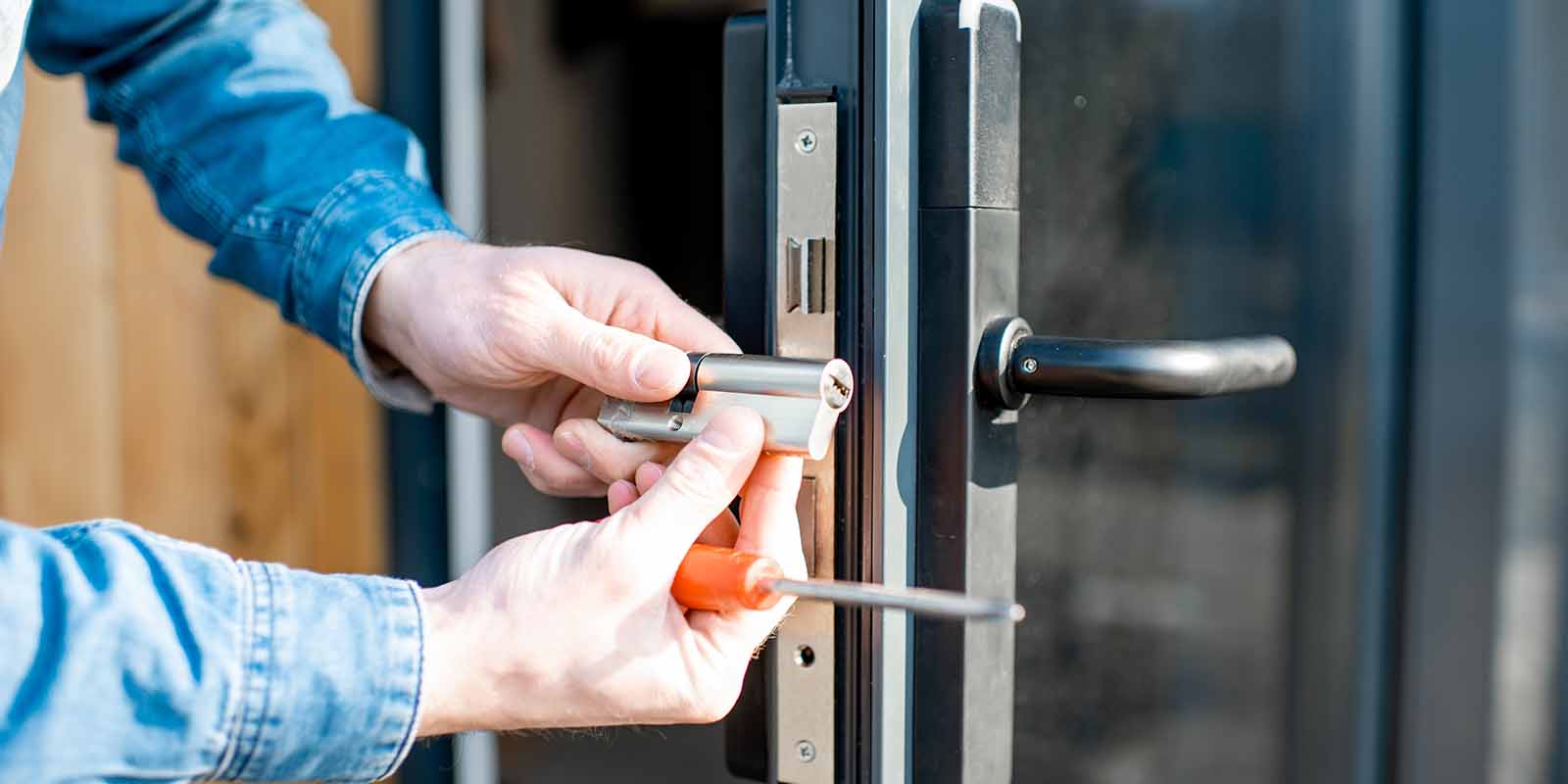
Euro Cylinder
The euro cylinder is the part you insert your key into.
Its job is to authorise the locking system by operating the centre case.
If the cylinder becomes worn, damaged or you simply wish to improve security, it can usually be replaced without disturbing the rest of the locking mechanism.
Centre Case (Gearbox)
The centre case is the heart of the entire locking system.
Located behind the handles, it contains the gearbox that transfers movement from the handles and key to every locking point along the mechanism.
If the centre case fails, the hooks, rollers and deadbolts can no longer operate correctly.
Hooks
Hooks engage with specially designed keeps in the frame, pulling the door tightly closed as they're operated.
They improve both security and weather sealing.
Rollers
Rollers compress the weather seals evenly around the frame and help create a consistent seal against draughts and rain.
Deadbolts
Deadbolts provide additional locking points that increase resistance against forced entry and help prevent the door from being forced away from the frame.
Centre Latch
The latch keeps the door closed when it isn't locked and allows it to close securely without needing to lock it every time.
Connecting Rods
Connecting rods link the gearbox to each locking point, allowing every hook, roller and deadbolt to move together whenever the handle is lifted.
Why Do Multipoint Locking Systems Fail?
Like every mechanical system, multipoint locks experience wear throughout their lifetime.
Common causes include:
- Everyday use.
- Poor door alignment.
- A dropped door.
- Worn hinges.
- Repeatedly forcing a stiff handle.
- General mechanical wear.
- Lack of maintenance.
In many cases, when the multi point fails, the locking mechanism itself isn't the original problem. Instead, it has been working under excessive strain because the door has gradually moved out of alignment.
Warning Signs Your Lock Is Developing a Fault
Most multipoint locking systems give warning signs before they fail completely.
Symptoms include:
- A stiff handle.
- The key becoming difficult to turn.
- The handle not springing back.
- Grinding, clicking or crunching noises.
- The door catching on the frame.
- Having to push or pull the door before locking it.
- The lock operating more easily with the door open than when closed.
- Locking points failing to engage fully.
Ignoring these warning signs often leads to more expensive repairs later.
Gearbox or Complete Mechanism?
Not every multipoint lock failure requires a complete replacement.
If the centre case (gearbox) alone has failed and the remaining components are still in good condition, replacing only the gearbox is often the most economical solution.
However, replacing the complete mechanism may be recommended where there is:
- Broken hooks.
- Worn rollers.
- Damaged connecting rods.
- Seized locking points.
- Extensive internal wear.
- An obsolete mechanism with unavailable replacement parts.
An accurate diagnosis determines which repair offers the best long-term value.
Why Door Alignment Matters
Door alignment is one of the most overlooked causes of multipoint lock failure.
When a door drops even slightly:
- Locking points no longer align correctly with the keeps.
- The handle becomes increasingly stiff.
- The gearbox works much harder.
- Internal gears experience unnecessary wear.
- Door handles are placed under greater strain.
- The entire locking mechanism has a shorter lifespan.
Replacing worn parts without correcting the alignment usually results in the same problems returning.
Can Older Multipoint Locks Still Be Repaired?
Yes.
Even when the original locking mechanism has been discontinued, many older doors can still be repaired.
Possible solutions include:
- Replacing only the gearbox.
- Installing a compatible replacement mechanism.
- Upgrading obsolete components.
- Replacing individual locking points where suitable parts remain available.
An obsolete lock mechanism rarely means the entire door needs replacing.
Looking After Your Multipoint Lock
Regular maintenance helps extend the life of the locking system and reduces the likelihood of unexpected failures.
Good practice includes:
- Keeping the locking points clean.
- Applying a suitable lubricant to moving parts.
- Avoiding forcing a stiff handle.
- Checking that the door closes smoothly.
- Having the door realigned if it becomes difficult to lock.
- Investigating unusual noises or stiffness before they worsen.
Small preventative repairs are almost always less expensive than dealing with a complete mechanism failure.
Repair Before You Replace
One of the biggest misconceptions is that a failed multipoint locking mechanism means replacing the entire door.
In reality, most faults involve individual mechanical components rather than the door itself.
Common repairs include:
- Replacing the gearbox.
- Replacing the euro cylinder.
- Replacing the complete multipoint locking mechanism.
- Replacing worn door handles.
- Realigning the door.
- Adjusting or replacing worn hinges.
When accurately diagnosed, these repairs can restore smooth, secure operation while avoiding the significant cost of a replacement door.
Conclusion
A multipoint locking system is one of the most important security features of any modern external door. Although it consists of numerous moving parts, the vast majority of faults are caused by wear, poor alignment or excessive strain rather than failure of the door itself.
Understanding how the system works, recognising the early warning signs of wear and carrying out timely repairs can significantly extend its lifespan. In many cases, replacing a worn gearbox, euro cylinder or locking mechanism—combined with correctly realigning the door—is all that's required to restore smooth, reliable operation.
At A.L.S. Locksmiths, we believe in repairing the problem rather than replacing the door wherever possible. With an accurate diagnosis, quality replacement parts and careful door realignment, most multipoint locking systems can continue providing reliable security for many years.
Frequently Asked Questions
How long does a multipoint locking mechanism last?
A quality multipoint locking mechanism will often last between 10 and 20 years, depending on how frequently the door is used, the quality of the components, regular maintenance and whether the door remains correctly aligned.
Can I replace just the gearbox?
Yes. If the rest of the locking mechanism is still in good condition, replacing only the centre case (gearbox) is often the most economical and effective repair.
Why has my door handle become stiff?
A stiff handle is commonly caused by poor door alignment, worn hinges or a gearbox beginning to wear. Continuing to force the handle usually causes additional damage.
Do multipoint locks require maintenance?
Yes. Keeping the locking points clean, lubricating moving components with a suitable lock lubricant and ensuring the door remains correctly aligned can significantly increase the lifespan of the mechanism.
Does a failed multipoint lock mean I need a new door?
No. In most cases, the door itself remains perfectly serviceable. Replacing worn components such as the gearbox, euro cylinder or multipoint locking mechanism is usually far more cost-effective than replacing the entire door.
Why does my lock work better with the door open?
This is one of the clearest signs of an alignment problem. If the mechanism operates smoothly when the door is open but becomes stiff when closed, the locking points are likely meeting resistance from the frame, placing unnecessary strain on the gearbox and locking mechanism.