Introduction
Many homeowners use the terms door lock and locking mechanism interchangeably, but they actually refer to two completely different parts of your door.
Understanding the difference can make it much easier to describe a fault, understand what needs repairing and avoid replacing components that are still working perfectly.
In many cases, a problem that appears to be a faulty lock is actually caused by the multipoint locking mechanism—or vice versa. Knowing how these components work together helps ensure the correct repair is carried out first time.
What Is the Lock?
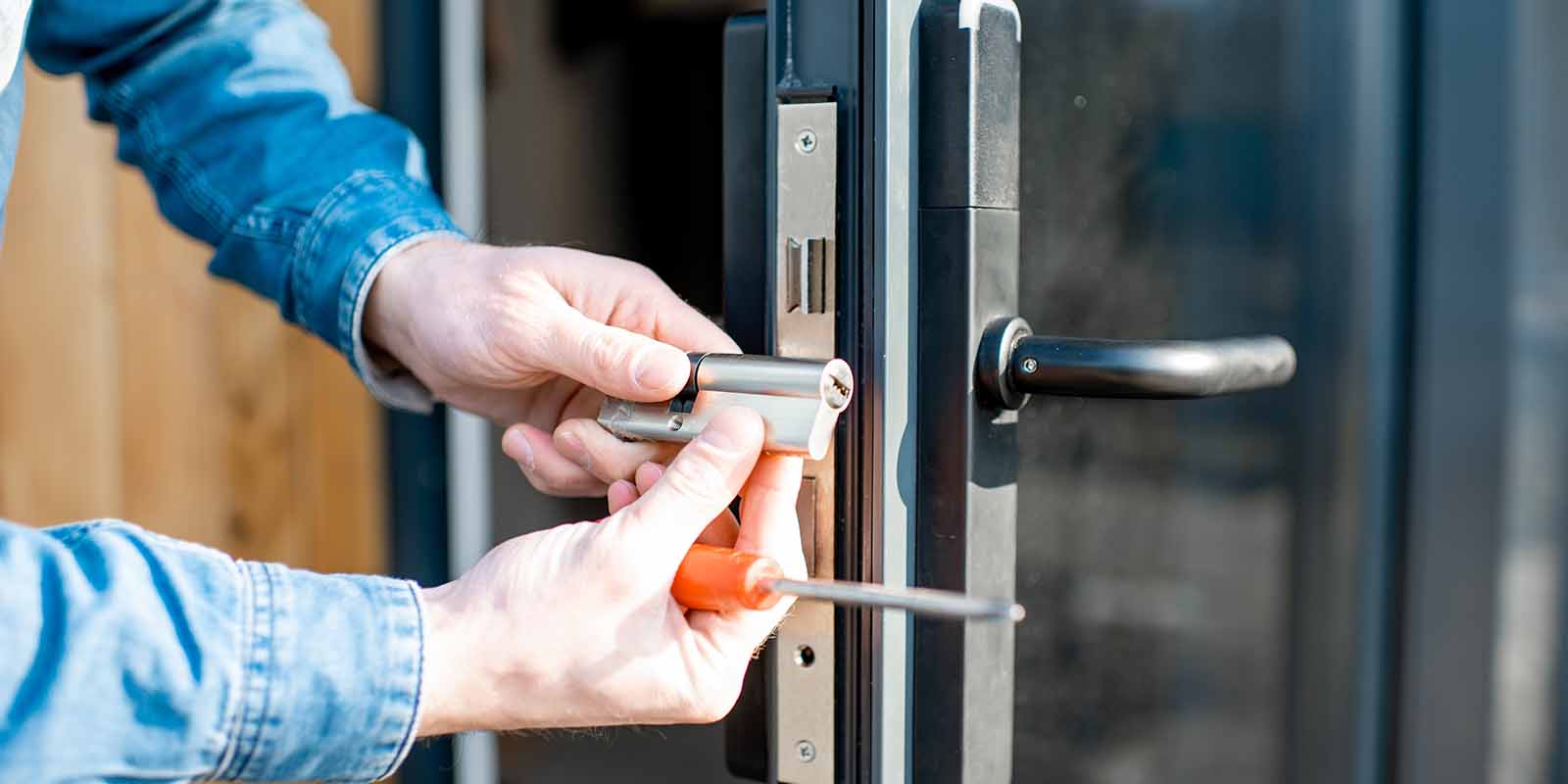
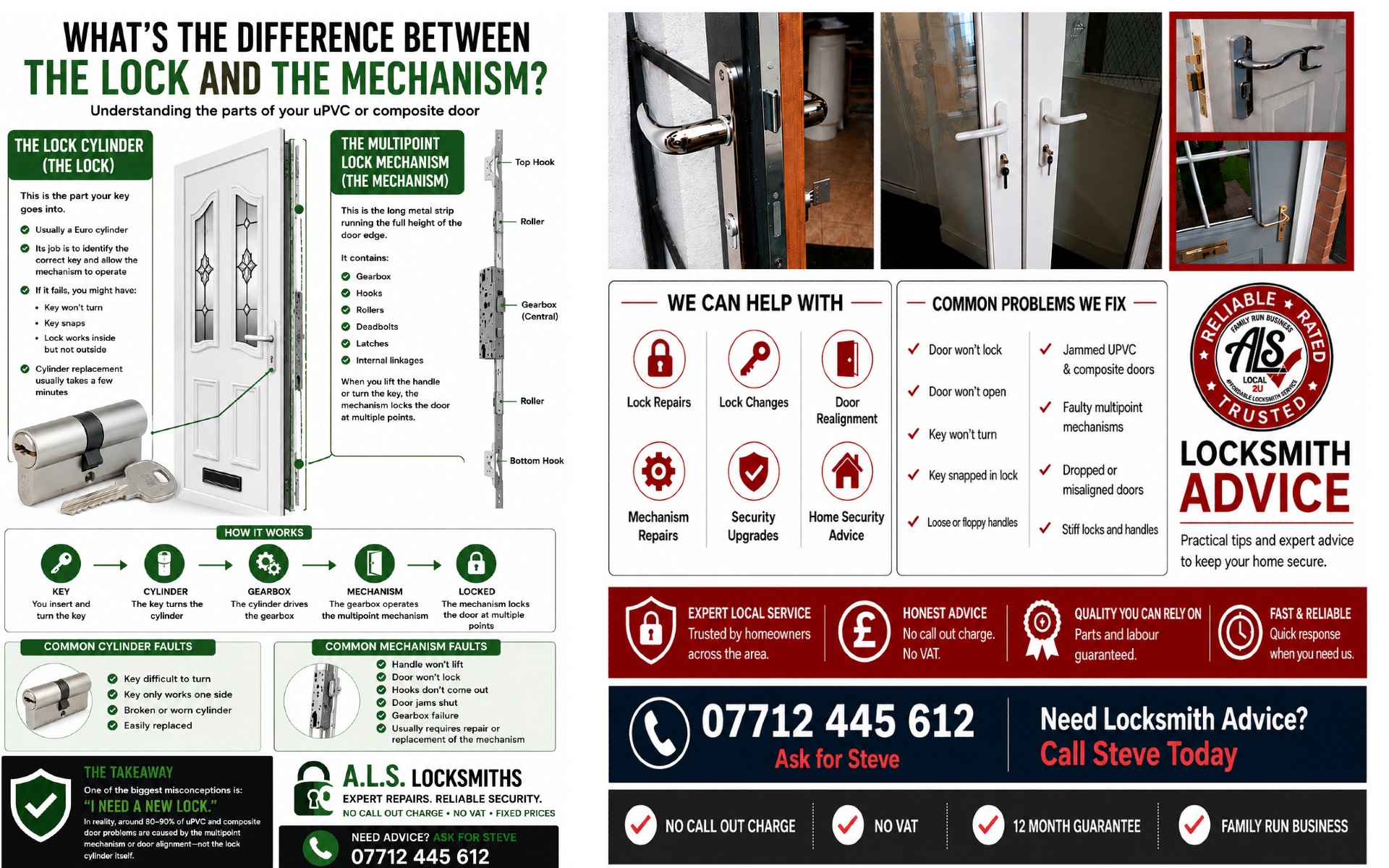
The lock usually refers to the euro cylinder—the removable cylinder that your key fits into.
Its main job is to:
- Accept the correct key.
- Lock and unlock the door.
- Operate the center gearbox inside the locking mechanism.
Although it's an important security component, the cylinder itself doesn't lock the door at multiple points. Instead, it activates the rest of the locking system.
Signs the Lock Cylinder Has Failed
If the euro cylinder develops a fault, you may notice symptoms such as:
- The key won't turn.
- The key sticks in the cylinder.
- The key is difficult to insert or remove.
- The key has snapped inside the lock.
- The cylinder feels rough or worn.
- You've lost your keys or want to prevent old keys from working.
In many cases, the cylinder can be replaced quickly without disturbing the rest of the locking system.
What Is the Multipoint Locking Mechanism?
The multipoint locking mechanism is the long metal strip fitted into the edge of most uPVC, composite and French doors.
Rather than securing the door in one place, it locks the door at several points around the frame.
A typical mechanism includes:
- Gearbox.
- Hooks.
- Rollers.
- Deadbolts.
- Centre latch.
- Connecting rods.
When the handle is lifted, these components move together to secure the door along its full height.
How the Lock and Mechanism Work Together
Although they're separate components, the lock cylinder and multipoint mechanism work as one system.
The locking process usually works like this:
- You insert the key into the euro cylinder.
- Turning the key operates the gearbox.
- The gearbox transfers movement through the multipoint locking mechanism.
- The hooks, rollers and deadbolts engage with the keeps in the frame.
- The door is securely locked at multiple points.
If any one of these components develops a fault, the door may become difficult—or impossible—to lock or unlock.
When the Lock Is the Problem
The lock cylinder is the most likely cause if:
- The key won't turn from one or both sides.
- The key is difficult to insert or remove.
- The cylinder has become worn.
- The cylinder has been damaged during an attempted break-in.
- The keys have been lost or stolen.
- You want to upgrade to a higher-security cylinder.
In these situations, the multipoint locking mechanism may still be operating perfectly.
When the Mechanism Is the Problem
The multipoint locking mechanism is usually responsible if you experience problems such as:
- A stiff handle.
- The handle moves but nothing happens.
- The locking points don't move.
- The hooks or rollers won't engage.
- The key turns but the door won't unlock.
- The door has jammed closed.
- The handle won't lift fully.
These faults are commonly caused by a worn gearbox, damaged internal linkages or wear within the multipoint locking mechanism rather than the lock cylinder itself.
Can One Be Replaced Without the Other?
Yes.
One of the biggest misconceptions is that the entire locking system has to be replaced whenever a fault develops.
In reality, depending on the diagnosis, it may only be necessary to replace:
- The euro cylinder.
- The gearbox.
- The complete multipoint locking mechanism.
- The door handles.
- Or, where appropriate, a combination of these components.
Replacing only the failed part is often the most economical and practical solution.
Related article: Are all multipoint mechanisms the same?
Why Correct Diagnosis Matters
It's common for homeowners to assume they need a new lock when the real problem lies elsewhere.
For example:
- Replacing the cylinder won't repair a failed gearbox.
- Replacing the gearbox won't solve a worn lock cylinder.
- Neither replacement will correct a dropped door that's placing excessive strain on the locking mechanism.
- Replacing parts unnecessarily increases costs without solving the underlying problem.
An accurate diagnosis identifies exactly which component has failed and whether poor alignment or excessive strain has contributed to the fault.
Door Alignment Can Affect Both
Even if the lock cylinder and mechanism are in good condition, poor door alignment can cause symptoms that resemble a lock failure.
A dropped or misaligned door can make:
- The handle difficult to lift.
- The key difficult to turn.
- The locking points hard to engage.
- The gearbox work under constant strain.
For this reason, checking the door alignment should always form part of any locking system repair.
Most Door Lock Problems Can Be Repaired
Whether the fault lies with the euro cylinder or the multipoint locking mechanism, it rarely means you need a new door.
Most uPVC, composite and French door locking problems can be resolved by replacing the worn component, correcting any alignment issues and ensuring the locking system operates smoothly without unnecessary strain.
Repairing only the parts that have genuinely failed is usually faster, more cost-effective and far less disruptive than replacing the entire door.
Conclusion
Although the terms lock and mechanism are often used interchangeably, they perform very different jobs. The lock cylinder accepts the key and operates the system, while the multipoint locking mechanism secures the door at multiple points around the frame.
Understanding this difference makes it easier to identify the likely cause of a fault and helps avoid replacing components unnecessarily. With an accurate diagnosis, most problems can be resolved by repairing or replacing only the parts that have worn out, allowing your existing door to continue operating smoothly and securely for many years.