Introduction
A multipoint lock that has jammed closed is one of the most inconvenient problems a homeowner can face. You may find that the handle still moves, the key still turns, or nothing happens at all—but the door simply refuses to open.
Although it can seem like a serious fault, the good news is that the door itself rarely needs replacing. In most cases, the problem lies within the locking mechanism or the strain placed upon it over time. Once the door has been opened, the faulty components can usually be repaired or replaced, allowing the existing door to continue providing many years of reliable service.
What Is a Multipoint Lock?
Most uPVC, composite and French doors are fitted with a multipoint locking mechanism. Rather than locking the door in one place, it secures it at several points along its height.
A typical mechanism consists of:
- Gearbox
- Hooks
- Rollers
- Deadbolts
- Centre latch
- Connecting rods
These components work together whenever you lift the handle and turn the key, locking the door securely into the frame.
Why Has the Lock Jammed Closed?
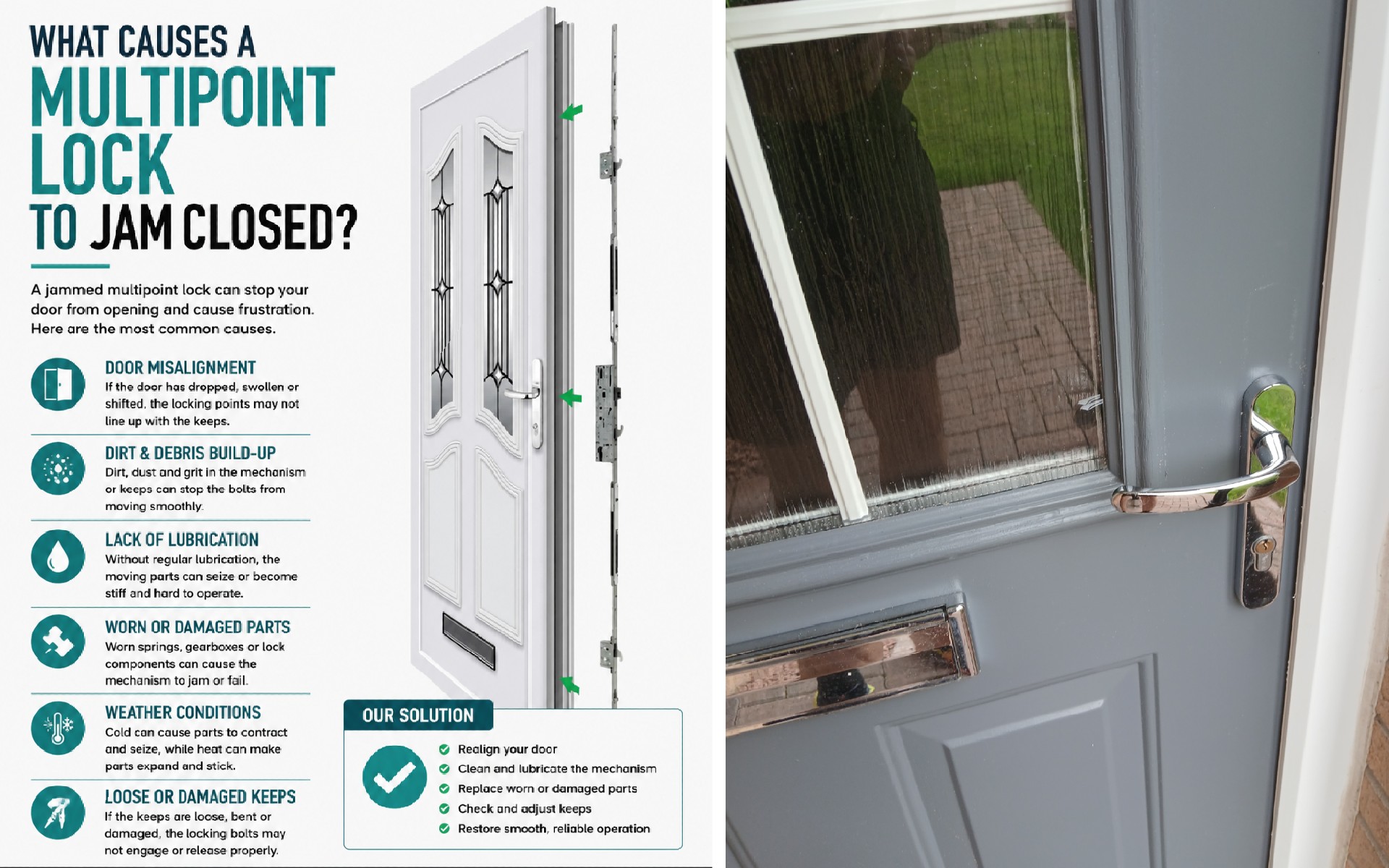
A multipoint lock rarely jams without warning. In many cases, the mechanism has been working under increasing strain for weeks or even months before finally failing.
Common causes include:
- A failed gearbox.
- Broken internal linkages.
- Seized locking points.
- Poor door alignment.
- A dropped door.
- Worn hinges.
- General wear within the locking mechanism.
Identifying the exact cause is essential before deciding which components need replacing.
The Gearbox Has Failed
The gearbox is the heart of the multipoint locking mechanism and one of the components most likely to wear out.
When it fails internally, it may no longer release the locking points, leaving the door stuck in the locked position.
Typical symptoms include:
- The handle moves but nothing happens.
- The key turns but the door won't open.
- The locking points remain engaged.
- The handle feels unusually loose or unusually stiff.
Depending on the extent of the damage, replacing the gearbox is often enough to restore normal operation.
The Door Has Been Working Under Excessive Strain
Many mechanisms don't fail because they're poor quality—they fail because they've been forced to operate under constant pressure.
This often happens when:
- The door has dropped.
- Hinges have worn over time.
- The locking points rub against the keeps.
- The door has moved out of alignment.
Every time the handle is lifted, additional force is transferred through the gearbox and internal components until something eventually gives way.
Broken Internal Linkages
Inside the locking strip are connecting rods that transfer movement from the gearbox to the hooks, rollers and deadbolts.
If one of these rods breaks or becomes disconnected:
- The handle may still move.
- The key may still turn.
- Some locking points may remain engaged.
- The door stays locked shut.
This type of failure usually requires repair or replacement of the multipoint locking mechanism.
Seized Locking Points
Individual locking points can also become seized through wear, corrosion or prolonged operation under excessive pressure.
When this happens, the hooks, rollers or deadbolts may remain trapped in the keeps fitted to the frame, preventing the door from opening.
This is particularly common where the door has been difficult to lock for some time before the complete failure occurred.
Don't Keep Forcing the Handle
If the lock feels unusually stiff, avoid using extra force.
Repeatedly forcing the handle or key can cause further damage to:
- The gearbox.
- Internal gears.
- Connecting rods.
- Door handles.
- The multipoint locking mechanism.
What might have been a relatively straightforward repair can quickly become more complex if additional components are damaged.
Can a Jammed Multipoint Lock Be Opened?
In many cases, yes.
An experienced locksmith can often open a jammed multipoint lock without damaging:
- The door.
- The frame.
- The glass.
- The handles.
Once access has been gained, the locking mechanism can be inspected to identify exactly which components have failed and whether a gearbox repair or complete mechanism replacement is the best solution.
Door Alignment Is Part of the Repair
Replacing the failed mechanism without correcting the original cause often results in the same problem returning.
After any repair, the door should be checked to ensure:
- The door sits correctly within the frame.
- The locking points engage freely.
- The handle lifts smoothly.
- The key turns easily.
- The mechanism operates without unnecessary resistance.
Correct alignment helps protect the replacement parts and significantly extends their lifespan.
Can the Locking Mechanism Be Repaired?
In many cases, yes.
Depending on the condition of the lock, the repair may involve:
- Replacing the gearbox.
- Replacing the complete multipoint locking mechanism.
- Replacing damaged handles.
- Replacing the euro cylinder if required.
- Adjusting the hinges and realigning the door.
Most jammed multipoint locks can be repaired without replacing the entire door.
Repair the Cause, Not Just the Failure
Simply replacing the broken component isn't always enough.
If the original gearbox failed because the door had dropped or the locking points were operating under excessive pressure, those issues should also be corrected during the repair.
Addressing both the fault and its underlying cause helps prevent repeat failures and allows the new components to operate as they were designed.
Conclusion
A multipoint lock that has jammed closed can be alarming, but it doesn't usually mean the door needs replacing. More often than not, the fault is caused by a failed gearbox, broken internal components or a locking mechanism that has been working under unnecessary strain because of poor door alignment.
Once the door has been opened, most repairs involve replacing only the worn components, realigning the door and ensuring the locking system operates smoothly again. Diagnosing the cause of the failure—not just replacing the damaged part—is the key to a reliable, long-lasting repair.