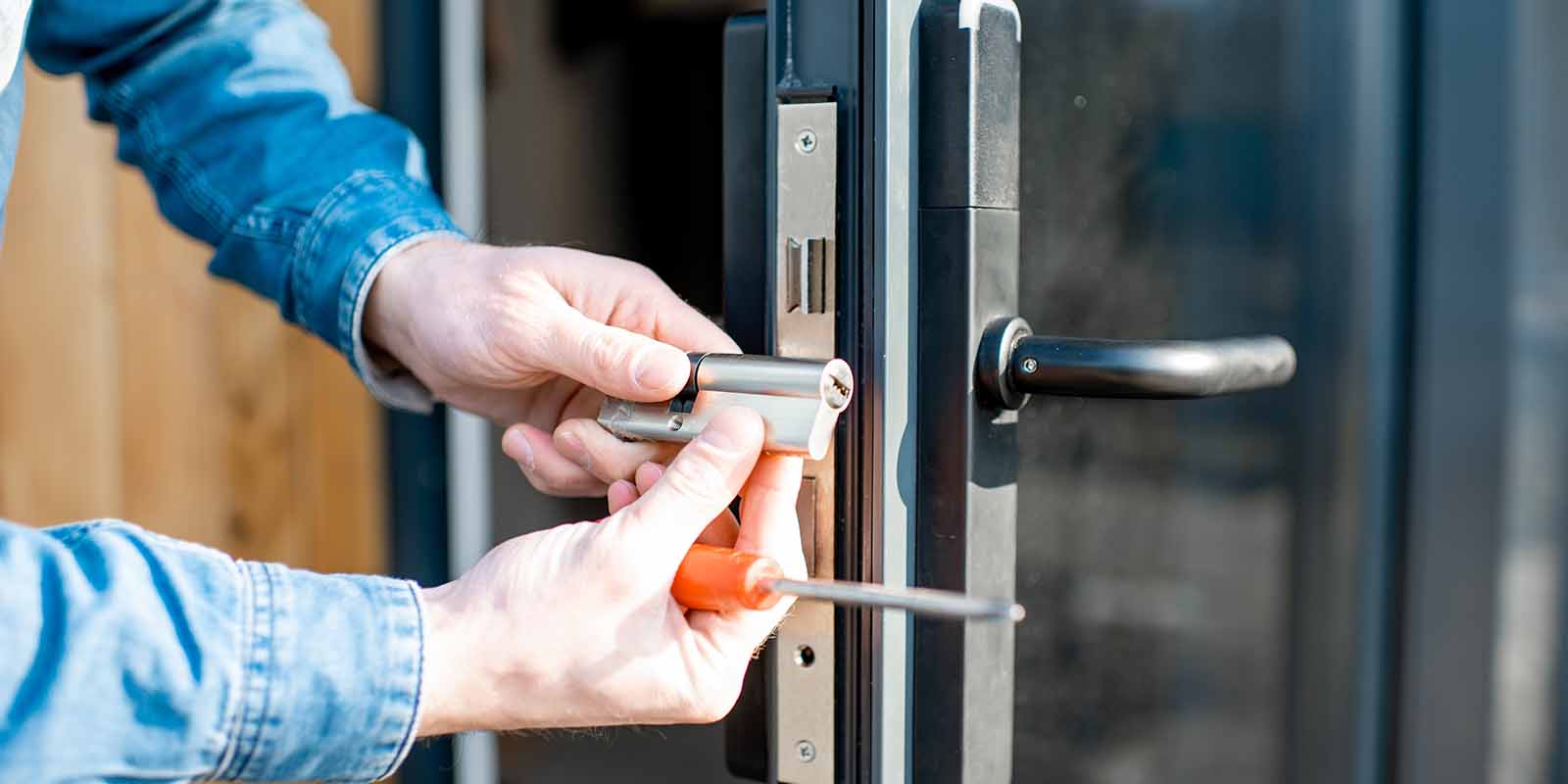
Discovering that your uPVC door won't lock or unlock properly can be frustrating, especially if you're unable to secure your home or, worse still, the door has jammed shut.
One of the most common causes is a broken multipoint locking mechanism. Fortunately, a failed mechanism doesn't usually mean you need a new door. In many cases, the faulty components can be repaired or replaced, restoring the door to full working order.
Here's what you should do if you suspect your uPVC door lock mechanism has failed.
What Is a Door Lock Mechanism?
The door lock mechanism, often called a multipoint locking mechanism, is the long strip of metal fitted into the edge of a uPVC or composite door.
It consists of several components working together, including:
- Gearbox
- Latch
- Deadbolt
- Hooks
- Rollers
- Mushroom cams
- Shoot bolts
- Drive bars
When you lift the handle or turn the key, these parts move together to secure the door at multiple points along its height.
If one section fails, the entire mechanism may stop working correctly.
Signs Your Door Lock Mechanism May Be Broken
Common symptoms include:
- The handle won't lift.
- The handle feels floppy or loose.
- The key turns but the door won't unlock.
- The key won't turn at all.
- The door only locks when it's open.
- The latch won't retract.
- The door has jammed shut.
- The locking hooks don't move.
- The handle won't return to its normal position.
- The door requires excessive force to lock.
These symptoms don't always mean the entire mechanism has failed, but they do indicate that something within the locking system requires attention.
What Causes a Mechanism to Fail?
There are several possible causes.
Worn Gearbox
The gearbox is the heart of the locking mechanism.
Thousands of opening and closing cycles eventually wear the internal components until they fail.
This is one of the most common faults.
Poor Door Alignment
Many gearbox failures actually begin with poor alignment.
If the locking points continually scrape against the frame keeps, the gearbox has to work much harder every time the handle is lifted.
Eventually something gives way.
Seized Locking Points
Hooks, rollers and shoot bolts can seize due to:
- Dirt.
- Lack of lubrication.
- Corrosion.
- Long periods without maintenance.
A seized locking point can overload the gearbox.
Worn Handles
Loose or worn handles can sometimes be mistaken for a failed mechanism.
Weak spring cassettes or worn handle backplates often produce similar symptoms.
Obsolete Mechanisms
Some older mechanisms are no longer manufactured.
However, this doesn't necessarily mean the door needs replacing.
Compatible gearboxes or adapted replacement mechanisms are often available.
Don't Assume You Need a New Door
One of the biggest misconceptions is that an obsolete mechanism automatically means the whole door must be replaced.
In reality, many older doors can be repaired by:
- Replacing the gearbox.
- Adapting a compatible mechanism.
- Repairing individual locking points.
- Replacing worn handles.
- Realigning the door.
- Replacing the euro cylinder if required.
I've attended many jobs where customers had been advised to replace the entire door, only to successfully repair the existing one for a fraction of the cost.
What Should You Do If Your Door Is Jammed?
If the door has jammed shut:
- Don't force the handle.
- Don't repeatedly turn the key.
- Don't hit the handles.
- Don't attempt to drill the lock unless you know exactly what has failed.
Many jammed doors can be opened without damaging the door or frame.
Correct diagnosis is the key.
For example, if the gearbox has failed internally, drilling the euro cylinder usually won't solve the problem because the cylinder isn't the faulty component.
Can Every Mechanism Be Repaired?
Not every mechanism can be repaired, but many can.
Depending on the fault, repairs may include:
- Gearbox replacement.
- Hook replacement.
- Roller replacement.
- Cleaning seized components.
- Mechanism servicing.
- Complete mechanism replacement.
- Door realignment.
The correct solution depends on the condition of both the mechanism and the door itself.
Why Diagnosis Matters
Replacing parts based on guesswork often leads to unnecessary expense.
For example:
- Drooping handles may simply need new handles.
- A stiff key may be caused by poor alignment.
- A jammed door may have a failed gearbox rather than a faulty cylinder.
- Difficult locking may only require adjustment.
A proper diagnosis identifies the actual fault before any parts are replaced.
Can You Prevent Mechanism Failure?
Regular maintenance helps.
It's worth:
- Lubricating moving parts.
- Keeping the door correctly aligned.
- Addressing stiff handles early.
- Replacing worn handles before they damage the gearbox.
- Having small faults checked before they become major failures.
Small repairs carried out early often prevent much larger repairs later.
When to Call a Locksmith
You should seek professional help if:
- The door won't lock.
- The door won't unlock.
- The handles have dropped.
- The key turns but nothing happens.
- The mechanism has jammed.
- The door is scraping the frame.
- The handle is becoming difficult to lift.
Ignoring these symptoms usually results in further wear and more expensive repairs.
Conclusion
A broken uPVC door lock mechanism doesn't automatically mean you need a new door. Many problems are caused by worn gearboxes, poor alignment, seized locking points or tired door handles, all of which can often be repaired without replacing the complete door. The key is identifying the actual fault rather than assuming the most obvious component has failed. With the correct diagnosis and the right replacement parts, many doors can be restored to smooth, secure operation for a fraction of the cost of a new installation.
Need a uPVC Door Lock Mechanism Repaired?
If your uPVC or composite door won't lock, has jammed shut or the multipoint locking mechanism has failed, professional diagnosis can often save both time and money. At A.L.S. Locksmiths, I specialise in repairing and replacing multipoint locking mechanisms, including many obsolete systems that other companies may recommend replacing entirely. Every repair begins with identifying the actual cause of the fault before recommending the most practical and cost-effective solution.
For more information about our specialist repair service, visit our uPVC & Composite Door Lock Repair service page.