Hooks, Rollers and Deadbolts – What's the Difference?
If you own a uPVC, composite or French door, you've probably heard the terms hooks, rollers and deadbolts. These are the main locking points found on a multipoint locking mechanism, and together they help keep your door secure while also improving weather sealing and overall door performance.
Although they all contribute to locking the door, each performs a different role. Understanding how they work can help you recognise early signs of wear, appreciate why door alignment is so important and understand why some doors lock more smoothly than others.
If you're unfamiliar with multipoint locking systems, start with – What Is a Multipoint Door Lock Mechanism?, – Everything You Need to Know About Multipoint Locking Systems and – The Complete Guide to Multipoint Locking Systems before reading this guide.
What Is a Multipoint Locking Mechanism?
A multipoint locking mechanism is the long metal strip fitted into the edge of a uPVC, composite, French or conservatory door.
When you lift the handle and turn the key, several locking points engage with keeps fitted to the door frame instead of relying on a single central lock.
These locking points commonly include:
- Hooks
- Rollers
- Deadbolts
Some mechanisms use all three, while others use different combinations depending on the manufacturer, door style and security requirements.
For a more detailed overview, see The Complete Guide to uPVC Door Locks and – The Science of Multipoint Door Locks.
What Are Hooks?
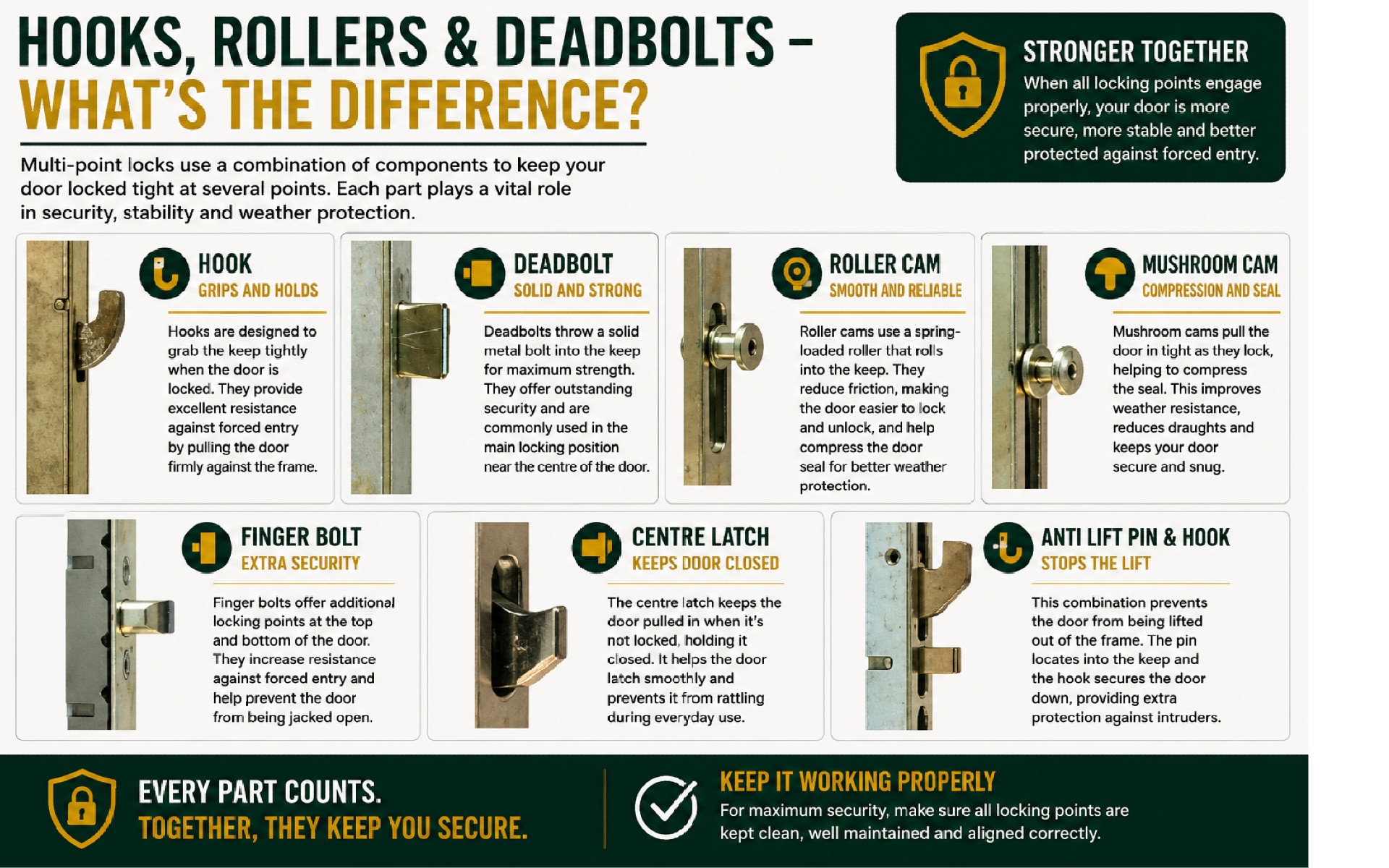
Hooks are curved steel locking bolts that rotate into specially designed keeps fitted to the frame.
Once engaged, they hook behind the keeps, helping to pull the door tightly against the frame while providing excellent resistance to forced entry.
Advantages of Hooks
- Excellent resistance against forced entry
- Strong protection against the door being forced apart
- Improved compression of weather seals
- Secure engagement behind the frame
- High-security locking performance
Because hooks rotate behind the keep, they're extremely effective at resisting attempts to force the door open.
What Are Rollers?
Rollers are rounded or mushroom-shaped locking points that rotate or slide into adjustable keeps.
Unlike hooks, their primary purpose isn't security alone. Rollers also help improve how the door fits within the frame.
They help to:
- Pull the door evenly against the seals
- Improve weatherproofing
- Reduce draughts
- Improve compression around the frame
- Allow smoother door operation
Many modern rollers can also be adjusted to fine-tune how tightly the door closes.
What Are Deadbolts?
Deadbolts are solid rectangular locking bolts that extend directly into matching keeps when the door is locked.
Unlike the spring latch, they remain firmly extended until the handle and key are used to unlock the door.
Deadbolts provide:
- Additional locking strength
- Increased resistance against forced entry
- Greater stability when the door is locked
- Reliable central security
They work alongside hooks and rollers to create a secure multipoint locking system.
Which Locking Point Is the Most Secure?
There isn't a single "best" locking point because each performs a different function.
| Locking Point | Main Purpose |
|---|---|
| Hooks | High security and resistance to forced entry |
| Rollers | Door compression, weather sealing and smooth operation |
| Deadbolts | Strong secondary locking and door stability |
Together they provide an excellent balance of security, smooth operation and weather resistance.
To understand how these components work together mechanically, read The Science of Multipoint Door Locks.
Why Do Hooks, Rollers and Deadbolts Sometimes Stop Working Properly?
The locking points themselves are usually extremely durable.
Problems are far more likely to be caused by:
- A dropped door
- Poor door alignment
- A worn gearbox
- A damaged multipoint locking mechanism
- Excessive force when locking the door
- Worn hinges
When the door becomes misaligned, the locking points may no longer enter their keeps correctly, placing unnecessary strain on the gearbox and the rest of the mechanism.
For more information, see:
- uPVC and Composite Door Gearboxes Explained
- The Complete Guide to Door Alignment and Lock Performance
Warning Signs of a Problem
Common symptoms include:
- A stiff handle
- The key becoming difficult to turn
- Hooks not engaging fully
- Rollers missing the keeps
- Deadbolts failing to extend fully
- The door rubbing against the frame
- Having to push or pull the door before it locks
These symptoms often indicate an alignment issue rather than faulty locking points.
Early diagnosis can prevent unnecessary damage to the gearbox and locking mechanism.
Keeping the Locking Points Working Properly
Routine maintenance helps prolong the life of the entire locking system.
Simple maintenance includes:
- Keeping the locking strip clean
- Removing dirt and debris from the edge of the door
- Lubricating moving locking points with a suitable product
- Avoiding excessive force on stiff handles
- Having the door adjusted if locking becomes difficult
Proper maintenance reduces wear on both the gearbox and the locking mechanism.
If repairs are needed, you may also find these guides helpful:
- uPVC Door Mechanism Repair
- Can You Replace Just the Locking Mechanism?
- Can a Locksmith Repair a Multipoint Lock?
Why Locking Points Differ Between Manufacturers
Not every multipoint lock uses the same hooks, rollers or deadbolts.
Manufacturers use different designs depending on:
- Door type
- Security rating
- Weather performance
- Manufacturing design
- Locking operation
Even two doors from the same manufacturer may use completely different locking arrangements.
Learn more in:
- Why No Two Door Mechanisms Are Exactly the Same
- A–Z of Multipoint Lock Manufacturers
- Understanding Multipoint Lock Types: Lever Lever, Lever Pad, Split Spindle and Keywind Explained
- A–Z of Door Locking Mechanisms – The Complete Homeowner's Guide
French and Conservatory Doors Use Them Too
Multipoint locking systems aren't limited to front and back doors.
French doors and conservatory doors also commonly use combinations of hooks, rollers and deadbolts, although the overall mechanism may be longer or include additional locking points.
Related guides include:
- Repairing French Door Lock Mechanisms: Everything You Need to Know About French Door Lock Repairs
- Conservatory Door Lock Repairs Explained: Repairing Multipoint Locks Without Replacing the Door
They All Work Together
Hooks, rollers and deadbolts aren't competing designs—they're complementary parts of the same multipoint locking system. Hooks provide excellent resistance against forced entry, rollers improve door compression and weather sealing, while deadbolts add strength and stability. When combined with a correctly functioning gearbox and a properly aligned door, they create a locking system that is significantly more secure and reliable than a traditional single-point lock.
For a complete understanding of multipoint locking systems, you may also wish to read:
- What Is a Multipoint Door Lock Mechanism?
- The Complete Guide to uPVC Door Locks
- uPVC and Composite Door Gearboxes Explained
- A–Z of Multipoint Lock Manufacturers
- Understanding Multipoint Lock Types: Lever Lever, Lever Pad, Split Spindle and Keywind Explained
- The Science of Multipoint Door Locks
- Everything You Need to Know About Multipoint Locking Systems
- A–Z of Door Locking Mechanisms – The Complete Homeowner's Guide
- The Complete Guide to Multipoint Locking Systems
- Why No Two Door Mechanisms Are Exactly the Same