The Answer Is Usually Yes
One of the most common questions homeowners ask is whether a faulty multipoint lock can be repaired or whether the entire mechanism needs replacing.
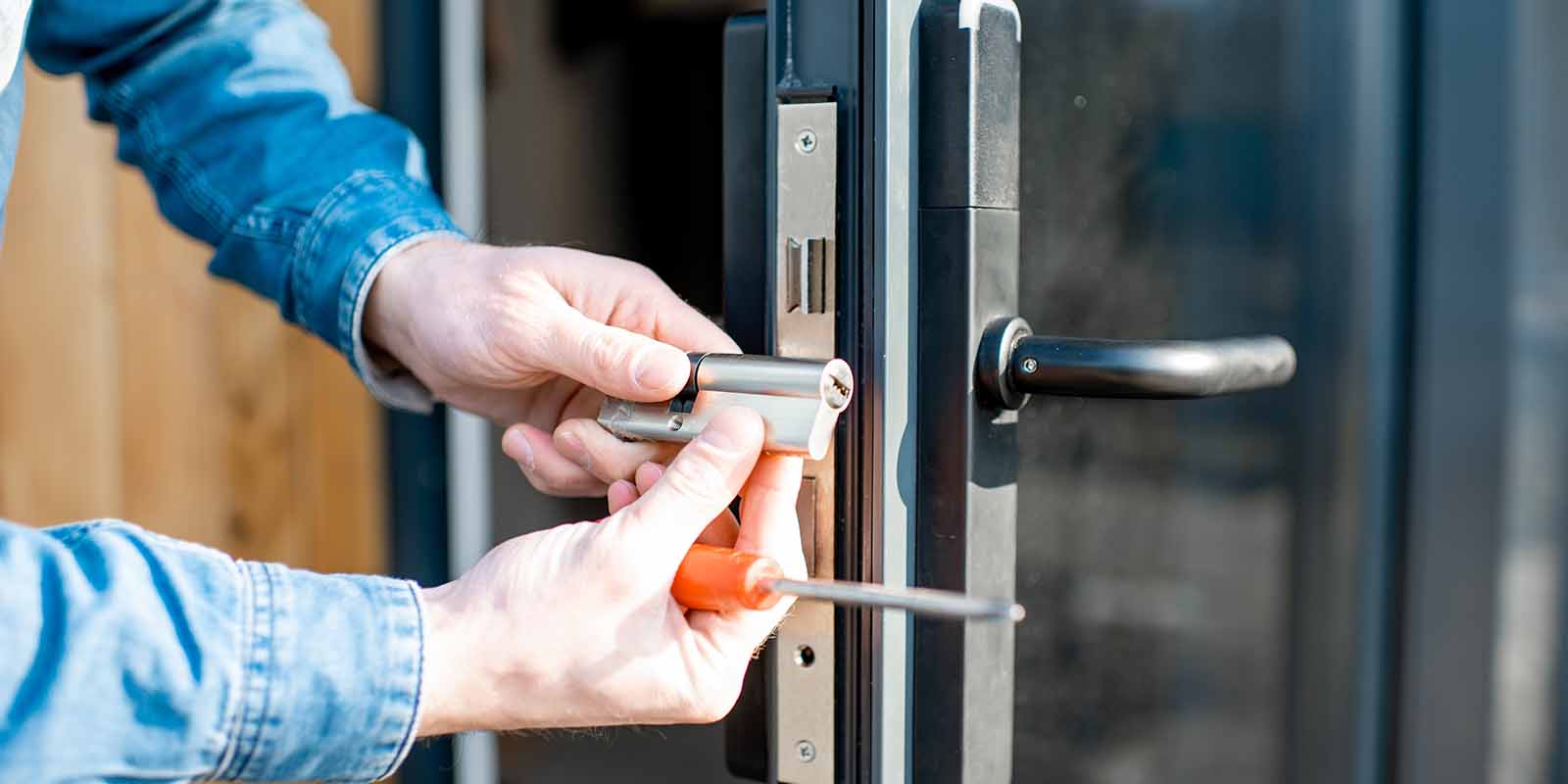
In many cases, the answer is yes. A professional locksmith can often repair or replace the faulty component without replacing the whole door. The key is identifying exactly what has failed before any parts are ordered.
Many locking problems are caused by worn components, poor door alignment or damaged hardware rather than complete failure of the multipoint locking mechanism itself.
If you're new to multipoint locking systems, it's worth reading What Is a Multipoint Door Lock Mechanism?, Everything You Need to Know About Multipoint Locking Systems and The Complete Guide to Multipoint Locking Systems first.
What Is a Multipoint Lock?
A multipoint locking mechanism is the long metal strip fitted into the edge of most modern uPVC, composite, French and conservatory doors.
Instead of locking at just one point, it secures the door at several positions using components such as:
- Hooks
- Rollers
- Deadbolts
- Mushroom cams
- Latch
- Gearbox
These all work together whenever the handle is lifted or the key is turned, providing significantly greater security than a traditional single-point lock.
For a broader overview, see The Complete Guide to uPVC Door Locks.
Can Every Fault Be Repaired?
Not every fault requires a complete replacement mechanism.
A locksmith's first job is to identify exactly which component has failed.
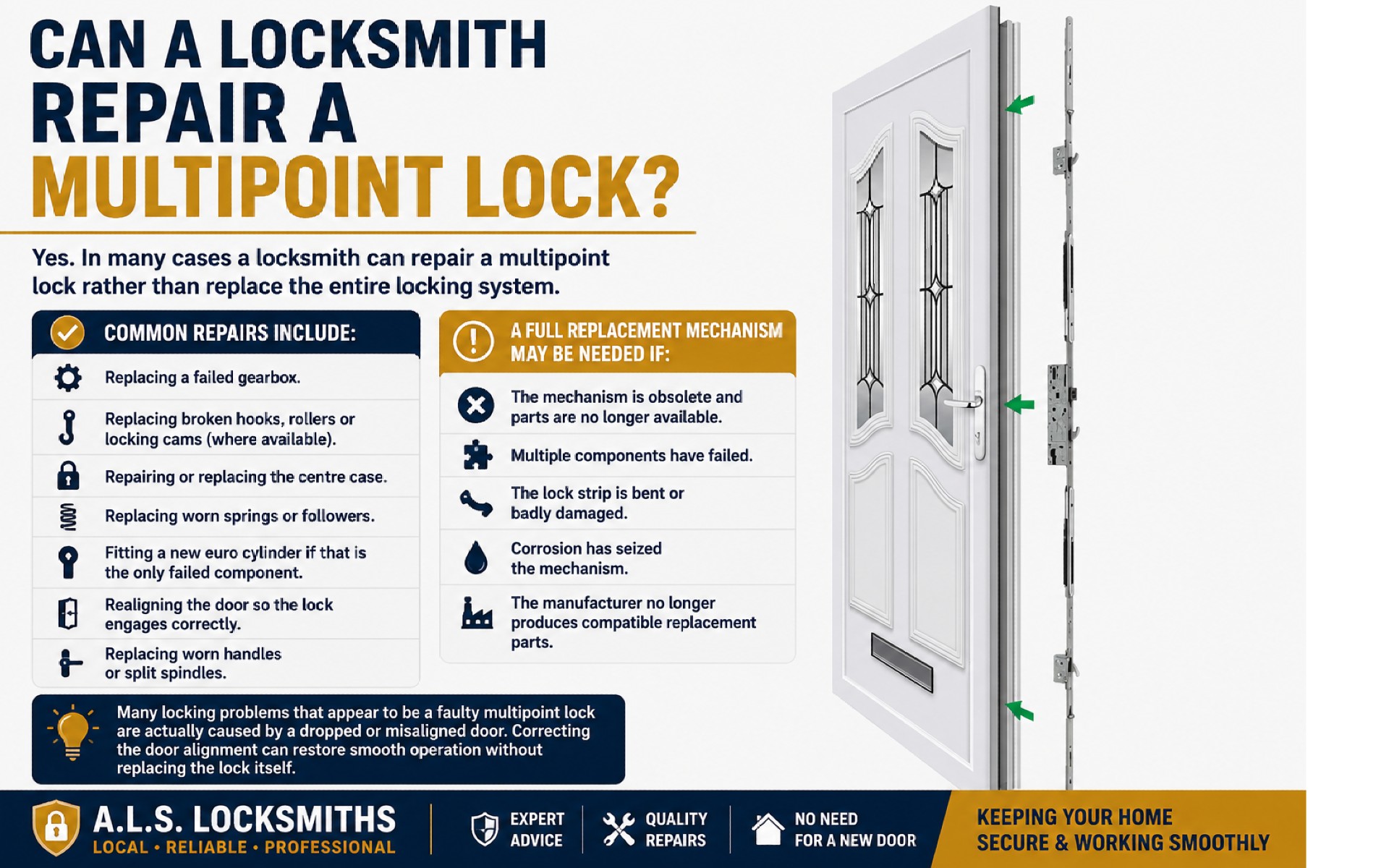
Common repairs include:
- Replacing a worn gearbox
- Fitting a new centre case
- Replacing broken handles
- Replacing a worn euro cylinder
- Realigning the door
- Adjusting hinges
- Replacing worn keeps
- Replacing damaged rollers
- Replacing shoot bolts on French doors
Many of these repairs restore the door to full working order without replacing the complete locking strip.
Common Multipoint Lock Problems
The Handle Won't Lift
This is commonly caused by:
- Poor door alignment
- A worn gearbox
- A failed locking mechanism
- A broken handle
The Key Won't Turn
Possible causes include:
- A misaligned door
- A worn lock cylinder
- A damaged gearbox
- Dirt or debris inside the cylinder
The Door Locks When Open but Not When Closed
If the lock operates perfectly with the door open but becomes difficult when closed, the problem is almost always alignment rather than the lock itself.
Common causes include:
- Dropped hinges
- Misaligned keeps
- Building movement
- Worn hinges
The Door Won't Open
A door that refuses to open may be suffering from:
- A failed gearbox
- A broken centre case
- Internal mechanism failure
- A damaged latch
In many situations, a locksmith can safely open the door before repairing or replacing the faulty component.
When Does the Whole Mechanism Need Replacing?
Sometimes replacing the complete multipoint locking mechanism is the most sensible long-term repair.
Examples include:
- Multiple internal failures
- Severely worn locking points
- A bent faceplate
- Corrosion throughout the mechanism
- Obsolete parts that are no longer available
Even then, replacing the mechanism is usually far less expensive than replacing the entire door.
Can Older Mechanisms Still Be Repaired?
Yes—very often they can.
Many older mechanisms can be repaired by:
- Replacing only the gearbox
- Installing compatible replacement parts
- Using genuine old-stock components
- Fitting updated versions from the original manufacturer
An experienced locksmith will normally explore repair options before recommending complete replacement.
To understand why older mechanisms vary so much, read Why No Two Door Mechanisms Are Exactly the Same and A–Z of Multipoint Lock Manufacturers.
Why Accurate Diagnosis Is So Important
Many homeowners assume the locking mechanism has failed because:
- The handle is stiff
- The key won't turn
- The door won't lock
- The mechanism feels rough
However, these symptoms are frequently caused by:
- Door movement
- Worn hinges
- Poor alignment
- Incorrect compression
- Worn handles
Replacing the mechanism without correcting these issues often leads to the same problem returning.
A proper diagnosis identifies the real cause before any parts are replaced.
Understanding the Different Components
A multipoint lock contains many individual components that work together.
These include:
- Gearboxes
- Hooks
- Rollers
- Deadbolts
- Connecting rods
- Linkages
Understanding how each part functions makes it easier to identify where the fault lies.
If you'd like to learn more, these guides explain the individual components in greater detail:
- Hooks, Rollers and Deadbolts – What's the Difference?
- The Science of Multipoint Door Locks
- Understanding Multipoint Lock Types: Lever Lever, Lever Pad, Split Spindle and Keywind Explained
Door Alignment Is Often the Real Problem
One of the biggest causes of premature lock failure is poor door alignment.
If the locking points no longer line up correctly with the keeps, the gearbox and mechanism have to work much harder every time the door is locked.
After any repair, a professional locksmith should always check:
- Door alignment
- Hinge adjustment
- Handle operation
- Key operation
- Locking point engagement
Correcting these issues helps protect the replacement parts from unnecessary wear.
French and Conservatory Door Repairs
Multipoint locking systems fitted to French and conservatory doors can often be repaired using the same approach.
Depending on the fault, it may be possible to replace the gearbox, locking mechanism or individual components without replacing the door itself.
Further reading:
- Repairing French Door Lock Mechanisms: Everything You Need to Know About French Door Lock Repairs
- Conservatory Door Lock Repairs Explained: Repairing Multipoint Locks Without Replacing the Door
How to Help a Locksmith Diagnose the Problem
Before arranging a repair, it helps to note:
- Is the door uPVC or composite?
- Does the handle lift?
- Will the key turn?
- Does the problem only occur when the door is closed?
- Is the door catching on the frame?
- Has the problem developed gradually or suddenly?
Clear photographs of the door edge, handles and locking mechanism can also help identify replacement parts before the visit.
Don't Assume You Need a New Door
A faulty multipoint lock doesn't automatically mean your door needs replacing. In many cases, the problem is caused by a worn gearbox, damaged locking component or poor door alignment rather than complete mechanism failure. Even when the locking mechanism itself has reached the end of its service life, replacing the multipoint lock is usually far more economical than fitting a new door. The best repairs begin with an accurate diagnosis, the correct replacement parts and proper door alignment, ensuring the mechanism operates smoothly for many years to come.
For a complete understanding of multipoint locking systems, continue with A–Z of Door Locking Mechanisms – The Complete Homeowner's Guide, which brings together the terminology, components and operating principles covered throughout this series.