A Door That Wouldn't Unlock
I was recently called to a property in Paisley where the homeowner's front door had jammed shut.
The key would turn in the lock, but the door wouldn't unlock. The handles wouldn't move either, leaving the customer unable to open the door.
Situations like this often lead people to believe the euro cylinder has failed, but that isn't always the case.
Before attempting to open the door, I needed to identify exactly what locking mechanism was fitted.
Identifying the Mechanism
With the door still closed, there was very little of the locking mechanism visible.
By carefully easing the door away from the frame slightly, I was able to see part of the centre latch.
After 18 years repairing multipoint locking systems, I recognised the manufacturer purely from the size and shape of the latch.
That immediately told me what I was dealing with.
I'd seen this particular mechanism fail in exactly the same way before.
The Real Fault
On this design of gearbox, turning the key rotates a cam which lifts an internal gate inside the gearbox.
That gate allows the locking mechanism to retract so the door can open.
Unfortunately, this particular gearbox has a known weakness.
Over time, the internal gate can break.
When that happens, the key still turns the cam exactly as it should, but because the gate no longer moves, the latch and locking points remain engaged.
The euro cylinder isn't faulty.
The key isn't faulty.
The gearbox has simply jammed internally.
Understanding how the mechanism works is the key to opening the door without causing unnecessary damage.
Avoiding Unnecessary Damage
This wasn't the first time I'd dealt with this type of failure.
Years ago, I attended another property with exactly the same problem after another locksmith had already attempted to gain entry.
Unfortunately, the previous repair involved destroying the lock and causing unnecessary damage to the door, even though neither actually needed replacing.
That experience reinforced something I've always believed: if you understand how the mechanism works, there's usually a much less destructive solution.
Opening the Door
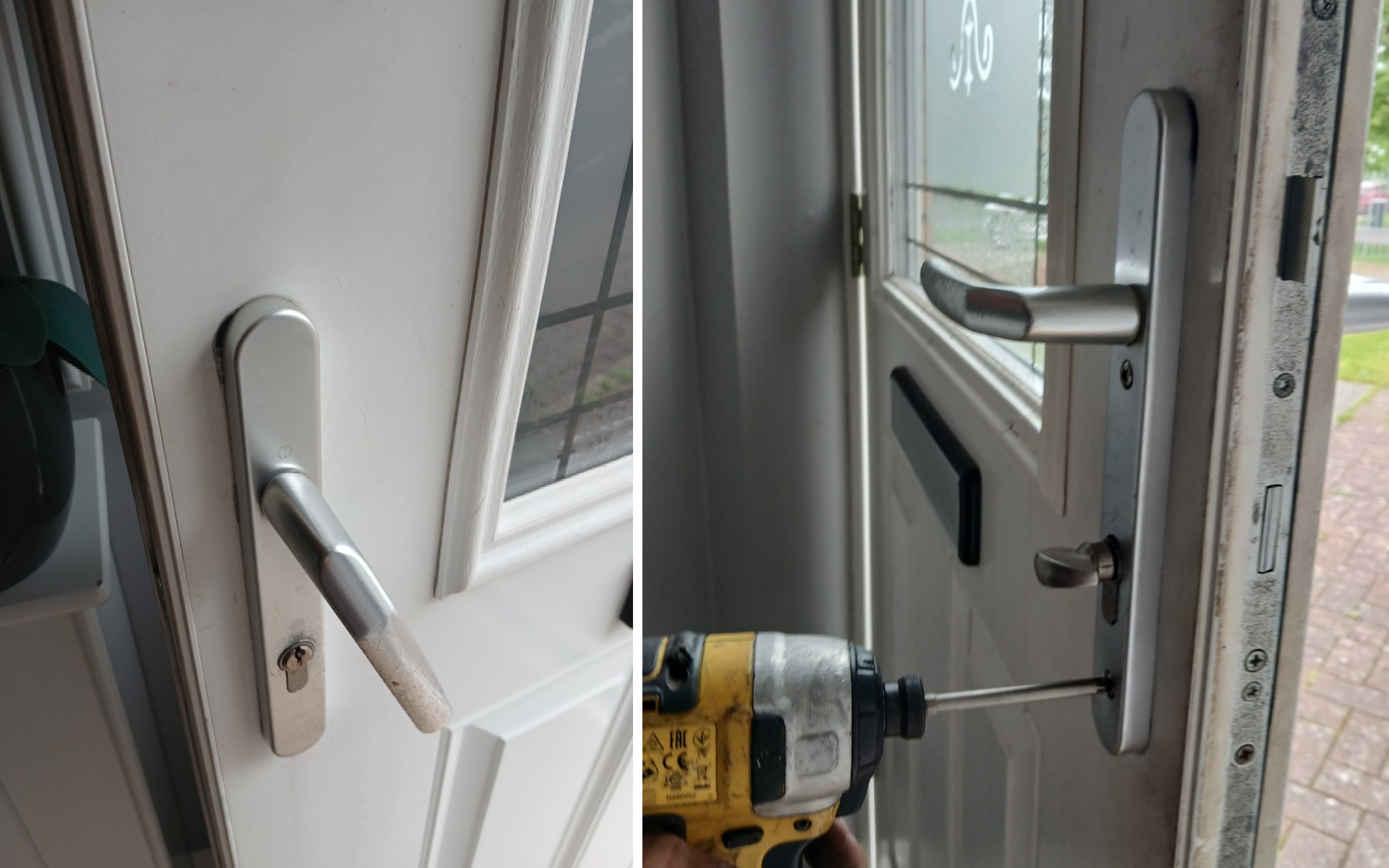
After removing the handles, I used a 4mm carbide-tipped drill bit to drill a small, precisely positioned access hole into the gearbox.
The aim wasn't to damage the door or destroy the lock. It was simply to release the failed internal component that was preventing the mechanism from operating.
Once the gearbox had been released, I refitted the handles and operated the mechanism.
The door opened immediately.
There was no damage to the door, the frame or the locking cylinder.
Repairing the Fault
With the door open, I removed the complete multipoint locking mechanism from the door.
The failed gearbox was replaced with a new one before the mechanism was thoroughly tested.
Because the euro cylinder had never been the problem, it was cleaned, inspected and reused, saving the customer the cost of an unnecessary replacement.
Once the mechanism was reassembled, I carried out a full door alignment, ensuring the locking points entered their keeps smoothly without placing unnecessary strain on the new gearbox.
Back to Full Working Order
After completing the repair, I tested the door repeatedly.
The handles operated smoothly.
The key unlocked the door without resistance.
The locking points engaged correctly.
The door closed and locked exactly as it should.
From arriving at the property to completing the repair took around 45 minutes, and the customer was left with a fully functioning front door without the damage or unnecessary expense that can sometimes result from this type of fault.
Experience Makes the Difference
Jammed multipoint locking mechanisms can often look worse than they really are. Without understanding how a particular gearbox operates, it's easy to assume the lock cylinder has failed or that the only option is to force the door open.
In many cases, neither is true.
Recognising the mechanism, understanding its common failure points and knowing how to release it safely can often mean the difference between a straightforward repair and an expensive door repair.