Introduction
If your uPVC or composite door has become difficult to lock or the handle feels loose or floppy, it's easy to assume the handles are worn out.
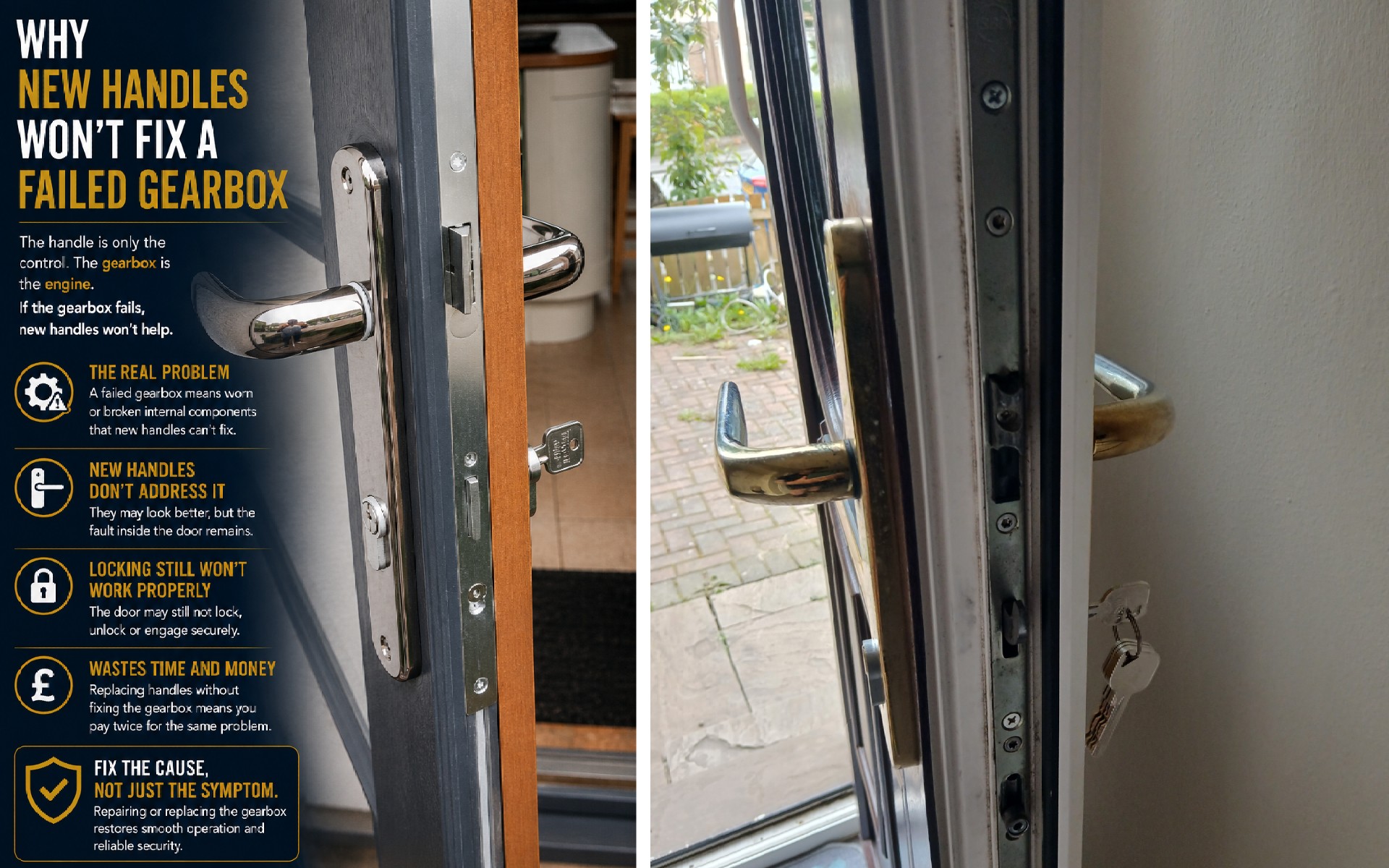
While door handles do wear over time, they're often blamed for problems that actually originate inside the gearbox. Replacing the handles may improve the appearance or feel of the door, but it won't repair a worn or failed gearbox.
Understanding the difference can save you the cost of replacing parts unnecessarily.
What Does the Gearbox Do?
The gearbox is the heart of a multipoint locking mechanism.
Every time you lift the handle or turn the key, the gearbox operates the entire locking system, controlling the movement of the:
- Hooks
- Rollers
- Deadbolts
- Latches
- Locking points
If the gearbox fails, these components cannot operate correctly, regardless of how good the handles are.
Why the Handles Get the Blame
The first signs of gearbox wear are often noticed at the handles.
You may experience:
- A floppy handle.
- A handle that doesn't return properly.
- Difficulty lifting the handle.
- Excessive movement.
- A handle that feels different from normal.
Because the handle is the part you use every day, it's natural to assume that's where the fault lies.
In reality, it's often simply revealing that the gearbox underneath is beginning to fail.
Signs of a Failed Gearbox
A worn gearbox typically causes symptoms such as:
- The handle lifts but nothing happens.
- The key turns without locking or unlocking the door.
- Locking points fail to engage.
- The door becomes difficult to lock.
- Door jams shut and wont open.
- The door becomes difficult to open.
- The handle feels stiff or inconsistent.
None of these problems can be solved simply by fitting new handles.
What New Handles Can Improve
There are situations where replacing the handles is worthwhile.
New handles can resolve:
- Broken return springs.
- Cracked backplates.
- Loose fixings.
- Excessive handle movement.
- Cosmetic damage.
- Poor-quality or worn handles.
Quality sprung handles can also improve the feel of the door and reduce the load placed on the gearbox by returning the handle independently.
However, they cannot repair damaged gearbox components.
What New Handles Cannot Fix
Replacing the handles will not repair:
- Broken gearbox springs.
- Worn followers.
- Internal gearbox failure.
- Seized locking points.
- Broken cams.
- Damaged lock cases.
- A worn multipoint locking mechanism.
If these faults are present, the locking problems will remain regardless of the handles fitted.
A Failing Gearbox Can Damage the Handles
In many cases, the gearbox is actually responsible for damaging the handles.
As the gearbox becomes harder to operate, additional force is transferred through the handle, which can lead to:
- Broken handle springs.
- Drooping handles.
- Loose backplates.
- Cracked handles.
- Excessive wear.
Replacing only the handles means the new set is subjected to exactly the same strain that damaged the originals.
Correct Diagnosis Saves Money
It's common to attend properties where new handles have already been fitted without solving the problem.
The homeowner is still left with:
- A stiff lock.
- A difficult door.
- Locking points that don't engage properly.
- A gearbox close to complete failure.
The cost of replacement handles has been spent without addressing the real cause.
A proper diagnosis identifies whether the fault lies with the handles, the gearbox, the lock cylinder, the door alignment, or a combination of several issues.
When Both Should Be Replaced
On older doors, replacing several components together is often the best long-term solution.
This may include:
- A new gearbox.
- Quality sprung handles.
- A snap-resistant lock cylinder.
- Door realignment.
- Servicing the locking points.
Completing the repair as a whole restores smooth operation while reducing stress on the entire locking system.
Don't Forget Door Alignment
Many gearbox failures begin with a dropped or poorly aligned door.
If the locking points don't line up correctly with the keeps, extra pressure is transferred through the gearbox and handles every time the door is locked.
Signs include:
- Difficulty lifting the handle.
- The need to push or pull the door.
- A stiff key.
- The door catching the frame.
- Draughts around the door.
Correcting the alignment helps protect both the new gearbox and the handles from unnecessary wear.
Conclusion
A floppy or difficult door handle is often a symptom of gearbox failure rather than the cause. While replacing worn or broken handles can improve operation, they cannot repair the damaged internal components of a failed gearbox.
The best repair starts with identifying the real fault. By diagnosing the cause correctly and replacing only the components that genuinely need attention, you can restore smooth operation, avoid unnecessary expense and extend the life of your door's locking system.
Related guides: