Introduction
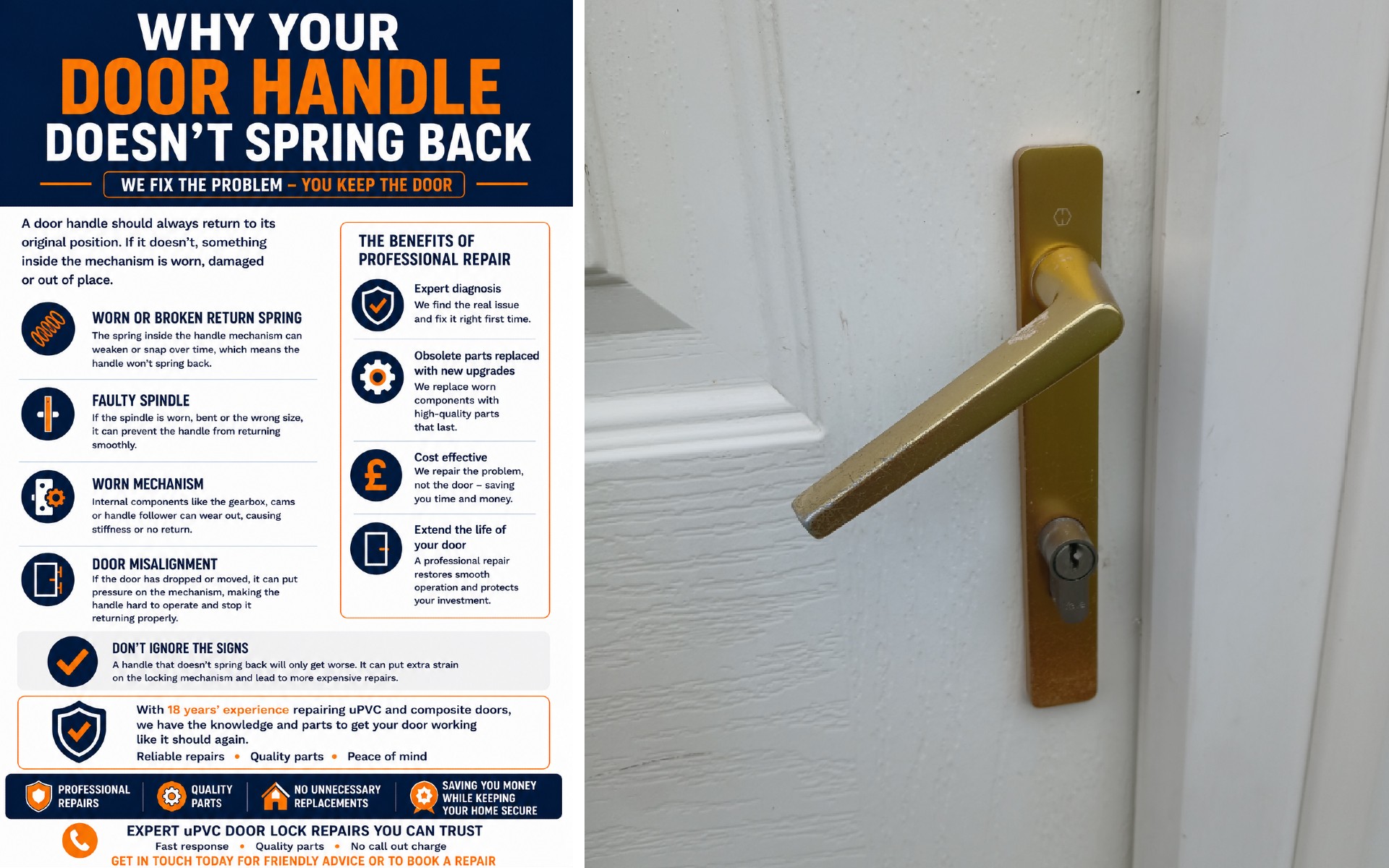
A door handle that doesn't return to its horizontal position is more than just an annoyance—it's often an early warning that something within the locking system isn't working properly.
While a worn handle spring is a common cause, it's not the only possibility. A failed gearbox, poor door alignment or a worn multipoint locking mechanism can all prevent the handle from springing back as it should.
The key is identifying the real cause before replacing any parts. Replacing the handles alone may solve the problem, but if another component is at fault, the symptoms are likely to return.
Worn Handle Springs
Most modern uPVC, composite and French door handles contain their own internal return springs.
These springs return the handle to its horizontal position after it has been lifted or pushed down.
Over time the springs can weaken or break, causing the handle to:
- Stay in the lowered position.
- Return slowly.
- Feel loose.
- Hang at an angle.
- Feel inconsistent when operated.
If the locking mechanism is operating normally, replacing the handles is often all that's required.
A Failing Gearbox
Sometimes the handles aren't the problem at all.
The gearbox is the heart of the multipoint locking mechanism and contains the internal components that operate the locking points.
As the gearbox begins to fail, it can prevent the handle from returning correctly.
Other warning signs include:
- A stiff handle.
- Difficulty lifting the handle.
- The key becoming harder to turn.
- The lock working intermittently.
- Grinding or clicking noises.
- The handle feeling floppy.
In these situations, replacing the handles alone won't solve the problem.
A Dropped Door
One of the most common causes of gearbox and handle problems is a door that has gradually moved out of alignment.
Instead of operating freely, the handle has to work against resistance every time it's used.
This additional strain can:
- Slow the return of the handle.
- Damage the handle springs.
- Accelerate gearbox wear.
- Make the door difficult to lock.
- Increase wear on the locking points.
Correcting the alignment often restores smooth operation and protects the locking system from further damage.
Worn Multipoint Locking Mechanism
As a multipoint locking mechanism ages, its internal components gradually wear.
This can result in:
- Increased friction.
- Stiff operation.
- Poor handle return.
- Locking points sticking.
- Rough or noisy operation.
- Door handle drooping.
If the wear extends beyond the gearbox, replacing the complete multipoint locking mechanism may provide the most reliable long-term repair.
Loose or Worn Handles
After years of daily use, the handles themselves can simply wear out.
Common signs include:
- Excessive movement.
- Loose backplates.
- Broken return springs.
- Cracked handles.
- Poor handle return.
- Worn spindle followers.
Quality sprung replacement handles usually restore normal operation, provided no other faults are present.
Poor-Quality Replacement Handles
Not every replacement handle is manufactured to the same standard.
Lower-quality handles often have:
- Weak return springs.
- Poor internal components.
- Excessive movement.
- Shorter service life.
Investing in quality sprung handles can improve both reliability and reduce strain on the locking mechanism.
Don't Ignore the Problem
Many homeowners continue using the door because it still locks.
However, a handle that isn't returning properly often means another part of the locking system is working under unnecessary strain.
Ignoring the problem can eventually lead to:
- Gearbox failure.
- Broken handles.
- A jammed multipoint locking mechanism.
- A door that won't lock.
- A door that won't open.
- A complete lockout.
Dealing with the problem early is usually much quicker and less expensive.
Door Realignment Is Part of a Proper Repair
If the gearbox or multipoint locking mechanism has been replaced, the repair shouldn't stop there.
The door should always be checked and adjusted where necessary.
Correct alignment helps:
- The handle return smoothly.
- Reduce pressure on the gearbox.
- Allow the key to turn freely.
- Ensure the locking points engage correctly.
- Extend the life of the new components.
- Prevent repeat failures.
Replacing worn parts without correcting a dropped door often results in the same fault returning.
Prevent Future Handle Problems
Simple maintenance can help extend the life of both the handles and the locking mechanism.
Good practice includes:
- Investigating stiff handles early.
- Avoiding excessive force when locking the door.
- Keeping the door correctly aligned.
- Lubricating hooks, rollers and locking points periodically.
- Replacing worn handles before they fail completely.
- Having the locking mechanism checked if the key becomes stiff.
Preventative maintenance is far cheaper than dealing with an emergency lockout.
Most Door Handle Problems Can Be Repaired
A handle that doesn't spring back doesn't usually mean you need a new door. Whether the cause is worn handle springs, a failed gearbox, poor door alignment or a worn multipoint locking mechanism, most faults can be repaired quickly and cost-effectively.
Correct diagnosis is the most important part of the repair. By identifying the actual cause, replacing only the necessary components and ensuring the door is properly realigned afterwards, your door can be restored to smooth, reliable operation and continue providing many more years of dependable service.