Introduction
When homeowners think about door security, they usually focus on locks and cylinders. However, the door handles are just as important to the overall operation of the locking system.
Every time you open, close and lock your door, the handles work alongside the multipoint locking mechanism. If the handles are worn, unsprung or poorly made, they can place unnecessary strain on the gearbox and eventually contribute to premature failure.
Fitting quality sprung handles is a simple upgrade that improves reliability, protects the locking mechanism and gives the door a smoother, more positive feel.
What Is a Sprung Door Handle?
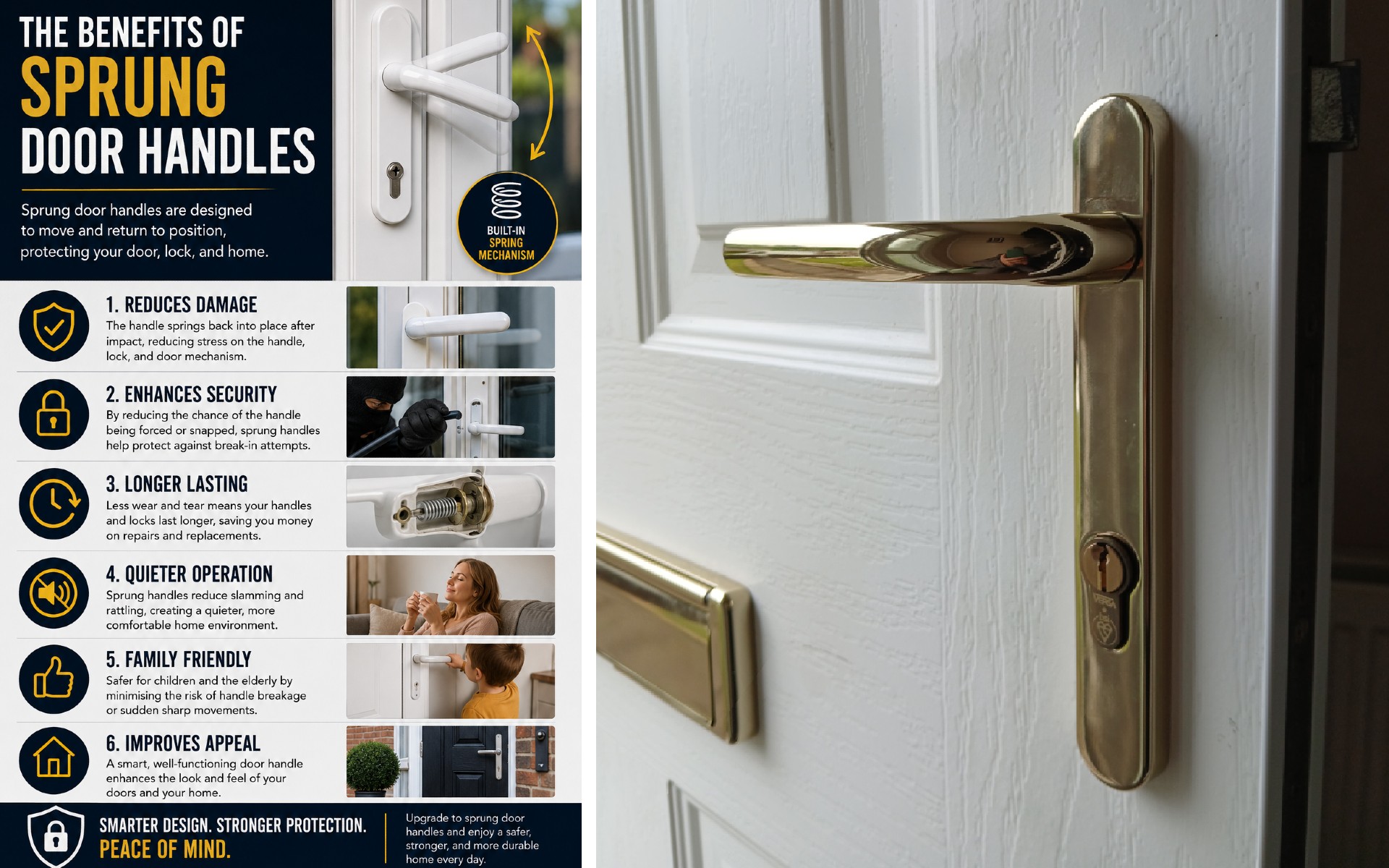
A sprung door handle contains its own internal return spring.
When the handle is pressed down, the spring returns it to its original horizontal position after it is released.
Unlike unsprung handles, the return action doesn't rely entirely on the springs inside the lock mechanism.
How Sprung Handles Protect the Gearbox
Inside every multipoint locking mechanism is a gearbox that controls the latch, hooks, rollers and deadbolts.
With unsprung handles, the gearbox has to do all the work of returning the handle after every operation.
Over thousands of cycles this creates unnecessary wear on:
- Internal springs
- Followers
- Gearbox components
- Handle spindle connections
A sprung handle shares this workload, reducing stress on the mechanism and helping it last longer.
Prevents Handles From Drooping
One of the first signs of a worn or poor-quality handle is that it starts to sag below the horizontal position.
This can happen because:
- The internal spring has failed.
- The handle has worn.
- The gearbox return spring is becoming weak.
- The handle is of poor quality.
Replacing the handle with a quality sprung version usually restores proper operation and improves the feel of the door.
Improves the Feel of the Door
Many customers immediately notice the difference after quality sprung handles are fitted.
Benefits include:
- Smoother operation.
- Positive handle return.
- Less play in the handle.
- Better overall feel.
- Reduced strain when locking.
The door simply feels more solid and better engineered.
Can Help Extend the Life of Older Mechanisms
As multipoint locking mechanisms age, the internal return springs naturally weaken.
Although a sprung handle won't repair a worn gearbox, it can reduce the workload placed upon it during normal use.
For older doors, this can help prolong the life of the existing mechanism by reducing unnecessary stress every time the handle is operated.
Ideal for Frequently Used Doors
Sprung handles are particularly beneficial on doors that are opened and closed many times every day, including:
- Front doors
- Back doors
- Composite doors
- uPVC doors
- French doors
- Patio doors
- Bifold doors
The more frequently a door is used, the greater the benefit of reducing wear on the locking mechanism.
Better Than Budget Handles
Not all door handles are manufactured to the same standard.
Cheaper handles often feature:
- Weak return springs
- Thin backplates
- Poor-quality castings
- Inferior fixings
- Shorter service life
Quality handles are generally manufactured using stronger materials and better internal components, resulting in smoother operation and improved durability.
Replace Them During Other Repairs
Whenever a lock or gearbox is being replaced, it's worth inspecting the handles at the same time.
If they're worn, unsprung or beginning to fail, replacing them during the same visit often makes sense.
This ensures the new mechanism isn't immediately subjected to unnecessary strain from tired handles.
Signs Your Handles Need Replacing
Your door handles may be due for replacement if you notice:
- Handles drooping after use.
- Slow or incomplete return.
- Loose or wobbly handles.
- Cracked backplates.
- Broken springs.
- Difficulty lifting the handle.
- Excessive movement.
- Corrosion or cosmetic damage.
Addressing these issues early can help prevent additional wear elsewhere in the locking system.
Not Every Handle Is the Same
When replacing door handles, several measurements must match the existing fittings, including:
- PZ (lock centre) measurement.
- Screw fixing centres.
- Spindle size.
- Backplate length and width.
- Handing where applicable.
Choosing the correct handle ensures smooth operation and avoids unnecessary stress on the lock mechanism.
A Simple Upgrade That Protects Your Lock
Quality sprung door handles are one of the most cost-effective upgrades available for uPVC, composite and French doors.
Although they're often overlooked, they help support the locking mechanism, improve day-to-day operation and can extend the life of expensive components such as the gearbox.
Combined with a correctly aligned door, a quality snap-resistant cylinder and a properly functioning multipoint mechanism, sprung handles help keep your door operating smoothly for many years.
Related guides: