Introduction
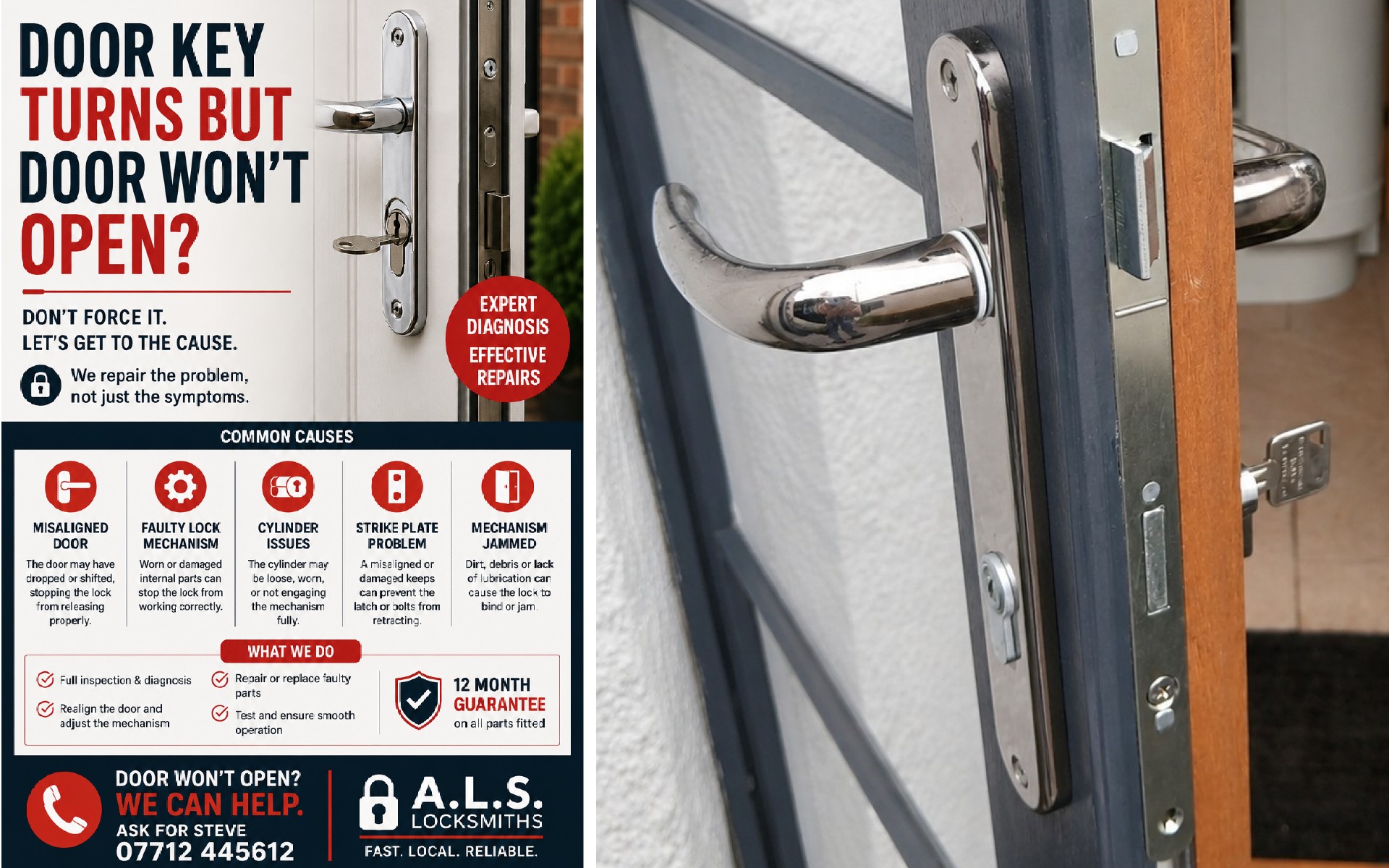
If your key turns normally but the door won't open, it's usually a sign that something inside the locking mechanism has failed. While it can be alarming—especially if you're locked in or out—it doesn't necessarily mean you need a new door.
In most cases, the problem can be repaired by replacing the faulty components and correcting any underlying issues that caused the failure.
Why Does the Key Turn but the Door Stay Locked?
When you turn the key, it should operate the gearbox and multipoint locking mechanism, allowing the locking points to retract.
If the key turns but nothing happens, one of the internal components has probably failed.
Common causes include:
- A failed gearbox.
- A broken multipoint locking mechanism.
- Broken internal connecting rods.
- Damaged or seized locking points.
- Doors been out of alignment causing door to jam shut.
- A failed lock cylinder (less common).
- A door that's been operating under excessive strain.
A proper diagnosis is essential to identify exactly which component has failed.
Failed Gearbox
The gearbox is the most common cause of this type of fault.
Typical symptoms include:
- The key turns freely.
- The handle moves normally.
- The locking points don't retract.
- The door remains locked.
If the remainder of the multipoint mechanism is still in good condition, replacing the gearbox is often the most economical repair.
The Multipoint Locking Mechanism Has Failed
Sometimes the damage extends beyond the gearbox.
The complete mechanism may require replacement if there are:
- Broken connecting rods.
- Worn hooks or rollers.
- Seized locking points.
- Extensive internal wear.
- An obsolete mechanism with unavailable replacement gearboxes.
Replacing the complete mechanism restores reliable operation without replacing the door itself.
Related guide: Why won’t my uPVC door lock?
The Door Has Been Under Strain
Many mechanism failures are caused by a door that's gradually dropped out of alignment.
You may have noticed warning signs beforehand, including:
- A stiff handle.
- The key becoming harder to turn.
- Having to push or pull the door to lock it.
- Difficulty lifting the handle.
- The door catching the frame.
These symptoms indicate the locking mechanism has been working harder than it should, eventually leading to failure.
Don't Keep Turning the Key
If the key turns but the door won't open, avoid repeatedly forcing it.
Doing so can cause further damage to:
- The gearbox.
- Internal components.
- The lock cylinder.
- The door handles.
- The multipoint mechanism.
If the lock doesn't operate after a normal turn of the key, continuing to force it usually makes the repair more complicated.
Can the Door Be Opened?
In most cases, yes.
An experienced locksmith can often open the door using non-destructive methods, avoiding unnecessary damage to:
- The door.
- The frame.
- The lock cylinder.
- The handles.
Once access has been gained, the faulty components can be replaced and the locking system restored.
Door Realignment Is Part of the Repair
Replacing the gearbox or multipoint mechanism is only part of a proper repair.
If the door has dropped or become misaligned, the new components will continue working under unnecessary strain unless the alignment is corrected.
A professional repair should always include checking and adjusting the door to ensure:
- The handle operates smoothly.
- The key turns easily.
- Every locking point engages correctly.
- The gearbox isn't under excessive pressure.
- The replacement parts achieve their maximum lifespan.
Correct alignment helps prevent the same fault from returning.
Could It Be the Lock Cylinder?
Although less common, a damaged lock cylinder can sometimes allow the key to turn without properly operating the cam that engages the gearbox.
Signs of a faulty cylinder may include:
- The key spinning without resistance.
- Intermittent operation.
- Difficulty removing the key.
- The lock working from one side but not the other.
If the cylinder has failed, replacing it is usually a straightforward repair.
Most Doors Don't Need Replacing
A key that turns but won't open the door doesn't usually mean the door itself has failed.
Most repairs involve:
- Gearbox replacement.
- Multipoint locking mechanism replacement.
- Lock cylinder replacement where necessary.
- Door realignment.
- Handle replacement if worn or damaged.
If the door and frame remain structurally sound, repairing the locking system is almost always far more cost-effective than replacing the entire door.
Prevention Is Better Than an Emergency
Most locking systems provide warning signs before complete failure.
Don't ignore:
- A stiff handle.
- A stiff lock.
- A difficult key.
- Doors catching the frame.
- Locking points that don't engage smoothly.
- Grinding, clicking or unusual noises.
Addressing these problems early can prevent a complete lock failure, reduce repair costs and avoid the inconvenience of being locked in or out.
Conclusion
A key that turns without opening the door is usually caused by a failed gearbox or damaged multipoint locking mechanism rather than a faulty door. With the correct diagnosis, most doors can be opened without damage, the worn components replaced and the door properly realigned to prevent repeat failures.
In the vast majority of cases, you don't need a replacement door—just the correct repair.
Related articles: